Categories
Reviews Video Games

Life is Strange Episode 2 Review

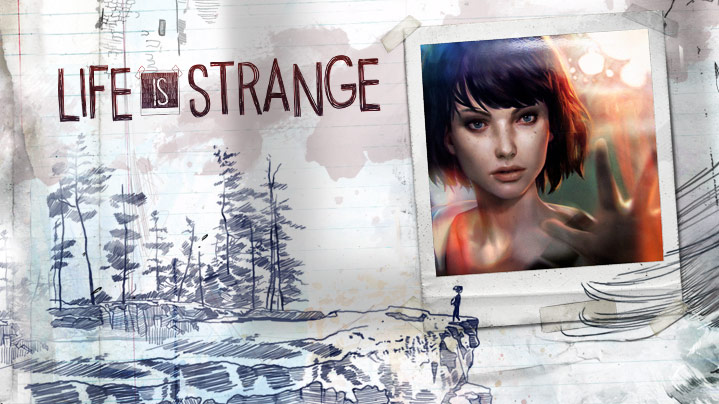
Max’s return to her home town after 5 years away hasn’t even remotely gone like she might have imagined. Cool as they are, her new powers have come with rather alarming visions of impending disaster. She’s let one friend in on her secrets, but both of them also have other personal issues to attend to… life2

Episode 1 of Life is Strange established a compelling mix of mysteries, characters, and atmosphere that I enjoyed quite a bit. For the most part episode 2 capitalizes and expands on the potential shown. One of the best parts is that the major decisions made in episode 1 carry over and influence a good bit of dialogue and some pieces of major developments. So far this is the best integration of this type of carryover I’ve seen. There’s a big, tough choice at the end that looks to have similar ripple effects going forward. The time mechanic is interesting and continues to be well implemented and integrated. Hints and foreshadowing are everywhere, but it’s hard to see where it’s all going. I love that kind of story.

The biggest weakness of this episode is in the middle where in an attempt to break up the tension a little there is a fetch quest that slows things down way too much and is frustrating to finish. It’s an unfortunate misstep that derails most of the momentum that had been built up. Things recover nicely though, with three harrowing scenes later one and the big choice I talked about earlier to finish. There’s still a strong feeling of “no right answer” to most of the choices, which is a great accomplishment.

Overall a good follow up and I’m still extremely invested in Life is Strange and eager to continue with the next episode.

Categories
Reviews Video Games

Life is Strange Episode 1 Review

Max is a shy 18 year old photography enthusiast returning to her home town after 5 years away. She has a lot of normal high school concerns, like schoolwork, dealing with bullies, making friends, missing classmates, murder, and suddenly being able to turn back time.

life1

Life is Strange is an adventure game with great atmosphere. It has a strong opening that draws the player right in, cranks up the mystery, then settles down a bit to let things unfold. The story is intriguing and Max makes a compelling point of view character. The dialogue can be a little stilted, but it gets the point across and for the most part the characters do sound like high schoolers.

The gameplay is straight exploration, with a couple of extremely simple puzzles. The story is the draw, and I was particularly impressed with the use of decision points. It remains to be seen how much effect they’ll have (if any) if future episodes, but they felt important. Even more interestingly, there didn’t feel like there was a right answer. After either option for every major choice Max muses about why the other one could have been better. It’s a wonderful touch lacking in a lot of games that have a clear and obvious “preferred path.”

The environment is fantastic. It captures the feel of the locales perfectly, including a boarding school, associated dorms, a run down house, etc. I found myself stopping to look at all the posters and flyers as much out of curiosity as to find clues. There’s a significant amount of little things to poke around.

Some players will find it on the short side, but it had good progression and found a decent stopping point, and is after all just episode 1. I thought Life is Strange was great and will definitely be checking out further chapters.

Categories
Reviews Video Games

Lost Dimension Follow Up: 2nd + Times the Charm

I reviewed Lost Dimension after a complete playthrough, then continued on in new game + mode. I’ve now finished two additional plays, and received the true ending. I’ll avoid spoilers but there is enough to talk about that I wanted to share some thoughts.

It’s impossible to get the true ending in one play, because you need to max out your camaraderie levels with everyone and it can’t be done for the characters chosen in the early judgements. So it will require at least two times through the game. I got unlucky and one character was an early traitor for me twice, so I needed a third complete play to get the ending.

The nice thing is the game carries over skill points and lets you redistribute them, so the team is pretty powerful upfront. Also dialogue you’ve seen before can be fast forwarded, so I completed BOTH subsequent playthroughs in less time combined than the first took me. The battle system is fun so I didn’t mind tackling them again, especially since hunting for traitors meant I was using different batches of characters each time.

The biggest weakness of the game in my first playthrough was some concepts and motivations seemed underdeveloped, which I chalked up to the fluid nature of the game and the traitor identities. This is actually disproven by the true ending. Everything is explained and it all makes sense within the story we’ve been following all along. While there’s a lot that remains mysterious until the end there were hints and I pieced together most of it as I completed all the camaraderie links. The ending wasn’t perfect but it was fitting , tied up all the loose ends and made sense.

So I have to say I love the game even more now. It’s hard to sell people on a game that requires multiple play throughs to get the story’s completion, but I don’t think it would be disappointing even if you stopped at once and the game does enough to make those subsequent plays enjoyable that I highly recommend giving Lost Dimension a try.

Categories
Reviews Video Games

Lost Dimension: Video Game AND Logic Puzzle In One

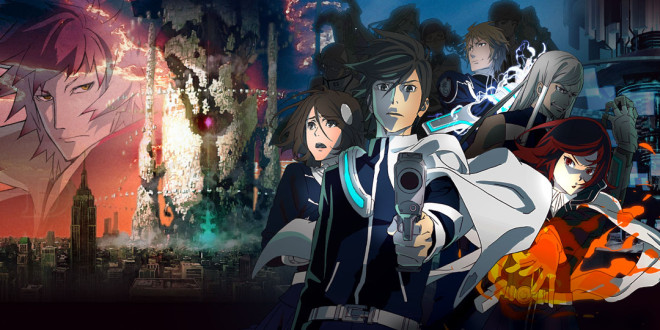
In the near future, the world is in ruin with just days left before total destruction at the hands of a suitably over the top villain who calls himself “The End.” An elite secret service group is put together to stop him, but only a handful survive the initial assault and make it into his tower. They all have special powers, but The End has a nasty surprise in store: there are traitors among them.

Lost-DImension-Poster

At its core Lost Dimensions is a action/strategy rpg, and an extremely good one. There is a central hub where the characters plan between levels. Here you manage/buy equipment, get to know the other characters, learn new skills, etc. The nested menus are a little overwhelming, but nothing crazy and it doesn’t take too long to get used to them. Most importantly they’re functional and fairly clear despite being numerous. The skill system is pretty robust and does a nice job of keeping characters varied while making them all relatively useful. The first couple of characters you talk to during each interlude receive a camaraderie boost, leading to improved influence over them and personal discussions that flesh out their backstories.  The hub also has a key role that opens a bit into the game – gathering intel to identify traitors. I’ll discuss this in detail later.

The gameplay isn’t quite the dungeon crawler (well, tower climber in this case) that I might have expected, but absolutely no complaints. And it does have a bit of that feel during individual levels. The levels are self-contained mini-mazes with enemies that generally need to be wiped out. You generally field six characters, and can move them in any order each turn. Each moves freely within a circular indicated range, and then can attack, use skills/items, or even forfeit their turn to allow an ally to move again. There are other nice nuances, and the battles proceed quickly and are quite fun. I don’t think I’ve seen an action oriented implementation of squad combat like this that’s deep yet keeps things brisk. I enjoyed it immensely.

The story is fine. Nothing terribly deep and a bit cliched, but it moves things along and there’s a nice mystery that builds about the villain’s connection to our protagonist, Sho. The game’s key innovation also hamstrings proper story development a little. Let me explain – at the end of each layer of the tower The End makes you sacrifice a suspected traitor from among your group. This is done via in game vote, and there are numerous things you can do during a layer to get your teammates to target someone specific.

The cool thing is other than the first one on your first playthrough, the identity of each traitor is COMPLETELY RANDOM. There’s no way of knowing in advance whether it’s going to be your least favorite ally or the character you use for point on every mission. This can obviously have a huge effect on gameplay, depending on your choices. To help ferret out the traitor the player uses Sho’s special ability of clairvoyance to identify how many traitors are in a given combat group and then has to puzzle out who’s a prime suspect for further investigation (via a minigame with limited trials). I ADORE logical puzzles, and this is one of the most innovative and well integrated game mechanics I’ve seen in ages.

Of course there are always trade offs. Since the traitors can be anyone and they are preemptively killed, the reasons for them plotting to turn on you aren’t fully explained. This is the detriment to story I mentioned above. I felt the background details you could find out about each teammate by becoming friends made up for this, but it is a little frustrating to see your favorite character turn on you without more than vague hints as to why. Still I felt this was a fantastic element to build the game around, and overall was implemented very well. Erased allies also leave ability enhancing devices, making sure their key powers don’t disappear with them. You aren’t even forced to eliminate the traitors if you don’t want to, although that will have repercussions later in the game…

There is significant info dump at the end, a consequence of keeping the story mysterious. It makes sense though, and is a fitting reveal / endcap for the journey. The true end requires more than one playthrough, and there were a couple of obvious questions left ope n for that. But if I stopped after once through the game it would still be satisfying enough an end.

Lost-Dimension-Teaser-Site-Open-660x330

——-

Lost Dimension won’t be for everyone, but overall I loved it. At a point where it’s hard to come up with time to sit down and play rpgs, I can see myself revisiting this to get to know other allies, see how things turn out with different traitors, etc. It tried something quite different and despite not being perfect, the gamble paid off.

Categories
Mystery Boxes Reviews Video Games

Arcade Block July 2015

July’s 2015 Arcade Block has arrived, as always sporting its awesome retro NES style box. Let’s take a look inside.

IMG_2479

In advance it was promised that this month’s block would have a Funko Pop, and the “Product of the Month” is said Funko Pop, one of four possible from Evolve. I’m not familiar with it, but Markov looks cool enough. The second item is a mystery pack of “Nommies” from Cut the Rope. Another game I don’t know, another product that’s cute for what it is. DJ Organic & Mega Ran’s Coin-Op Crush CD, featuring rap tracks using samples from classic video games is amusing, but not really my thing. Sonic Worlds Unite: Battles #1contains side stories from an upcoming Sonic/MegaMan comic crossover, and has an Arcade Block exclusive cover. The art is good and captures the look and feel of the video game characters well, but the three stories were short and silly and didn’t do anything to interest me in the crossover.

IMG_2481

Classic Console Cartridge Coasters is where things get more interesting for me. They’re thin cardboard and I’m not sure they’d hold up as coasters, but the NES cartridge design and nods to four great NES games is phenomenal.

IMG_2477

The other things that was revealed ahead of time is that this month’s block would contain an extra t-shirt. This worked out well for me, as the Caution t-shirt from The Last of Us does nothing for me, but the random shirt meant to give a taste of the Classic Nerd Block or Horror Block ended up being a fantastic Star Wars riff.

Conclusion

Most of this month’s Arcade Block were misses for me, but I still appreciate the quality and variety of items and properties being included. So even with only two things I really liked I’m still satisfied with AB. If nothing else this one’s given me some good gifts for friends with different tastes than mine.

Categories
Reviews Video Games

An empty house full of atmosphere

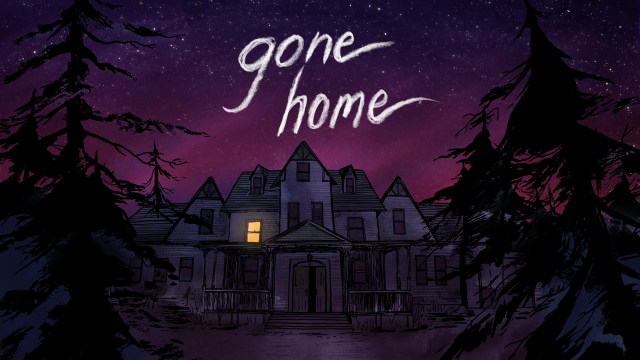
Gone Home is a first-person adventure game with the player taking the role of Kaitlin Greenbriar, a college student who comes back after a year abroad to find an empty house. In the middle of a stormy night Kaitlin searches for clues as to why her parents and younger sister aren’t home.


While critical reception of Gone Home has been largely positive, the game is quite polarizing in several respects. The length and price are two of the most often quoted negatives, as the game takes 2-3 hours to finish and retails for $20. As an adventure game there is also an automatic perceived zero replay value for most players, furthering the impact of the previous two points.

There are also diverse opinions on how much of an “actual game” it is. Gone Home is completely exploration driven and story based. If you are a gamer that sees a difference between a “game” and an “experience” this is the latter.

With the warnings out of the way (to hopefully give those who will automatically not enjoy the game enough information to determine Gone Home is not for them), let’s talk about why I personally loved it and wasn’t bothered by the “negatives” above.

Gone Home is an interesting experiment in storytelling, and I think it works beautifully. The fate of Kaitlin’s sister Sam, who has left am ominous note on the front door asking Kaitlin not to look for her, is the central mystery and Sam narrates journal entries as Kaitlin explores the house. The story comes together through these narrations and information from notes, books, receipts, observations, etc as we go through the house. The atmosphere created is incredible. Things unfold naturally but still manage surprises.

There is a lot to learn about the year Kaitlin’s been abroad and the house her family moved into shortly after she left. The “gameplay” here is not about action or even puzzles, the backbone of most adventure titles. The engagement aspect of the game is in seeking out all the little clues and slowly forming a picture of what’s going on. This is a subtle kind of mystery, where the game’s draw are the moments of realization as you figure out the next twist or what something you saw earlier meant.

Since the entire point of the game is piecing things together as Kaitlin explores the empty house I am going to avoid plot specifics, but all of the family members’ stories have quite a bit of depth. Including Kaitlin’s – in a wonderful touch you’ll find postcards she sent home that can be read to find out more about your protagonist’s time in Europe.

Little things like that are what really made Gone Home shine for me. Information is rationed such that conclusions can be drawn without finding everything, but the complete stories are there in their entireties if you search hard enough and pay attention. In some cases a key letter or piece of scrap adds new context to what you thought you knew.

It’s all wonderfully constructed and one of the reasons I don’t hold to the theory that mysteries or adventure games automatically have no replay value. I’m certain I missed some things, particularly relating to the parents, on my first play. So I have more to unravel next time. Also, while the game won’t be the same knowing where it’s going to end up, that’s kind of the point for me. All the clues, hints and other little nuances will mean a lot more to me during the second pass.

Add it all up and I thoroughly enjoyed Gone Home. It’s definitely aimed more towards the “games as art” crowd but if you can take it for what it is there’s a lot to like. Overall I feel it was well worth my $20, “short” or not.