Categories
Books Reviews

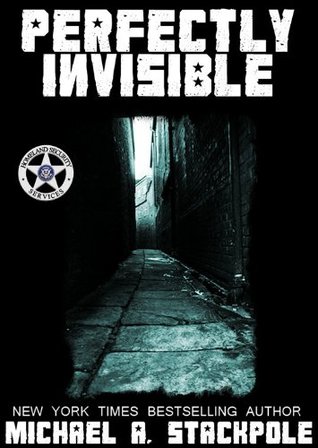
Perfectly Invisible Review

“Better some tears get shred because she was mean, than blood splashed because she wasn’t.”

A pair of national tragedies in the 1990’s has turned the US into a largely totalitarian nation. Homeland Security Services is the omnipresent but largely mysterious elite law enforcement organization that takes over when cases are too dangerous or too important to entrust to anyone else. Miracle Dunn’s first case as Krait Squad’s new investigator involves a simple looking murder which uncovers a less simple makeshift crypt in the apartment next door.

perfectlyinvisible

I’m quite torn on this first novel in Michael Stackpole’s Homeland Security services series.  It takes place in an intriguing, unnerving alternate reality that displays Stackpole’s usual thorough development and vivd descriptions. Everything is internally consistent and provides a stark environment with tons of potential to frame Miracle’s story against. Heavy topics, ranging from government approved exile to institutionalized, legalized discrimination and covering a wide range in between saturate the society HSS polices and the variety of directions Stackpole could explore within this dystopian framework are extremely intriguing. 

Miracle and her coworkers are nicely individualized characters in both areas of expertise and personalities. I adore the way Stackpole fleshed them out via their approaches to their job and interactions with Miracle such that it all feels natural and the pace never slows.

However the breakneck pace is where I have my reservations. There is so much happening and so many story threads introduced in this short novel that by the end I felt like too much was left dangling. It sets up a few too many outstanding mysteries and as a result came across more like the first half of a longer novel than a standalone start to a series.

To be clear: a central mystery IS solved and by and large a complete, good story is told. But there are a couple of other important things that certainly seemed like they were going to be addressed during this book, and it was hard not to be disappointed when I realized they were going to be left obscure. Mystery series walk a fine line of giving the reader enough to satisfy during each book and keeping enough back to build to future installments, and overall Perfectly Invisible did too little of the former and too much of the latter. 

Still, there’s a lot to enjoy in Stackpole’s alternate vision of the US, and I am interested in continuing with the series. Though to be honest,  will probably wait until there are at least a couple more to read at a time to be sure I get enough plot advancement to avoid the unfinished feeling I was left with here. 

Categories
Board Games Reviews

Ravens of Thri Sahashri Review (First Impressions)

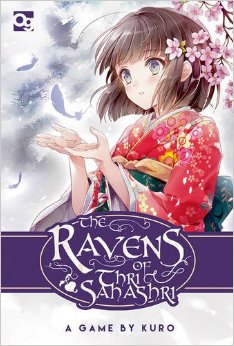
Ravens of Thri Sahashri is an asymmetrical 2-player cooperative game that comes together quite unlike anything else I’ve seen.
ravens

Gameplay

One player takes the role of Ren, a young girl in a coma with her mind and soul being consumed by darkness, and the other plays Feth, searching through Ren’s dreams for the fragments of her fading memories that will restore her heart. The fantasy theme is a imaginative, solid framework for the game.

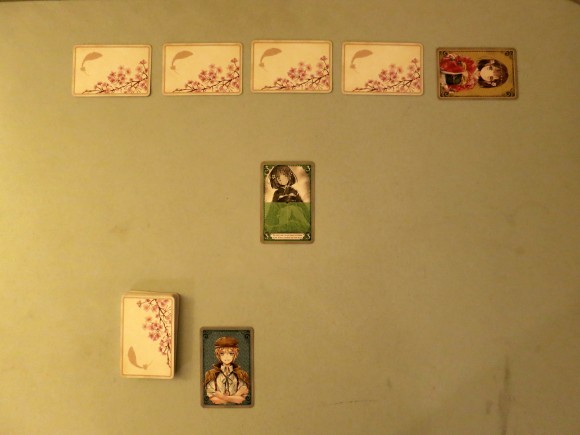
The two character’s mechanics are VASTLY different. Feth draws (face up) hands and builds a central repository of cards (called the Atman), from which Ren draws one card each turn to either discard or add to rows of a “poem” in front of her that starts with four hidden cards representing Ren’s heart. If the players can complete the poem and have all visible cards in the Atman matching the colors of Ren’s heart, the “dream” (round) is completed. Players must complete three dreams to win the game.

img_3050

On each turn, Feth draws an many cards as he wants into a face up row in front of him. Once he’s done any ravens (which I’ll explain later) drawn are moved to a second row, leaving only memory cards in the top row. Feth then plays as many cards from the top row as he wants into the Atman. At the end of his turn any memory cards not played are discarded.

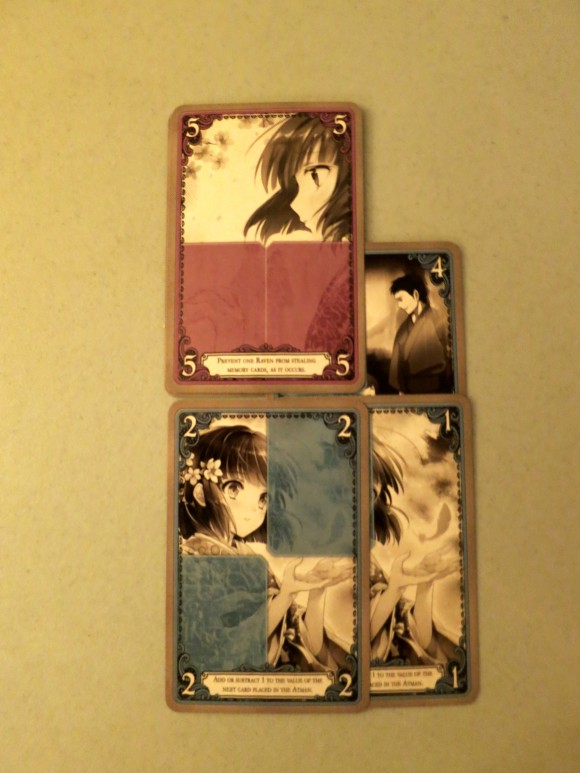
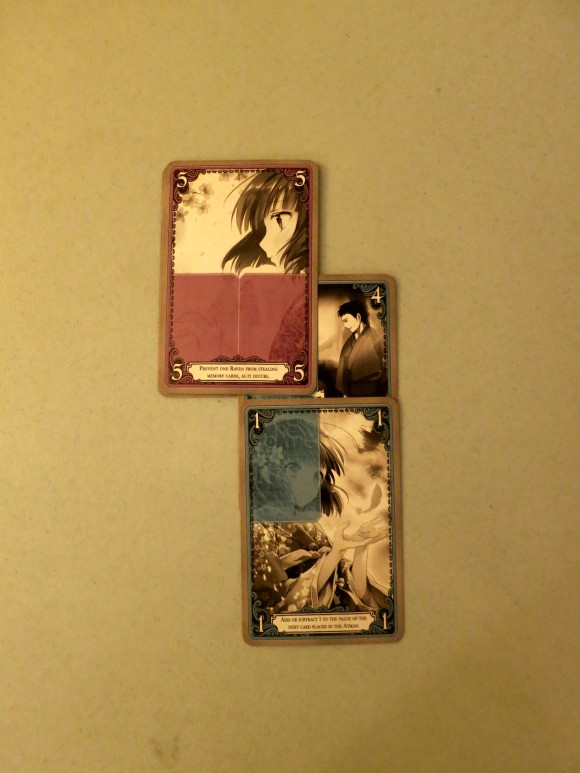
The faded sections of each memory (card) determine how it can be added to the Atman. When placing a card at least one faded section must overlap with an existing card in the Atman, and any overlapping sections must be of like type (faded or clear).  Cards in the Atman can be completely covered in certain circumstances, and no longer count as part of the Atman until / unless they are uncovered later.

Feth can also “restore a memory” for Ren by forming an uninterrupted block of the same color of cards that totals a value of 7. When this happens the raven of the same color is chased away (removed from the game for the current round) if present in Feth’s bottom row and any cards under it are discarded, and Ren can reveal one of her “heart” cards that matches the color of the restored memory. At the end of the dream revealed heart cards are kept by Ren in a special score pile to be used during the final dream.

img_3049

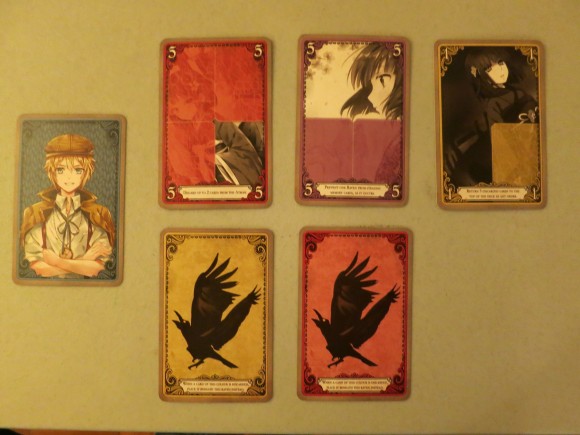
The five ravens in the deck, one for each color, represent the dark forces trying to destroy Ren’s memories and cause her to drift away forever. If at any point all five ravens are in Feth’s playing area, the game is lost. The ravens can also “eat” Ren’s memories. When a raven is in Feth’s playing area, any cards of the matching color that would be discarded are placed under the raven instead. Any cards underneath ravens at the end of a dream are “eaten” (removed from the game) and will not be available in the following rounds.

Mechanics-wise Ren’s turns are much simpler: she removes one visible card from the Atman and either discards it or adds it to her poem. Ren’s poem starts with one card for each of the lines face down (hidden from Feth). These cards represent her heart, and only the colors of these four cards may be visible in the Atman at the end of a dream. Ren is trying to complete a Japanese poem form called Doidotsu, which has a 7-7-7-5 rhythm. So she must place cards in the first three lines such that each line (including her heart card in that line) adds to a total of 7, and place cards in the final line to reach a total of 5. The lines must be played in / completed in order, and once the last line is completed the poem is finished.
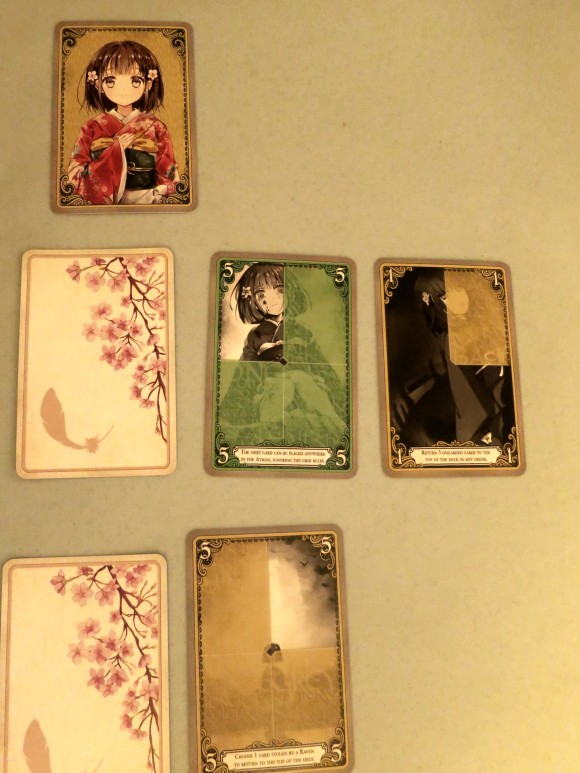
img_3035

The only communication between players is meant to be through card choice, which is where the challenge for Ren comes in. She does much less on each turn than the Feth player, but her choices on which cards to take from the Atman, and whether to use or discard them, is crucial to providing Feth with information about what she needs and what colors are in her hidden heart cards and must be the only ones in the Atman at the end of the dream.

It is possible for the Atman to be “split” (have sections that are not visibly connected) during the game, and Ren’s other big ability is choosing which part of the Atman remains and which is discarded when this happens. This is another key way to pass information to the Feth player and work towards their mutual goals.

There are other details to the mechanics that add to gameplay, such as special powers on the memory cards that Feth has access to for any face up cards in Ren’s poem, and added restrictions and abilities during the third and final dream of the game.

General Thoughts

As I mentioned above Ravens of Thri Sahashri is quite original, and it takes a bit of start up time to wrap your head around. There are a lot of details to learn before beginning to play, but it all fits well once things get going and everything adds to the game in an important way.

There’s a nice “press your luck” element to drawing Feth’s hands: draw too few cards and Feth will lack options and limit Ren’s ability to play, but draw too many and Feth risks losing the game by revealing all the ravens or draining the deck.

Ren’s turns are much shorter than Feth’s and she seems to to have less to do, but I played her and really enjoyed it. What Feth chooses to do on his turns provides extremely vital clues towards what colors he thinks are important, etc and so I was as engaged in the game during his turns as I was during my own. I found trying to figure out how to pass useful hints by only removing a single card from the Atman challenging and rewarding.

The game increases in difficulty from round to round, due to both unavailable cards that have been either eaten or set aside in Ren’s score pile and to extra limitations placed on the players during the final dream. It’s somewhat difficult to judge how the game is going during the middle and there is a large luck component related to card draws, but co-op games should be a challenge and I feel Ravens dances the line just right.

We were slightly lax on the silence in the one game I’ve played, allowing some rule discussion (which I highly recommend when learning the game) as well as the Feth player thinking out loud a bit here and there without me responding. I’d probably try forbidding that last part in future games to see how it plays, as in retrospect him ruminating about what colors he thought my be in my heart cards did affect some of my choices.
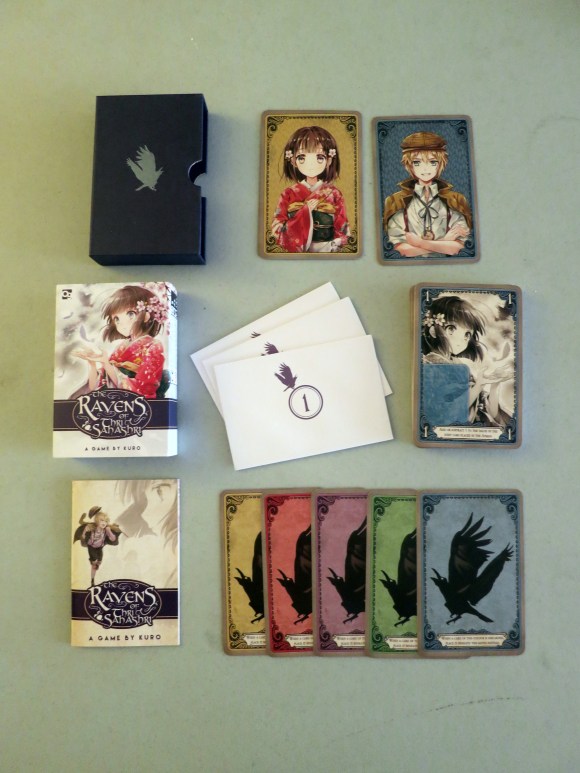
img_3031

I LOVE the visual design here. I’ve looked at pictures of the original version and it’s even more polished here, using faded gray coloring instead of bars for the faded memory sections to make the cards less busy and let the marvelous artwork shine more. Each card’s art is beautiful while keeping all gameplay related elements and information clear. The production quality is excellent in general, with a sturdy, striking outer box, appropriately large and thick cards, and vivd colors and printing.

Adding a final touch of mystery are three sealed envelopes, to be opened only when players win a complete game, which provide additional story context and legacy gameplay elements.

Overall

The lack of table talk and a fairly sizable learning curve for a card game definitely puts Ravens of Thri Sahashri in the “not for everyone” camp, but I found it to be a wonderfully original game that forces players to approach cooperation in a unique way. The asymmetric roles and legacy rule changes add even more longevity, and I can see myself coming back to this again and again for a long time.

Categories
Anime Film Reviews

Paprika Review

“Night dreams of Day, and Light dreams of Darkness.”

A groundbreaking technological advancement called the “DC Mini” aims to enable revolutionary treatments by directly interacting with patients’ dreams. However test patient Detective Toshimi Konakawa and Doctor Atsuko Chiba are caught up in much more than an experiment when the DC Mini is stolen.

paprika

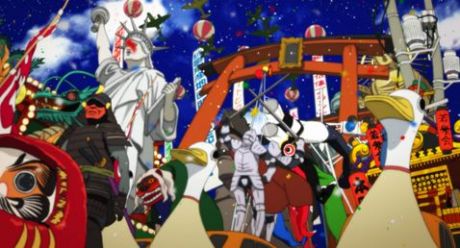
Satoshi Kon’s four movies are all excellent and form a collection of extremely diverse, impactful tales, and his final film is perhaps the most ambitious of them all. I recently had an opportunity to revisit Paprika in 35mm glory thanks to a special 1oth Anniversary screening at Japan Society. It was such a treat to see this glorious assault on the senses in that form.

paprika9

Paprika feels different in emotional resonance from Kon’s other films, perhaps due to it being an adaptation instead of original work. The characters are interesting and carry the story well, but don’t have quite the depth of those in Perfect Blue, Millennium Actress, and Tokyo Godfathers (although both Konakawa and the titular heroine do face some nice introspection and growth at points).

Here the events and action are spotlit somewhat more, with a constant barrage of weird happenings that manage to be both zany and creepy at every step. The visuals are absolutely incredible, with vivid colors and wild, semi-abstract images pouring all over the screen.

paprika8

But the genius is that there is always a framework, with repeated dream images and themes and limits to how abstract things get, as well as equally impressive environments and attention to the art during the quiet moments. It all comes together to ensure the story can always be tracked and suspense can build. There are several beautifully executed moments that are just breathtaking.

paprika10

Elevating all I’ve mentioned even further is a phenomenal score that blends seamlessly and unobtrusively accentuates the action as well as the emotional undercurrents of each scene. Pieces of music from the movie have been stuck in my head for days, which in this case I have no objections to. 😉

One last thing I’ll mention is the plethora of delightful references and Easter eggs strewn throughout, from fun characters and costumes donned by Parprika in the dream sequences to amusing nods to Kon’s other films. Filmmaking is a theme as prevalent in Paprika as the meaning of dreams is, and excellent use is made of both for both story gravity and added layers of fun.

paprika2

There’s disagreement over whether Paprika quite reaches the heights of Kon’s other movies, but either way it is a wonderful experience in its own right. Strap in for the ride, and enjoy the trippy, wild visual feast.

Categories
Reviews Video Games

Hotel Dusk: Room 215 Review

It’s 1979,  and Kyle Hyde is three years and a lot of miles from his past life as a NYC Police Detective. But when his new job sends him to an odd hotel in the middle of nowhere, he’ll find significantly more than a quiet night’s rest.

hd_wallpaper02_1024

Hotel Dusk is an old favorite of mine, which I hadn’t played in years. As I seem to finally have an opportunity to get around to playing the sequel, I decided to revisit Kyle Hyde’s original adventure first. I’m surprised at how much I’d forgotten, as entire sections of the game seemed new to me.

This is a game that knows exactly what it wants to be and gives no quarter. It’s an old-fashioned hard-boiled mystery with a down-on-his-luck protagonist and a bunch of odd people and happenings his mind just can’t let go of. As such, the pace is appropriately deliberate as Hyde pokes around Hotel Dusk and pieces everything together. The journey is well worth it, but this is a story that unfolds gradually and requires some patience. The game’s self description of being an “interactive mystery novel” is spot on.

Aiding in the immersion as the player guides Hyde through a tangle of misfits with hidden secrets is a fantastic artistic style and some unique elements both in presentation and gameplay. The “hand drawn” feel to the character portraits and the way color is sparingly used on and of in them contrasts nicely with the more traditionally drawn backgrounds. This not only let’s the characters stand out, but keeps the backgrounds simple and clear so searching for things and solving puzzles isn’t unnecessarily complicated by the art. Even little touches, like requiring the DS be held sideways to resemble a book while playing or having a virtual notebook you can hand write notes in, add to the experience.

The puzzles are fine overall. They tend to be reasonably engaging and as well incorporated as can be. Some are a little shoehorned in, but nothing seems terribly out of place or breaks immersion enough to be a problem. A couple of mini-games/puzzles were particularly clever, and effort was taken to make use of the DS’s features. The mystery elements are the focus though, and a majority of the game is walking around gathering information and talking to various people to unravel all the odd things going on at the hotel.

Hyde is generally a smart protagonist, and there were only a couple times where I was ahead of him enough to get a little impatient. Not bad at all for such a long game. There’s a good mix of (semi) reasonable red herrings and interwoven backstories for the various characters. There are of course some coincidences in this kind of tale, but they are relatively minimal and blend in fairly seamlessly overall. Everything ties up fairly nicely at the end, although a few minor lingering questions remain involving some of the supporting cast. The main story threads are resolved to satisfaction while leaving room for certain things to be expanded on in the sequel, although I don’t know if they were (to my knowledge sequel is largely separate/stand alone even though it features same main character).

Perhaps most importantly at this point is that I find Hotel Dusk: Room 215 holds up well compared to when I first played it and I thoroughly enjoyed my replay. The heavy narrative focus, as well as little things like not being able to speed up the text display, will make this a slog for some players, but those with the patience to wander through a solid, old school noir-ish mystery will still find this to be a gem among the DS’s expansive library.


Categories
Comics Reviews

Raven #1 Review

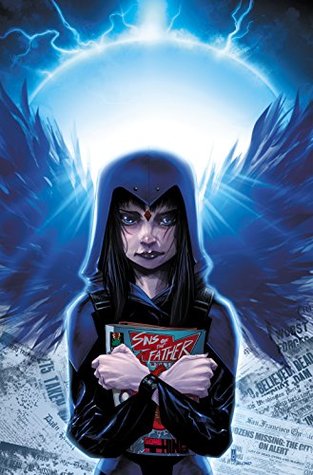
Dealing with the loss of a friend and teammate as well as the weight of her legacy, Raven seeks to explore her human side a bit by moving in with her aunt’s family and living a “normal” life for a while.

raven

Raven’s a character I’ve always liked, but never really read too many amazing stories about. A different take on her written by New Teen Titans legend Marv Wolfman was too intriguing to pass up.

And different this most certainly is. The whole hook of the concept is watching Raven try to be normal, and it was pretty entertaining to see her try to “blend in” a little in her new home and attending high school. Wolfman does a good job of providing those moments without letting them overwhelm the comic, and lays in a mysterious, superhero appropriate underlying story that we just see hints of in this first issue. Alisson Borges’ art is admittedly uneven in parts, but is spot on most of the time and suits the tone and events in the comic well.

It’s not perfect and maybe not what longtime Titans fans wanted from a Raven solo, but I find this take compelling and entertaining overall and am interested in reading the rest as it comes out.

Categories
Manga Reviews

Shoulder-a-Coffin Kuro Volume 4 Review

“I believe that a journey … is like becoming the wind.”

Shoulder-a-Coffin Kuro presents a story that has built over the course of the series. Start reading with volume 1.

kuro4

Unable to control her emotions after last volume’s shock, the witch’s curse has caught up with Kuro. While she drifts through her past, Nijuku and Sanju have a plan to protect their own memories, as well as their companion.

When this volume originally came out it was after quite a wait, but I didn’t anticipate an even longer hiatus before the series would continue again.  Two years later and I’m rereading this to refresh my memory in order to finally move on to volume 5. This was just as outstanding an installment as I remember.

As always it’s a dense read, but so richly layered that the attention require of the reader is well rewarded. The moments of whimsy that soften the dark themes are masterful, and there’s a ton to think about here both plot-wise and philosophically. Magic creeps around the edges of the story and the lines of reality are blurred in extraordinary ways. While unique and giving the comic an unusual rhythm, the 4-koma format fits Kuro’s adventures well, and is executed perfectly with high quality and detailed art.

The blending of Kuro’s journey with the emotional growth of the twins is the heart of the manga and makes the narrative something special. Kuro’s efforts to chase her past and face her destiny contrast with the twins simplistic view of the world and her need to educate and foster them as they all travel. It’s a delicate, compelling balance that’s maintained beautifully throughout all the volumes so far.

Shoulder-a-Coffin Kuro is very much one of a kind, and embraces that status fully. This is an atmospheric, haunting manga that’s well worth reading along with.

Categories
Comics Reviews

Arkham Asylum: Living Hell Review

This trade collects the entire Arkham Asylum: Living Hell miniseries (issues #1-6).

arkhamlh

To call the main characters of Living Hell even “third-string” Batman villains would be generous, but Dan Slott reminds us that characters don’t have to be popular to be interesting. Across six issues he builds a compelling tale of the world’s worst nuthouse.

If you dislike supernatural elements creeping into Batman stories or require the Dark Knight himself as the focus, this won’t be for you. It’s also extremely creepy in tone and fairly graphic – I would normally expect something like this to be under the Vertigo imprint. Even with the title “Living Hell” I wasn’t expecting something this dark (especially from Slott, who is more well known for his comedic ability).

But those who can handle the elements mentioned above will find Living Hell well worth the read. Things tie together surprisingly but reasonably, horrific events tie directly to the plot and character arcs, and it was all engrossing enough that I couldn’t stop reading until I was finished.

Categories
Manga Reviews

Shoulder-a-Coffin Kuro Volume 3 Review

“Well, no matter how much the road branches off… in the end, you can only go down one path.”

This volume builds a lot off of the previous two. Start with volume 1.

Shoulder-A-Coffin Kuro follows of the unusual traveller Kuro, her sensei who just happens to be a talking bat, and two odd children. Kuro wanders with a coffin strapped to her back and is often mistaken for a boy and/or vampire.

kuro3

Volume 1 of Shoulder-a-Coffin Kuro introduced our cast in stand alone adventures tinged with dark whimsy. Volume 2 continued with the same style and atmosphere, while fleshing out the world more and giving glimpses of the backgrounds of Kuro and the twins.

This volume continues in that vein, giving even more information regarding the pasts of Kuro, Nijuku, Sanju and Sen. It also continues their travels in the present as Kuro still searches for a cure, and features some key encounters and events. The tone is even darker in these stories than previously (which is surprising after some of volume 2) and there are a lot of intriguing philosophical overtones. Touches of humor and the familiar charming antics of the twins remain though to help us along.

While I enjoyed this installment the first time I read it, I feel like I got a lot more out of it this time through now that I have a better idea of how certain things fit together and am picking up more of the subtleties and foreshadowing. The storytelling is dense and takes effort to unravel, but is exquisitely layered and built and it’s rewarding to see it slowly come together.

As always the manga uses the 4-koma style, which gives it a very unique rhythm. The art is impressive as usual, particularly the gorgeous and numerous color pages, and the printing quality is excellent. I feel like there’s more use of white in the black and white pages this time, which makes it easier to see the detail work and is very nice in general considering the borders are all black.

Shoulder-a-Coffin Kuro is a very odd series but is quite engaging in its own way. I’ve become completely engrossed in Kuro’s journey and revel not only in continuing along with it, but also going back to these earlier volumes and experiencing layers and nuances I missed the first time.

Categories
Manga Reviews

Shoulder-a-Coffin Kuro Volume 2 Review

“The world is big and endless, eh?”

Volume 1 was mostly stand alone adventures and character introductions, so it wouldn’t be too hard to pick up the gist if you wanted to start here. It is much better to go back to the beginning though.

kuro2

Shoulder-A-Coffin Kuro follows the travels of the unusual traveller Kuro. She wanders with a coffin strapped to her back, is accompanied by two odd children and a talking bat, and is often mistaken for a boy and/or vampire.

The 4-koma style being used for a generally serious, dark, and somewhat non-linear story took getting used to in the first volume. I enjoyed it though and was fully invested by the end. I was very curious to find out more about Kuro, Sen, the twins (Nijuku and Sanju), and their world.

Volume 2 didn’t disappoint. The comic is growing into it’s format and is smoother this time. It still requires effort – things are not spelled out and the cadence of the story is unique so this is a manga you have to pay attention to and think about. But it’s worth it. The off-beat way the twins see the world leads to some touching moments and the information and flashbacks we get about Kuro and Sen are intriguing, powerful stuff.

The art continues to be very well done, particularly the beautiful color pages. Detailed thoughts from my review of volume 1: “The art is very good and detailed, particularly for the 4-koma format. The detail does make it a little busy, and I kind of wish all the pages were in color (the color pages are gorgeous).

The production values of the book are excellent. Good quality paper and printing and more retained color pages than most manga volumes. The style makes it a little hard on the eyes though, as all the borders and backgrounds behind the panels are pitch black.”

Shoulder-a-Coffin Kuro is a odd little series that is quite captivating and really seems to be hitting it’s stride in this volume. It’s interesting to revisit these early volumes again (in preparation of finally having a new volume to read after a couple of years), and I’m catching even more of the details and subtleties this time through.


Categories
Manga Reviews

Rosario Vampire Season II Volume 5 Review

“I bet it’s tougher than we can even imagine for a monster to live in the human world.”

Tsukune and friends try to take a break from the threat of Fairy Tale on a quiet beach vacation to a seaside inn. But It’s not just them that Fairy Tale is after, and shy former Yokai Academy student San Otonashi might need help from them in numerous ways.

rvii5

I generally enjoy Rosario Vampire for what it is: a formulaic, fanservice-heavy series that provides a light blend of action and humor. It cranks up the dramatic tension and intrigue in parts nicely, but overall it’s more “enjoyable” than “essential.”

However this is the volume where it transcends itself, and it’s perhaps the best stand alone story within any series I’ve read. Among all the expected fanservice (and there’s plenty) and normal ridiculousness is a wonderful, powerful story about acceptance/ rejection, fear in various forms, and appearance vs reality.

Our usual protagonists’ encounter with San Otonashi plays with the self-same expectations and cliches the series is steeped in, with wonderful results. I love the twist on classic story tropes, where certain ones are embraced to compliment story character development while others are tweaked for added depth. The mix of surprises with certain things unfolding as expected heightens the impact of the former and it all comes together to a strong crescendo to end the volume.

Tsukune is at an interesting point coming into this volume, where he’s training and pushing himself to be less of a burden to his friends, but doubting his ability to achieve that goal. His continued growth intertwines with a spotlight on a new character and related events to her introduction.

The best thing is that the way the story is told not only conveys nuances of San’s and Tsukune’s characters, but several of the other cast as well in the subtle ways they react and comment on what’s happening. San’s tale is masterfully told, with layers to her personality and motivations unveiled deftly , and in way that provokes introspection in everyone around her. Gin in particular gets a nice spotlight in parts.

While it is better to be familiar with the established cast, their powers and personalities, and what they’ve gone through to this point, I realize catching up on a series and a half of Rosario Vampire is a bit of an investment to get to a single story. There is a summary of the regular cast at the beginning of each volume, and I think enough is explained that this could be read on its own. It would be hard to pick up on all the underlying effects and ripples of the story, but the core elements and themes and the emotional resonance related to the two main subjects would come through.

Again, this little slice of Rosario Vampire is one of my personal favorite manga works ever. Push past the general trappings (if that’s not your thing) and enjoy an emotional, character driven ride that provides a lot to think about if you poke below the surface.