Categories
Board Games Reviews

Ravens of Thri Sahashri Review (First Impressions)

Ravens of Thri Sahashri is an asymmetrical 2-player cooperative game that comes together quite unlike anything else I’ve seen.

ravens

Gameplay

One player takes the role of Ren, a young girl in a coma with her mind and soul being consumed by darkness, and the other plays Feth, searching through Ren’s dreams for the fragments of her fading memories that will restore her heart. The fantasy theme is a imaginative, solid framework for the game.

The two character’s mechanics are VASTLY different. Feth draws (face up) hands and builds a central repository of cards (called the Atman), from which Ren draws one card each turn to either discard or add to rows of a “poem” in front of her that starts with four hidden cards representing Ren’s heart. If the players can complete the poem and have all visible cards in the Atman matching the colors of Ren’s heart, the “dream” (round) is completed. Players must complete three dreams to win the game.

img_3050

On each turn, Feth draws an many cards as he wants into a face up row in front of him. Once he’s done any ravens (which I’ll explain later) drawn are moved to a second row, leaving only memory cards in the top row. Feth then plays as many cards from the top row as he wants into the Atman. At the end of his turn any memory cards not played are discarded.

The faded sections of each memory (card) determine how it can be added to the Atman. When placing a card at least one faded section must overlap with an existing card in the Atman, and any overlapping sections must be of like type (faded or clear).  Cards in the Atman can be completely covered in certain circumstances, and no longer count as part of the Atman until / unless they are uncovered later.

Feth can also “restore a memory” for Ren by forming an uninterrupted block of the same color of cards that totals a value of 7. When this happens the raven of the same color is chased away (removed from the game for the current round) if present in Feth’s bottom row and any cards under it are discarded, and Ren can reveal one of her “heart” cards that matches the color of the restored memory. At the end of the dream revealed heart cards are kept by Ren in a special score pile to be used during the final dream.

img_3049

The five ravens in the deck, one for each color, represent the dark forces trying to destroy Ren’s memories and cause her to drift away forever. If at any point all five ravens are in Feth’s playing area, the game is lost. The ravens can also “eat” Ren’s memories. When a raven is in Feth’s playing area, any cards of the matching color that would be discarded are placed under the raven instead. Any cards underneath ravens at the end of a dream are “eaten” (removed from the game) and will not be available in the following rounds.

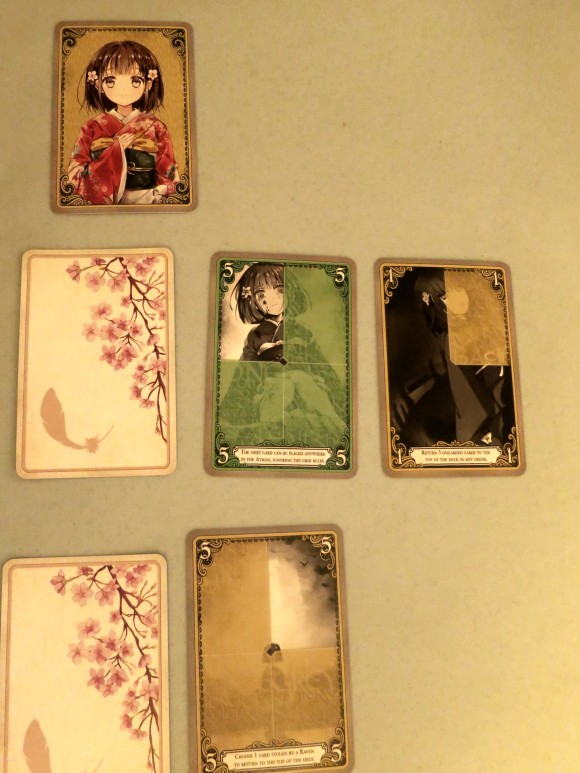
Mechanics-wise Ren’s turns are much simpler: she removes one visible card from the Atman and either discards it or adds it to her poem. Ren’s poem starts with one card for each of the lines face down (hidden from Feth). These cards represent her heart, and only the colors of these four cards may be visible in the Atman at the end of a dream. Ren is trying to complete a Japanese poem form called Doidotsu, which has a 7-7-7-5 rhythm. So she must place cards in the first three lines such that each line (including her heart card in that line) adds to a total of 7, and place cards in the final line to reach a total of 5. The lines must be played in / completed in order, and once the last line is completed the poem is finished.
img_3035

The only communication between players is meant to be through card choice, which is where the challenge for Ren comes in. She does much less on each turn than the Feth player, but her choices on which cards to take from the Atman, and whether to use or discard them, is crucial to providing Feth with information about what she needs and what colors are in her hidden heart cards and must be the only ones in the Atman at the end of the dream.

It is possible for the Atman to be “split” (have sections that are not visibly connected) during the game, and Ren’s other big ability is choosing which part of the Atman remains and which is discarded when this happens. This is another key way to pass information to the Feth player and work towards their mutual goals.

There are other details to the mechanics that add to gameplay, such as special powers on the memory cards that Feth has access to for any face up cards in Ren’s poem, and added restrictions and abilities during the third and final dream of the game.

General Thoughts

As I mentioned above Ravens of Thri Sahashri is quite original, and it takes a bit of start up time to wrap your head around. There are a lot of details to learn before beginning to play, but it all fits well once things get going and everything adds to the game in an important way.

There’s a nice “press your luck” element to drawing Feth’s hands: draw too few cards and Feth will lack options and limit Ren’s ability to play, but draw too many and Feth risks losing the game by revealing all the ravens or draining the deck.

Ren’s turns are much shorter than Feth’s and she seems to to have less to do, but I played her and really enjoyed it. What Feth chooses to do on his turns provides extremely vital clues towards what colors he thinks are important, etc and so I was as engaged in the game during his turns as I was during my own. I found trying to figure out how to pass useful hints by only removing a single card from the Atman challenging and rewarding.

The game increases in difficulty from round to round, due to both unavailable cards that have been either eaten or set aside in Ren’s score pile and to extra limitations placed on the players during the final dream. It’s somewhat difficult to judge how the game is going during the middle and there is a large luck component related to card draws, but co-op games should be a challenge and I feel Ravens dances the line just right.

We were slightly lax on the silence in the one game I’ve played, allowing some rule discussion (which I highly recommend when learning the game) as well as the Feth player thinking out loud a bit here and there without me responding. I’d probably try forbidding that last part in future games to see how it plays, as in retrospect him ruminating about what colors he thought my be in my heart cards did affect some of my choices.
img_3031

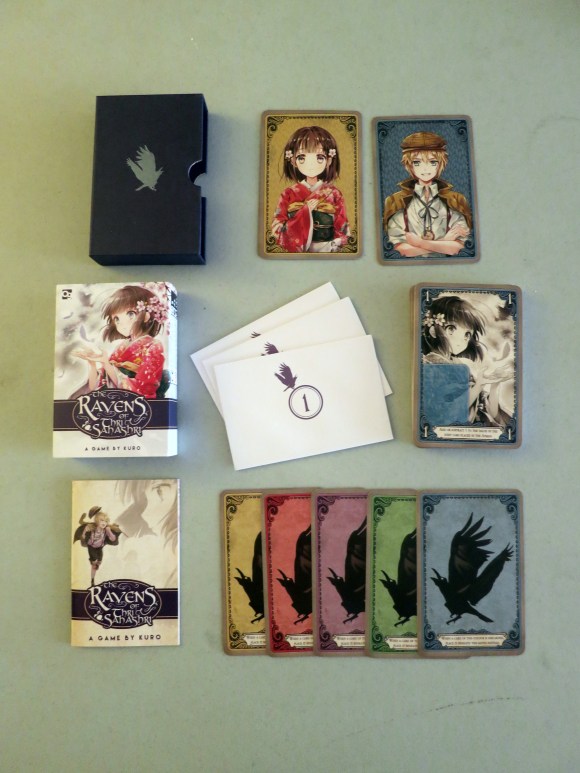
I LOVE the visual design here. I’ve looked at pictures of the original version and it’s even more polished here, using faded gray coloring instead of bars for the faded memory sections to make the cards less busy and let the marvelous artwork shine more. Each card’s art is beautiful while keeping all gameplay related elements and information clear. The production quality is excellent in general, with a sturdy, striking outer box, appropriately large and thick cards, and vivd colors and printing.

Adding a final touch of mystery are three sealed envelopes, to be opened only when players win a complete game, which provide additional story context and legacy gameplay elements.

Overall

The lack of table talk and a fairly sizable learning curve for a card game definitely puts Ravens of Thri Sahashri in the “not for everyone” camp, but I found it to be a wonderfully original game that forces players to approach cooperation in a unique way. The asymmetric roles and legacy rule changes add even more longevity, and I can see myself coming back to this again and again for a long time.
Categories
Board Games Reviews

Scythe Board Game Review

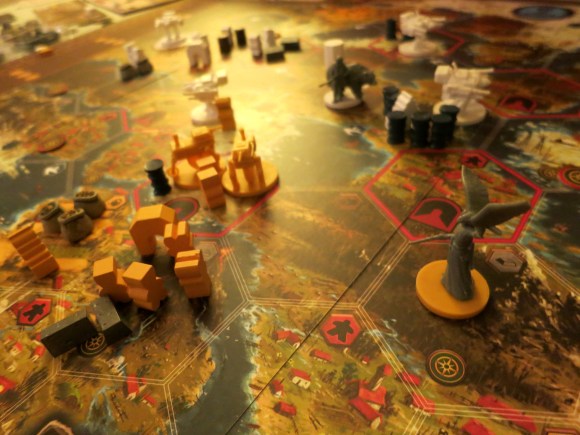
I’m a big fan of Jamey Stegmaier’s previous games (Viticulture and Euphoria) and heard a lot of pre-release hype about his newest offering in Scythe, so had been eagerly looking forward to trying it out. It balances a lot of moving parts in a way that requires some getting used to, but provides a wonderful experience once things click in the players’ minds.

scythe

Gameplay

I debated leaving this section out, as I feel I’d have to get into much more depth than I want to for it to be truly explanatory, but I do want to give an idea of Scythe mechanics so I’ll do my best to highlight the most important aspects of playing Scythe in a somewhat accessible way.

img_2920

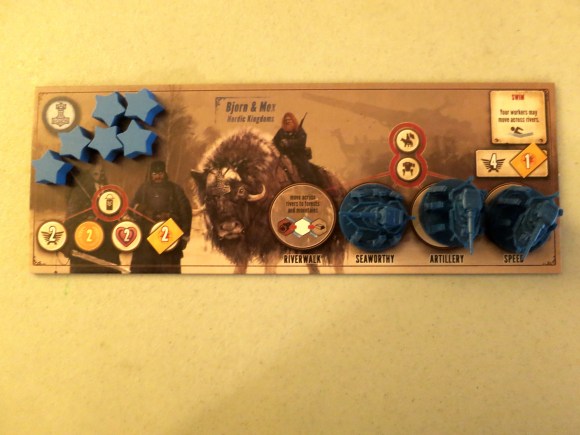
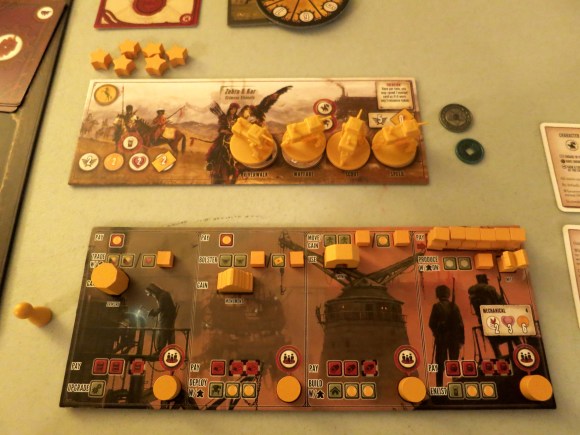
Each player controls one of five factions (seven after the upcoming expansion) that starts in a specific area of the game board, and has a faction specific board that shows a unique faction power, some starting conditions, and slight variations on four additional abilities that will become available during the game if/when the player builds their four mechs.


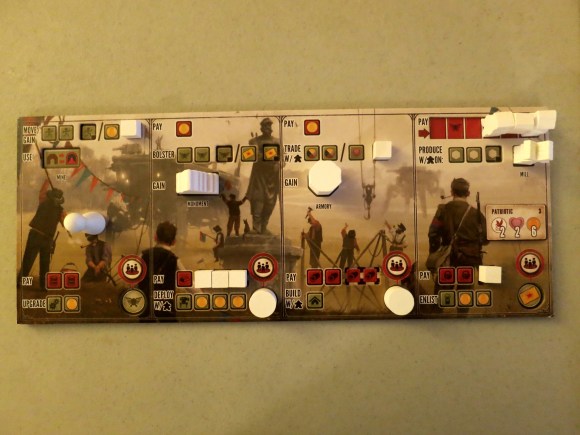
In addition to a faction board, each player will use a separate, unique player board which with determine which actions can be taken during turns. Each board has a top and bottom row with four actions each, and on a turn you choose one “vertical” and do either or both the top and bottom action on that vertical. The top actions are identical across all player boards, including costs and benefits, but are in a different order from board to board. The bottom actions themselves are the same and they are in the same order on every board, but the costs and bonuses vary.

img_2921


The top row actions all involve things on the main game board and/or one of the game’s four “currencies” (explained below). They are:

1) Move: move units on the game board or gain money.

2) Bolster: gain power or draw a combat card.

3) Trade: collect a set number of resources from the bank or gain popularity.

4) Produce: generate resources on certain hexes where you have workers (new workers are also gained using this action).


The bottom row actions directly affect your player and faction board (as well as sometimes adding things to the main game board) and generally enhance your powers or make actions more efficient/beneficial. They are:

1) Upgrade (costs oil): move a small block from somewhere on the top of your player board to somewhere on the bottom. This makes the top action you are moving the block from more beneficial and reduces the cost of the bottom action you are moving it to.

2) Deploy (costs steel): move one of your mechs from your faction board to a spot on the main game board where you have a worker.

3) Build (costs wood): move one of your four buildings from your player board to a spot on the main game board where you have a worker (and no other buildings). Two of the buildings provide additional abilities on the game board, and two of them make player board actions more beneficial.

4) Enlist (costs food): Move one of your “recruits” (cylindrical markers) from the player board to your faction board.  This gives you a bonus when you (or any other player) does the bottom row action you moved the recruit from, and gives a one time bonus determined by which spot on the faction board the recruit was moved to.

Each bottom action will additionally give the player 0-3 money. The specific amount given for each action is what varies on the bottom row among the different player boards.


So the top actions generally increase things you can spend (besides move) and the bottom actions make taking individual actions better. The fact that each player’s board has different sets of these actions in each vertical along with different combinations of faction and player boards will force different tactics from game to game.

(For a small example, resources generated using the Produce top action can be used for that vertical’s bottom action the same turn. So if production is above Upgrade for me, I may be more likely to have my workers congregated on oil so I can produce it and upgrade in the same turn. If production is above Deploy for someone else, they may be slightly more interested in steel hexes early on.)

IMG_1954

The four “currencies” of the game are:

1) Popularity: measures how much your faction is beloved by the population. Can be spent or lost in certain situations, and determines how much stars, territory, and resources are worth in end game scoring.

2) Power: measures military might, and is used in combat and spent in certain situations.

3) Money: measures your wealth ;), and in addition to being spent for certain actions, acts directly as victory points at the end of the game. The person with the most money wins.

4) Resources: there are four types of resources that can be produced (oil, steel, wood, and food) using different hexes on the game board. Each one is used for a different bottom row action as marked above.


Throughout the game, players can earn stars (place their star tokens on a achievement track on the game board) for a variety of things, mostly related to placing all of a particular type of piece or maxing out certain currencies.

Stars can be earned by achieving maximum popularity or power (one star each), building all of your upgrades, mechs, buildings, or recruits (one star each), winning a combat (up to two stars), completing a mission card (one star). Whenever any player places their sixth star, the game immediately ends. All players earn end game money bonuses based on their popularity and the number of stars they’ve placed, territories they control, and resources they control. Most money (after bonuses) wins.


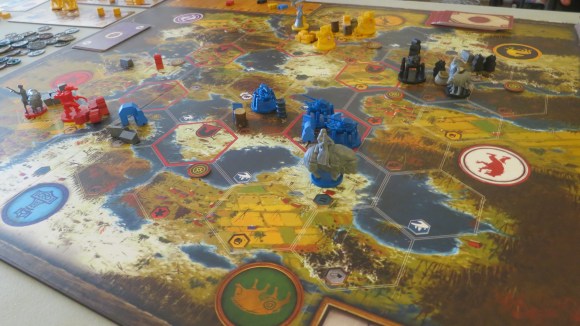
There are a lot of details I left out (like the importance and function of the “factory” space in the center of the game board, the encounter cards featuring interesting choices and Jakub Różalski’s incredible art, etc) that both tie the above together and provide additional depth, but hopefully I’ve given the flavor of the main moving parts. The key to the game is that while there are all of these elements working together and a lot of rules to explain and keep track of, each players’ turn is kept manageable by it always boiling back down to “choose a vertical, do one or both actions on it.” I found everything fit well once the game got going and I understood how it all worked in conjunction.

IMG_2006


General Thoughts

It did take me a full game to start to get an inkling of how to play strategically and our group was a bit split, with everyone enjoying it to some degree but some loving it right away and others finding it “one level of complexity too many.” I’d say there is a steeper learning curve than Viticulture and Euphoria. But my personal impression is there’s more depth too,  so I think it’s well worth the slightly higher “start up cost” and I feel it becomes more accessible on subsequent plays.

One things that helps immeasurably is the incredible graphic design. Everything you can do in the game and all effects are represented in symbols on the various boards, so once a player gets the gist of the symbols there are constant, unobtrusive gameplay reminders at hand at all times. The theme is also beneficial in that respect, with the interactions of desperate elements making sense within what they represent thematically.  I also find the theme/game world fun and immersive.


Having faction specific character and mech abilities that are separate from the slight variation in action costs and rewards on the player boards is a fantastic way to increase replayability and depth. The flip side of this is players must be willing to be open to letting player board (not just the faction board and special powers) guide strategy to some extent, which can take a little getting used to.

There are a lot of interesting choices to be made, and I love the mechanic of choosing one “vertical” on your player board per turn and concentrating on one to two key actions to keep things manageable yet complex. I found an unusual combination of planning and flexibility is needed to do well, and am enjoying that aspect immensely.

The game plays differently with more players, but retains the same general feel and atmosphere as it scales and the set board worked well at the 2 and 4 player level games I’ve played.


IMG_1965


I participated in the Kickstarter for Scythe and got the Collector’s Edition, so even beyond Stonemaier’s general excellent production quality, my version of Scythe shines even more with realistic resources, wooden stars, etc. None of it’s necessary, but I adore the extra layer of visual impact and the weight and feel of the tokens.


Overall

Scythe definitely has a learning curve and is Stonemaier’s heaviest game yet, but I was pretty well acclimated after a single game and I adore the way it comes together. This is a unique game that won’t necessarily appeal to all fans of Jamey’s other offerings, but players who can take it for what it is and enjoy adapting to (somewhat) constantly changing situations and balancing needed actions with required currencies will find a thoroughly enjoyable (and quite possibly addictive) experience here.

Categories
Board Games Reviews

Quick Thoughts: Mystic Vale and Vast

Here are some brief thoughts on a couple interesting games I’ve played once each so far and enjoyed.

Mystic Vale

mysticvale


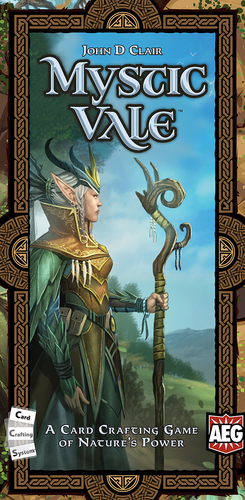
Mystic Vale brings an entirely new slant to deckbuilders: instead of adding cards to the deck, you add overlays to oversized cards to add functionality. Much more than just a gimmick, this is a key improvement to the concept of deckbuilers. The deck distribution of CARDS never changes, so managing deck size or lowering odds of seeing good cards as your deck grows is eliminated. What happens is the cards you’re seeing get (mostly) better and better as they cycle through your deck at the same rate.

But the designers didn’t stop with just that innovation, they built a fully formed game around it with other elements unusual in these types of games. Having a set of award cards (that don’t go into the deck and can only be bought with resources obtained from upgrade cards) that grant special abilities and/or victory points in addition to stand alone victory point tokens (that can be obtained directly) give variability in player strategies. They also implemented a FANTASTIC “press your luck” element to drawing hands than makes hand size variable each turn and allows a player to choose to risk losing a turn to try to get make their hand better. It’s easily as good an innovation as the overlays.

I’ve really tired of deck builders, but between the innovative design and wonderful new elements it brings to the genre Mystic Vale is a great, unique game and I’d already rather play this than any other deckbuilder I’ve tried.


Vast

vast

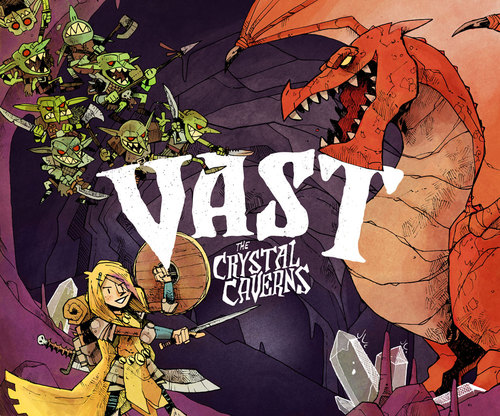
Vast (known as Trove during the Kickstarter) takes a wonderfully unique approach to dungeon crawling and allows up to four players to take totally asymmetric roles of either a knight on an adventure, goblins dwelling in the cave, a dragon guarding his horde, or the cave itself trying to collapse and trap everyone inside. Unused roles are represented by cards that perform set tasks, so any number of players from 2 to 4 can play any combination of roles. As such the replayability should obviously be off the charts, but of course there’s the danger of too much complexity and possible imbalance trying to make four distinct player mechanics work together in so many combinations. Although I’ve only played on game so far, my impression is that Vast did not fall into those traps. There is a learning curve, but the gameplay seems tight, fun, and well balanced. The way the the roles we didn’t used were represented during our game make me believe they are also well developed as player roles.

Cave vs Knight:

Being a sucker for the unusual, I saw only one real choice for my initial role choice and played the Cave. My opponent chose the Knight. My goal was to expand to full size then collapse on her or have her perish within my depths. His was to guide her through smashing a certain number of my precious crystals. So he was essentially playing an exploration game while I was playing a tile layer. It worked wonderfully and even though I played a few things slightly wrong (two to my own detriment, one to my favor) I loved the game and am eager to play again. Interestingly the first thing I want to do is play the Cave again given I now know better how it works rather than try someone new, but I’d like to play every role at different player counts eventually. Mark of a great game when you come out of a single play feeling that way. Excellent production value on top of all that make this look like a must have.


——-

Just a quick look at a couple new to me games. Hope to be back with more in the not too distant future. 🙂

Categories
Board Games Reviews

Android: Mainframe Board Game First Impressions

Mainframe is a nice little abstract game themed in the Android Universe.

mainframe

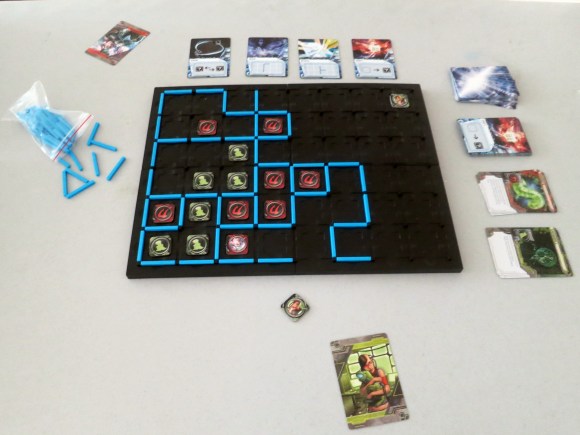
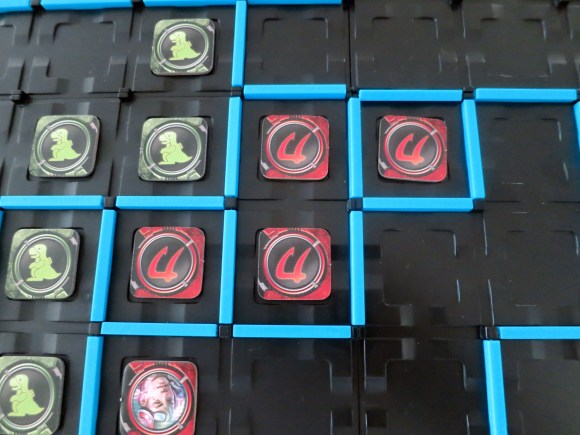
Players take the role of one of six possible runners (hackers) trying to secure the most of an infiltrated mainframe for themselves. Players place nodes (tokens) on an 8×6 board and try to enclose their nodes with barriers by executing programs (playing cards) both from a generic supply available to all players and from a hand of a few unique cards representing their particular runner’s abilities. Programs generally add, move, or swap nodes and partitions to/on the board. Endgame scoring depends on how large your enclosures are and how many of your tokens are inside each.

IMG_1950

The theme is well done, adding some flavor to what’s strictly speaking a pure abstract in gameplay. The characters have a nice bit of backstory that ties to their cards, such as one being an intrusion expert and thus having “programs” that generally revolve around manipulating “entry points” (nodes). The facts that you play with three of your character’s five special cards in any given game and that there are more different characters (six) than max players (four) seem like they’ll add a good amount to replayability.  There seems to be a decent amount of depth for how simple and easy to learn the rules are.

IMG_1951

The board seemed a little big for two players, but it was workable and with numerous cards that can reposition nodes the board layout changes often so the size isn’t that big a deal. I feel like things will be much tighter and harder to adapt to with more players though, and am extremely intrigued to play that way.


Overall

Fast to learn, fast to play, more thematic than most abstracts, and fun. Great addition to the gaming closet.

Categories
Board Games Reviews

T.I.M.E Stories Board Game Review

Given the story and exploration based nature of the game let me state up front that this review will be spoiler free (which in this case also means no during game photos).

Between having some extremely intriguing design elements and a lot of great word of mouth, I’ve been dying to try out T.I.M.E Stories. I’m pleased to report that it’s a fantastic gaming experience.

timestories

Parts of this review will be vague, as it’s extremely difficult to describe T.I.M.E Stories in any detail without spoiling pieces of the first mission. I’ll try to provide useful information about the structure and premise though.

The players work for a time travel agency and are sent back to investigate a potential temporal incident. Each player will be “sent back” into a receptacle (character), Quantum Leap style. From there it’s the team’s job to work together to explore, figure out what’s happening, and complete the mission. That’s the basic background of the game, and everything else is intertwined with the particular mission being played. The base game comes with a deck for the first mission, and further mission decks are available as expansions.

One mission may not sound like much, but there is a lot of depth achieved due to clever mechanics, careful writing with several surprises, and a real sense of exploration and atmosphere. There are a limited amount of “Time Units” to use during a “run” (game), and if you run out or encounter some other game ending condition you have to reset and try the mission again. It’s normal to need more than one run to finish a mission, so even with only one included in the base game there’s a lot to encounter and enjoy here.

The care with which the game was designed to allow numerous missions is obvious. General game tokens, dice, and the board all use various symbols, which are given mission specific meanings by rule cards in the mission deck. So for example a symbol that indicates a character’s agility might mean something completely different in an expansion mission. This is an elegant way to allow the framework to adapt to each mission and keep everything tight and appropriate from a narrative standpoint without overly complicating the common components. Cards from the mission deck will also represent the area to be explored, specific locations within that area, items, etc.

The best part of T.I.M.E Stories is how engaging it is. The sense of foreboding and immersion, as well as the depth of gameplay, achieved with just a deck of various cards is INCREDIBLE. The artwork and graphic design are both exquisite and work in tandem to fulfill both functional and thematic demands perfectly. We were completely invested on surviving the game and completing our mission, and extremely intrigued with the mysterious happenings we were thrown into. It really felt like we were exploring and investigating, which again is amazing given everything is represented by and explained on cards. The puzzles and situations are appropriately challenging without being impossible, and it all further enhances a strong core story that has some great twists.


Overall

I can’t say enough about how well everything comes together in this game, and the included mission is excellent. T.I.M.E Stories won’t be for everyone given the storytelling aspects and lack of replayability, but I adored it and can’t wait to play the expansions.

Categories
Board Games Reviews

My Top Ten Favorite Board Games (June 2016)

Tastes constantly evolve, so as I mentioned in my first version from November 2015, I intend to periodically revise my top ten games to see how things change and share any new games that have impressed me.

Ground rules:

  • This reflects my favorite things to play right now. I love everything on this list. Order is pure personal preference and whole list HIGHLY subject to change and reshuffling, as ten is a small number to cover all the great games I’ve played and something’s bound to be missing.
  • I need to have played something at least twice for it to be eligible. I think something has to hold up to at the very least a second play to be considered a favorite. So Imperial Assault (still), Trickerion, Relic Knights, and Samurai (and several others) all get automatic honorable mentions, but may very well make it into this list in the future.
  • Some games have been replaced here simply because of other games that suit my current tastes (and those of my group) just a little more. Alhambra, Pillars of the Earth, and Anima are all still fantastic games well worth seeking out / trying.
  • Expansions I have are considered with the base game and won’t be listed separately.
  • The write-ups for reappearing games were changed only as needed.


10. Blueprints

IMG_4433

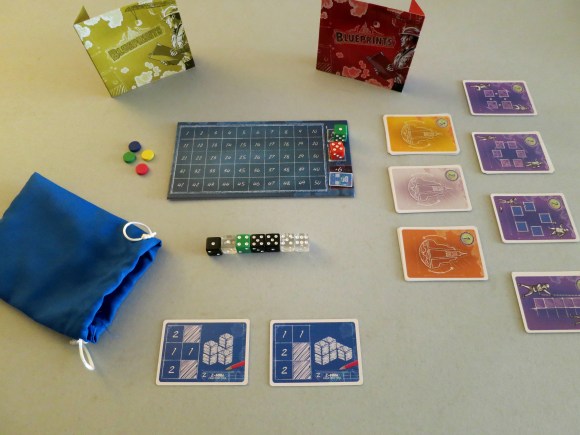
Blueprints is a great pick up and play that’s extremely easy to teach and plays quickly, which makes it valuable to have on hand for in between longer  games. However the setup and nuances make it more than just filler and add a reasonable amount of strategy and depth. It’s quirky, well designed, and most importantly fun.


9. Viticulture

IMG_0167

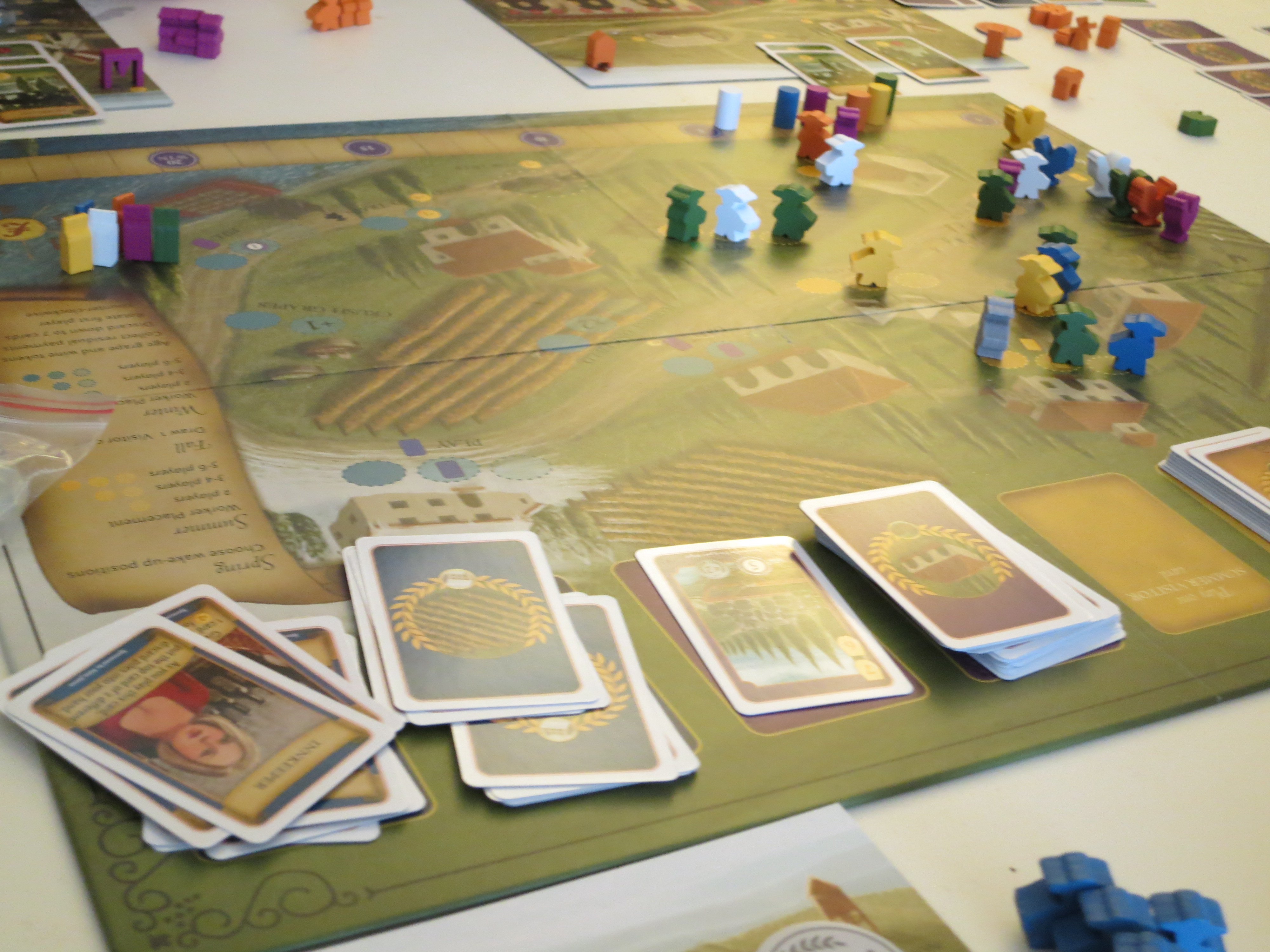
The debut game from Stonemaier, which instantly made them one of my favorite publishers. Beautifully realized worker placement game that is just completely infused with the unlikely theme of winemaking. The Tuscany expansion adds several great aspects that make it even more amazing, and the game scales incredibly well and feels like the same game no matter the player count. As usual with Stonemaier the production quality is absolutely unreal, with individually shaped building pieces and gorgeous art elevating the immersion.


8. The Duke

IMG_2493

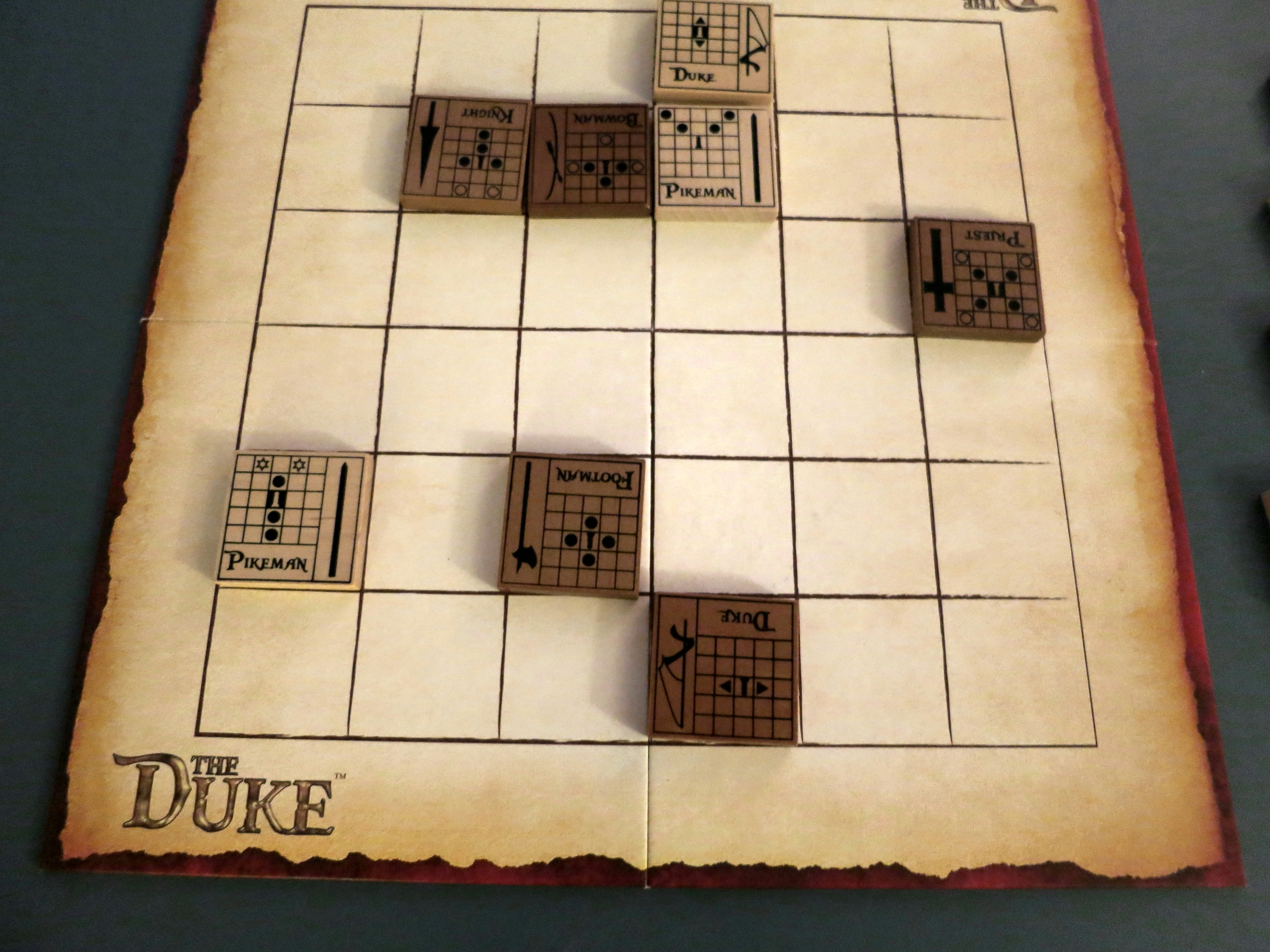
This slips a bit due to other great two player games I’ve been able to try recently, limited opportunity to play two player games in general, and tough competition from multi-player games. Still The Duke is an incredible two player game with elements of chess reworked into a much more accessible and variable experience. The vast number of movement patterns allows for deep gameplay, yet the smaller board and limited starting pieces keeps things manageable. The combination of each piece having its movement grid printed on it and the fact that the pattern is different on each side is just fantastic, and makes this both incredibly new player friendly and deep.


7. Mysterium

IMG_4412

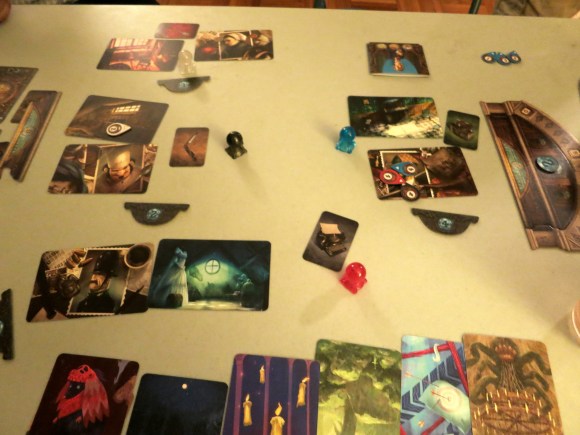
At this point I’ve played so many games that something that seems to have a truly original approach intrigues me greatly. Mysterium is a wonderful asymmetric cooperative game that has a departed ghost trying to guide psychics to the culprit of its murder through sending “visions” consisting of cards with abstract art. It adds a more structured and “complete” feeling game to the base mechanics of Dixit. The hope is that the cards played by the ghost will indicate specific cards on the game board to the psychics, who are working together and can discuss as needed. It plays best with 4 or more players, but that’s not much of a limitation since it accommodates up to 7. Lots of fun.


6. Ghost Stories

IMG_3010

Fantastic co-op game that’s fairly easy to teach but has a lot of variation and depth. Best on its own or with Ghost Moon (Black Secret has fallen flat with my group so far). Notorious for its difficulty, but we’ve found it challenging rather than frustrating. The changing board, player powers and enemy cards make every game significantly different, which greatly aids its longevity. It’s also great to have a go to co-op game on hand, as many of my “non-gamer” friends have really enjoyed trying something that has them working with, rather than against, the rest of the group.


5. Euphoria

IMG_1121

Stonemaier Games’ second offering, a fantastic dice-as-workers game with an incredibly unique theme of trying to achieve prestige and status in a dystopian world. Little touches like artifact cards depicting objects from today’s world and trying to keep your workers happy and stupid bring the theme to life and it’s very well intertwined with gameplay. Also, the production quality is absolutely unreal, with realistic resources, wooden commodity pieces, wonderful art, etc all making this as great to look at as it is to play. As time goes on I personally find it just a little more compelling than Viticulture, which is why Euphoria leapfrogged it this time around.


4. La Citta

IMG_3003

La Citta is fifteen years old and feels so timeless and classic I’m actually surprised it’s not older. Wonderfully thematic game that combines tile laying and resource management as players try to build the most attractive cities and lure the greatest population (the game’s victory points) to them. Details like needing water sources to grow beyond a certain point, having to produce enough food to feed your population, and a changing priority system signifying what people value most in their cities each round make this a fantastically deep, balanced game.


3. Castles of Burgundy 

IMG_2505

Castles of Burgundy is unlike any other game I’ve played, and it shines in the unusual way uses dice to determine both which tiles a player can buy and which purchased tiles can be placed on their personal player boards. There are a lot of “moving parts” and things to keep track of, but it’s all logically laid out and intuitive once you get the hang of it. There’s tons of replayability and different viable strategies, even before considering the numerous different player boards available. I fall more and more in love with this game each time I play.


2. Tragedy Looper

IMG_1428

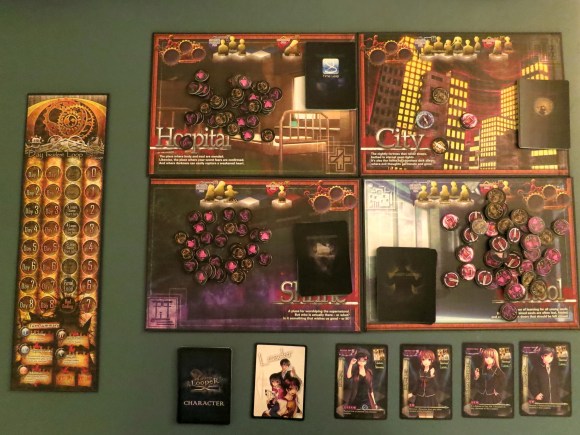
Tragedy Looper is unlike anything else I’ve played and I adore both the atmosphere and the way its core mechanics combine mystery elements with those of a logic puzzle. It’s somewhat of a tough game to get your mind around, given unusual mechanics and a non-trivial learning curve, but once you do it’s a great mystery game (a genre that’s underrepresented and hard to do well).  It’s asymmetric, with players who are time traveling and trying to prevent a tragedy, and a gamemaster that is trying to stop them. There are limitations on possible actions based on the scenario and various stats of the characters being controlled, which is where clues about what has happened and how to prevent it come from. It requires the right group of players, but is highly enjoyable once you’ve found them.


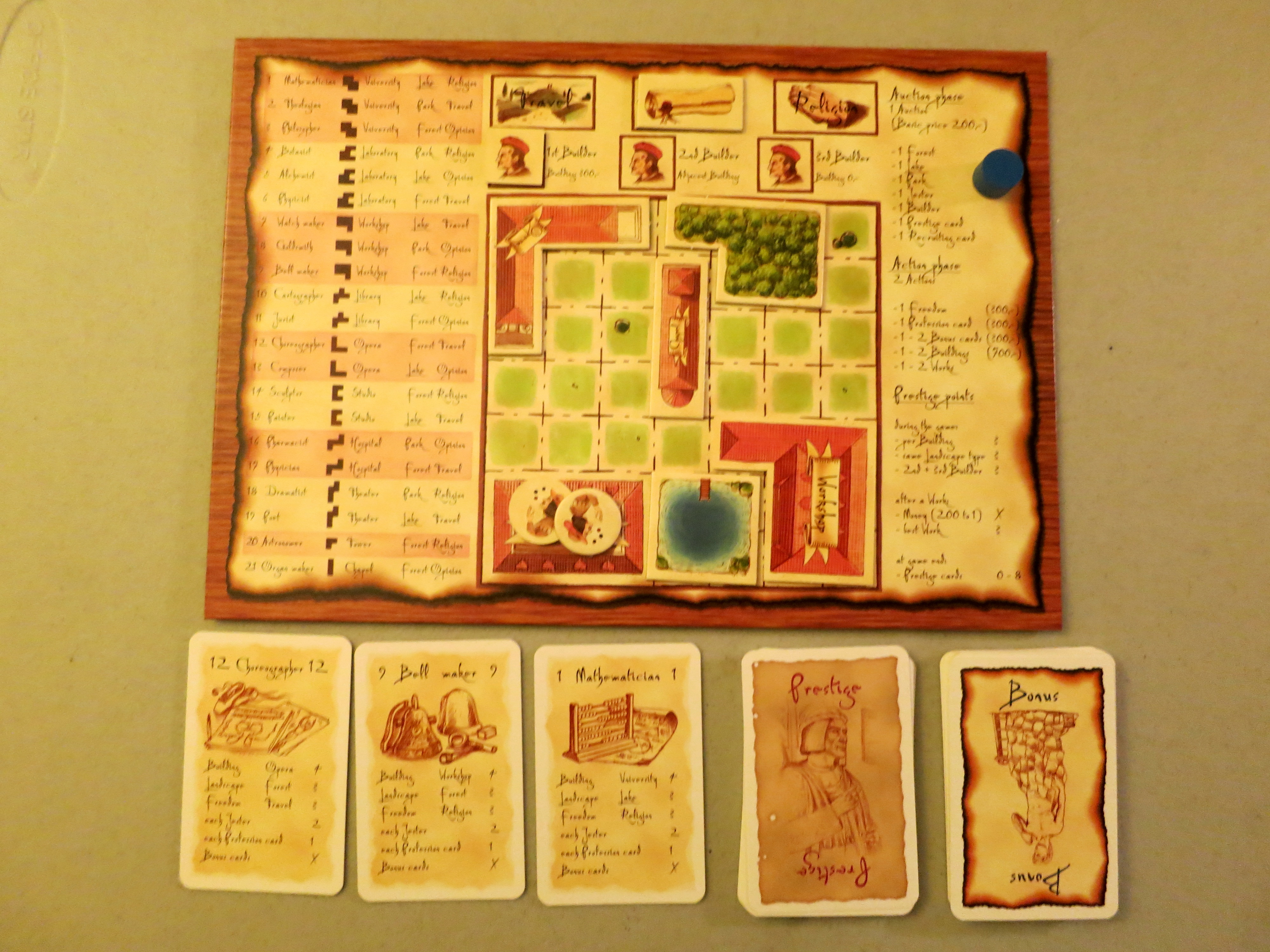
1. Princes of Florence

IMG_2470

Despite tough competition, Princes of Florence is still my favorite game of all time. It incorporates what’s usually one of my least favorite mechanics (the auction) in a quick and enjoyable way that enhances the balance of differing strategies greatly. At any point if an opponent’s strategy seems to be working too well, the others players need to be making them pay more for the needed components. The way the different elements that can be purchased and used come together is wonderful and allows deep and varied gameplay. The combination of resource management, strategic choices and maximizing opportunities is just perfect and I could (and probably will) play this a million times.
——-

And that’s it for this time. Will be interesting to track how this list changes in the future. What are everyone else’s current favorites?

Categories
Board Games Reviews

Top Five “New to Me” Games mid-2016

I’ve played a fair number of new games so far this year, so I decided to do a midpoint look at games that really impressed me. I did a similar list at the end of 2015
Ground rules:

  • The only qualification for this list is that I personally played the game for the first time in 2016.
  • I’ve already tried around 15 new games this year, so it was again difficult to narrow this down. Honorable Mentions include, but aren’t limited to And Then We Held Hands, Catacombs, Monstrous, and Onitama.


5. Tumult Royale

Tumult Royale is a unique game that combines a couple of diverse mechanics beautifully. The real time resource collection is done in a way I haven’t seen and trying to get what you need while worrying about the total limits among all players each round adds a wonderful “press your luck” element. These resources are then used in an area control aspect that is also very well done.

4. Hostage Negotiator
IMG_8501

Board games are such a social experience I feel it’s difficult to make single player games compelling. It can be done though, and Hostage Negotiate is a great example. It takes a tight core concept and just the right amount of luck and expands them into an engaging game with varying levels of challenge due to different Hostage Takers to be faced. Full review.

3. Relic Knights

IMG_0069

I backed the Relic Knights Kickstarter and received a large collection of models I’ve been slowly working on assembling and painting. I recently finished enough to finally try out the game itself, and found it fun with a lot of potential. There are a ton of terms and concepts that force a lot of referring to a rulebook that could be a but more clear, but I still found this pretty accessible at its core and am looking forward to learning more of the mechanics now that I have the gist down. There’s a lot to absorb and get used to but I really enjoyed my first experience with it overall. 

2. Trickerion

IMG_9109

Trickerion has a lot of “moving parts,” and uses them to provide a very cool game that integrates the theme of making and performing magic tricks excellently. We played with a slight rule misinterpretation regarding trick placement, whose correction should add even more strategy to the game. The production quality is high and the game looks great, and I feel like I’ve only scratched the surface of the depth it has to offer.

1. Samurai

IMG_9176

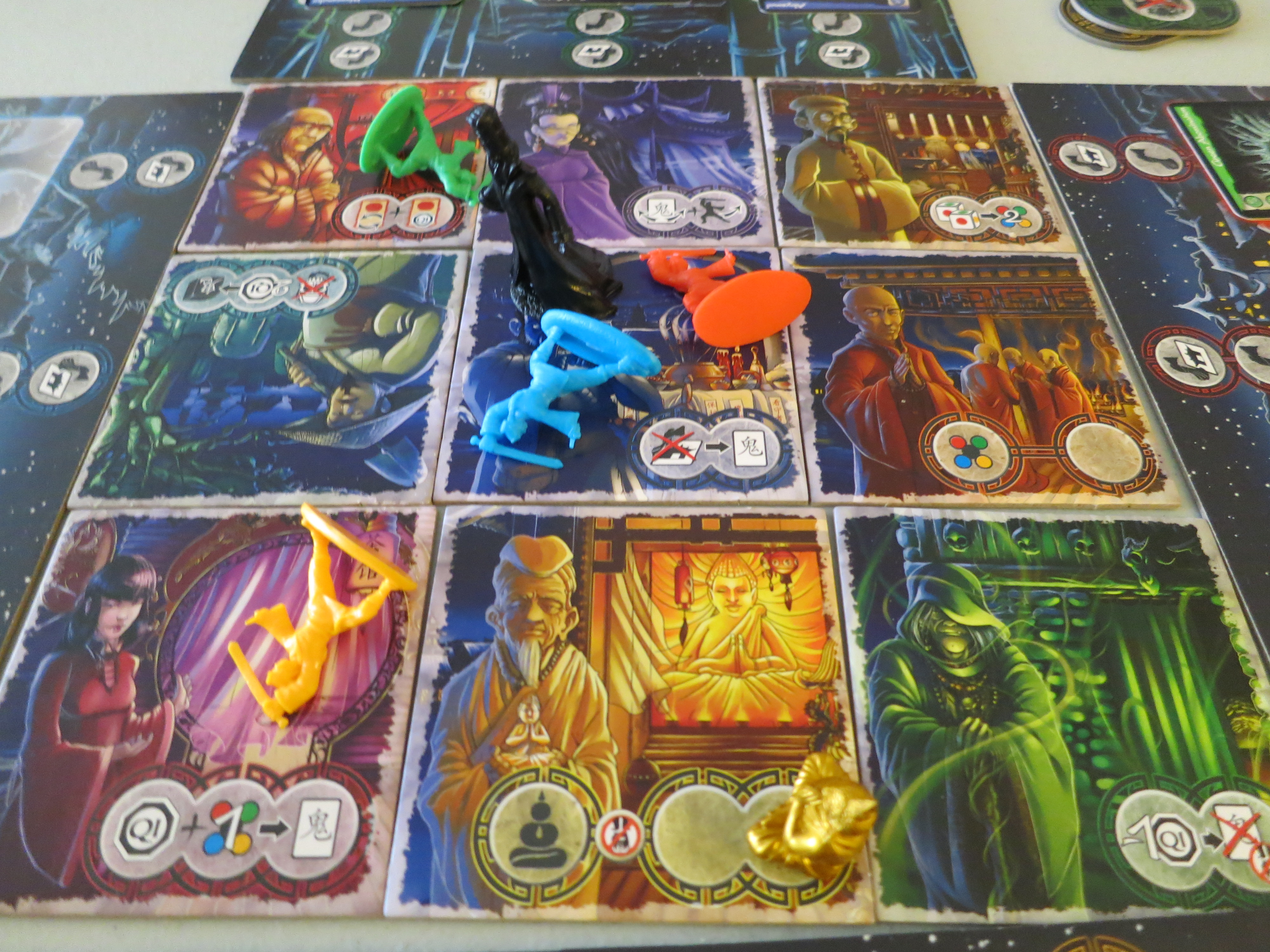
Speaking of excellent production value, Samurai is gorgeous, from the graphic design on the board and tiles to the plastic statues whose capture the game revolves around. I fell in love with this game immediately, particularly with regard to the simple concepts and mechanics that mask meaningful choices and fairly deep gameplay. I fear it might be prone to analysis paralysis for certain players, but so far that’s the only even remotely possible negative I see.  Full review.

——-

That’s it for now. Great year so far, with hopefully more to come. What are everyone else’s new favorites?

Categories
Board Games Reviews

Quick Thoughts: Dark Tales, Flick ’em Up, Steampunk Rally, and Tumult Royale

Here are some brief thoughts on a few interesting games I’ve played once or twice so far.

Dark Tales

darktales

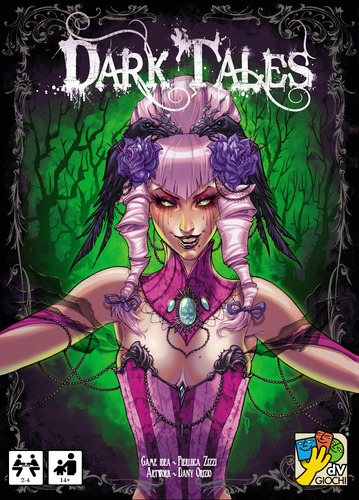
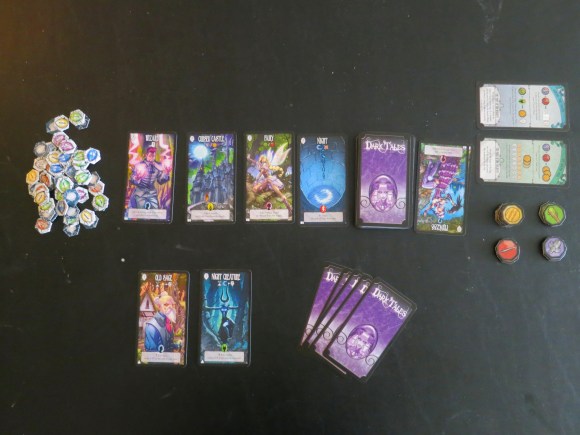
Dark Tales is a fantasy / fairy tale themed card game that revolves around card effects that vary largely based on what else is currently in play. Even the power of special tokens in the game and end game scoring differ from game to game based on randomly chosen setting cards. There’s a lot of luck based on the cards drawn, but the core mechanics are good and I had fun with this. Looking forward to trying it with more people and playing the expansions.

IMG_9793


Flick ’em Up

flickemup

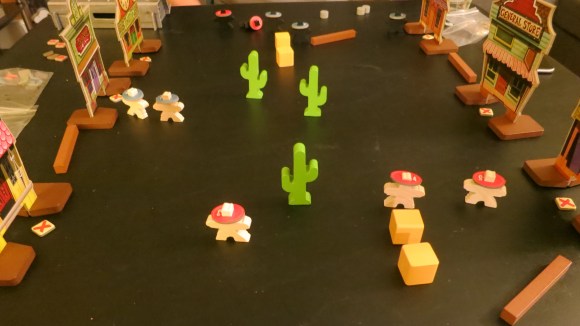
The production value of this dexterity based game really shines, as a lot of effort was clearly put into both the aesthetic and producing quality components. The cowboy and bullet pieces are perfect. The cowboys readily fall over when directly hit, but hold their ground well when grazed or hit from the side. The two scenarios we played were largely tutorials, so I expect a lot more depth from the later ones. Amusing game that makes the most of its theme. As far as flicking games go I think I prefer Disc Duelers a little (even though I was better at this), but Flick ‘Em Up is still fun.

IMG_9586


Steampunk Rally

steampunkrally

Steampunk Rally is a neat little game that revolves around building and racing contraptions piloted by famous inventors. The track is variable and the mechanics solid. The best part for me is it really captures the feeling that you’re constantly fighting entropy trying to keep your machine going. This is a unique game that makes excellent use of its theme.


Tumult Royale

tumultroyale

Tumult Royale is my favorite game of this bunch. The real time resource collection is done in a way I haven’t seen and works extremely well. Trying to get what you need while worrying about the total limits among all players each round adds a wonderful “press your luck” element, and the area control aspect is great too.


——-

Just a quick look at some games I’ve had the pleasure of trying. Hope to be back with more in the not too distant future. 🙂

Categories
Board Games Reviews

Monstrous Card Game First Impressions

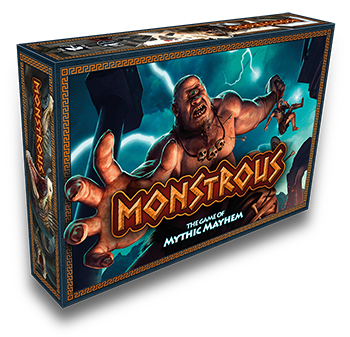
I noticed Monstrous during its Kickstarter, and was drawn to both the mythic theme and its unique take on dexterity games. I’m quite pleased with my initial experiences with it.

monstrous

Gameplay

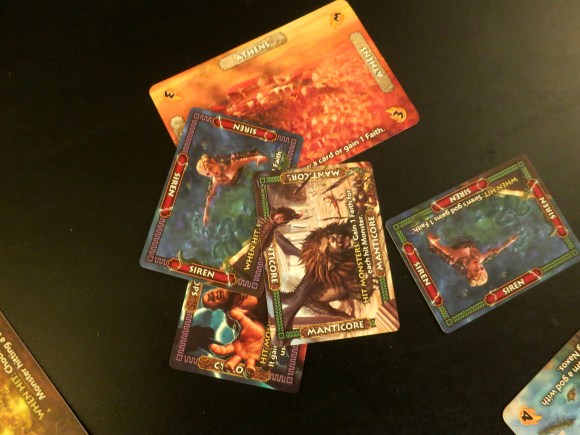
The core gameplay of Monstrous is extremely simple in concept. Five oversized Location cards are placed on the table and players take turns throwing Monster cards. Players score Faith (victory points) and use special abilities based on which Location and/or other Monsters their cards hits. Players’ hands may not cross the plane of the table’s edge when throwing. The game ends when a player has no more cards in hand and none to draw (everyone else gets one more turn), and most Faith wins.

IMG_9562


General Thoughts

The little details in Monstrous provide a considerable amount of depth. Players have identical Monsters in their decks, but draw hands at random so the particular cards available at any given time will vary. Monsters can be thrown either with their unique power side face up or with the standard power side ever card has face up. Some cards’ powers trigger when a they are thrown, and others cards have powers that come into play when they are already on the table and are hit by other cards.

IMG_9561

There are numerous “scenarios” provided that specify particular combinations of the five locations used in a game (from eleven possibilities). They’re identified by difficulty/game length to allow some control over the level of game desired. Of course the locations can also be drawn at random, providing a wide variety of variations and challenges. A few Monsters are excluded from all players decks each game, further making sure no two games feel/play quite the same.

Cards left in a player’s hand/deck/discard are subtracted from their Fame total at the end of the game, so going out first and triggering the game end can be advantageous. On the other hand the more cards on the table the greater effects can be achieved by hitting multiple cards at once so sometimes playing a little slower will pay off. It’s little nuances like this that make the game shine and I’m impressed with what they’ve accomplished in both depth and balance within a game that’s very new player friendly and easy to pick up.

IMG_9560


Overall

Despite my lack of success in my initial games due to poor throwing ability, I enjoyed Monstrous thoroughly. The theme amuses me and I adore the art. It plays quick and is easy to understand, yet rewards skill and has strategic choices to be made. Most importantly, it was fun. 🙂

Categories
Board Games Reviews

Quick Thoughts: And Then We Held Hands, Mr. Jack Pocket, and Onitama

Here are some brief thoughts on a some interesting games two-player games I’ve played once or twice so far.

… and then we held hands.

IMG_9570

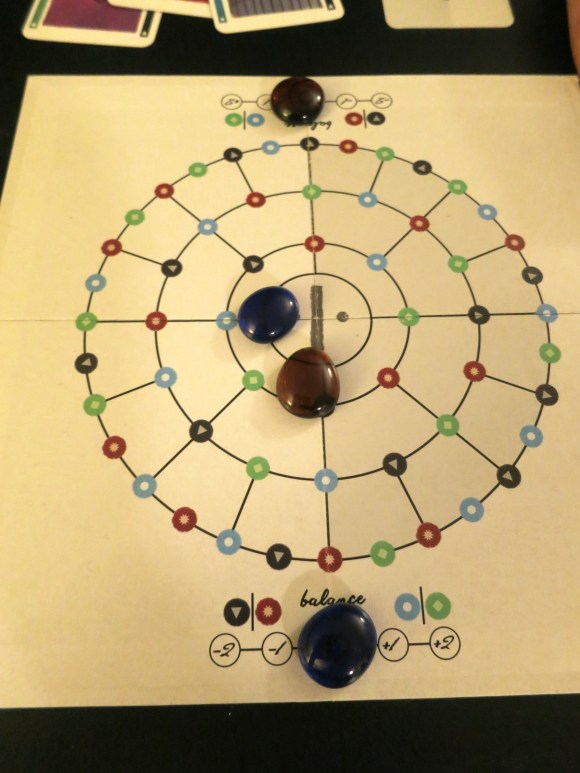
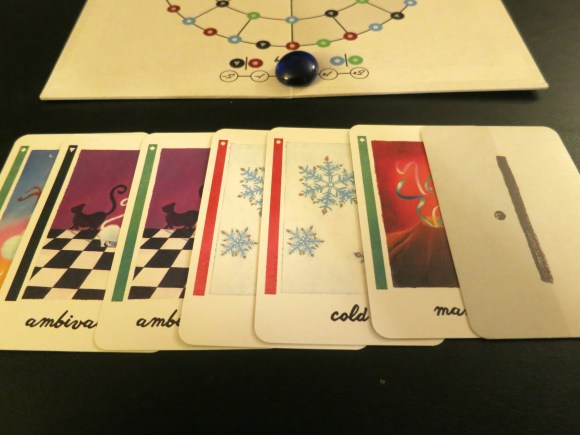
“… and then we held hands”  is a two-player cooperative game centered around the idea of balancing emotions. There are a lot of unique aspects that really stood out, from needing to be balanced to refill you hand to using different edges of the cards depending on which side of the board you’re on to always being able to play from either your own hand or your partner’s.

IMG_9568

The theme, while providing decent framing and structure for the game, really disappears when you start playing. It instantly became an abstract. No real complaints about that though. I thought this was a fun, original challenge for a pair of players.

Mr. Jack Pocket

IMG_9564

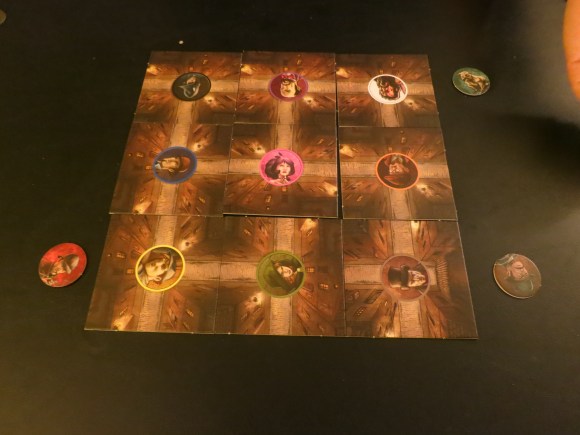
Mr. Jack Pocket is a neat little two-player, asymmetric, abstract game. Having the four random actions available on odd numbered turns and the “opposite” moves to choose from on the  even numbered turns is a nice touch that gives the game some depth. I and my opponent both found Mr. Jack’s role more difficult to play than the detectives’, but enjoyed the game in both variations. This plays quick and does a lot with a fairly simple setup.

Onitama

IMG_9551

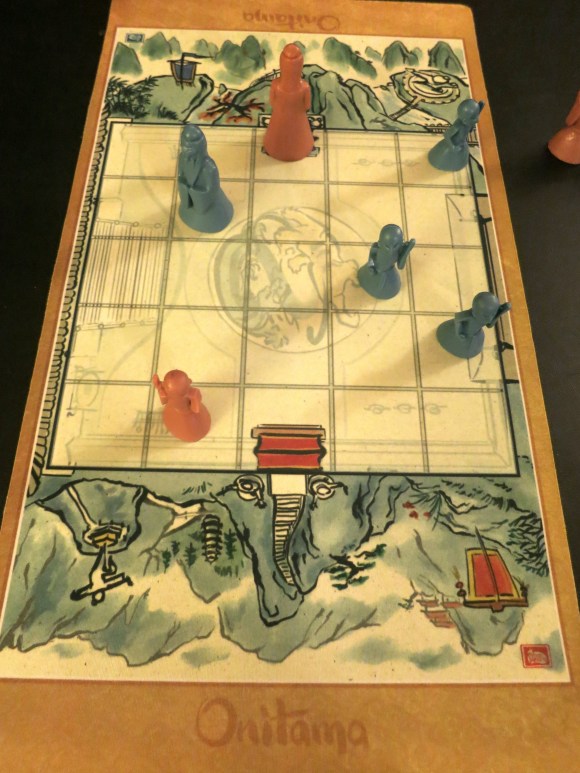
While I’m not a huge chess fan, I’m finding I quite enjoy games that take inspiration from elements of it. Onitama is another great example of that. The simple setup of having five pieces that all move the same based on cards make this extremely easy to learn. Having those cards remain the same throughout the game and “rotate” in a sense between the two players adds a wonderful layer of strategy and gives this game its unique hook. Great aesthetics too.

——-

Just a quick look at some games I’ve had the pleasure of playing. Hope to be back with more in the not too distant future. 🙂