Categories
Film Japan

Japan Cuts 2016: Flying Colors, Kako: My Sullen Past, and Emi-Abi Reviews

Japan Society’s annual Japan Cuts Film Festival for 2016 ran from July 14th through July 24th. These were the last three movies I saw as part of this year’s screenings. My thoughts on last year’s festival can be read starting here.

Check out my thoughts on other films from this year in posts about Bitter Honey and Lowlife Love,  Nagasaki: Memories of My Son and Bakuman, and The Shell Collector and Being Good.


Flying Colors

“Once you achieve the impossible, you can do anything.”
flyingcolors

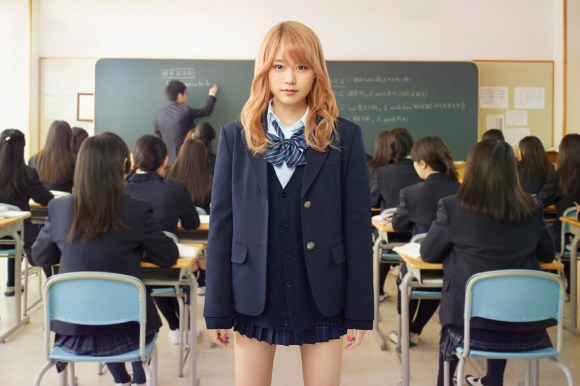
Sayaka is a social butterfly content to scrape by in dead last place among the students at a high school that guarantees admittance into its partner college to all who attend. But when an unusual cram school teacher sets her sights on one of the most prestigious colleges in Japan, years of being called worthless combine with the surprise of having someone believe in her to make Sayaka determined to prove everyone who thinks she has no chance wrong.

Flying Colors is a wonderful story about pursuing dreams and attempting to defy expectations. Structured brilliantly, the movie starts by providing some strong background scenes of Sayaka’s scholastic past to set up how she ended up in her starting status quo, content to know nothing. Her complete lack of shame about being stupid while not resenting those smarter than her is one of the big comedic hooks early on, and cements her as a lovable doofus that the audience is happy to cheer for. Kasumi Arimura plays the part perfectly, and the pairing with Sayaka’s unconventional teacher who knows how to encourage poor students to start to enjoy learning is not only hilarious but also gives the film its core. Their shared enthusiasm about Sayaka getting the slightest things right early on provide outrageously funny scenes. The various ways in which the teacher played by Atsushi Ito brings out the best in his band of misfits and genuinely sees their potential and cares about their success and improvement is phenomenal.

Expertly interwoven with the humor and Sayaka’s educational journey is a touching family drama centered around her father’s projection of his own dream of big time baseball success onto Sayaka’s brother and the complete lack of support any of the women in the family get from him. Sayaka’s mother and her complete devotion to her children anchor the film, with Yo Yoshia giving an extraordinary supporting performance as someone who truly wants nothing more than her children’s happiness. The drama is genuinely emotional without ever getting overly sappy or melodramatic, and adds a perhaps unexpected amount of heart beneath all the humor.

As I’m sure is clear at this point I loved just about everything about this film. Easily one of my favorites of the festival.


Kako: My Sullen Past

“Isn’t everybody lonely? Alone or even if you’re with family.”

kako

High schooler Kako spends her summer days bored out of her mind, listlessly going through the motions of helping in her family’s restaurant and staring at a local river looking for a crocodile she knows isn’t there. Then her activist, long thought dead aunt shows back up on the family doorstep.

Japan Cuts has been my first introduction to the incredible talent of Fumi Nikaido, and it was fascinating to see her here playing such a different character from Akako in Bitter Honey. Akako popped off the screen with an infectious playfulness and a larger than life feel. Kako is compelling in a different way, with apparent apathy arising from her boredom completely infusing her body language and making her susceptible to insatiable curiosity about her mysterious aunt. The flatness Nikaido achieves in Kako’s everyday actions and personality makes it all the more intriguing when she takes interest in anything. The contrast in the two characters and the skill with which she plays both highlights her versatility and why she’s such a highly regarded and awarded actress even at such a young age.

The feelings and sounds of summer come across well, and appropriately compliment the film’s odd tone, which examines the slow yet relentless passage of time in the lives of Kako and her family.  Boredom is portrayed as so pervasive its relief is more important to the characters than even the well being of others. The disaffected nature of both Kako and her aunt’s personalities adds humor to some very dark moments in a way that generally works, yet still feels strange when the viewer realizes what they just laughed at.

There’s a lot simmering just underneath the surface of the depicted events, both in theme and in production. Such as the significance of Kako’s interactions with her aunt’s mysterious companion, or the facts that Kako’s baby sister remains unnamed, is constantly commented upon for how little she moves, and is clearly played by a doll if the viewer looks closely at the bundle of blankets.

There are aspects of Kako: My Sullen Past that I really liked and aspects that I didn’t. I’m not entirely sure how I feel about it as a whole, but it was well made and acted, and quite interesting. I’m glad I saw it.


Emi-Abi

“… if you can make me laugh.”

Emi Abi


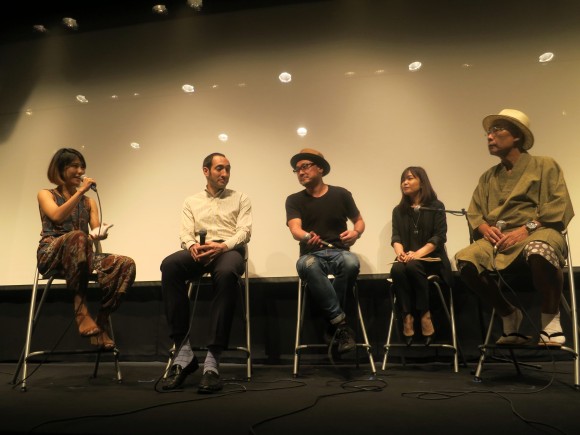
During the Q&A following the world premiere of Emi-Abi at Japan Cuts, director Kensaku Watanabe explained his desire when making the film to show genuine comedy yet constantly undercut it with dramatic and somber elements. He really succeeds in this goal, giving his story of a comedian trying to move on after the loss of his partner a tone that constantly switches and balances between light hearted comedy and deeper, sadder themes.

The plot progression was solid, but not at all as I expected. The film is extremely flashback heavy, focusing a lot on deceased partner Unno, what happened the night of his passing, and a surprisingly well developed romantic story involving him and a young fan. Unno steals the movie from his surviving partner Jitsudo, who is well portrayed but while we understand and sympathize with his grief we never really feel it, making nearly every character in the film more sympathetic than the supposed main character trying to find his new path in life.

The entire supporting cast was quite good, but I was especially impressed with what Haru Kuroki did as Jitsudo’s manager, making the most of a small role as someone totally devoted to seeing Jitsudo at his best once again despite the tragedy.

I found parts of Emi-Abi disjointed and the balance of characters a bit off, but it’s a decent film overall made with a specific vision in mind and supported with strong acting.

IMG_1927

——-

Fantastic festival overall as usual from Japan Society Film. Definitely check out some of these great movies as you are able.

Categories
Film Japan

Japan Cuts 2016: The Shell Collector and Being Good Reviews

Japan Society’s annual Japan Cuts Film Festival for 2016 started on July 14th and is running through July 24th. My thoughts on last year’s festival can be read starting here.

My thoughts on Bitter Honey and Lowlife Love can be read here, and those on Nagasaki: Memories of My Son and Bakuman here.


The Shell Collector

“Being alone is intimate.”

shell2

In The Shell Collector Japan Cuts 2016 recipient of the Cut Above award Lily Franky plays an elderly blind man who has isolated himself from society and spends his time collecting shells along the beach. The opening of the movie has a serene quality as it shows his everyday life and events that bring a trouble woman unexpectedly into it. From there the movie’s tone and direction changes a couple times, dealing with escalating events and consequences arising from the intersection of the old man’s hobby and a mysterious disease affecting the islands around his reclusive home.

The entire movie is incredibly well acted and directed to convey a real feeling of blindness of the main character. Little touches regarding the way he searches for his shells and finds his way around his home really sell the concept, which is so important to the way the plot unfolds. Excellent cinematography featuring fantastic locations and great integration of art, props, etc heighten the atmosphere and impact of the film expertly.

The themes are abstract, and I’m still not sure quite what to make of the film as a whole. I realize it was bound by being an adaptation of a short story and is quite faithful to the source material from what I understand, but I wanted something more/different from story. The early portion of the film was my favorite, and it seemed there was great potential to continue in that same vein throughout.

The Q&A afterward with the director, the producer, and star Lily Franky was interesting and once again the moderator had great questions and asked the question I had in mind. Franky’s sense of humor was off-color and a little inappropriate at times, but overall this was another good Q&A.

IMG_1854

Overall I think I liked The Shell Collector, although some parts quite a bit more than others. I didn’t find it great in total, but parts of it certainly were and it was certainly a good film.


Being Good

“I don’t know how to be good.”

being good

Being good tackles numerous related difficult societal issues regarding forms of abuse and ingrained standards, attitudes, and expectations that facilitate these tragic situations. It’s a poignant, raw look at both these difficult situations as well as some of the obstructions to dealing  with them.

The key to the movie is the careful touch with which this delicate subject matter is presented. The film does not shy away from illustrating the harshness of the problems being addressed in a blunt manner, but it is done with a point and completely without sensationalism and none of the scenes ever feel the least bit exploitive. Abuse is sadly a part of the lives of the characters, and it needs to be shown matter of factly in order for the audience to understand its nature and depth, and for the characters to be able to contemplate what to do about it.

This of course makes parts of the film (extremely) hard to watch, but the important things the story has to say about abuse make these scenes both worth watching and indispensable to the film. The most important thing is that there are glimmers of hope and genuine efforts and desire from certain characters to break these cycles. These are stories that don’t just present an upsetting status quo, they express a wish for things to be better.

Through three parallel stories in the same town, Being Good tackles subjects ranging from a young school teacher trying to learn how to deal with bullying within his classroom as well as trying to help a student he suspects is being abused, to a mother who disciplines her child through violence and hates herself for it, to society’s attitudes towards the metal ill and how it changes with the person’s age, to some of the emotional realities of raising an autistic child. This variety of related issues and the skill with which they were integrated together into a single film are incredibly impressive. Each of the three parallel tales are balanced perfectly, without any characters, stories, or themes feeling shortchanged and with all of them receiving equal and appropriate weight.

That the director was able to bring all of this together is amazing. Being Good is an adaptation of three short stories from a collection of five. Making everything work in the balanced manner I described without losing any of the underlying messages or their impact is a huge accomplishment. The acting is equally superb, both from the adults grappling with moral dilemmas and feelings of bitter realities beyond their control, and from child actors tasked with communicating heart wrenching emotional distress. I found this film just phenomenally made from top to bottom.

The Q&A with director Mipo O following the screening was illuminating, as she covered topics ranging from how this film differed from her other movies, to the process of adapting these stories and approaching the subject matter, to the care with which certain scenes needed to be approached, specifically in making sure the child actors were not suffering emotion distress themselves in the process of having to portray it.

IMG_1883

Being Good is a masterpiece, and may very well be the best film of an extremely strong Japan Cuts Festival this year.

——-

So these were two more unique and thought provoking films featured during the festival. Will be back with more a couple more reviews as Japan Cuts concludes. 🙂

Categories
Film Japan

Japan Cuts 2016: Nagasaki: Memories of My Son and Bakuman Reviews

Japan Society’s annual Japan Cuts Film Festival for 2016 started on July 14th and is running through July 24th. My thoughts on last year’s festival can be read starting here.

My thoughts on Bitter Honey and Lowlife Love can be read here.


Nagasaki: Memories of My Son

“Of course I’m not ok. I’m dead.”

nagasaki

Nagasaki: Memories of My Son is the story of those left behind after the atomic bomb was dropped on Nagasaki. It’s a tightly focused, personal tale centered on the mother and fiance of a medical student killed in the attack and their daily lives three years after his death.

The skill on display in every aspect of the film’s construction and the seamlessness with which they come together is phenomenal. From the striking opening scenes alternating between the cockpit of the bomber and the son staring his day and going to class, to clever techniques surrounding Kazunari Ninomiya’s status as a ghost and use of flashbacks, to an absolutely haunting score and  breathtaking performances, it’s all amazing. The composer of the exquisite music featured in the film gave a nice introduction for the screening.

Incredibly beautifully shot and acted, the film provides a powerful and touching personal story while giving an ongoing glimpse of life during and after the war that all feels natural and real. Universal themes of loss and moving on are explored both in general and with specific ties to the bombing, and difficult subjects like survivor’s guilt and jealousy are handled with a deft and genuine feel. Numerous scenes are absolutely devastating in their emotional impact, yet the love underlying all the feelings of loss is given equal weight and woven throughout the movie perfectly. I wanted something slightly different from the ending, but it was extremely fitting as it was none the less.

Though completely different approaches to the material, the film was somewhat reminiscent of the equally incredible manga Town of Evening Calm, Country of Cherry Blossoms. Both are powerful examinations of the effect of the atomic bomb on everyday people’s lives.

Though a period tale of the ripples of a specific horrific event, the themes and story are impressively timeless. Simultaneously heart breaking and heart warming, I’ve never been so content to cry so much. Nagasaki: Memories of My Son lives in the shadow on tragedy, but contains an inextinguishable light at its core. Highest possible recommendation.

Bakuman

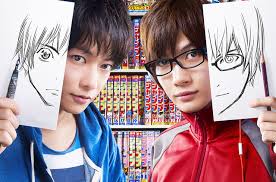
bakuman

The live action movie adaptation of a manga about making manga.

Featuring two high school students who decide to team up with the goal of getting published in the premiere manga magazine in Japan, Bakuman using innovative filmmaking techniques and expert touches of comedy to provide a wonderful adaptation of the story of their quest while giving great insight into the industry the characters love. The focus on the often overlooked difficulties of both making art and turning it into something commercially viable, shining a light on the creative aspects and associated hard work and harsh realities on competition in entertainment fields as well as on the editorial process, is fascinating.

The visual style and feel of the movie is phenomenal, with a multitude of imaginative ways of representing the writing and drawing processes in striking, engaging ways which are further enhanced by pitch perfect comedic acting that makes it impossible not to get pulled in for the ride. Though overused, the phrase “love letter to the industry” exactly describes how this film represents the creation of manga, though it pulls no punches with the hardships involved.

There are key dramatic moments, and the general tone is so light and breezy they hit like a tons of bricks and their impact is felt throughout the film. The romance aspect felt short changed and it needed more time devoted for the developments to play out properly, but everything else came together strongly and overall this was an amazingly high quality not only as an adaptation, but as a film in general.

The director made a surprise appearance and his short Q&A after the screening was extremely interesting, talking about the changes made in changing mediums, some of the nods and references to other manga, and the impressive amount of work the actors put into being able to do the drawing scenes.

——-

Fantastic stuff. Will be back with more reviews as Japan Cuts continues. 🙂

Categories
Film Japan

Japan Cuts 2016: Bitter Honey and Lowlife Love Reviews

Japan Society’s annual Japan Cuts Film Festival for 2016 started on July 14th and is running through July 24th. My thoughts on last year’s festival can be read starting here.

My first viewings this year were the two films shown on Friday July 15th.

Bitter Honey

bitterhoney2

So here we have a love story of sorts featuring an aging writer, a goldfish come to life as a young woman, and a ghost. Yet the superb acting and careful mix of comedy and drama make the absurd premise work and present an engaging narrative to follow along with.

Fumi Nikaido’s Akako pops right off the screen with an energy that’s contagious. Her playfulness gives the movie its heart and gratefully lightens its heavy themes. The movie’s wardrobe and background visuals enhance the focus on her, with her vibrant red dresses standing out as much as her infectious personality against the more subdued world around her. The rest of the cast is equally impressive, capturing the emotion behind the depicted events and conveying even the most ridiculous elements with total commitment and conviction.

I’m not sure everything came together quite perfectly, as certain aspects could have been better addressed/explained and I’m positive I didn’t catch nearly all of the symbolism and significance of some scenes (mostly those involving the mysterious upper floor of the author’s home). The author is intentionally unlikable in numerous ways, which could have been softened a little to better effect. I understand his characterization was an important part of the movie, but a couple of things could have been scaled back without losing that element and at the same time adding some extra empathy to the events that unfold. That said there’s just enough about him to sympathize with to keep the audience engaged.

As a side note, I also feel the often quoted movie summary (which was also paraphrased for us during the screening’s introduction) explaining that the ghost of the writer’s former lover “helps Akako realize her own desires, activating her agency and frustrating the one-sided male fantasy the writer is so keen to continue” over simplifies things a bit too much and somewhat shortchanges the ghost’s (played by Yoko Maki) nuanced role and intentions as well as the way the themes arise in the movie.  I won’t go into detail to avoid major spoilers, but while the statement isn’t wrong per se the movie I saw didn’t quite feel fairly described by it.

Bitter Honey is an extremely odd movie where a strong center and phenomenal acting beneath the surreal elements and absurd premise make it all work splendidly. Despite a few imperfections I really enjoyed this and it leaves the viewer with a lot of interesting things to think about. And even with a great supporting cast and a strong narrative as draws, I have to agree with other reviewers that Fumi Nikaido’s performance alone was easily worth the price of admission.

Lowlife Love

lowlifelove2

On the opposite end of the spectrum from the playfulness of Bitter Honey is an extremely dark tale about a bunch of lowlifes who dream of success in the film industry. This is the story of horrible people trying to survive in/break into a horrible industry, yet is played for comedy about half the time.

Lowlife Love is definitely not a bad movie. Far from it. It’s extremely well shot and acted, to the point where it’s very easy to get caught up in everything at an emotional level. This makes certain scenes incredibly powerful, to the point where I felt like I had been gut punched a few times and was extremely angry at what was happening during others. Any film that can evoke those kind of reactions is impressive. But there was nothing to counter it. The audience is deprived even the slightest glimmers of hope. This was brutally hard to watch in parts and the valve was never released, as the attempted humor was as relentlessly bleak as everything else and felt out of place and uncomfortable rather than lightening the mood to any lasting effect.

The film has a misogynist edge to its female characters, and I was pleased when the moderator asked the director/writer about the portrayal of women during the Q&A. He explained it not as a conscious choice that he was going to approach the female characters that way, but that he was illustrating the harsh realities of the film industry in Japan. I understand this to an extent, but if this was meant to be an expose of sorts then certain tonal aspects and plot points are quite incongruous to that. Also the explanation rings a little hollow considering one female character exists in the film simply to repeatedly remind us how much of an ass the main character is, and another solely for sex related jokes who is later revealed to be underage.

I understand that these are not supposed to be good people and we are supposed to cheer for their success despite that, and the film does manage to infuse that feeling overall. But there are things that undermine that aspect too, and the single character that remains likable and uncorrupted is given practically no spotlight or story throughout the film.

Again Lowlife Love is well done on a technical level and there are stories worth telling and things worth thinking about here, but they fall short of their potential in the execution and the movie is just so depressing I can’t possibly recommend it. It deserved to be screened, but I can’t say I liked it.

IMG_1550
Q&A with producer Adam Torel, director Eiji Uchida, and actor Denden after the screening


——-

Will be back with more reviews as Japan Cuts continues. 🙂

Categories
Anime Film Reviews

Miss Hokusai Review

“With two brushes and four chopsticks, we’ll get by anywhere. ”

Journey back to 19th century Edo for a look at famous painter Hokusai and his work through the perspective of his daughter O-Ei, who possesses a talent to rival his own.


MISS_HOKUSAI


The trailer to this looked delightful and I enjoyed Keiichi’s Colorful, so my anticipation was high for NYAFF’s screening of Miss Hokusai. I’m pleased to say it lived up to expectations.

This look into the life of famous painter Hokusai through the eyes of his daughter is beautiful both visually and thematically. The backgrounds are gorgeous and extremely evocative of the featured period. The art being created by the characters is depicted wonderfully, feeling authentic to the styles and techniques employed. A variety of animation techniques are used here and there to enhance the atmosphere and/or illustrate a particular point. Contrast from scene to scene is used exquisitely. At one point a dark, heavy scene showing a fascination with the beauty behind the danger of fire immediately gives way to a stark, calm, white winter’s day to great effect. It all comes together wonderfully as a perfect vehicle to to tell O-Ei’s story.

The thematic and emotional core of the movie comes from it being appropriately and strongly character driven. Creativity and inspiration aren’t direct subjects of the film, but are rather the lenses that shape the main characters’ view of the world around them. The characters’ personalities and idiosyncrasies are often not directly tied to specific events, but are extensions of their emotions and overall experiences. They feel real and relatable as we receive little glimpses of their lives, which is of course exactly the goal of a good biopic. I don’t know how accurately the artists and their lives are reflected here, but the version presented is wonderfully thoughtful and poignant.

One of the the film’s greatest achievements lies in its depictions of an artist describing the world to a blind child. These moments are touching and emotionally charged, and comprise Miss Hokusai’s best scenes

This is an excellent film that provides a nuanced look at life and art via gorgeous animation. Highly recommended for anyone with any interest in anime and/or Japanese art and culture in general.

Categories
Comics Film Reviews

“Take your glow stick and go home.”

Justice League: War is based of the first story arc of the New 52 Justice League reboot, and features the first meetings and teaming of these reimagined versions of DCs biggest heroes

justiceleaguewar

The New 52 was at best a mixed bag, and a lot of what I didn’t like about it was on display here. The heroes don’t have the complexity or appeal of the previous versions, and several of them have been made more bloodthirsty and violent. In some cases, like Wonder Woman, it fits and is a natural direction for the character. It most others it just makes them grating and unlikable. The dialogue and character interactions are often downright painful, particularly those featuring Shazam. Superman is a complete cipher, just there to expedite the plot and get into the expected scuffles. Speaking of which, the conflicts between heroes are extremely contrived, and could have been resolved in seconds with a little talk and a lot of Green Lantern not being an ass.

There is some fun to be had here though. As much as I dislike this take on Green Lantern and his attitude, seeing Batman interact with him and put him in his place (repeatedly) is hilarious. While I find the underlying reasons behind the fights and the strategies employed flimsy, the action is quite well done and exciting to watch. And the movie is true to the source material, adapting the comic faithfully and making it work in a different format.

Overall I don’t have a lot of fondness for Justice League: War because the New 52 approach isn’t to my tastes, but there are some highlights and for viewers who do like these versions of DC’s heroes this is a strong adaptation.

Categories
Comics Film Reviews

Son of Batman Review

“The psychos just keep getting younger.”

Batman’s about to meet the son he never knew he had, but things are bound to be rocky considering Damian’s been raised by assassins since birth.

sonofbatman

Damian is a hit or miss character for me, but wow did they nail him here and use him as the center of a great story. The conflict between who he was raised to be and his father’s ideals and methods is balanced perfectly and an extremely compelling hook for the movie. The plot carries things well with clever twists and well developed, logical complications. It’s supported by incredible action and a formidable villain to bring everything together.

One of the things that’s vital for my enjoyment of a story are characters who are flawed without being artificially stupid to advance the plot. The cast here all have diverse motivations and personalities that reflect directly in their actions. When mistakes are made, they’re logical and believable extensions of the characters’ mindsets. This is so important to immersion and is done very well here. I also love the dialogue and character interactions, which beyond being entertaining do an excellent job of conveying the aforementioned personalities and motivations. Seeing all featured heroes acting like the detectives they are at various points is another highlight.

Son of Batman is much better than I expected going in and one of the best DC animated features I’ve seen in quite a while.

Categories
Anime Film Reviews

Project Itoh: Harmony Review

“Does humanity have a place in a perfect world?”

Harmony presents a wonderfully intriguing dystopian concept, namely that of a utopia. An obsession with good health has lead to a society where no one dies and everyone strives to support each other, and Tuan hates it for the loss of personal control over one’s own body that comes with it. With a past haunted by loss and a failed attempt at the ultimate act of rebellion, Tuan will face her own beliefs and doubts when someone else decides to shake up the “perfect society.”


harmony

Once I’ve decided I’m going to see a movie I generally don’t do much research ahead of time. Having now seen Harmony I went back and read Funimation’s summary. I highly recommend avoiding it if you haven’t read it yet, as in my opinion it spoils some key plot reveals that were a surprise as I was watching.

Harmony raises numerous philosophical questions, and has interesting things to say about them. Concepts ranging from the natures of consciousness and happiness to what an ideal society really is are explored. The central plot and action are decent, but let’s be honest: it’s all a vehicle for the philosophical dilemmas and messages. I found it engaging, but even I disagree with a lot of the conclusions it seems to draw, and some viewers may find them off putting. And one of the twists with the most potential turned out to be largely a throwaway to set up something else.

Still, the moral and philosophical issues raised are thought provoking and will stay with me for a long while. Overall while Harmony could have been much more what’s here is good enough and it’s worth checking out.

Categories
Film Reviews

How to Train Your Dragon 2 Review

“Well… at least I’m not boring. Right?”

httyd2

Hiccup and company are back, exploring and expanding on life in Berk given their now harmonious relationship with dragons. The growing pains of integration are rightfully skipped so the focus can be placed on how the new status quo has changed and expanded their world. The first movie is a favorite of mine, and I’m happy to finally have had a chance to watch the follow up.

It’s a competent sequel that packs a lot of action and emotion, but honestly is missing something. It lacks whimsy compared to the original, and seems to replace it by just cranking everything up several notches. The battles are overwhelming in their scope and there were parts of the movie where I just felt overloaded. The comedy is also much less integrated. It was seamless in the first movie, with touches of humor placed throughout to lighten the tone unobtrusively. Here the tone was darker in general, and when comedy happened the movie kind of stopped for it.


That’s in no way to say How to Train Your Dragon 2 is bad or unsuccessful. The plot is solid, the characters endearing, and it packs several strong emotional punches. It was a smart, safe sequel that I enjoyed a lot and recommend. It just didn’t quite capture the magic of the first movie. A lot of fun on its own merits though.

Categories
Comics Film Reviews

Deadpool Review: “That’s like… 16 walls!”

“Guy came in here looking for you. Real Grim Reaper-type. I don’t know. Might further the plot.”

deadpoolheart

If ever there was an epitome of “good for what it is,” Deadpool the movie is it.

Ridiculous, rude, and raunchy from the get-go, Wade Wilson’s over the top adventure revels in excess and absurdity. It also largely works, thanks to clever writing, self-awareness, and Ryan Reynolds’ delivery. This is no masterpiece, but it is a hilarious ride to tag along with. There’s a lot to be said for knowing what you set out to accomplish and sticking to it, and Deadpool is exactly as expected in all the right ways.

Check any comparisons to other movies (superhero and otherwise) at the door and you’ll find an amusing and unique R-rated super not-hero movie full of laughs and limbs. Or, you know, go see something else. I’m sure Mr. Pool will understand.