Japan Society’s annual Japan Cuts Film Festival for 2024 started on July 10th and is running through this Sunday, July 21st.
My thoughts on films from 2015’s festival can be read starting here, 2016’s starting here, 2017’s starting here, 2018’s starting here, and 2019’s starting here.
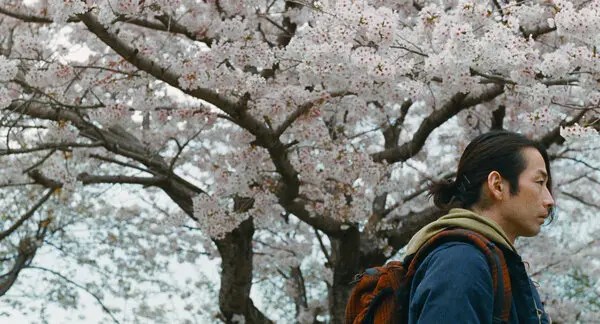
This screening ended up being a special one for me. Due to the pandemic and personal limitations this was my first time at Japan Cuts since 2019. In addition, while I had planned to see several films Great Absence ended up being the only one I was able to attend. It was nice to be back, even for a single film, and I lucked into an excellent one for my only viewing.
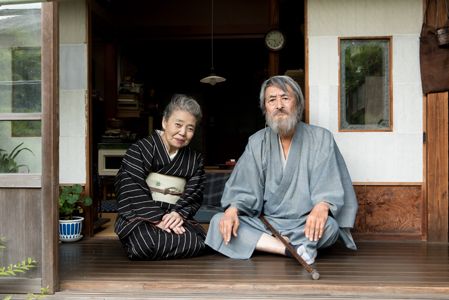
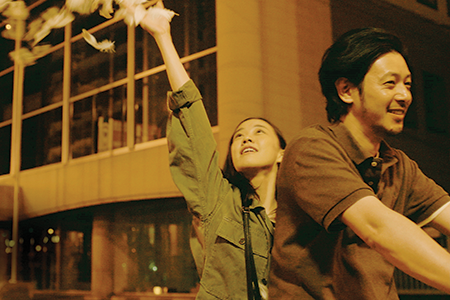
Great Absence is a gradually unfolding tale of an actor and his wife brought abruptly back into the middle of his estranged father’s life due to the latter’s rapidly worsening dementia. Hanging ominously over the visit is the puzzling absence of the father’s wife of twenty years.
The movie is intentionally disjointed and deliberately paced. With growing puzzlement and unease the viewer gets small glimpses of interwoven past and present, with new perspectives often re-contextualizing what’s come before.
The shifting ambiguity mostly works, and there are some incredibly powerful moments that are open to some interpretation in ways that add a lot of depth. A key scene seemed to have a second, fascinating nearly opposite possible interpretation from what I think we were supposed to take from it.
While there are a couple of aspects I really would have liked to see fleshed out a touch more by the end, for the most part this is an exceptionally well written drama where the explanations received and the things left open work together particularly well.
The movie doesn’t try to tell the viewer what to feel, but instead presents imperfect people in difficult situations frankly and lets the viewers take it in as they will. But the fragile nature of a story subject to some of the same type of fluid reality dementia brings occasionally turns it all on its head. Combined with an appropriately subtle score and beautiful cinematography it all elicits strong emotions across the spectrum as the film marches on in a gradual but unrelenting way.
This deeply affecting story hinged on the actors’ portrayals of complex emotions simmering beneath the surface and wouldn’t have worked with lesser performances.
Actor Tatsuya Fuji was in attendance and received Japan Society’s first Lifetime Achievement Award before the screening. The previous night his co-star Mirai Moriyama received the annual Cut Above Award for outstanding achievement in film (presented before a screening of Shadow of Fire). All four key roles, including those of Fuji, Moriyama, the third lead Hideko Hara, and supporting actress Yoko Maki, were played to perfection.
Great Absence is a subtly powerful film that I highly recommend.

After the film there was a Q&A with Fuji and director Kei Chika-ura. Important central concepts of Great Absence were taken from Chika-ura’s own experiences, and it was fascinating to hear about the various conditions that brought the film together. Fuji talked at length about his extensive career, his approach to acting, and the curious story of his only other trip to New York nearly fifty years ago. All in all it was an excellent session and a wonderful post script to the movie.
This showing was Great Absence’s New York premiere, and it will be playing from today at the Angelika Film Center. Fuji and Chika-ura will be attending and having Q&A’s after both tonight and tomorrow’s 7pm showings (July 19 & 20, 2024). I encourage anyone in the area to check it out.








 Derailments of Thought