Categories
Board Games Reviews

Ars Alchimia Review (First Impressions)

Alchemy is a hallmark of a lot of video game sidequest activities, and I was both amused and intrigued by the thought of a board game based around it.


ars


The general setup is great and makes a lot of sense thematically: players gather materials, learn recipes (“orders”), and perform alchemy (all represented by different cards on the board). There are also cards representing assistants that can be hired to provide specific bonuses.

The key mechanics are worker placement and resource management. Collection and spending the proper resources to complete orders is the main way to collect victory points, which of course determine the winner at game end.

Taking actions is where the worker placement comes in. Players deploy workers to the board spaces associated with the card they want to claim/use. A significant amount of strategy revolves around this deployment. At least one more worker must be placed than those currently on the space (the previous workers are then moved to a general area for the rest of the round). So popular spaces become more and more “expensive” as the round goes on.

The second aspect to deciding how many workers to play involves bonus die rolls when taking certain actions. Playing extra workers increase the chances of collecting bonuses, but will also make that space require even more workers to use again in the future. It’s a really great aspect: players always get a set benefit for using the card regardless, but can mitigate the luck for bonuses if they choose.

There are other interesting elements that add depth, including players who go later in turn order getting more workers, elixirs which count as any resource when completing orders, etc. I found it all came together really well and provided interesting, meaningful choices during the game.


img_4881


Ars Alchimedia has very nice looking components and attractive art, but admittedly it could have been “spruced up” a bit. It’s clearly reflective of Japanese design and original production in the economy of space everything has. There is an incredible amount of information and functionality compressed down into a general board and a bunch of different card types.

While impressive, this also makes things a bit overwhelming on the cards sometimes and leads to very small and occasionally hard to read type, particularly since TMG made the odd decision to leave the original Japanese text in addition to the translations. While the Japanese student in me likes this, from a gameplay perspective it’s unneeded and distracting. My opponent (who is not colorblind) also had some trouble telling the small colored boxed apart on the cards, which could have been easily addressed by using the symbols for each resources shown on the player’s tracking cards.

This is a hefty game cleverly packed into a small box, and as such while I generally really like the design and artistic style there are some minor resulting inconveniences.


img_4880


The overall balance seemed good, with harder to get materials and orders being involved in higher scoring. Although there is luck involved in the available options on the board at any given time and some are strictly better than others. However there is a mitigating mechanism for turn order, so I think it all fits nicely and fairly.

I really enjoyed my first experience with Ars Alchimia and am excited to play it again sometime, try it with more players, etc.
Categories
Board Games Reviews

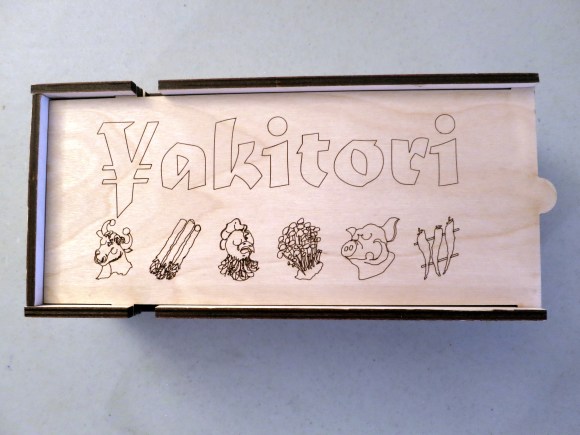
Yakitori Board Game Review (First Impressions)

One of the most intriguing things about how gaming continues to expand and grow is the way designers take inspiration from all kinds of unexpected (and sometimes “mundane”) sources to create original and engaging games. One example of such is Yakitori, a laser cut wooden game based around trying to maximize profit while grilling and selling the titular street food.

img_4887

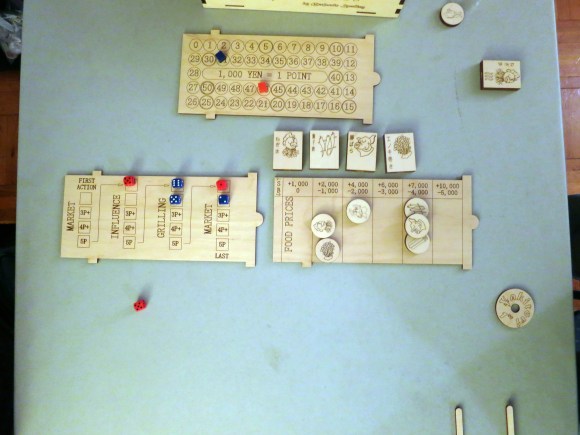
The gameplay is both a well simplified play on the chosen theme and a deep enough game in itself.  Each round players roll three dice and then use them to choose (in turn) which available actions they want to perform. The die values will determine action order within each action category.

  1. At Market players will buy raw ingredients or sell their cooked dishes. There are three different types of meat tiles and three different vegetable tiles available in the game.
  2. The Influence category allows manipulation of demand for ingredients, moving their individual buy and sell prices up or down.
  3. Finally Grilling allows players to cook the food on their skewers or accelerate/slow the speed with which it reaches doneness.

img_4882

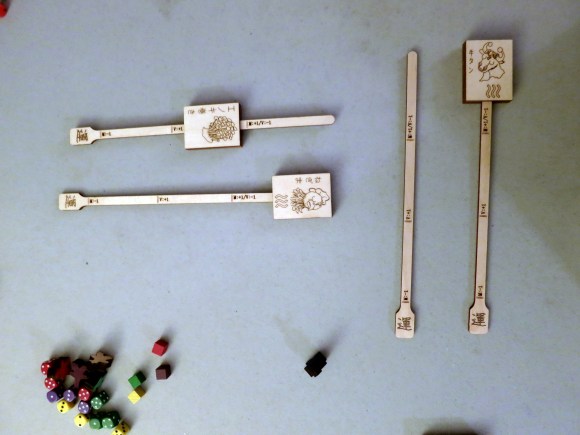
The skewers are both a fun thematic component and a clever mechanic. Raw food starts on the lowest section of the skewer, and moves upward as time passes. Which section it is in when a player sells it will determine whether they get a monetary bonus (for perfect doneness) or a penalty (for overcooking vegetables or undercooking meat).

At the end of the game players also receive bonuses for cooking the most of a particular type of food and for groups of diverse types sold (although each food item sold during the game may only be counted once for bonuses).

There are meaningful choices each round, although in the 2 player game certain limitations almost felt too restrictive. It adds strategy but can be a little frustrating and makes the learning curve for playing well steeper than first apparent.

img_4883

This is definitely a game enhanced by the production value and design choices. There’s a wonderful classic quality to a well made wooden game that fits nicely with the theme, and again the way the food tiles interact with the skewers is a unique hook to build gameplay around. The center slots on a couple of the tiles were a bit too tight to properly move along the skewers, but that should fix itself as we play more and seems better than having them too loose.

img_4884

While the game seemed quite accessible, as I mentioned earlier I feel like there’s aspects of the strategy I wasn’t quite getting. This isn’t necessarily bad early on, as it encourages more play to begin to understand certain subtleties beneath the  seemingly straightforward base mechanics. The 2 player game definitely felt a bit cutthroat, where one mistake might put the game out of reach. It seems like this will play much differently with more players, something I look forward to trying in the future.

There’s more to Yakitori that initially meets the eye, and all around it strikes me as a nice package. It’s a game with a unique (yet accessible) theme, good production quality, and interesting gameplay.

Categories
Board Games Reviews

Cooperative Gaming: Fun with a Common Goal

I’m an avid gamer and have played a large variety of board games of different complexities and styles over the years. A particular type that has become more common recently is the cooperative game, where instead of competing against each other players work together to defeat the game itself.

In addition to being a nice change of pace and a fun and exciting genre, co-op games can also be a nice way to introduce new gamers to the hobby, as working with veteran gamers instead of against them can be less intimidating. I’ll include notes on how new gamer friendly each is, but in most cases having at least one experienced gamer playing to learn / explain the rules will be very helpful.

Here’s a sampling of diverse cooperative games that include several of my favorites.


Beyond Baker Street

img_3048

Player count: 2-4

New gamer friendly?: Reasonably, but probably better to start with Hanabi.

Like Hanabi, Beyond Baker Street is a fun team game in which players can not see their own cards but received limited information from other players about them in order to figure out what to play when. Beyond Baker Street goes a couple steps farther than ordering cards within a color type to having changing total goals as well as a “time limit” of sorts and a general track that has to be exactly maxed out during the coarse of the game.

I enjoy the additional complexities this adds and experienced gamers will be able to jump right in here, but with new gamers I’d again recommend starting with Hanabi. Further thoughts here.


Ghost Stories

img_1115

Player count: 1-4 (I recommend 2+, best with the full 4)

New gamer friendly?: Reasonably

Easily one of my favorite co-op games of all time. Fairly easy to teach but has a lot of variation and depth. Best on its own or with the Ghost Moon expansion  (Black Secret has fallen flat with my group so far). Notorious for its difficulty, but we’ve found it challenging rather than frustrating. The changing board, player powers and enemy cards make every game significantly different, which greatly aids its longevity. I’ve had good reception playing this with both new and experienced gamers.


Mysterium

IMG_4412

Player count: 2-7 (I recommend 4+)

New gamer friendly?: Yes

I love the way Mysterium takes the base concept of Dixit and expands it into not only a fuller game, but also cooperative one. One player is a ghost trying to point “psychics” (the other players) to possible culprits solely through handing out cards with abstract images on them. The multi-round elements where players can get further clues towards each of their personal cards to guess is fun, and taking the competitive aspect out of this type of interpretive exercise is nice.

Have tried this with a mix of veteran and new gamers, and everyone’s had a lot of fun with it (having an experienced gamer around to play the ghost is recommended though). Some aspects of gameplay are lost with less than 4 players, so while it’s playable with 2 or 3 bigger groups are better.

Further thoughts here.


Project Elite

img_3241

Player count: 1-4 (I recommend 2-4)

New gamer friendly?: Reasonably

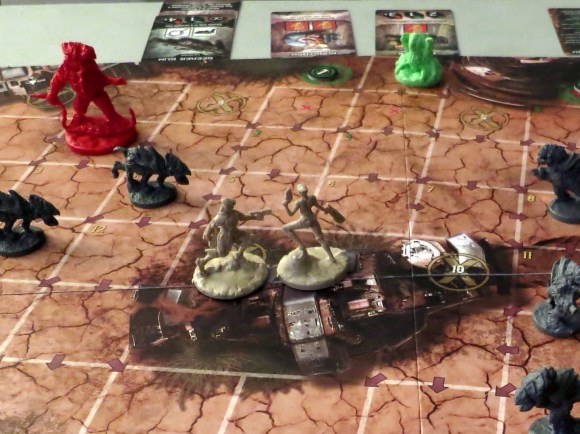
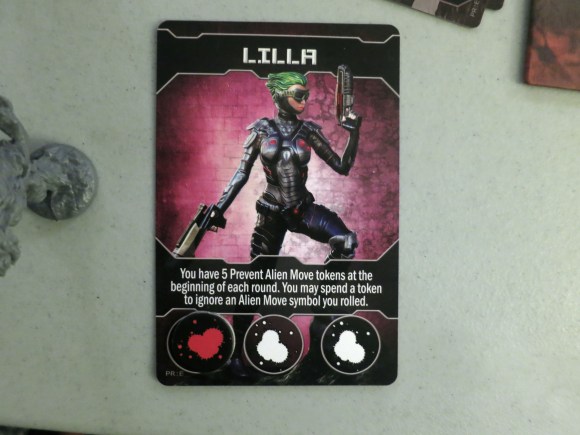
Project Elite has an aspect that other games on this list do not have: real-time sections. In between periods of common planning and upkeep of the enemy alien pieces, players frantically roll dice during two minute real-time periods during which they attack the aliens and attempt to accomplish their goals. There’s a fairly large learning curve to initally start playing, but once someone’s played once I think it’d be pretty easy to teach. This is frantically fun and having upkeep outside of the real-time play is a wonderful design choice. It feels almost video game like in a great way.

Further thoughts here.


Ravens of Thri Sahshri

img_3049

Player count: 2

New gamer friendly?: No

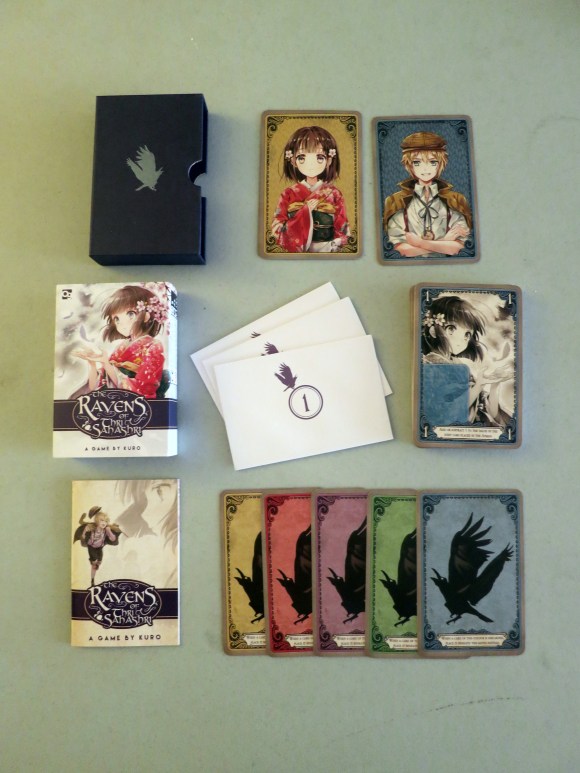
Ravens of Thri Sahashri is an asymmetrical two player game whose core concept requires both players having firm grasp of rules before play starts. The players are trying to complete certain goals while having completely different personal gameplay mechanics and communicating only through play choices.

Ravens has elements of deduction, press-your-luck card drawing, and color/type matching. There are tons of little rules working in concert, but the game does a lot with them and comes together mechanically and thematically. It takes some time to wrap your brain around, but I adored it once initiated.

Further thoughts here.


Shadows Over Camelot

img_4878

Player count: 3-7

New gamer friendly?: Reasonably

For years this was my go-to cooperative game, and probably my most used to intro new gamers. The presence of different quests to do and a choice of activities is appealing, and the theme classic. It does have significant downtime between turns as the player count gets high, but is still a lot of fun. One barrier to entry here is the possible presence of a hidden traitor, secretly working to help the game defeat the players.  This can be difficult for new gamers as they can’t really ask for help with playing if they end up a traitor. Still, while newer games have replaced this a bit in our group this is  great co-op all around.


T.I.M.E Stories

timestories

Player count: 2-4 (best with 4)

New gamer friendly?: Somewhat

As much an experience as it is a game, T.I.M.E Stories provides a compelling and fun first mission as well as fantastic framework for future expansions/adventures. It’s hard to talk about in detail because of the exploration and story based nature of the game make any specific comments spoiler prone, but T.I.M.E Stories is a fun and immersive adventure that I highly recommend.

Because of that spoiler-ish nature, when starting with the base game mission everyone playing must be new to game. So unlike the other games on this list it’s not possible to have someone who’s previously played the game take part to teach and explain as things go. Experienced gamers don’t necessarily have an advantage here, but they might understand rules quicker

Full review here.


——-

Hope this feature has been useful in shining a light on some gems in the cooperative genre. While these are some of my personal favorites there are many other excellent games of this type to discover.

Categories
Board Games Reviews

Deception: Murder in Hong Kong Board Game First Impressions

In the wake of a murder investigators are on the scene and their forensic scientist knows who did it and how. However the murderer is secretly among their ranks and will try to distort the evidence and distract the rest of the group away from the true explanation.


deception


Deception is an asymmetric game where one player is a “forensic scientist” who knows the truth behind a committed crime and is trying to direct the rest of the players (investigators) to the proper means and a particular clue by conveying details about the crime scene. The twist is that one of the investigators is the murderer, and is trying to misdirect everyone else.


img_4863


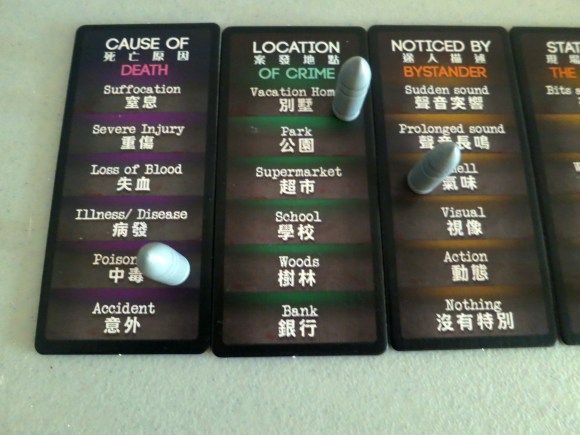
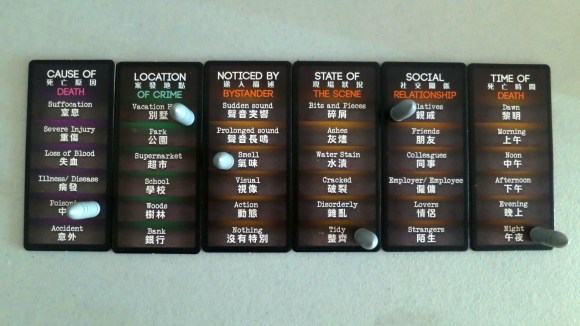
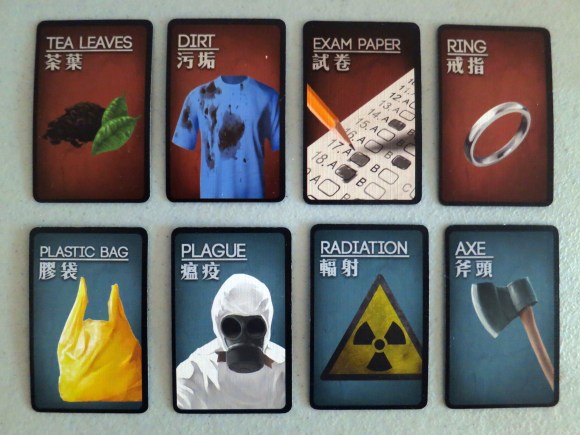
The general idea of the game is similar to Werewolf/Mafia, but getting actual concrete information from the gamemaster (Forensic Scientist) to discuss and interpret makes a huge difference and turns this into a more structured and cerebral game. Each player has four “clue” cards and four “means” cards in front of them. One of each in front of the murderer define the solution the players are trying to figure out. The Forensic Scientist knows the solution and provides information only through indicating which options on descriptive “scene tiles” best match their idea of the crime.

So there is still a social discussion and bluffing aspect, but having a starting point for discussions and a goal beyond just identifying the murderer elevates this greatly over it’s (admittedly fun) inspiration games. It also seems to play quicker overall than such games, which is another nice bonus.


img_4862


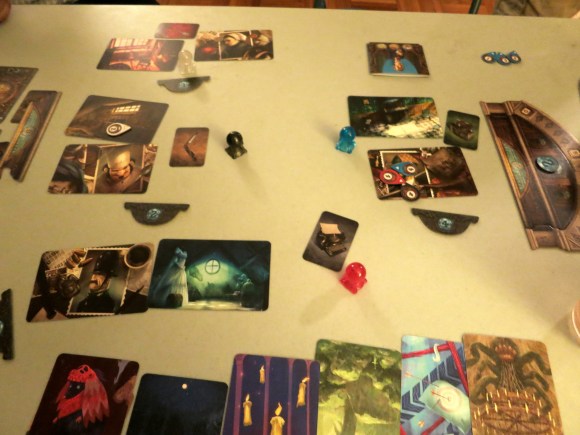
I’ve also seen some comparisons of this to Mysterium. There are some general similarities in base mechanics relating to having an asymmetric role of information distribution, but otherwise this really is a much different game. The biggest contrast (in addition to linguistic clues vs Mysterium’s Dixit style card matching) is Mysterium is purely cooperative while Deception is a hidden role game with an antagonist(s) among the players with a subversive goal. I understand the parallels, but the two games don’t feel that similar to me. I enjoyed both in different ways and see value in having both games on hand for different moods and groups.


img_4865


There’s good variety in the clue and means cards and the evidence tiles, which will provide excellent replayability. Since this was our first couple of games we played without the accomplice and witness roles, and without event tiles. They all seem like they’ll add even further depth to an already compelling game.

Overall this is an excellent entry into the social deduction genre and I’m excited about getting to play it more in the future.

Categories
Board Games Reviews

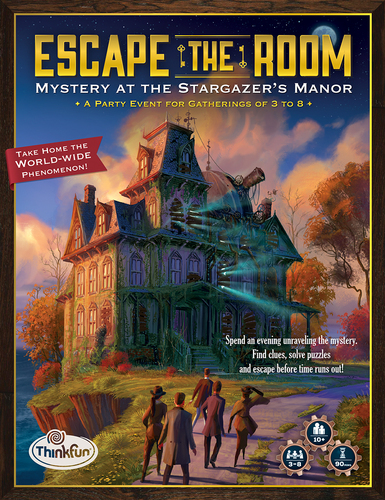
Escape the Room: Mystery at the Stargazer’s Manor Board Game Review

I adore the Escape Game phenomenon, and was excited to try out this board game attempt to capture the same type of feeling and fun. Here’s a SPOILER FREE look at ThinkFun’s home version.

stargazer

Basic Gameplay:

There is a brief instruction manual that introduces the concept of the game and sets the stage, but really everything the players need to know is explained on the various pieces that will be part of the game. At the beginning the players are presented with five sealed envelopes depicting various areas of the Manor and the first Scene Card. The card sets up the story context for the game and walks the players through how the solution wheel works in a nice little intro.  It then points players to the first envelope to begin the game proper.

The solution wheel is particularly well done. Solutions to each puzzle / envelope are indicated by paired colors and symbols, and if correctly entered into the wheel a symbol matching the current puzzle will be shown in two places on the wheel, indicating that envelope should then be opened.

General Thoughts:

Stargazer’s Manor is well designed and produced, and reasonably thematic. The puzzles make sense and are pretty well held together with the story framing. The quality of components is high, particularly at the price point. A good job was done overall evoking a location and providing some hands on puzzling without getting crazy in the cost department, but there is of course a visceral feeling to the exploration of an Escape Room that can’t be captured in a primarily 2d game.

The box says it accommodates 3-8 players, and given this type of game can only be played with a given group once we went with the maximum to get as many people involved as possible.

It may have been because all but one of us have previously played an actual Escape Room and were experienced puzzlers, but we didn’t need nearly that many people and it was tough keeping everyone involved since it’s mostly a “one puzzle at a time” experience. Four of us would have been plenty, and that’s the number my intuition recommends trying this with.

We found the puzzles on the easy side, but still had fun and again it might have been because of our experience level. The game tends to point you rather directly at the next thing to solve, which is a bit of unnecessary handholding given how few things there are to choose between.

Outside of possible tape damage to some paper pieces if you aren’t careful when opening things, none of the components are permanently marked while playing. Combined with instructions on the website on how to put everything back in the proper envelopes when finished, the game can be packed back up afterwards and given to a new group to try. Nice touch by ThinkFun.

Summary

So in conclusion while Escape the Room: Mystery at The Stargazer’s Manor is not quite equal to its inspirational namesake and tends to the easy side, it’s still a fun experience well worth trying out. ThinkFun has another out already (Secret of Dr. Gravely’s Retreat) which I’ll definitely try sometime.

Categories
Board Games Reviews

Quick Thoughts: Abraca…what? and Sushi Go!

It’s sometimes hard to find games that are younger player friendly and yet offer something for older / more experienced gamers. Here’s a brief look at two such games I tried recently that take one great concept each from more complex games and build introductory level experiences from there.


Abraca…what?

abra

The cartoonish characters and silly name had me expecting a much lighter game than Abraca…what? turned out to be. Players have a “hand” of five spellstones in front of them that they can’t see the values of, but that are visible to all other players. This recalls games like Hanabi or Beyond Baker Street, but here instead of a cooperative exchange of information towards a common goal players try to use what they see to “cast” (play) their own spells, often to the detriment of other players. Each spell has an associated value, and the value is the same as the number of that spell that exists among all the spellstones in the game (so for example, there are 5 total copies of spell #5). Having a few hidden spellstones each round adds an appropriate amount of luck, but there’s a solid deductive core in this game and it was fun to play with my niece and nephew and see them start to put it all together as the game went on.

Given the humorous player artwork and title I would have liked to see similarly silly spell names (and perhaps effects) instead of things like “fireball,” etc, but it’s a small criticism. Would be a reasonable light-gateway game to have on hand for new gamers of nearly any age.


Sushi Go!

sushigo

Next up is a game with perhaps even more universal appeal than Abraca-what? in Sushi-Go! Trimming away everything from games like 7 Wonders except the card drafting, Sushi Go! simply adds a well implemented set gathering goal to create a easy to learn, quick playing card game with nice balance and (light) strategic choices.

The artwork is cute and the sushi theme has just a bit of context that aligns with the desired pairings of different card types. There is enough variation to have the hands feel and play out differently from round to round, and the core mechanic of “take a card, pass your hand, then repeat” is wonderfully simple. Strikes me as a great game to have on hand for quick plays in between diving into heavier fare. Also, this is again a game that introduces a concept prominent in more complex games is an extremely straightforward manner.


——-

That’s all for now. Hope to be back with more soon. 🙂

Categories
Board Games Reviews

Top Five “New to Me” Games late-2016

I’ve played a lot number of new games so this year. So many in fact that I decided to do a midpoint look at games that really impressed me. I also did a similar list at the end of 2015. Here are the best games I’ve tried in the second half of 2016.

Ground rules:

  • The only qualification for this list is that I personally played the game for the first time in since my mid-2016 list.
  • I’ve tried around 15 new games since then, so it was again difficult to narrow this down. Honorable Mentions include, but aren’t limited to Beyond Baker Street and Mystic Vale.


5. Project Elite

img_3239

Project Elite is a fun, frantic co-op with alternating sections of untimed setup and two-minute real time action rounds. It’s feel like a combination of the best aspects of board and video gaming, and I had a lot of fun during my sole play of it so far. Further thoughts here.


4. Android Mainframe

IMG_1950

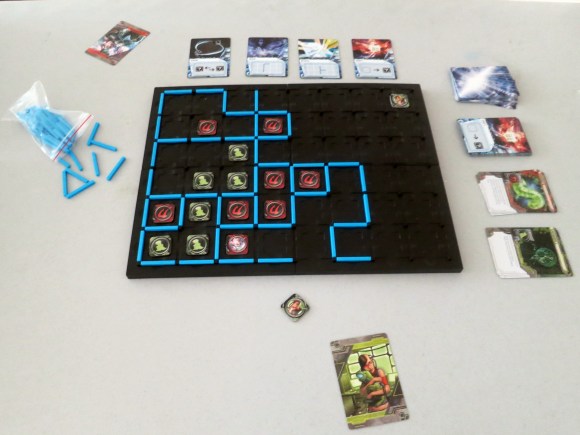
Mainframe is a great little abstract that I find myself introducing people to often. It is incredibly easy to pick up, largely due to taking the basics of the children’s pen and paper game “Dots” and turning it into a “full fledged” game in such a way to keep it accessible while also achieving a decent level of complexity. Further thoughts here.


3. Ravens of Thri Tahashri

img_3031

Ravens of Thri Sahashri is a two-player asymmetric cooperative game that focuses on communication through card playing and taking. It has a huge learning curve, but is also extremely unique and rewarding once you get into it. Further thoughts here.


1. Scythe (tie)

IMG_1965

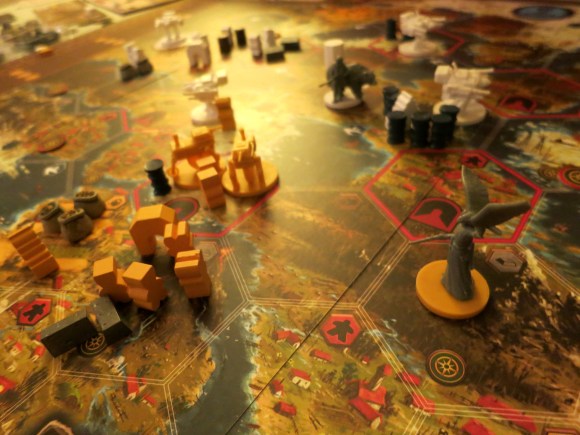
I played two new games during 2016 that I adore so much I can’t choose between them. So they are tied for first in this list. Scythe is the latest from Stonemaier Games, makers of other phenomenal games such as Viticulture and Euphoria.  Scythe is Stonemaier’s “heaviest” game yet with a lot of moving parts and generally takes a least a game to get the feel of. But it comes together wonderfully through focus on taking just a couple of specific actions per turn. There’s a lot of depth here and various viable strategies, making for an excellent game. Full review.


1. T.I.M.E Stories (tie)

timestories

As much an experience as it is a game, T.I.M.E Stories provides a compelling and fun first mission as well as fantastic framework for future expansions/adventures. Full (spoiler free) review.

——-

That’s it for now. Great year of gaming for me all around.

What are everyone else’s new favorites?

Categories
Board Games Reviews

Project Elite Review (First Impressions)

Project Elite is a game I backed on Kickstarter promising “an innovative real-time board game full of intense moments” with “highly detailed miniatures.” While they came nowhere near fulfilling the latter part, the minis are at least identifiable and fine to play with. As for the former statement, now that PE is finally in my hands I think in that respect they were quite successful.

projectelite

There is a non-trivial learning curve to start, as the players need to understand how everything works before even attempting the two minute real time sections that comprise the heart of the game. But it all meshes well once you start playing and the framework is really well designed so that players are concentrating on PLAYING while the clock is running, not rule clarifications.

img_3239

Having those previously mentioned rounds of real time play separated by untimed planning and alien upkeep periods is a great structure that balances all the needed elements of gameplay well. The players get a breather between rounds and all the things that take just a bit more time to set up properly and shouldn’t be rushed because of the clock aren’t.

Project Elite almost feels like a video game, in a good way. There’s a frantic pace and sense of urgency that only a few board games achieve, while retaining some elements unique to tabletop gaming.

My friend and I played a two player extermination game on easy difficulty. Our goal was to destroy three target tokens on the board and get back to base within eight rounds without ever letting any aliens get into our base.  We managed to win by skin of our teeth, which is about right for a first attempt played by regular gamers on easy difficulty level.

img_3246

The items and weapons are interesting and definitely have some effect on the strategy players will employ in pursuit of they’re objectives. Some of them seemed a little underpowered, but it could have just been beginner’s impression and/or poor luck rolling.

img_3242

Likewise the player powers all seem interesting. We made frequent use of the powers of the two characters we chose, and I imagine the game plays quite differently with different combinations.

img_3241

So far Project Elite seems like a great addition to my co-op collection. I’m definitely excited to play more in the future and in checking out how if feels at the various objectives, difficulties, and player counts.

Categories
Board Games Reviews

Ravens of Thri Sahashri Beginner’s Guide

As I mentioned in my review of Raven’s of Thri Sahashri, while I thoroughly enjoyed it the learning curve is sizable. The two player roles are quite different, and with unique gameplay revolving around non-verbal communication strategies for neither role are immediately apparent nor intuitive.

This is not meant as a complete substitute for the rulebook, but hopefully will be a useful gameplay guide to help make the complicated rule structure more accessible and supply a few strategy hints to help new players from feeling too overwhelmed.

ravens

Overview

Each round (“Dream”) of RoTS has two goals that must be satisfied to win:

  1. The four rows in front of the Ren player (ie Ren’s “Poem”) must reach specific totals (7-7-7-5).
  2. The only card colors that can be visible in the central area (“Atman”) are the colors of the four cards Ren started the Dream with.

A game of RoTS consists of three consecutive Dreams (rounds), and the players win the game if they win all three Dreams.

Game End

Players lose RoTS if

  1. All five Raven cards are in Raven row.
  2. The draw deck is empty at the start of Feth’s turn.
  3.  Feth cannot add at least one card to the Atman on his turn
  4. The Atman runs out of cards.

There are special rules for the third/final dream, which I’ll discuss later.

Setup

  1. Choose which player will play Ren and which will play Feth.
  2. Deal four cards to Ren.
    • These are not to be revealed to Feth.
    • There must not be any Ravens among these cards.
    • These are Ren’s “Heart cards” for the Dream, and determine which colors are allowed in the Atman at Dream’s end.
  3. Ren places the four cards face down in front of her, establishing four rows to be completed.
  4. Feth deals a single card in the center of the table to start the Atman.
    • Must be non-Raven.

Each Dream starts with Feth, and then turns alternate.

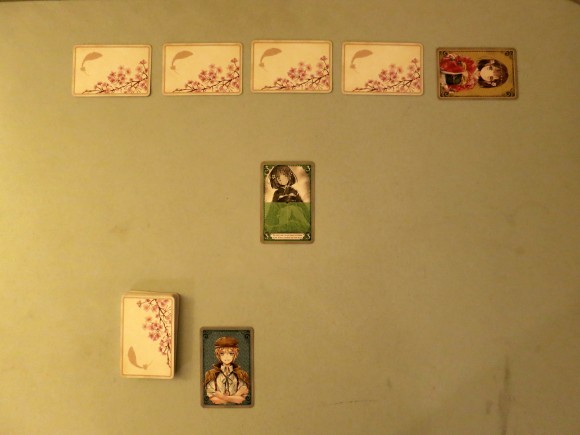
img_3106
Example of the game area after setup.

I’m going to concentrate on rules and strategy for things that happen within a single dream first for each player, then talk about rules and notes for a full three Dream game.

Feth’s Turn

  1. Feth deals as many cards as he wants into a “Memory Row” in front of him.
  2. Whenever he decides he is done, he moves any revealed Ravens directly below Memory Row into a “Raven Row.”
  3. Feth then plays as many cards as he wants from Memory row into the Atman.
  4. Feth’s turn then ends, and any cards left in Memory Row are discarded.

At any point during his turn, Feth may use the powers listed on any face up cards in Ren’s Poem.

Key rules for Feth

  1. Cards added to the Atman must:
    • be in the same orientation as cards already in the Atman.
    • overlap at least one shaded area with a card already in the Atman.
    • have any sections that overlap with cards already in the Atman be of like type (shaded vs clear).
    • not directly completely cover another card.
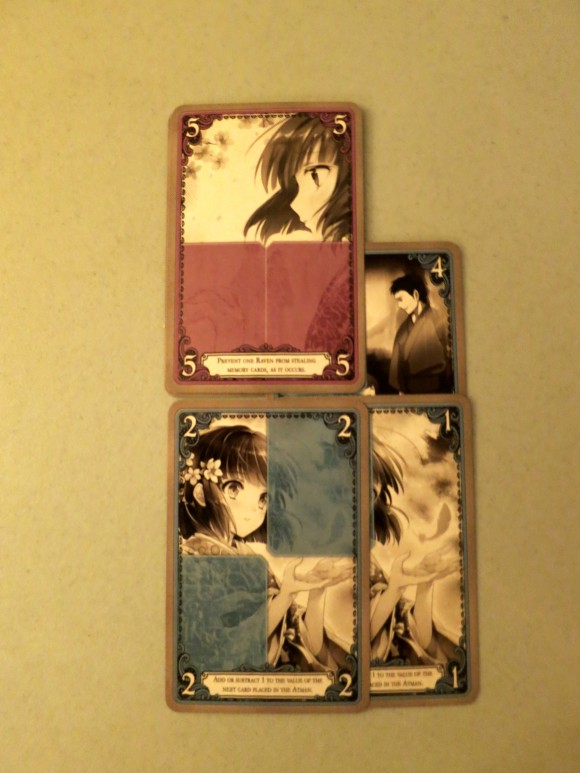
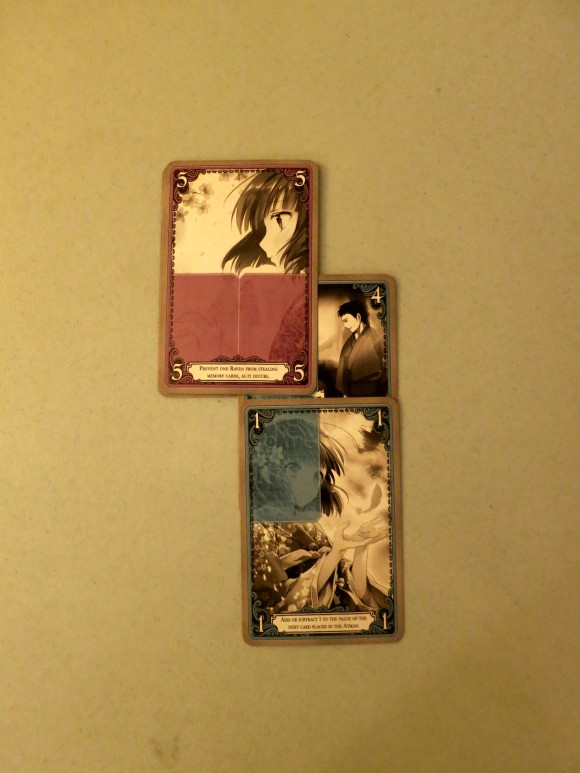
    • In the above pictures, after Feth adds the purple 5 to the Atman the green 3 is completely covered, and thus does not count as part of the Atman until/unless it is later uncovered again.
  2. If ever all five Ravens are in Raven Row, the game ends immediately.
  3. Whenever cards are discarded, if they match the color of a Raven in Ravens Row, they go underneath that Raven instead of into the discard pile.
    • Exception to the above: any cards in Memory Row directly above a Raven already in Raven Row are “safe.” Safe cards go to the discard pile regardless of color when discarded, and safe Ravens get discarded instead of moving into Raven’s Row.
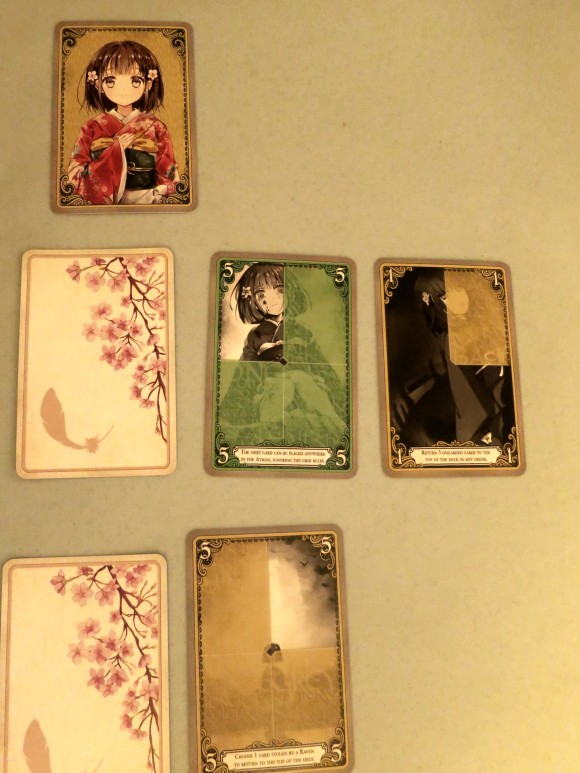
    • img_3107Example of Fen’s play area. If his turn ended like this, the red 5 would be “safe” and would go to the discard pile (with the purple 5). The yellow 1 is not “safe,” and would be placed under the yellow Raven.
  4. When Feth uses a card from Ren’s Poem, that card is turned sideways and cannot be used again (unless refreshed).
  5. If a card in the Atman is completely covered, it no longer counts as being part of the Atman unless/until it is visible again.
  6. Reliving Memories (important): whenever Feth manages to play cards to the Atman such that an uninterrupted group of cards of the same color totaling exactly 7 is formed, he “relives one of Ren’s memories.”
    • The matching colored Raven is chased away from Raven Row (if there) for the rest of the Dream. Any cards under the Raven move to the discard pile.
    • Ren reveals one Heart card that matches the color of the relived memory.
      1. If she does, all cards in that row are “refreshed” (turned vertical) and Feth can use their powers again.
img_3111
Example of a “relived memory.” Even through the purple 5 is covering part of the blue 4, it is not in between any of the blue cards forming a group that total 7.

Beginning strategy notes for Feth

  1. Balance drawing enough cards to provide Ren with good options to complete her poem, and being wary of drawing all five Ravens or emptying the deck.
  2. Make sure he can always play at least one card to the Atman.
  3. Pay attention to Ren’s clues, and as the dream progresses try to guess which colors should be present in the Atman and which colors he should be trying not to play and/or covering up.

Ren’s Turn

Mechanically Ren’s turns are much simper than Feth’s

  1. Ren draws any one visible card from the Atman and either adds it to the current row of her poem or discards it. That’s it.

Key rules for Ren

  1. Ren is trying to add cards to the rows of her Poem such that the totals are 7-7-7-5.
    • Totals include Ren’s Heart cards.
    • Rows must be completed in order.
      1. For example, to begin the Dream Ren can only play cards she draws from the Atman to the first row of her Poem.
      2. Once she plays a card to that first row that brings the sum of all card values in that row to 7, one the following turn she will start playing cards to the second row of her Poem.
    •  If Ren adds a card to a row that matches the color of the Heart card for that row, the Heart card is revealed to Feth.
    •  Whenever a row is completed, Ren informs the Feth player of that fact.
      1. When the fourth row is completed, Ren tells Feth whether the Dream is over or not ( depending on whether or not the Atman only shows colors in her Heart cards).
      2. If not, play continues until the players accomplish that second goal or until a loss condition is met.
  2. Partially covered cards are fine to draw. Any cards over or under it remain in position, and any previously hidden cards uncovered by Ren’s draw are now considered part of the Atman again.
  3. Cards Ren discards that match the color of a Raven in Raven Row go underneath the Raven as normal.
  4. If Ren chooses to draw a card that can be played to the current line of her Poem, she must play it there (and cannot discard it).
  5. Whenever the Atman is “split,” Ren is the one who decides which part(s) of the Atman are discarded, regardless of whose turn it happens on.
    • The Atman is split when it consists of more than one section that are not visibly connected by any overlapping cards.
    • Ren chooses one section to keep, and all others are discarded (cards are placed under Ravens as normal).
    • Remember – cards not visible are not considered part of the Atman, so there may be hidden cards underneath those being discarded that will remain on the table / become part of the Atman once the discarded sections have been removed.

img_3110

Example pic of a simple Atman that could be split – if Ren draws the blue 4, the purple 5 and blue 1 will be unconnected. Ren will then choose one to discard.

Beginning strategy notes for Ren

With Feth, a player need to be mindful of several options and rules and focus on aiding Ren. In contrast, Ren’s role is to make the most out of removing a single card from the Atman each turn, both in terms of progressing towards their goals and in providing as much information to Feth as possible.

  1. Removing cards from the Atman primarily of colors that aren’t in Ren’s Heart is a good way to clue Feth in about what colors can’t be in the Atman at the end of the Dream.
  2. Removing/discarding high value cards from the Atman can help indicate what value(s) are need for the current row of the Poem.
    • For example, if the Atman only shows values of 3 and higher, and Ren draws and discards a 3, the Feth player knows she couldn’t play the 3 in her row because the total of the row would go over 7. That also means she can’t play any of the 4s or 5s in the current row.

img_3035

Example of part of Ren’s Poem during game. From the above pic Feth knows:

  1. The first Heart card is not yellow or green, and the second is not yellow.
  2. The Heart card for the first row must be a 1.
  3. If Ren has not announced the second row is complete, that heart card must also be a 1. If she has said it’s complete, the Heart card must be a 2.

The game beyond finishing the first dream

In between Dreams

When the players successfully complete a Dream, three key things happen:

  1. Any cards underneath Ravens in Raven rows are “eaten” (removed from the game), and the players will not have use of them for the remaining Dreams.
  2. Any Ravens chased away by Feth “reliving a memory” return to Raven Row.
    • If this causes all five Ravens to be in the row, the players have lost.
  3. Any of Ren’s Heart cards that were revealed by Feth “reliving a memory” (NOT those revealed by Ren playing a card of the same color to that Heart card’s row) go into a “score pile” that is set aside until the final Dream.

As such Feth’s deck generally decreases in size from Dream to Dream, increasing the difficulty as the game goes on.

Final Dream

The players’ last attempt to complete Ren’s Poem and match the Atman to the colors of her Heart has additional challenges and advantages for the players. When learning the game I’d recommend not worrying about this section too much until you get there, except to understanding adding some cards to Ren’s score pile throughout the game is important.

Restrictions:

  1. Ren must complete a line of her Poem on EVERY TURN, or the players lose.
  2. The Atman colors must match the colors of Ren’s Heart cards at the end of Ren’s fourth turn, as the players will get no additional turns to accomplish that.

Extra abilities:

  1. In addition to drawing a card from the Atman and playing it on her turn, Ren may play as many cards from her score pile as she wants to help her complete the row.
  2. Cards under any Ravens Feth chases away during this Dream go into Ren’s score pile instead of the discard pile.

Hopefully this will be a useful reference. Feel free to let me know in the comments if anything is unclear.

Categories
Board Games Reviews

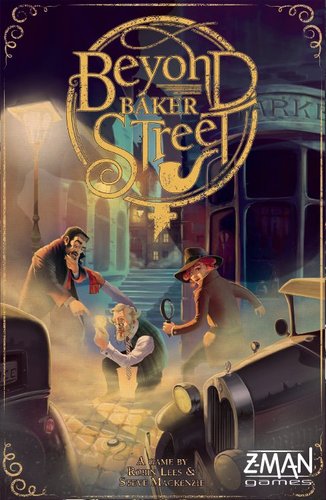
Beyond Baker Street Review (First Impressions)

beyondbaker

I’ve played Hanabi once a couple of years back, and recall it being interesting. A Sherlock Holmes themed game with that same central mechanic and additional gameplay elements piqued my curiosity quite a bit.

Beyond Baker Street capitalizes on its potential nicely, adding depth to the core of Hanabi without getting overly complicated or losing any of the fun.

Like Hanabi, Beyond Baker Street revolves around players being able to see other players’ hands, but not their own. Clues are given by telling someone which cards in their hand are a particular color or number. Players use these clues to try to figure out which cards from their hand should be played at different times.

img_3048

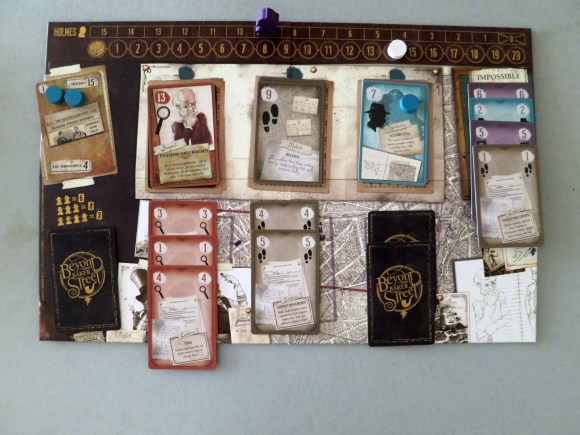
In Hanabi, players try to place like color cards in sequential order. Here there are three piles of cards on the board representing three types of “leads” (suspects, motives, and opportunities), and the player must play cards of the appropriate color to total the value on the top (face up) card of each pile. There is also a general area called “the impossible” to which players must play cards to reach a total of exactly 20 (marked on an “investigation” track) throughout the game. This represents supporting evidence needed to close the case, where the cards below each lead category represents what’s needed to confirm the proper suspect, motive, and opportunity for the crime.

The theme is used nicely to add depth to the game. The idea is that the players are detectives trying to solve the crime before Sherlock Holmes. Each time you give another player information about their hand the Holmes marker moves closer to zero. If it ever reaches that point Holmes has solved the crime and the players lose. The players can also lose if they eliminate all three cards in any of the lead piles (by accidentally going over the target total, choosing to discard the top card because needed evidence cards to reach its value are already out of play, etc).

The four types of evidence cards are mixed throughout the lead piles, which can present interesting choices in the event that the same color is needed for more than one lead. Difficulty and strategy is also influenced by the “case” that players choose to play at the beginning of each game. There are six different case cards that indicate where Holmes starts on his track, how many cards may be in the impossible before additional cards move Holmes faster, etc. I’ve only played the first case, but it’s already very clear how these variations on initial conditions will put pressure on the players.
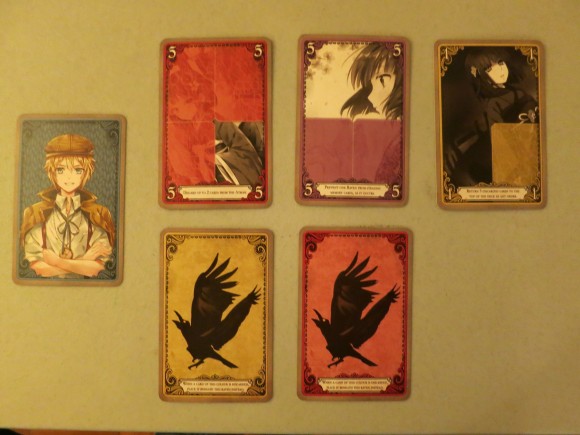
As recommended, we played our first game without using the player character cards which have various powers that can both help and hinder the players. I looking forward to trying them for added variability, as well as to playing with more than two players to see how the dynamic changes.

I love the theme in Beyond Baker Street and the way it’s implemented to take a strong base mechanic and flesh it out into something that feels both different and more fully developed than the inspirational game. The various goals and moving parts work well together and provide interesting strategic choices without getting too complex. I had fun with Hanabi, but personally I think the twists here and a lot of extra layers and so far I like this a great deal more. Definitely a welcome addition to my collection.