Here’s the short version: Guardians of the Galaxy 2 is great fun. Engaging, largely hilarious, and just plain fun.
Admittedly there are moments when it feels like they’re trying too hard (including occasional instances when the comedy is overdone, forced, and/or uncomfortable), and it doesn’t quite have sense of wonder of first movie since we’ve seen Quill and company before, but overall this was a fantastic ride.
The plot’s a little more focused and the characters are developed well, including nice spotlights on Nebula and Yondu, and a strong debut for newcomer Mantis. Of course as expected the show stealer is Baby Groot, who’s done pitch perfectly to be adorable, funny, and engaging without crossing over into annoyance. The movie’s absolutely BURIED in pop culture references, but it fits with Quill’s character as established in the first movie.
I had a wonderful time with Guardians 2, to the point where I got so caught up in the ride and enjoying the movie’s twists and turns I forgot about a couple things I had predicted would happen in this movie to the point I was surprised when they occurred. Can’t ask for much more than that in terms of immersion.
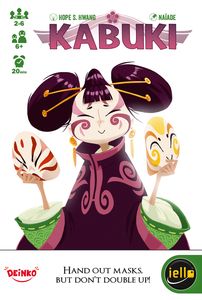
Some quick impressions on my first experiences with a trio of card based games.
Mottainai
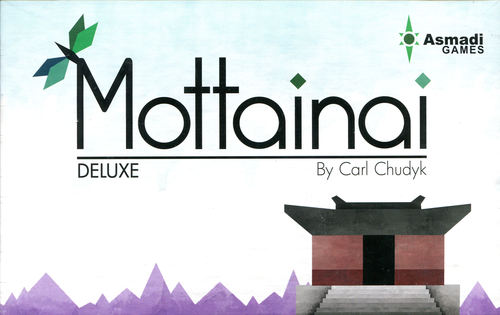
Carl Chudyk has a propensity for creating card games that pack an insane amount of information and functionality onto each card, and after having played Innovation (and Impulse) I would have easily known Mottainai was from the same designer even if not previously informed.
The cards in Mottainai have different functions based on placement around all four sides of each player’s playmat. This leads to a bit of rule overload during initial explanation, but it all fits well once the game gets going and the multiple ways to use each card leads to interesting choices. It felt SLIGHTLY less chaotic than Innovation (during which chains can develop out of the player’s control towards the end), but there is that same feeling of escalation as different types of card abilities become available later in the game. It’s another extremely well designed (and reasonably fun) card game from Chudyk and while I won’t necessarily rush it back to the table I’m interested in playing again at some point.
Clank
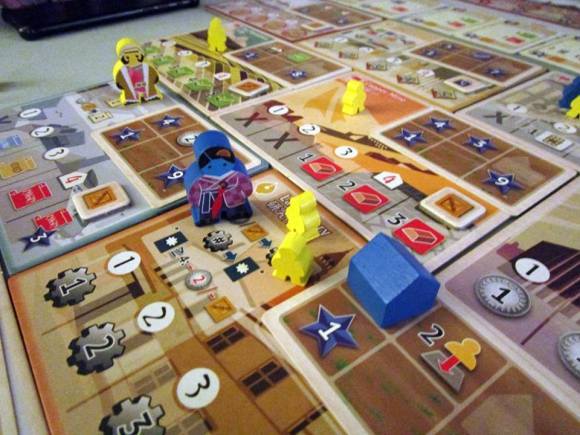
Clank is a Dominion style deck builder tied to board actions. Moving, buying items from shop spaces, and fighting monsters all require symbols from your player deck that’s built up Dominion style via buying new cards from a general supply. The currencies and board elements are well implemented, and the concept of getting into a subterranean cave and back out with treasure is a fun one.
However in end it’s still a VP game (right down to having a “Province” analogue) and feels a little too much like Dominion for me (which I’ve gotten beyond tired of and don’t really play anymore), even given the unique twists it adds. Something that had a different goal, or at least was farther from Dominion in terms of the deck mechanics, would have been appreciated. The additional elements do elevate it beyond its inspiration though and the plethora of gamers who love Dominion should jump all over this immediately.
Dark Tales: Snow White
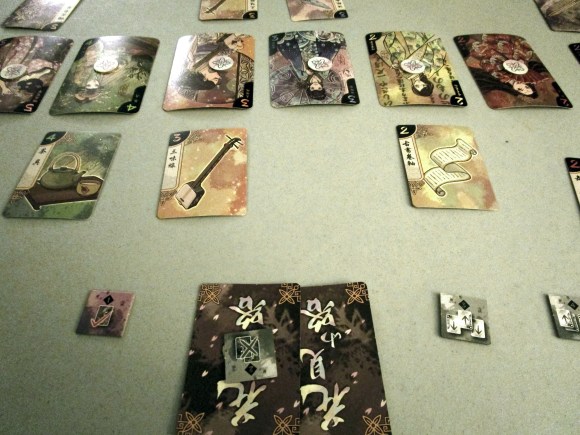
I found the Dark Tales base game reasonably enjoyable, but to be honest was rather disappointed with my first experience with the Snow White expansion. The new cards didn’t add much variety of mechanics (some were actually copies of base game cards with different names) and the distribution and way cards interacted seemed really screwed up by the added cards. There is a recommended variant where some of the base cards are removed, but it was presented as something that affected game length and was totally optional (and removing single copies of certain cards shouldn’t help distribution issues anyway).
The other expansions look more interesting and varied, so hopefully this was just a single misstep, but Snow White was a big miss for me and I’m more likely to go back to the base game alone than trying this again.
——-
So two solid games (though one’s not to my personal tastes) and a lackluster expansion this time around. As always your milage may vary.
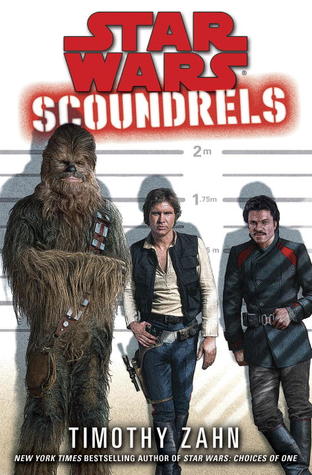
“It was, Han thought, a good day to make 163 million credits.
It would not be such a good day to walk away empty-handed.
It would be a really bad day to get shot.”
Han Solo’s a smuggler, not a conman. But with a growing bounty on his head and a huge score in front of him, he’ll adapt and lead a team of the very best thieves and grifters… that he could find on short notice.
Timothy Zahn is my favorite writer, and he shines most brightly when expanding and exploring the Star Wars mythos. In one of the last novels of the Expanded Universe before Lucsarts was bought by Disney, he presents a tale featuring the seedier element of Star Wars’ rogues gallery as Han, Chewbacca, and Lando Calrissian try to rescue someones ill-gotten gains from a neigh-impenetrable safe.
The concept Scoundrels was sold on is “Star Wars meets Ocean’s 11,” and it’s not only apt but I honestly felt Zahn was a little too tied to it in parts. I rolled my eyes when I found out Han’s team would actually have 11 members. They are all used well though and beyond the occasional heavy handed references this is a nice blending of heist tropes and sci-fi elements.
There are a lot of moving parts, agendas, and counter agendas that keep the plot compelling and mysterious until the end. Although I felt it didn’t quite come together as smoothly as some of Zahn’s other novels. The time period it’s set in provides advanced context that’s hard to shake, there are a couple of (thankfully minor) “idiot ball” moments, and at a particular part of the story there are some extremely uncomfortable implications that are totally unneeded. By and large though I enjoyed the journey, and while a couple of the multitude of twists had the edge of “trying too hard” most of them were logical, well done, and entertaining. Zahn also expertly weaves in allusions to his other books and characters without making knowledge of such necessary to follow the plot. It’s a nice treat for those who read everything he’s done but is executed in such a way not to turn off or overwhelm new readers.
I’ve read the prequel novella “Winner Lose All” (included at the end of the paperback) before. It’s a fun little story featuring a handful of characters from Scoundrels. The characterizations didn’t quite mesh between the novel and the novella, but they were still recognizable. Even though it takes place before Scoundrels and was released first to drum up interest, I’d say reading it second (as it’s presented here) is the better choice.
Scoundrels is another solid Star Wars adventure from Zahn, despite not reaching the heights of his other forays. Enjoy the ride.
Mitsuha and Taki are strangers living very different everyday lives that change dramatically when they start waking up in each others’ bodies at random intervals in dreams that are all too real. Getting to know each other by proxy the longer this goes on, something more is happening in the shadow of their strange situation.
Your Name. is as striking and impactful as Makoto Shinkai’s previous works, with perhaps a touch more polish. As always the visuals are absolutely breathtaking, both in the gorgeous environments and backgrounds that bring the movie’s world to life and in engaging character animation that adds great emotional impact to the story through facial expressions and body language.
Such detail and precision to the animation is used to great effect to make the story engaging, which is particularly important in the body switching scenes. The film would not have the resonance it does if the audience couldn’t immediately tell the difference between Mitsuha and “Taki in Mitsuha’s body” and vice versa.
I found the pacing here interesting, with the first half of the movie having a tv feel to it. The opening sequence and certain montages particularly bring to mind the pacing and certain elements of a tv series rather than a movie. It’s executed well and works nicely to allow establishment of a specific atmosphere as the baseline of Shinkai’s tale.
Your Name. walks a fine line thematically, but does it well. It’s infused with Shinkai’s usual evocative, sometimes biting, observations of the human condition, but well balanced with light and heartwarming touches among an emotionally affecting journey. There’s of course more going on than it appears, but the story always remains strongly centered on the characters and grows from their desires and actions. Shinkai’s trademark ability to pull on his viewer’s heartstrings was also in full effect, and I certainly felt my emotions being played like a fiddle at moments (and I mean that in a positive way).
While I’ve been impressed with all of Shinkai’s movies, I’ve liked some much more than others. I feel this is one of his best, right up with Children Who Chase Lost Voices as my favorite. Add in the previously mentioned incredible animation, and Your Name. is well worth catching during its limited theater run.
Recently had a chance to try a fun co-op with an intricate setup and thematic elements of the minotaur’s labyrinth adapted into a sci-fi setting (a treat for a mythology buff like me).
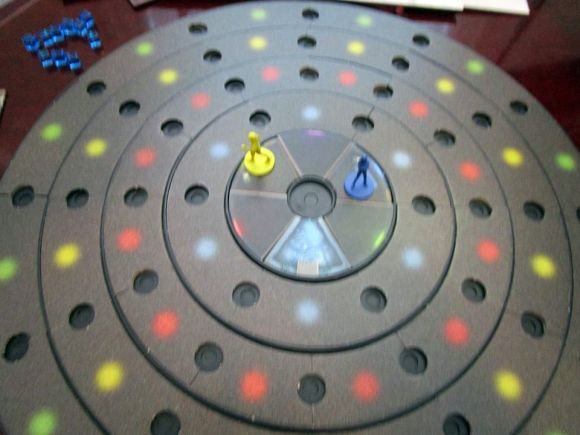
It starts with a great concept: players are captives of an alien race trying to perform a jail break and escape. All players must reach the exit (escape pod) at the same time to escape/win. The hook with Daedalus Sentence is the board comprised of concentric circles that rotate in between player turns. The mechanic is well implemented and nicely compliments independently moving guard patrols (including amusingly named/themed shock troops called Minotaurs) to really give the feeling of navigating a maze as players try to adapt. There’s an exploration aspect too, as the rooms start face down and have different powers available (and possibly extra guards to avoid) as the players reveal them.
The pace of the game really ramps up as players progress to each new ring and raise the game’s “alert level.” The higher the alert the more times the rings rotate and the guards move per turn. So at the beginning the players have some breathing room to plan a bit, but then things get extremely hectic. I liked the progression and the way the increasing pressure keeps the game engaging.
It did seem like the game could bog down at the end as players have incentives to play things slow and safe though. The capture mechanic is also a mixed bag, as it makes a lot of sense thematically but having a player literally have nothing to do until someone comes all the way back to the beginning of the “maze” to get them can hurt the pacing.
I tried this with 2 players, and liked the game balance. I’m not sure about the scalability with more players, as it felt like I had the perfect number of actions to make my turns meaningful. I understand to keep the difficulty intact the players as a group need to be limited to a certain number of actions, but there’s a lot of upkeep between turns and with fewer actions per player I could see upkeep vs actual playing time (for each person) to skew in the wrong direction. Curious to find out.
There is a small amount of randomness in what rooms are used on the outer rings, but for the most part after a couple games you’ll know what you’re going to find on each level. Some extra exploration incentives (items to find, etc) would help replayability. It would also be nice to have ways to help people get back to cells, or something for captured players to do while they wait.
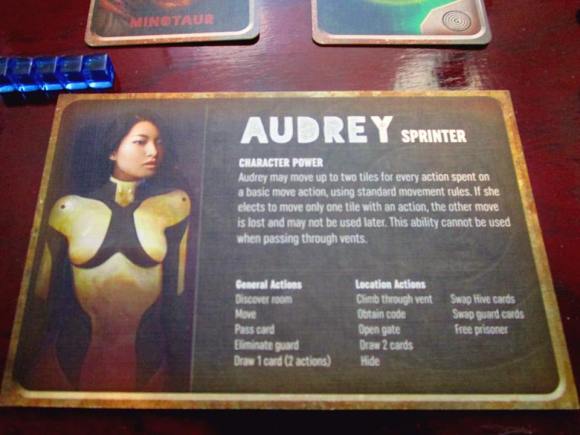
Overall though while there’s room for improvement in Daedalus Sentence what is here is fairly innovative and a lot of fun. I can see myself playing several times before it felt “solved,” and having varying player powers to try also helps shake things up a bit from game to game. While longevity could be an issue, the atmosphere is incredible and the game will be a blast for at the very least a few games.
The Supernatural Studies Club’s newest member is out to destroy Yamada over seeing him and Shiraishi in a compromising position. Even if he can stop her, the club has various other threats looming…
I’ve described volume 1 of Yamada-kun and the Seven Witches as “surprisingly fun,” and that feeling continues to hold into this second volume. The story is still in its early phases, with the titular “witches” concept not yet introduced, but the antics and mischief Yamada and friends get into with his power are amusing.
I do find things a little uneven and the school intrigue subplot is just so-so thus far, but it seems to be setting up the series’ backbone so I’ll give it some time. This manga’s greatest strength is its cast. The varied personalities mesh well and each has a touch of realism buried beneath a cliched exterior (I could admittedly do without the pervert though, who’s rather one note humor is already getting tiresome). Itou’s misguided earnestness makes her my favorite so far.
I’d like the central plot to start getting to the point soon, but regardless the first couple volumes of Yamada-kun and the Seven Witches have been quite enjoyable.
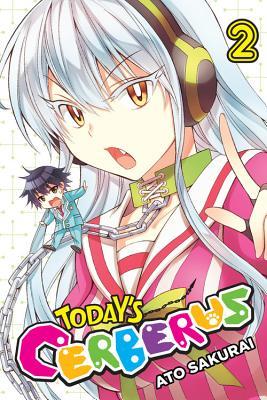
Chiaki’s getting used to life with his new companion / guard dog, but he doesn’t quite realize how much larger his world has really become. Nor what a tempting target his unique situation makes him to other supernatural beings.
Volume 1 of Today’s Cerberus was a fun read that put just enough of a twist on established conventions and tropes to keep things amusing and interesting. Volume 2 is a strong sophomore effort that continues to expand the cast of characters and new world Chiaki finds himself a part of while spending a fair amount of time on character development and firmly establishing the emotional core of the story.
I like the particulars of each of Cerberus’s personalities, and there’s good foreshadowing of each’s motivations, short comings, and the reasons they act as they do. The facts that the dominant personality is isolated from the others in their subconscious and that the most powerful of the three is self limited are great little nuances that portend ominous yet intriguing future developments. I still find Roze the most compelling, but both Kuro and Shirogane also have a fair amount of depth and uniqueness to them. The growing supporting cast fits well and all nicely supplements the (current) main plot of Chiaki trying to be more social and learn to be happy despite what he’s missing.
I’m still finding Chiaki and Kuro’s adventures highly entertaining. Looking forward to reading more.
I recently participated in a three day Shodo calligraphy course at TCI taught by Tomoko Furukawa. It was a particularly great opportunity to attend as it was Paris based Furukawa’s first class in the US.
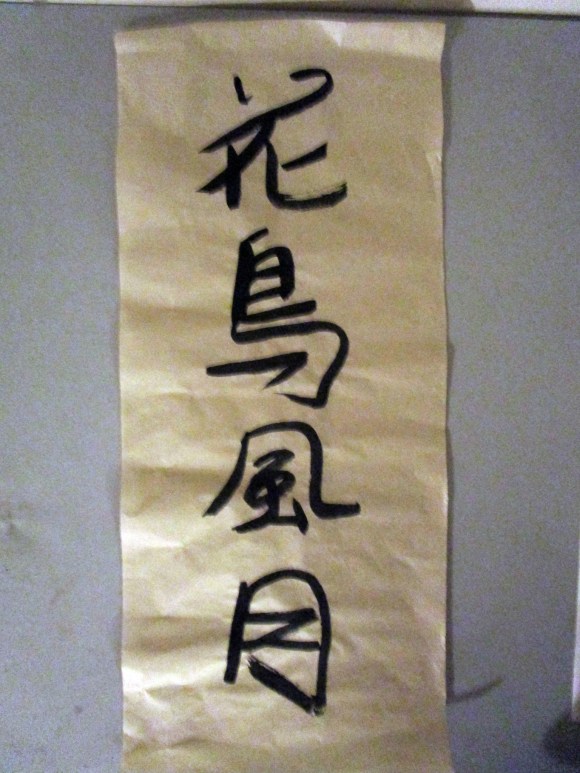
Example sheet made by Furukawa as a guide to practice from.
One of my efforts from class 1.
Having never tried calligraphy before in any form it was fascinating and enriching experience. Furukawa explained learning calligraphy is a hands on endeavor and all three classes were structured in a practice based manner, with her demonstrating the day’s techniques to open, creating guideline pages for us all to reference, and then offering guidance and suggestions as needed as we attempted what she showed us.
My final attempt from class 1.
During the three two hour sessions we experimented with three different aspects of calligraphy. On the first day we practiced what is perhaps the first thing that comes to mind when calligraphy is discussed: stylized kanji. Furukawa demonstrated a line of four kanji (“flower,” “bird,” “wind,” and “moon”) in three different styles, then focused on one style for us to attempt ourselves throughout the session. One of the most interesting things was seeing the ways in which everyone’s results were individual and unique even with working off the same examples and writing the same kanji.
One of my completed papers from class 2.
In the second class we learned about making Japanese Ryoshi paper, a technique of lightly decorating paper to be used for calligraphy. The concepts of using small amounts of color to accent etherial and similarly faint metallics really appeals to me, as does the idea of negative space. I had to leave this class a bit early so didn’t get to do as much of it as the other techniques, and would really like to revisit it in the future.
One of my completed papers from class 2.
On the final day we tried creating patterns evocative of bamboo. This was perhaps the most difficult to get a handle on, between trying to capture the essence of bamboo in minimal representation while making the brush and ink do what you want them to.
Beautiful example piece by Furukawa of another type of bamboo.
Example sheet made by Furukawa as a guide to practice from. Seeing the individual elements separated was quite interesting.
Example sheet made by Furukawa as a guide to practice from.
Everything was “trial and error” to some degree, and of course nothing looks the way you want it to the first time. In all three cases, even over the course of two short hours, I could see improvements in my (of course still rudimentary) efforts. It was quite satisfying, and the process itself relaxing and fun overall.
Slowly learning to mimic the form of Furukawa’s example (in orange).
One of my bamboo attempts from class 3.
Furukawa provided a wonderful primer on several different nuances of calligraphy in the limited time we had. In addition to the basics of the techniques we were focusing on each class, she had us use different types of paper to see the ways in which different techniques are needed and the ink, brushes, etc all react differently and produce lines with different qualities.
She also touched on the importance of how each work is approached mentally, visualizing what you wish to create, and the importance of negative space in the compositions. The breath of knowledge she shared and variety of topics covered while still spending the majority of class time letting us practice was quite impressive.
My final bamboo attempt from class 3.
While I found some things difficult (as of course expected when beginning any new art), I thoroughly enjoyed my first foray into Shodo and greatly appreciate the time Furukawa spent teaching us. Thanks to both her and TCI for such a rewarding class.
Tenri Cultural Institute, in addition to its language school, concerts, and various other cultural events, hosts an art gallery that is always home to a variety of incredible exhibitions ranging from demonstrations of traditional Japanese techniques to innovative displays of multinational modern art. I’ve spotlighted several past showings, including the multinational Ink Imagists exhibition and Chika MacDonald’s Mugen exhibit.
Here I’ll be sharing thoughts on the currently showing “12 Years” exhibit.
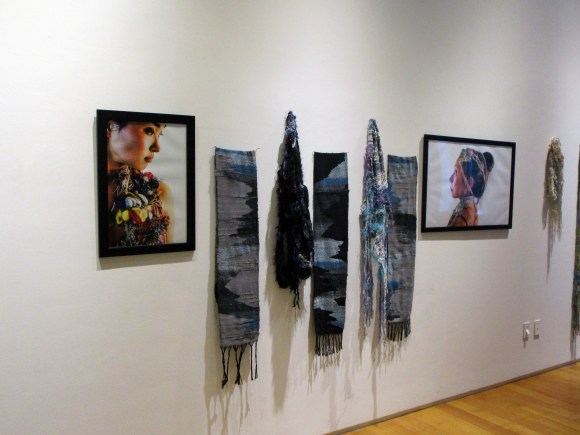
Nobuko Tsuruta has been doing SAORI, a Japanese art that embraces irregularities and uniqueness of freestyle hand weaving, for the exhibition’s titular “12 Years.” There’s wonderful variety showcased in her art. From stark, striking black and whites to gloriously colorful compositions in forms ranging from traditional tapestries and clothing to more inventive and abstract pieces using a wide array of fibers and other materials.
Beyond the surface intricacies and beauty, an underlying contemplative aspect to Nobuko’s textiles that adds emotional impact to her pieces. In her candid and genuine profile, she shares fascinating insight into weaving as meditation and accepting all aspects of herself, including “negative thoughts” and her “own vanity, ego, competitiveness and pessimism,” into the creative process and her art.
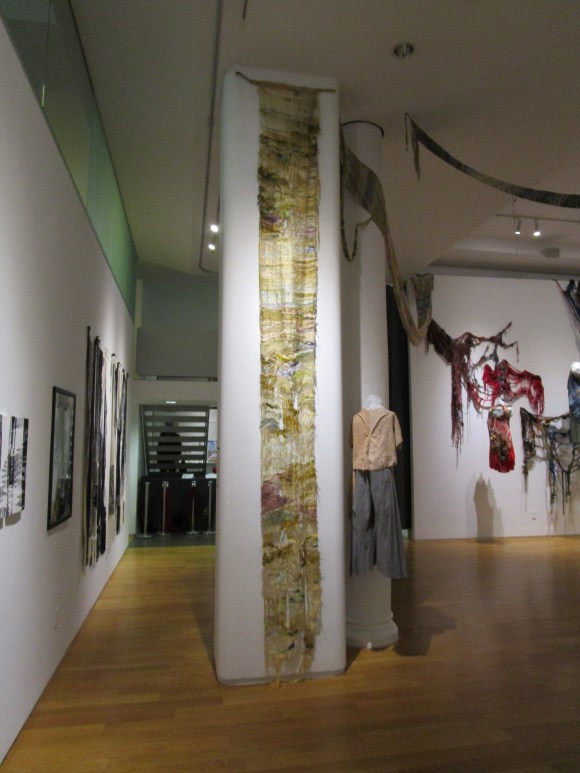
The centerpiece of 12 Years is a breathtaking floor to ceiling tapestry entitled “Requiem.” It’s absolutely gorgeous, with shimmering gold interwoven with splashes of vibrant colors. There’s something powerful and evocative beneath the surface, and a placard nearby explains the deep meaning behind it.
With artist Nobuko Tsuruta in front of “Requiem.”
Requiem was created while a fellow member of Tsuruta’s Saroi studio was hospitalized and subsequently passed away due to terminal cancer. It’s “intended to connect the Heaven and Earth, a bridge connecting the spirit of the people who died to we, the living.”
Nobuko’s dedicated Requiem to lost loved ones, including Tenri Gallery’s curator Kazuko Takizawa, who also passed from cancer a month ago. Kazuko’s love of art and infectious enthusiasm were apparent every time I saw her, and Requiem is a wonderful tribute to someone greatly missed.
Rounding out the exhibit are striking photographs of people wearing Nobuko’s creations. They provide a nice compliment to the pieces on display, and the entire exhibition makes great use of the gallery space to really highlight and heighten the visual impact of Nobuko’s work.
12 Years runs until Wednesday, March 29, and is another excellent exhibit at Tenri well worth going to see in person.
Last year’s Tokyo Joshi Pro show I attended was admittedly my least favorite of the trip, with mediocre wrestling, poor pacing, and the general feeling that I was not their target audience. There were bright points and most of the crowd adored it, but I felt with some tweaks the show could have been significantly better without losing any of the appeal to their dedicated fanbase.
So my expectations weren’t high for this, but I was interested to see if there had been any growth in the promotion / performers.
The undercard featured a nice assortment of match styles, including Nodoka Oneesan (who debuted in last year’s opener) opening against her trainer Cherry, a 3-way between Rika Tatsumi, Hyper Misao, and Maho Kurone, and Ai Shimizu & Laura James vs Azusa Takigawa & Nonoko with special guest referee Joey Ryan.
The opener was decent and while still developing Nodoka was clearly more comfortable in the ring than last year. The three way had a overriding story of super-creepy Maho Kurone going after TJP’s resident ring announcer Minami Momochi (who was seconding Misao) and Misao or Rika running interference. Maho’s vampire/zombie character, complete with a severed limb she wears around her neck to the ring and gnaws on, is a great addition to the idol heavy promotion to provide a different feel. All story over action here, but fine for what it was.
The tag match was all comedy, but it was good comedy. The pairing of Azusa and Nonoko benefits both as they have good chemistry.
Everything was absurd but entertaining. This match was the best Ai looked in the ring of the three times I saw her this trip.
A couple of matches in things paused for idol performances, with two different groups performing a couple of songs apiece. I actually liked isolating them instead of having the singing as part of certain wrestlers’ entrances like last year. It also allowed them to set up speakers/proper equipment in the ring for them (which is impractical when doing one song at a time throughout the show). I understand criticisms of this breaking the flow of the show, but I thought it was fine and fit well with TJP’s general theme/appeal.
It also tied directly into a later match between two members of the respective groups as Reika Saiki faced Maki Itoh. I was familiar with Reika via social media but never saw her wrestle before. She’s got an incredible physique and uses the power to great effect in the ring, looking quite impressive in her victory over Itoh. It was kept pretty basic (understandable given both wrestlers debuted in 2016), but they put on quite a clean, solid match considering their experience level.
In a rematch of sorts of one of last year’s highlights, Candice LeRae faced Yuka Sakazaki’s “masked twin sister” Mil Clown. I absolutely LOVE the crazy clown gimmick. The mannerisms, moves, etc. were all pitch perfect. Another strong showing between the two, and a touch better than last year’s I think. Mil gets a victory to avenge “her sister’s” loss last year.
Saki Akai is clearly TJP’s star, and received the biggest reactions of the night by far. She was in full dominant heel mode, but still heartily cheered regardless as she faced Miyu Yamashita in the semi-main. Saki’s personal maid / manager / henchman played to the crowd a little too much when interfering, but Miyu did a decent job of trying to rally the fans behind her despite it being an uphill battle.
I still kind of feel like Miyu’s capable of a bit more than I’ve seen from her, but she was good here regardless. Akai played the arrogant heel to the end, including mockingly offering a handshake after defeating Miyu only to pull it back and continue the abuse. I like the total commitment to the character she showed and that she didn’t let the cheers tempt her to play hero to the audience.
The main event was quite an interesting matchup. Reigning and defending Tokyo Princess of Princess Champion Yu made her wrestling debut in the opener of last year’s show. In contrast, her opponent Shoko Nakajima wrestled in last year’s main event in the finals of the tournament to crown the first champion, coming up short against Miyu Yamashita.
This started slow, but once they built momentum it turned into a nice example of a grapple heavy and judo influenced style I unfortunately didn’t really see otherwise this trip.
Shoko’s parallel challenge to last year added a bit of depth, and Yu looked natural as champion despite her short amount of experience. It ran a bit long and Shoko was clearly carrying things at times, but overall this had a strong story and good action and was a fitting main event.
After Yu’s successful defense, Reika comes up to apparently stake her claim as the next challenger. Good choice I think. It’ll be interesting to see if the two relative rookies can elevate each others’ performances in a main event slot.
I was pleasantly surprised to discover most of the issues I had last year had been addressed. While a lot of the action was still basic, significantly higher average in ring performances in terms of execution and a better array of stories and characters made this a vastly better show while keeping all of the elements that appeal to their core fanbase. The effort was strong up and down the card, paired competitors extremely well, and perhaps most importantly the pacing was much improved, with nothing really overstaying its welcome.
This is a very different product than the other promotions I watch, but it’s growing into its niche and I found this show quite enjoyable. Looking forward to seeing if they’ll continue in this vein going forward.