Categories
Board Games Reviews

Samurai Board Game First Impressions

Reiner Knizia has designed a number of award winning games, including a personal favorite of mine: Lost Cities. Last year Fantasy Flight Games published a new edition of a 1998 tile laying game of his called Samurai. It looked fantastic, from concept to theme to production value. Having gotten a chance to try it out I’m happy to say it impressed in all regards.

samurai

Gameplay

The goal Samurai is to gain control of the most of the three castes represented on the board by plastic tokens. Castles for military, Buddas for religion, and rice for commerce. Players place tiles each turn from a hand of five.

IMG_9174

Whenever certain spaces are surrounded by land tiles the piece(s) are claimed by whichever player has the highest influence for that caste in the surrounding tiles. Samurai act as wild cards and count for any of the three castes. If there is a tie for highest relevant influence, the piece is claimed by no one and is placed to the side of the board.

The game ends when either four pieces have been set to the side of the board as a result of tied influence or when the last piece of any one caste is claimed / removed from the board. Each of the three caste tokens is given to the player with the most of that caste’s pieces (and remains unclaimed in the case of a tie). The person with the most claimed castes wins. In case of a tie, the tied player with the most pieces in castes other than the one they claimed wins.


General Thoughts

While a little difficult to easily explain in words, the gameplay is extremely intuitive and quick to grasp. Yet there is a ton of potential depth, particularly with players getting to choose their own starting hands and take part in setting up the board (we took the instruction’s suggestion to do both randomly for our first game). Little touches like having some “quick” pieces that are exceptions to playing only a single tile per turn really open up possible strategies.

IMG_9181

If there’s one major potential flaw with Samurai it’s the possibility of major analysis paralysis. Every player has the exact same distribution of tiles they will play throughout the game. The player screens even have them all pictured to help you remember what you have left. This is great for the strategic depth of the game, but considering all played tiles can be seen and influence totals are usual extremely close, a player could not only get bogged down with trying to determine their best choice from what they have, but also with counting opponents visible tiles to determine what each other player has left and incorporate that into their strategy. We kept things going at a decent pace, but the potential for LONG turns is huge.

IMG_9180


The component quality is fantastic. Good thickness to the cardboard tiles, great looking plastic caste pieces, and beautiful graphic design fitting the chosen theme. Also, the modular board scales nicely for each different number of players.

Overall


Samurai is an accessible and fun tile laying game that is also surprisingly deep and beautiful to boot. With the one reservation that games will drag with AP prone players, I highly recommend this as a great addition to nearly anyone’s gaming closet.

Categories
Board Games Reviews

Hostage Negotiator Board Game Review

Hostage Negotiator is the first strictly one player game I’ve bought (although I never play Onirim with more). While the main draw of gaming is generally social interaction and competition, there is room for games that are challenging and fun to play when I can’t get a group together.

hostage_box

Gameplay

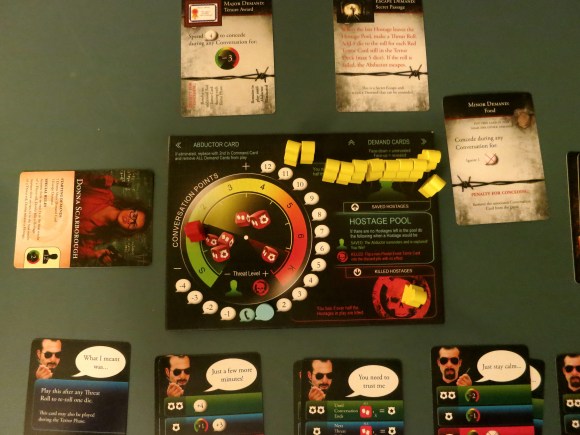
The goal of Hostage Negotiator is to save hostages and capture or eliminate their abductor. Each round you play cards to increase your conversation level (which lets you perform certain actions and/or purchase more powerful cards), attempt rescues, and try to keep the abductor calm and the threat level low.

Almost every card involves a “threat check.” You roll a number of dice based on the current threat level (and modifiers) and resolve things based on the number of successes rolled. The custom dice are numbered as well as having helpful game symbols on them. 5s and 6s are always successes, and 4s can generally be changed to a success by discarding two cards. 1-3 are fails.

IMG_8501

After you’ve played all you can (or choose to) you can buy cards for future “conversations” (rounds). Then a terror card, which represents a key moment between “conversations” and generally escalates the danger is played. If you haven’t satisfied a win or loss condition and the terror deck hasn’t run out you start a new round.

You win when there are no more hostages being held, you’ve rescued at least half of them, and the abductor is captured or eliminated. You lose when over half the hostages are killed, the abductor escapes, or the round after the last terror card is revealed.

General Thoughts

So with die rolls as a central mechanic there is a lot of luck involved, but I feel there really has to be in a one player game to keep things variable and interesting. Hostage Negotiator provides numerous ways to mitigate and manipulate your odds, which is a nice compromise and is where a good deal of the strategy and depth comes from. There is definitely a feel of time pressure as the rounds dwindle and the abductor gets closer and closer to getting away.

IMG_8530


The game comes with three different abductors, each with their own demands and temperament, which encourage different play styles. Terror cards, escape demands, and abductor specific demands are randomly selected for each game. The cards available to the player don’t change, but they are varied and balanced well to give rise to numerous options and strategies. The rulebook even suggests some “career goals” which are decent self-challenges to try as you get better at the base game. This all combines to keep the game fresh. I’ve played over 20 games at this point and none of them have felt the same.

IMG_8531

Which leads to another point: while engaging and deep Hostage Negotiator still lives up to its box advertised 15-30 minutes of play time (sometimes less), making it great to have on hand for small amounts of free time.

And while I haven’t tried any of them yet, there are four expansion packs (so far) which add new abductors, a perfect way to continue to increase the game’s  appeal and longevity.


Overall

What started as a curiosity play quickly ended up sucking me in and resulting in a couple of hours passed and a continual compulsion for “one more game.” While I don’t think anything will ever take the place of gaming with an actual human opponent (or teammate), Hostage Negotiator is a fantastic single player experience and an easy recommendation.


Categories
Board Games Reviews

Quick Thoughts: Automania, Clans, and Codenames

Here are some brief thoughts on a few interesting games I’ve played once or twice so far and enjoyed.

Automania

IMG_8397

Automania is yet another game that looks more daunting than it is. There are a lot of moving parts to reflect changing conditions and provide depth, but the core gameplay is pretty easy to grasp once you start. The different elements are extremely well balanced and make sense thematically. Running a car factory has never been so much fun.

Clans

clans

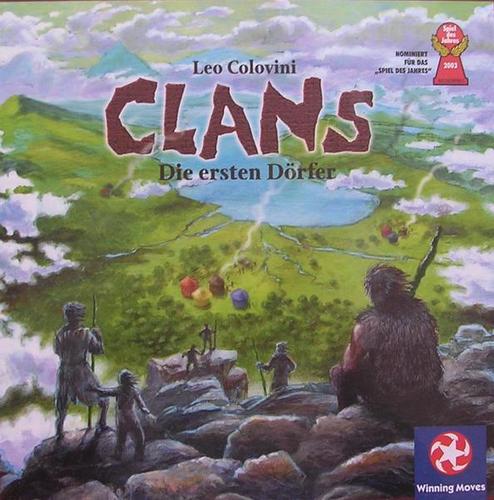
Clans is an area control game with a wonderful layer of hidden agendas beneath it. Everybody’s player color is randomly assigned and secret throughout the game. Trying to make moves that advance your color without giving it away (and thus making it easy for everyone to hinder you) adds a great amount of depth. The only real drawback here is the colors chosen aren’t colorblind friendly, which is a shame since no one can really ask for clarification without giving something away.

Codenames

codenames_back

Codenames sounded like a mild curiosity to me at first, and I was pleasantly surprised at how engaging and fun it turned out to be. The fact that you get to choose how far to press your luck when deciding how many words to try to link with one clue and the ever present instant lose word on the board to be wary of are key in making this a perfectly executed competitive party game.

——-

Just a quick look at some games I’ve had the pleasure of playing. Hope to be back with more in the not too distant future. 🙂

Categories
Board Games Reviews

Top Five “New to Me” Games 2015

I’m unlikely to be playing anymore new board games this year, so this is a good time to look back at games that really impressed me.

Ground rules:

  • The only qualification for this list is that I personally played the game for the first time in 2015.
  • I tried around 15 new games this year, so it was quite difficult to narrow this down. Honorable Mentions include, but aren’t limited to, Between Two Cities, Codenames, and Disc Duelers.


5. Imperial Assault

IMG_4434

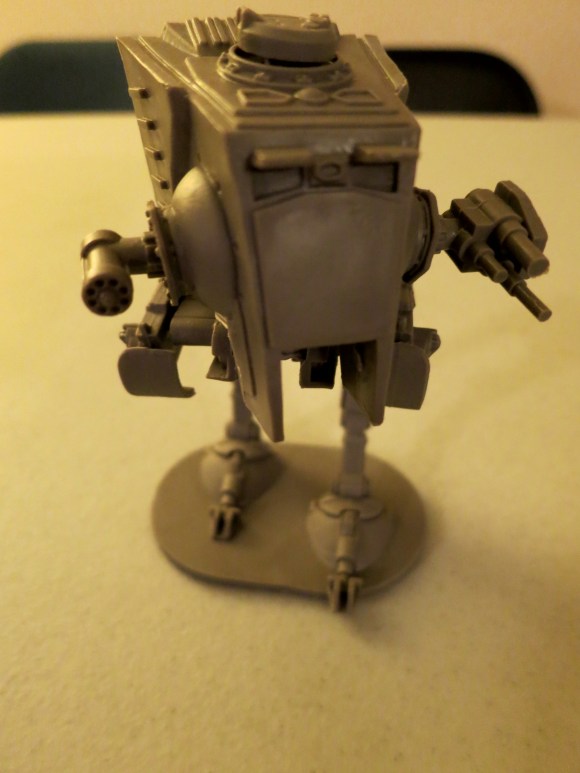
I imagine this is only going to climb in my estimation the more I play. There’s a ton of components and rules to Imperial Assault, but it’s obvious that’s to make it a deeper and more challenging game as time goes on. The introductory skirmish I played was easy to get the hang of and already felt like an actual battle between two sides with distinct goals. The fact that it’s Star Wars just makes it that much better. Fantastic miniature game all around.

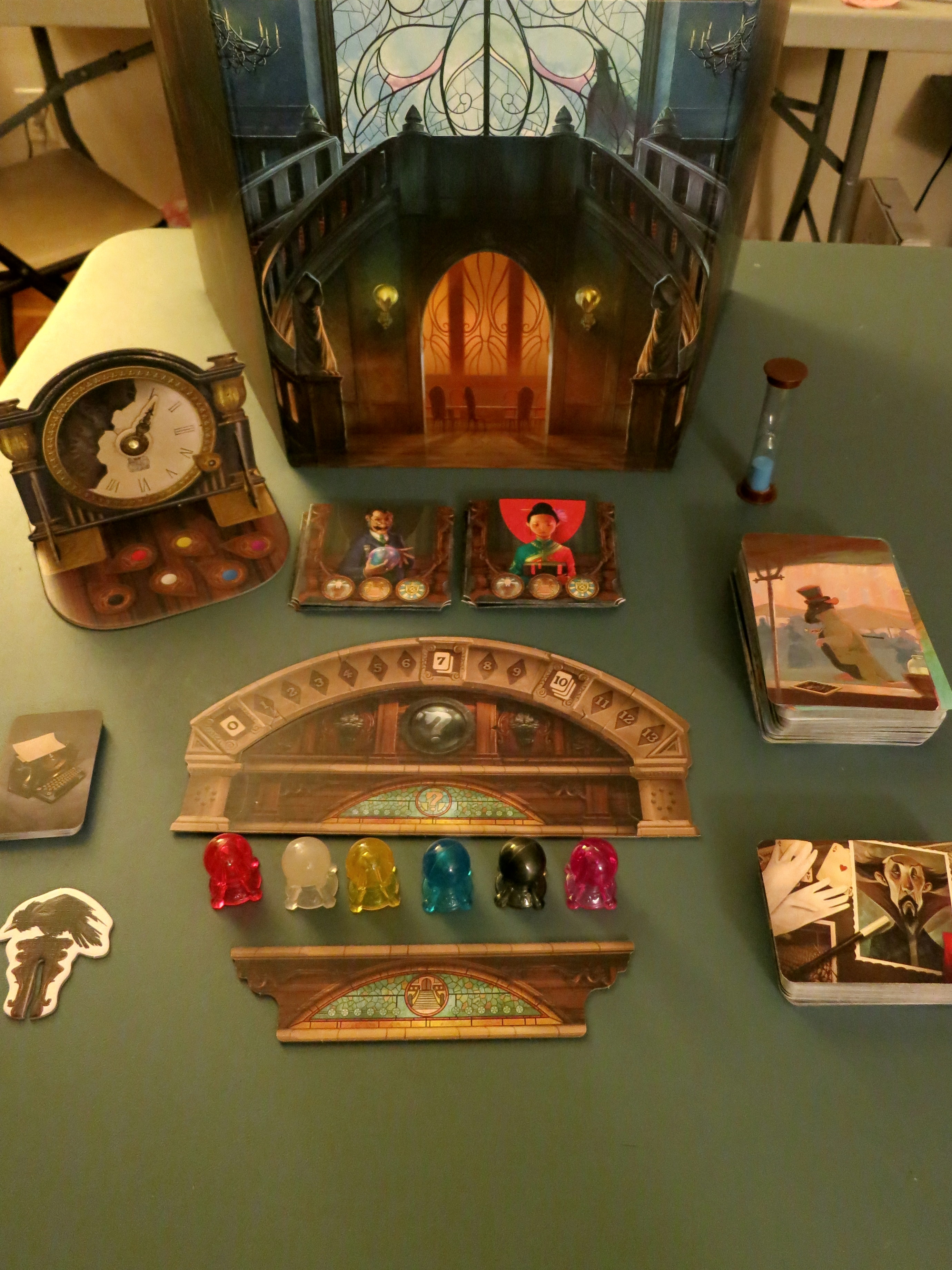
4. Mysterium

IMG_4412

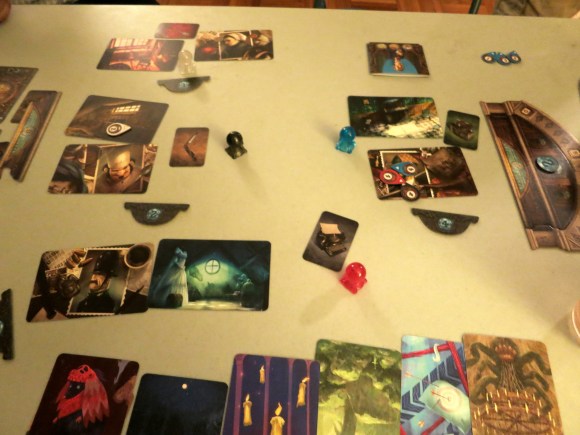
At this point I’ve played so many games that something that seems to have a truly original approach intrigues me greatly. Mysterium is a wonderful asymmetric cooperative game that has a departed ghost trying to guide psychics to the culprit of its murder through sending “visions” consisting of cards with abstract art. The hope is that the cards played by the ghost will indicate specific cards on the game board to the psychics, who are working together and can discuss as needed. Was a lot of fun. Full review.

3. Suburbia

IMG_4418

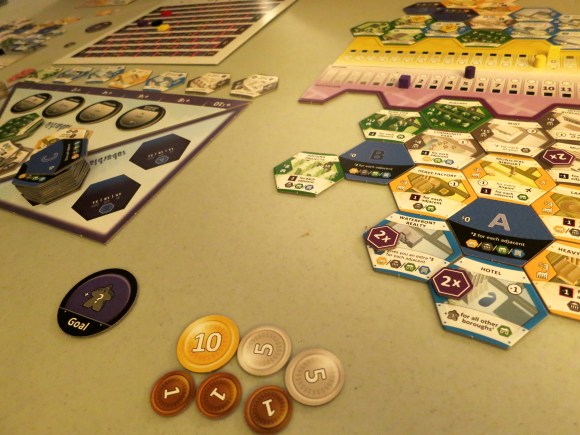
Suburbia is one of those games that looks more complicated than it is and is fairly easy to pick up. The basic gameplay is buy a tile and play it to your suburb, and the tiles tell you everything you need to know about scoring, etc. The depth comes in from the way the tiles interact. This is a wonderful, accessible game that has been a hit with everyone I’ve tried it with so far. Full review.

2. Tragedy Looper

IMG_1428

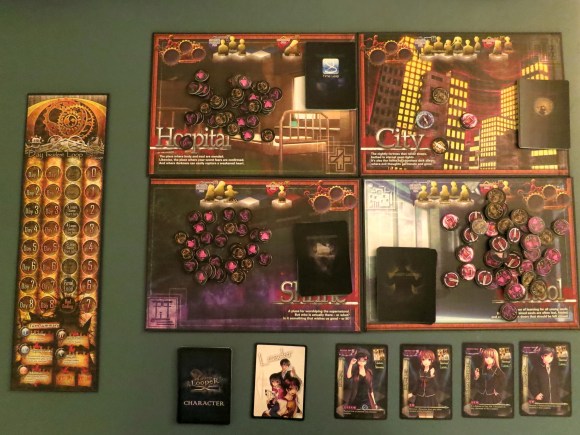
Tragedy Looper is somewhat of a tough game to get your mind around, but once you do it’s a great mystery game (a genre that’s underrepresented and hard to do well).  It’s asymmetric, with players who are time traveling and trying to prevent a tragedy, and a gamemaster that is trying to stop them. There are limitations on possible actions based on the scenario and various stats of the characters being controlled, which is where clues about what has happened and how to prevent it come from. I’ve only played once so far, but I adore the concept and despite playing VERY poorly as GM I enjoyed the game and am extremely excited to try it again.

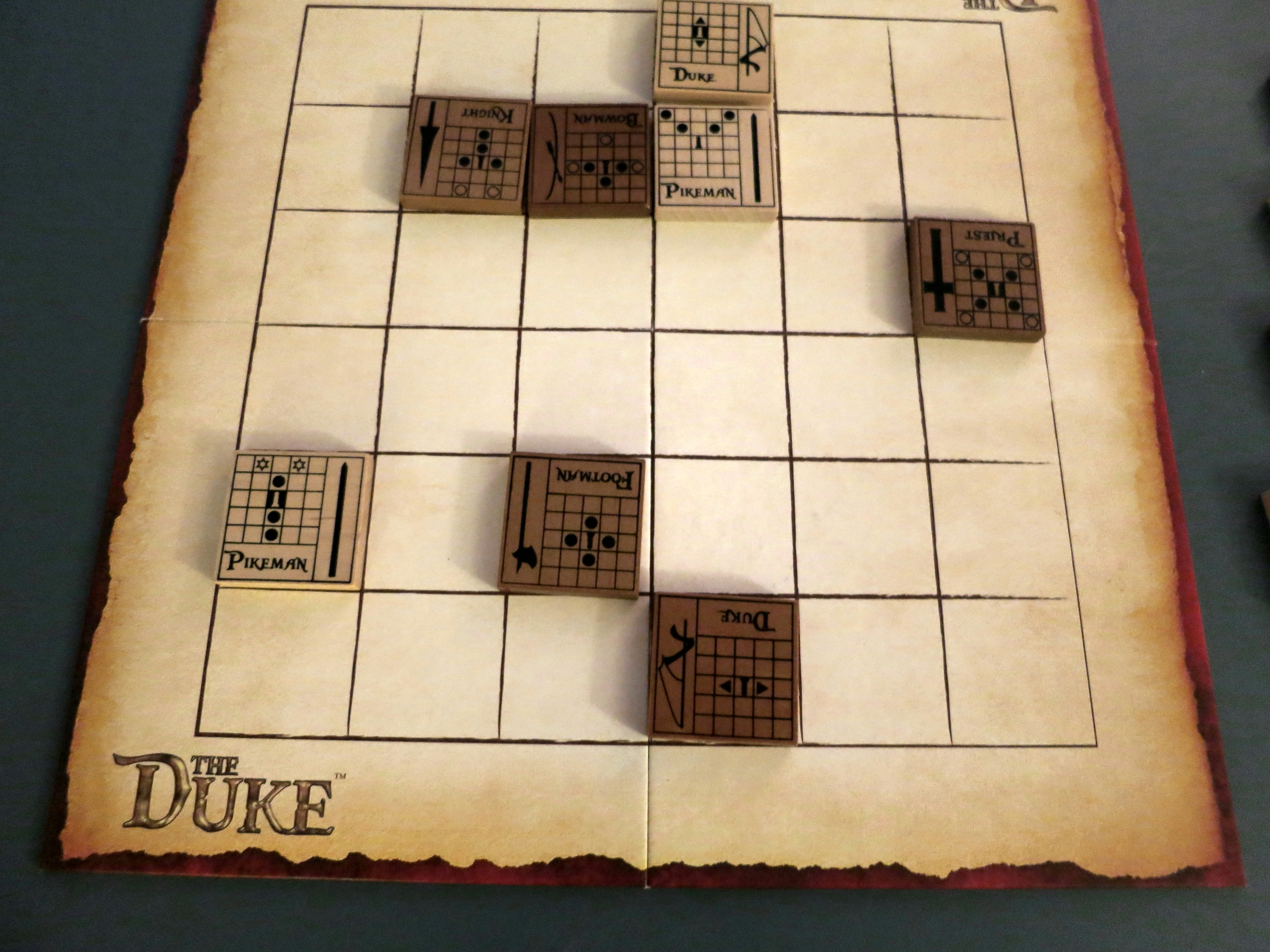
1. The Duke

IMG_2493

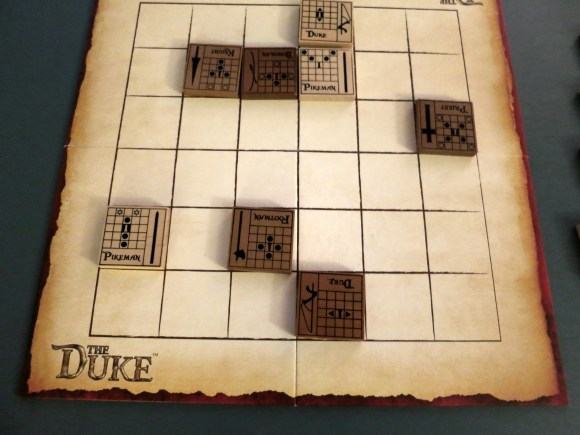
The Duke came out of nowhere to become my second favorite game of all time.  It’s an incredible two player game with elements of chess reworked into a much more accessible and variable experience. The vast number of movement patterns allows for deep gameplay, yet the smaller board and limited starting pieces keeps things manageable. The combination of each piece having its movement grid printed on it and the fact that the pattern is different on each side is just fantastic, and makes this both incredibly new player friendly and deep. Full review.

——-

And that’s it. Was a great year. What are everyone else’s new favorites?

Categories
Board Games Reviews

Blueprints Board Game Review

Blueprints is a fun, quick to learn game that centers around building secret structures with dice. Really, what more do we need? 😉

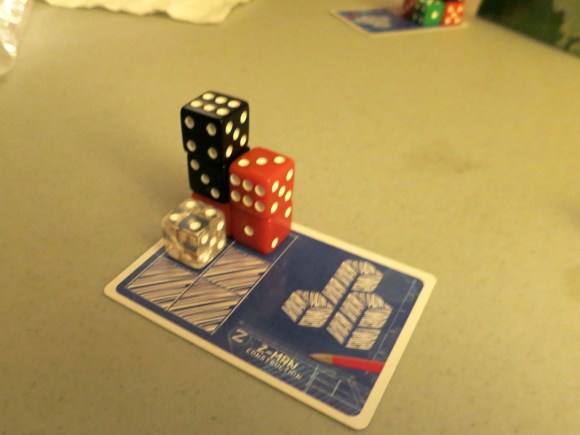
IMG_4433

Gameplay

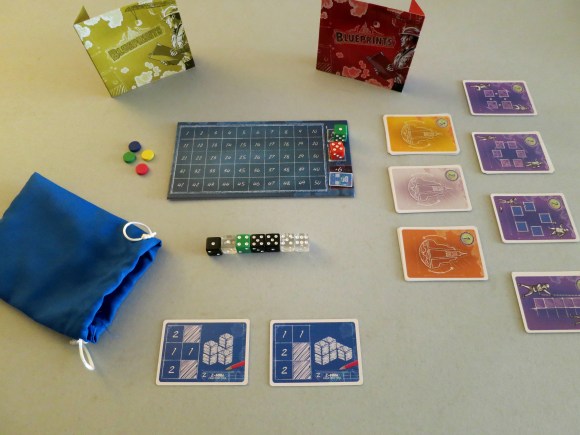
During each of the 3 rounds of the game, players build structures on a blueprint card hidden behind their personal shield out of dice drafted from a random supply. At any given time there are 7 dice in the center of the table, from which the current player chooses 1 and adds it to their building. After 6 turns each the round is over and players reveal their buildings for scoring.

There are 4 types (colors) of dice, which all increase your building’s value in different ways:

  • Orange dice add based on the number of other dice (any kind) it touches.
  • Green dice add based on the total number of green dice in your building.
  • White dice add based on the face up side.
  • Black dice add based on how high in your building they are placed.

Buildings are worth an additional 6 points if you manage to complete your blueprint for the round, but while you can’t build on X’ed spots you are otherwise NOT REQUIRED to follow the blueprint. The highest buildings each round gain “medals,” which translate to victory points at the end of the game. Building scores reset between each round.

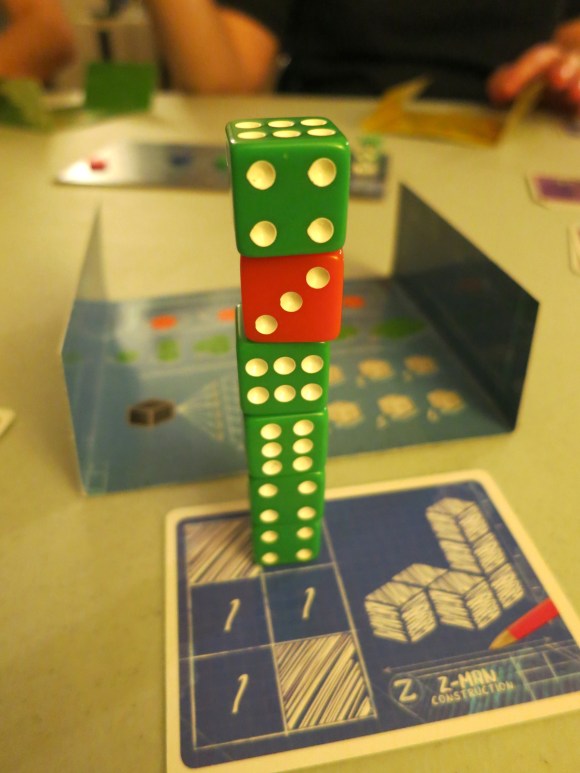
IMG_4425

Besides the medals there are “prizes” awarded each round, and this is where the game really opens up to varying strategies. There are always the same 4 prizes available:

  • Building contains 4 or more of the same number face up.
  • Building contains all numbers 1-6 face up.
  • Building contains 5 or more dice of the same color.
  • Building is 5 or more dice tall at its highest point.

Obviously a couple of these are contradictory, but it is still possible to get more than one a round. The prizes are each worth as much as a silver medal, so there are times when abandoning your blueprint or otherwise failing to maximize your building score might prove advantageous.

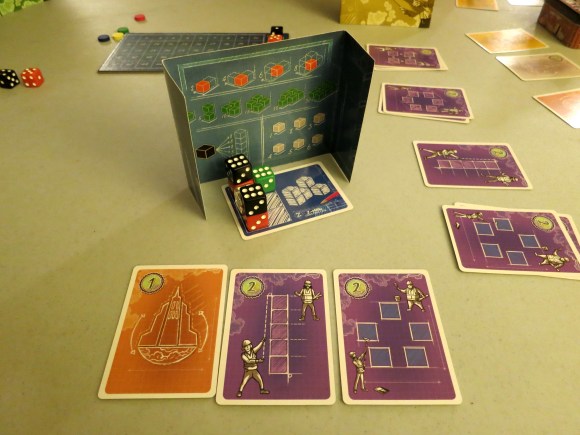
IMG_4426


One last element I want to talk about is “desired materials.” Each round two (different) dice are chosen to be the most and second most desired materials (dice) for that round. Tiebreakers are decided based on how many of these type of dice each player has in their building. This becomes VERY important since only one of each prize is given out each round, and often more than one player will qualify. The mechanic itself is wonderful, since by drawing the in-demand dice from the same supply players build from those dice are automatically slightly more scarce for that round.

IMG_4427

Overall Thoughts:

I’ve played this a few times now with different groups and like it quite a bit. It’s extremely easy to teach and plays very quickly, which makes it valuable to have on hand for in between longer  games. However the setup and nuances make it more than just filler and add a reasonable amount of strategy and depth. It’s quirky, well designed, and most importantly fun.


Categories
Board Games Reviews

Mysterium Board Game First Impressions

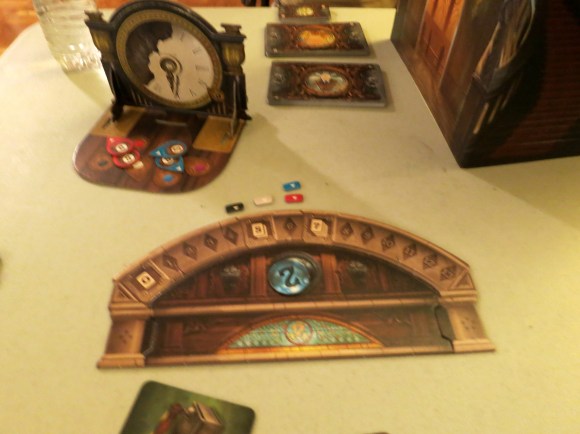
Mysterium is a game I spotlighted in my look at  new and different board games. The concept of having an asymmetric, completely cooperative game is intriguing, as usually everyone fills the same role (aside from player specific powers) or the asymmetric player is a game master / adversary. The setting and look of the game is also quite unique, so I was really looking forward to trying it out.

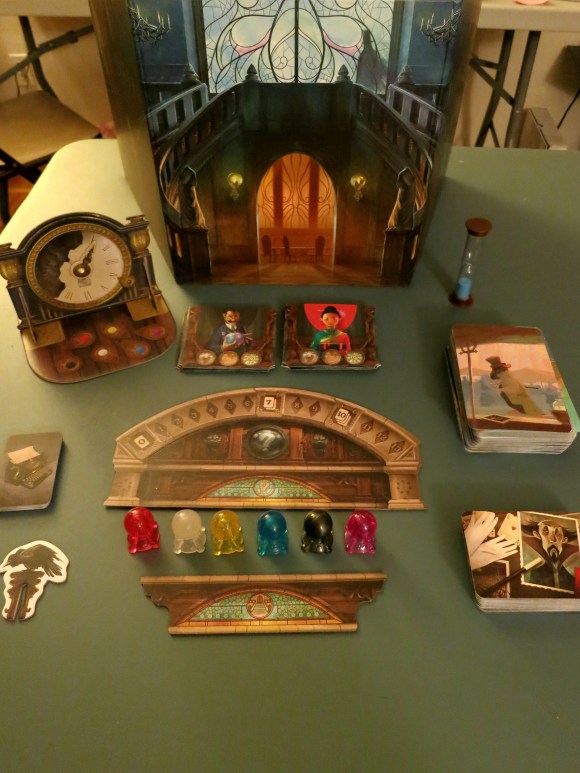
IMG_4283

Gameplay

The gist of Mysterium is that most players are psychics trying to solve the murder of a ghost who’s haunting an old mansion. The ghost is the asymmetric role played by one player chosen at the start. A certain number of people, locations, and objects are chosen (depending on the number of players and chosen difficulty level) and laid out to form the board. In secret the ghost randomly chooses a subset of copies of those cards to form the clue paths for each psychic.

Each psychic has a specific person, location and object that form their personal suspect path, and the ghost’s job is to give them clues to figure it out. This is done by sending the psychics “visions,” cards with abstract images very similar to something you’d see in a game of Dixit. The ghost gives each psychic at least one card per turn trying to match that player’s clue card for the round. The psychics can discuss what they think everything means, but the ghost must stay silent and not give any verbal or physical clues.

All of the psychics must complete their clue paths within seven turns or the game is lost. If they do, there is a final round where the ghost provides three cards pointing to one of the established clue paths (one each for suspect, location and object). This is the true murderer. The each psychics get to look at a number of these final three cards determined by how well they did in the earlier phase of the game, and there is no discussion here. The psychics vote and if they pick the right suspect the ghost’s soul is laid to rest and everyone wins.

IMG_4413

Thoughts:

This is a great game that really expands on the base of something like Dixit and turns it into a full blown deductive game rather than (an admittedly awesome) party game. I played as the ghost and found it quite challenging but a lot of fun. We did well for our first attempt, with everyone completing their clue paths, although we didn’t manage to have the majority finger the right suspect at the end.

It seems the game will scale extremely well simply by varying the number possible suspects based on player count and difficulty chosen. The difficulty impact on the ghost player is likewise well executed: the ghost is limited to the number of times he can discard cards based on the level. Choosing clues to give based on seven randomly picked abstract cards is tough and being able to discard once a round (on easy) was a big help. It will definitely be appropriately more challenging on higher levels by reducing that.

The production value is excellent here. The art is appropriately well done and has lots of little details to both make the cards flexible and open to interpretation and to challenge the player trying to decipher the clues. The theme fits perfectly and the various components enhance the atmosphere.


IMG_4412


Overall

I had heard good things about Mysterium and wasn’t disappointed in our first play. I love mystery based games and this is an original one with great twists on mechanics used in other games. Wonderful addition to the game closet and I”m excited to play again sometime.


Categories
Board Games Reviews

Between Two Cities Review: Balancing Progress

Stonemaier Games has quickly established itself as an excellent publisher that provides games of high quality both in terms of gameplay and production. Viticulture and Euphoria instantly became two of my favorite games, and the Treasure Chest series of gaming tokens are a wonderful series of premium resources token to “upgrade” a variety of games.

So I was quite excited to try out their most recent offering, Between Two Cities. Despite being the first of their games not designed by their founder Between Two Cities keeps up their extremely impressive track record, proving they are as good at recognizing great games as they are at designing them.

IMG_3486

Gameplay:

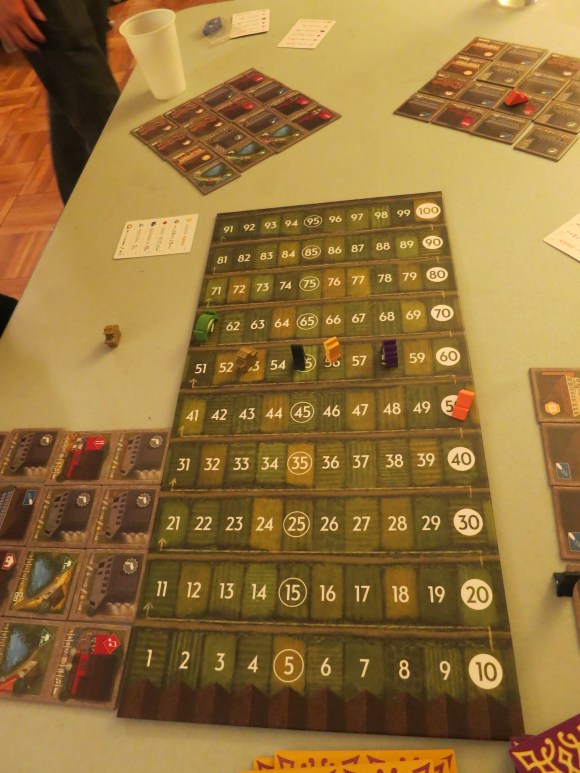
Between Two Cities combines tile laying and drafting, but the real innovation is a concept of “competitive co-op.” Each turn you choose two tiles from your hand and will play one into each city on either side of you. Your opponents will do the same, so you are cooperating with those players to build the cities. There is only one winner however and your score at the end of the game is that of your LEAST valuable city, so balancing things is key.

The different buildings pictured have different scoring schemes, so there’s a fair bit of strategy involved in selection and placement. In rounds 1 and 3 each player places 3 single building tiles in each of their adjacent cities, choosing two tiles to play from rotating hands each turn. In round 2 each player places a single double building tile into adjacent cities. The variation in tiles, as well as the restriction that all cities must be a 4 by 4 square at the end of the game, gives additional depth and challenge without making things too complicated. There are tiebreakers outlined, but they come up much less than one might think.

IMG_3487

Thoughts:

I’ve played this twice so far, once with 3 players and once with 6, and enjoyed it quite a bit. Unlike most Stonemaier games though this feels quite different at the different player counts. With the minimum players we could all affect everyone else’s cities, so it became very adversarial when someone jumped out ahead. The other two players were sabotaging those cities to let the one city lagging behind catch up. This led to a slight problem we had with the rules as stated.

It’s not always best to be optimal in placing your tile if one of your cities is far ahead of the other. In these cases it matters who places their tile first. The rulebook discourages this “in the name of cooperation” and offers a halfhearted order when needed – the same as seating order determined at the beginning of the game. But at the end of the day each player is trying to win on their own, so cooperating to the fullest on a city when it’s only going to help your opponent win is poor play.

The problem that comes up is that with the order as stated every single time you place tiles, the same person always goes first in each particular city (because the original seating order never changes during a game). This was a HUGE advantage, as both “behind” players were before the player who was in front, so we got to play tiles in her cities first EVERY TURN. She managed to hold on and win by a point anyway, but the issue came up again in the larger game to some extent and we decided afterward to use a rotating “first player” marker to decide this in all future games.

IMG_4334

Because of not having direct influence over every other player the 6 player game was more interesting and seemed more in line with the intention of the game / theme. It was fun both ways though.

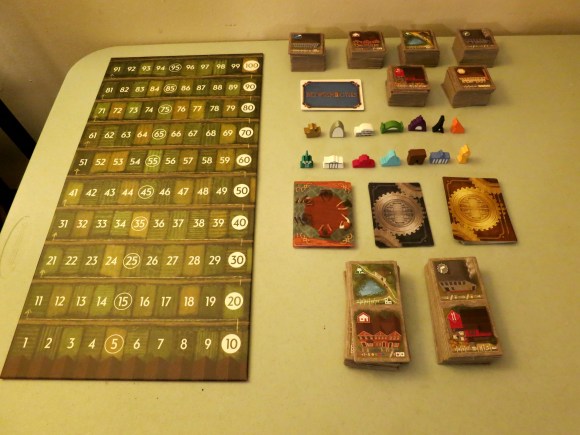
The component quality is up to Stonemaier’s usual high standards with nice, thick playing tiles and cool wooden city markers shaped after famous landmarks (I got the deluxe Kickstarter edition so I have extras pictured – the retail game comes with 7 different types). The game design is decent, but the roofs take up too much of the tiles and make the art look a bit bland. Very minor criticism though.

One particularly phenomenal thing about this game is that is plays pretty quick, and it DOES NOT INCREASE with more players because everyone’s making the same few decisions at the same time. I’ve never encountered a game before that scales without significant additional time. Great aspect that makes this quite versatile in terms of fitting it in to our gaming plans for the day.

IMG_4337

Overall:

Between Two Cities is another excellent offering from Stonemaier Games. The “competitive co-op” idea was quite brilliant and equally well executed. The combination of tile laying and drafting elements makes this plays like no other game I’ve ever seen, which is a huge plus with me nowadays. Definitely a worthy addition to the game closet. 🙂

Categories
Board Games Reviews

Enchanted Tower Review: A Magically Fun Children’s Game

I recently got Enchanted Tower for my 5 year old niece, based on interesting looking gameplay and theme. It turned out to be a wonderful little game that both she and my 11 year old nephew enjoyed.

IMG_4361

Basic Gameplay:

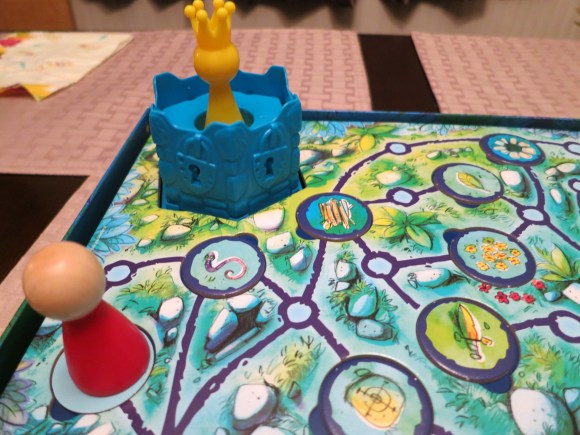
The mechanics are straightforward but a lot of fun. One player takes the role of the sorcerer, and the other take turns controlling “Robin.” All the robin players close their eyes and the Sorcerer hides a key under one of the 16 tokens on the board (there are compartments for the key under each). The two teams then race to find the key. The sorcerer knows exactly where it is, but has a longer path before he can start looking. Once someone finds the key they try it in one of the six locks on the tower. If the princess is freed that team wins. If not the sorcerer hides the key again and things start over.

IMG_4359

General Thoughts:

There are a lot of little touches that take a great basic concept and elevate it. Each turn both teams roll a special die. The sorcerer rolls one that has pictures of the player tokens and determines which team moves first that turn. The other team rolls one with two color coded numbers on each face that determines how far each team moves that turn.

IMG_4360

The mechanism under the tower is separate and thus can be turned, so which lock is the winning one can is randomized each game. Magnets on the bottom of the pieces make it obvious when the key is discovered. The board, tokens, and pieces are all beautiful and of high quality.

IMG_4362

Everything comes together wonderfully to form an easy to learn children’s game that plays quick, is captivating for the little ones and enjoyable for the adults playing with them. My niece and nephew got very excited when trying the key and taking their turns as sorcerer. Overall Enchanter Sorcerer was a bit hit for us and I highly recommend checking it out for the little gamers in your family.

Categories
Board Games Reviews

My Top Ten Favorite Games (Nov 2015)

I’ve been wanting to do a rundown of my favorite games, but it’s always a bit odd as the list is ever changing as I play new things. I recently came across a wonderful blog entry by Jamey Stegmaier embracing that change and periodically updating his personal list. So I’m adopting his great idea and will likely be checking in every so often with updates to the below.

Ground rules:

  • This reflects my favorite things to play right now. I love everything on this list. Order is pure personal preference and whole list HIGHLY subject to change, as ten is a small number to cover all the great games I’ve played and something’s bound to be missing.
  • I need to have played something at least twice for it to be eligible. I think something has to hold up to at least a second play to be considered a favorite. So Imperial Assault, Suburbia, Tragedy Looper, and Impulse (and several others) all get automatic honorable mentions. I expect these the first two, at the very least, to jump into the list next time. I also have several interesting looking games I’ve never played in the waiting pile. Should be fun. 🙂
  • Expansions I have are considered with the base game and won’t be listed separately.

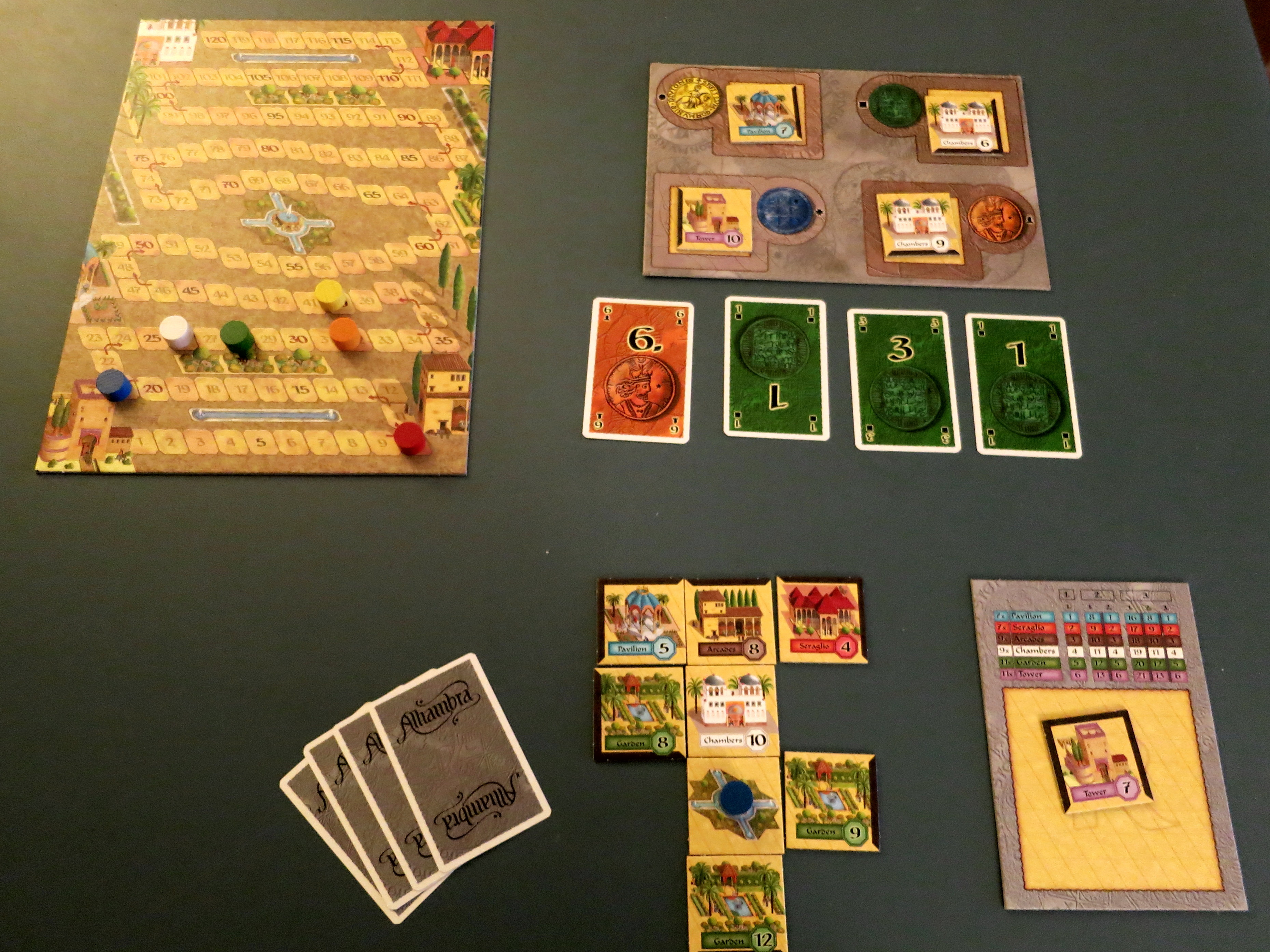
10. Alhambra

IMG_4291

A point that will pop up several times in this list is that I love games that are both accessible and deep. Alhambra shines in these respects. The basic mechanics of purchasing tiles and placing them in your own area with the player with the most of each type scoring points is easy to grasp, but the differing distributions and changing costs of tiles keeps things varied and challenging. There are numerous expansions containing several modules that can be swapped in and out to customize things even more exactly to your group’s particular preferences. This is one of my go-to gateway games.

9. Castles of Burgundy
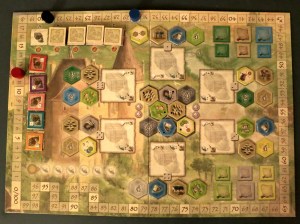
IMG_2505

Castles of Burgundy is unlike any other game I’ve played, and it shines in the unusual way uses dice to determine both which tiles a player can buy and which purchased tiles can be placed on their personal player boards. There are a lot of “moving parts” and things to keep track of, but it’s all logically laid out and intuitive once you get the hang of it. There’s tons of replayability and different viable strategies, even before considering the numerous different player boards available.

8. Pillars of the Earth
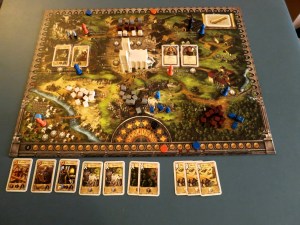
IMG_4287

Pillars of the Earth is one of those games that looks VASTLY more complicated than it is. There are a lot of components and mechanics, but it all fits together seamlessly and makes sense. The use of worker cards and execution of resource management is perfectly balanced and well constructed within the theme. Pillars also has the best expansion I’ve ever seen for any game. It adds depth and challenge to the game without losing anything and makes every aspect it touches better. This is always a big hit with my groups and one of the first “heavier” board games we introduce people to.

7. Euphoria
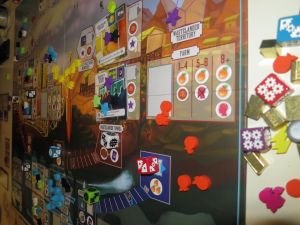
IMG_1121

Stonemaier Games’ second offering, a fantastic dice-as-workers game with an incredibly unique theme of trying to achieve prestige and status in a dystopian world. Little touches like artifact cards depicting objects from today’s world and trying to keep your workers happy and stupid bring the theme to life and it’s very well intertwined with gameplay. Also, the production quality is absolutely unreal, with realistic resources, wooden commodity pieces, wonderful art, etc all making this as great to look at as it is to play.

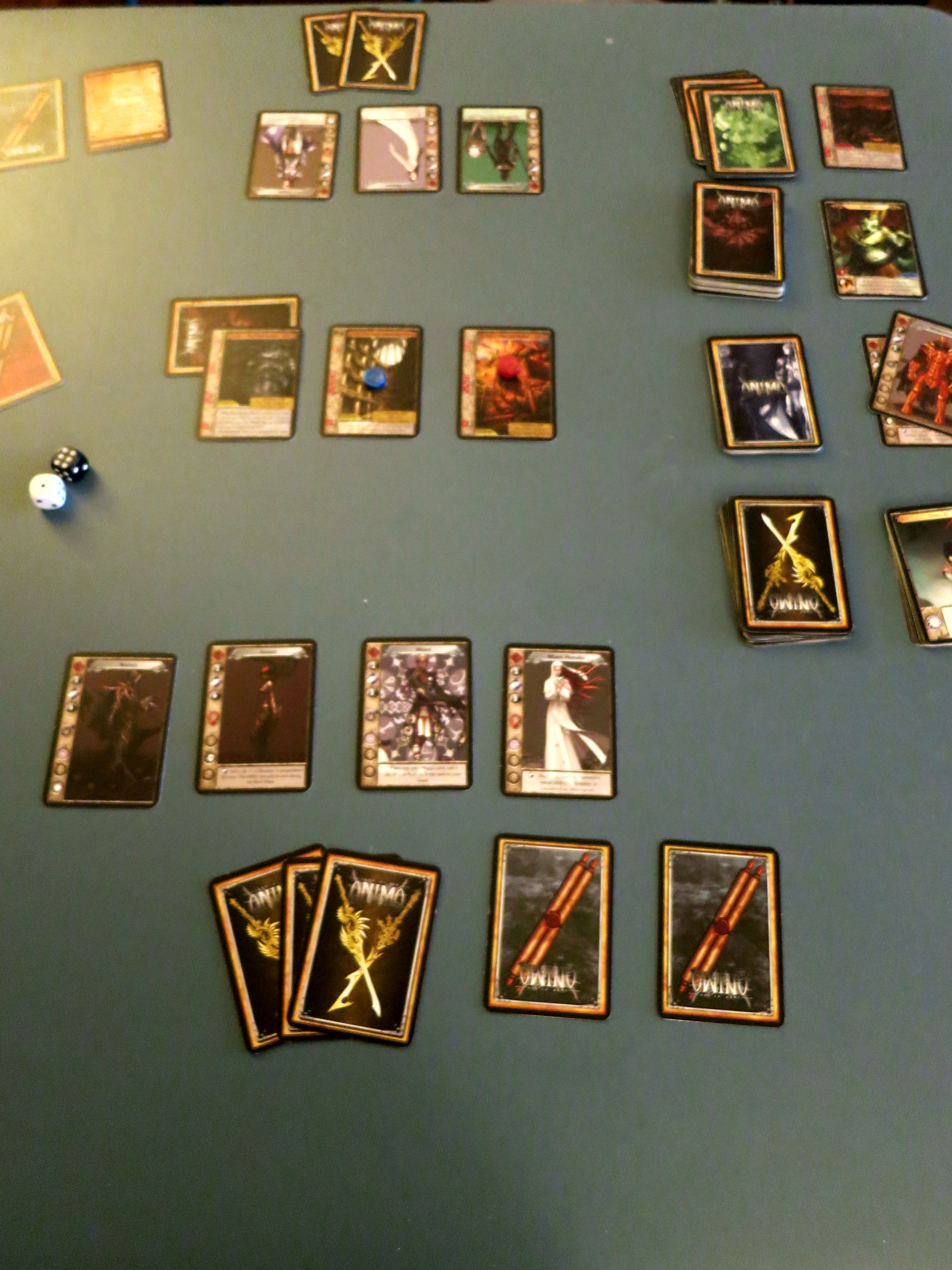
6. Anima

IMG_4289

It can be hard to capture the feeling of exploration and combat in a card game without getting too bogged down or complicated. Anima and its expansions walk the line perfectly, creating a framework where you’re leveling up your team, gradually facing tougher monsters and opponents, and preparing to defeat the great evil and win the game in a natural progression without needing 100+ page rulebooks. This is the best “simplified” role playing experience I’ve found, and I continue to adore this game years and years after my first play.

5. La Citta
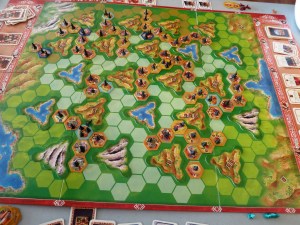
IMG_3003

La Citta is fifteen years old and feels so timeless and classic I’m actually surprised it’s not older. Wonderfully thematic game that combines tile laying and resource management as players try to build the most attractive cities and lure the greatest population (the game’s victory points) to them. Details like needing water sources to grow beyond a certain point, having to produce enough food to feed your population, and a changing priority system signifying what people value most in their cities each round make this a fantastically deep, balanced game.

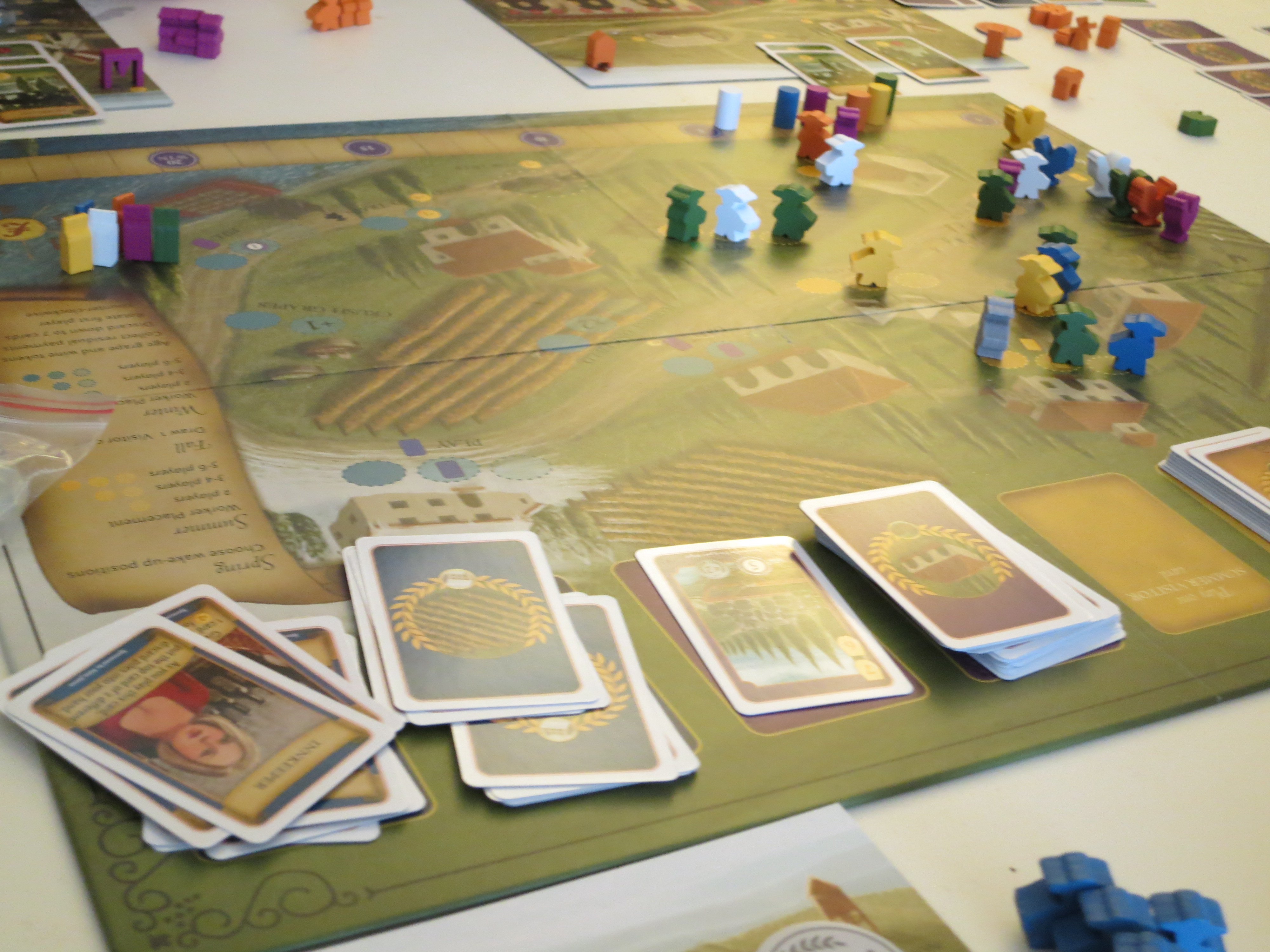
4. Viticulture

IMG_0167

The debut game from Stonemaier, which instantly made them one of my favorite publishers. Beautifully realized worker placement game that is just completely infused with the unlikely theme of winemaking. The Tuscany expansion adds several great aspects that make it even more amazing, and the game scales incredibly well and feels like the same game no matter the player count. As usual with Stonemaier the production quality is absolutely unreal, with individually shaped building pieces and gorgeous art elevating the immersion.

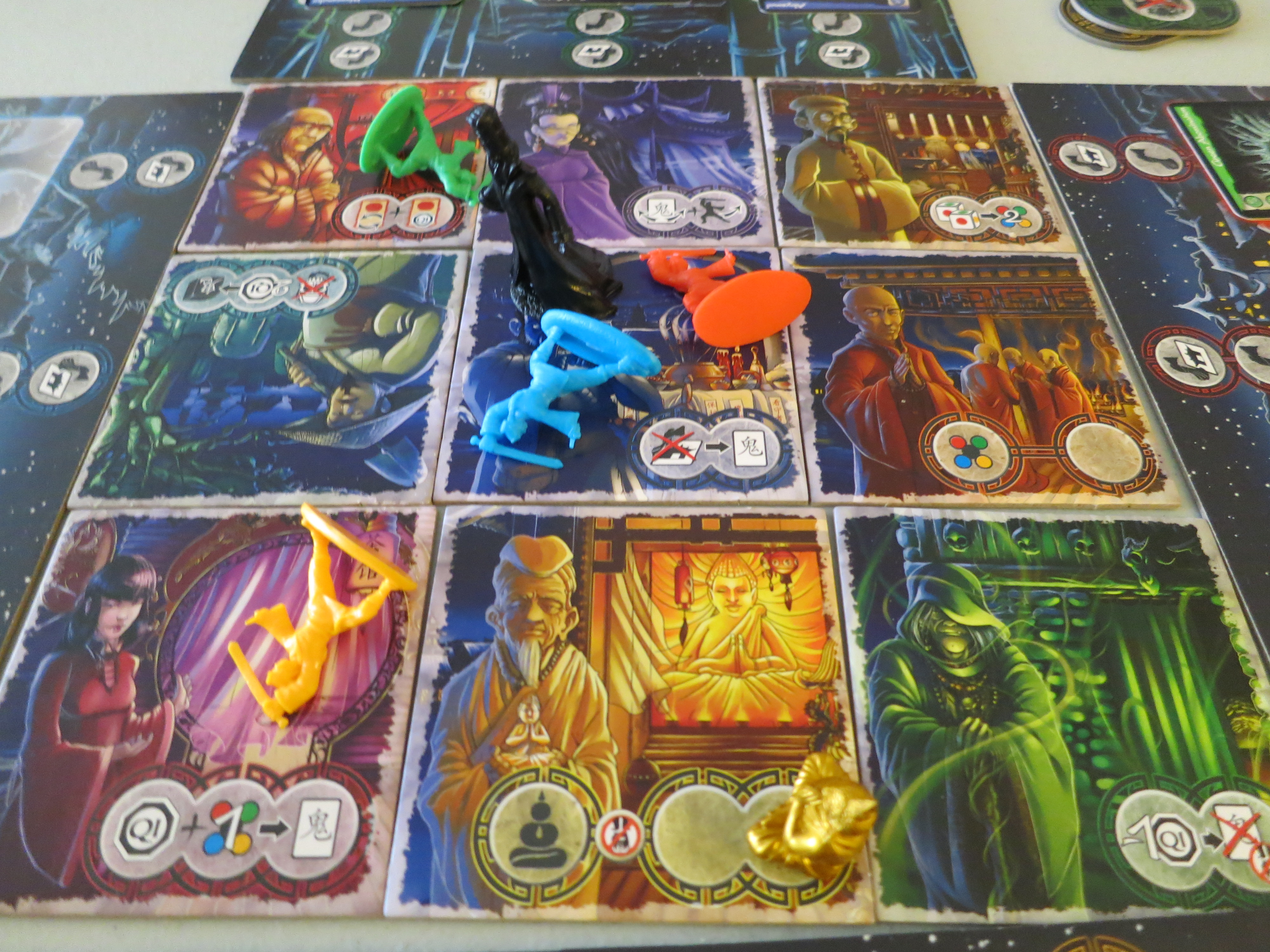
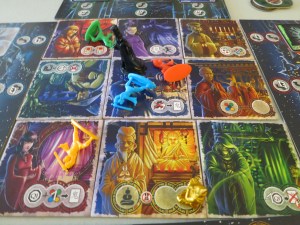
3. Ghost Stories
IMG_3010

Fantastic co-op game that’s fairly easy to teach but has a lot of variation and depth. Best on its own or with Ghost Moon (Black Secret has fallen flat with my group so far). Notorious for its difficulty, but we’ve found it challenging rather than frustrating. The changing board, player powers and enemy cards make every game significantly different, which greatly aids its longevity. It’s also great to have a go to co-op game on hand, as many of my “non-gamer” friends have really enjoyed trying something that has them working with, rather than against, the rest of the group.

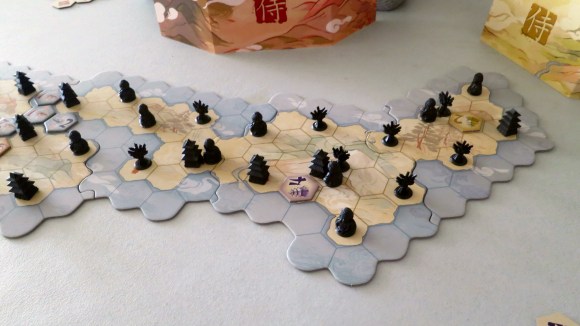
2. The Duke

Game in progress.

I amazed how quick this skyrocketed up my list. The Duke is an incredible two player game with elements of chess reworked into a much more accessible and variable experience. The vast number of movement patterns allows for deep gameplay, yet the smaller board and limited starting pieces keeps things manageable. The combination of each piece having its movement grid printed on it and the fact that the pattern is different on each side is just fantastic, and makes this both incredibly new player friendly and deep.

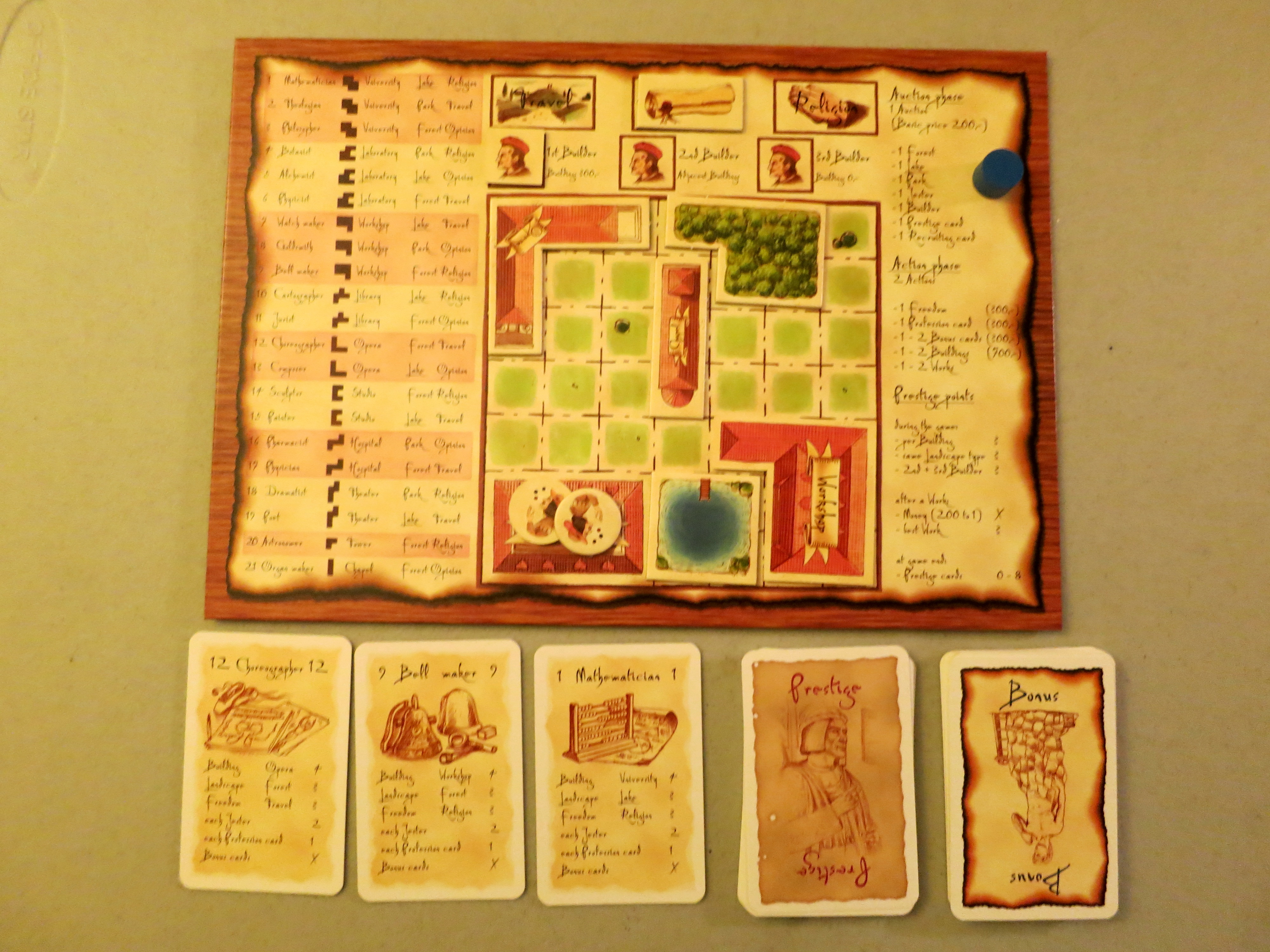
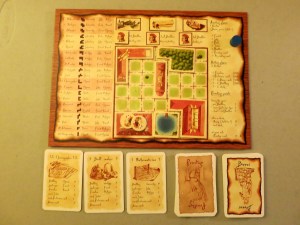
1. Princes of Florence
IMG_2470

Despite tough competition, Princes of Florence is still my favorite game of all time. It incorporates what’s usually one of my least favorite mechanics (the auction) in a quick and enjoyable way that enhances the balance of differing strategies greatly. The combination of resource management, strategic choices and maximizing opportunities is just perfect and I could (and probably will) play this a million times.

——-

And that’s a wrap. Will be interesting to track how this list changes in the future. What are everyone else’s favorites?

Categories
Board Games Reviews

Looking Ahead: New and Different Board Games

Having too many awesome games to play and try out is a good problem to have. Here are a few games I’m anxiously awaiting an opportunity to try. Each of these has some new twists on established mechanics that seems extremely interesting.

Between Two Cities

IMG_3487

Stonemaier Games previous two games (Viticulture and Euphoria) instantly became favorites of mine, and despite being the first of their games not designed by their founder Between Two Cities looks to keep up their extremely impressive track record. It combines tile laying and drafting, but the real innovation is a concept of “competitive co-op.” Each turn you choose two tiles from your hand and will play one into each city on each side of you. Your opponents will do the same, so you are cooperating with those players to build the cities. There is only one winner however and your score at the end of the game is that of your LEAST valuable city, so balancing things is key.

The idea is fantastic and playtesting feedback and early reviews are very positive about how well it was executed. The fact that other players will always be placing tiles to “your” areas at the same time you do brings discussion and bargaining into the game, which should be a refreshing additional element.

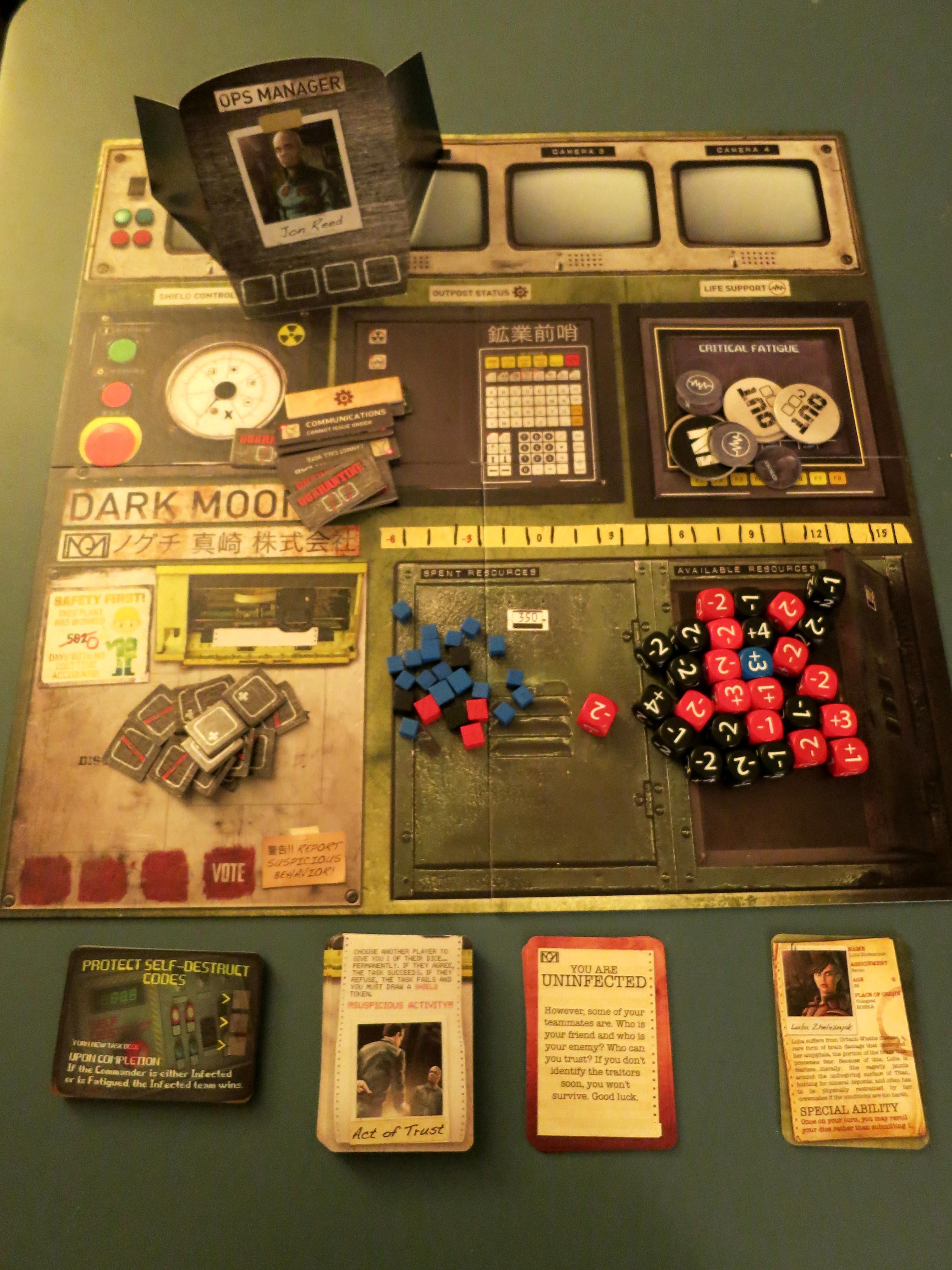
Dark Moon

IMG_4280

I’m a big fan of co-op games with hidden traitor roles, although they can be tough to balance. In addition to having a great, atmospheric sci-fi theme, Dark Moon plays around with different elements of such games in ways I haven’t really seen before. The “uninfected” players are trying to survive through a certain number of game events. The secretly “infected” players are trying to destroy the outpost and doom the crew. When there are more than 1 infected players, they won’t know who each other are. This brings up interesting possibilities of deception and/or working at cross purposes.

But the really interesting part of Dark Moon is that the “voting” system consists of contributing dice to attempt to complete actions or quarantine suspected players. Dice are rolled in secret, but the one you choose to contribute is always public information. This seems to provide a lot more to go on when trying to identify the traitors than normal games of this type, and I’m excited to see how it plays.

Mysterium

IMG_4283

Mysterium is a co-op centered around a group of psychics trying to solve a murder and set a wandering ghost’s soul to rest. All of the co-op games I’ve played so far have either been symmetric (outside of individual player powers) or asymmetric with one player being the villain or game master and the rest working against that player. This is a completely cooperative asymmetric game. There are no traitors, villains or gamemasters among the players, but one player will be the ghost of the departed and is trying to provide clues to the psychics to help them solve the mystery. The theme and setup of the game sound great and I adore the unique take on asymmetry game roles here. Really looking forward to trying it out in both roles.

——-

Just a quick look at some innovative and intriguing games in the pile. Hope to be back with reviews in the not too distant future. 🙂