Categories
Anime Film Reviews

Your Name. Review

“Who am I? No, who are YOU!”

Mitsuha and Taki are strangers living very different everyday lives that change dramatically when they start waking up in each others’ bodies at random intervals in dreams that are all too real. Getting to know each other by proxy the longer this goes on, something more is happening in the shadow of their strange situation.


yourname


Your Name. is as striking and impactful as Makoto Shinkai’s previous works, with perhaps a touch more polish. As always the visuals are absolutely breathtaking, both in the gorgeous environments and backgrounds that bring the movie’s world to life and in engaging character animation that adds great emotional impact to the story through facial expressions and body language.

Such detail and precision to the animation is used to great effect to make the story engaging, which is particularly important in the body switching scenes. The film would not have the resonance it does if the audience couldn’t immediately tell the difference between Mitsuha and “Taki in Mitsuha’s body” and vice versa.

I found the pacing here interesting, with the first half of the movie having a tv feel to it. The opening sequence and certain montages particularly bring to mind the pacing and certain elements of a tv series rather than a movie. It’s executed well and works nicely to allow establishment of a specific atmosphere as the baseline of Shinkai’s tale.

Your Name. walks a fine line thematically, but does it well. It’s infused with Shinkai’s usual evocative, sometimes biting, observations of the human condition, but well balanced with light and heartwarming touches among an emotionally affecting journey. There’s of course more going on than it appears, but the story always remains strongly centered on the characters and grows from their desires and actions. Shinkai’s trademark ability to pull on his viewer’s heartstrings was also in full effect, and I certainly felt my emotions being played like a fiddle at moments (and I mean that in a positive way).

While I’ve been impressed with all of Shinkai’s movies, I’ve liked some much more than others. I feel this is one of his best, right up with Children Who Chase Lost Voices as my favorite. Add in the previously mentioned incredible animation, and Your Name. is well worth catching during its limited theater run.


Categories
Anime Film Reviews

Ocean Waves Review

On the verge of his high school reunion, Taku recalls how all his problems began with a transfer student’s arrival.


oceanwaves


The 20+ year old “lost” Studio Ghibli classic featuring high school love and all the awkwardness that goes with it finally sees a US release, and I had the opportunity to catch it during limited screenings in NYC.

For context, I’m a middle of the road Ghibli fan. I appreciate the general quality and have favorites among their films that I consider incredible, but I don’t go crazy for every movie they do and was lukewarm on several I’ve seen (and outright hated one).

So I had no preconceived expectations really, which made it even more interesting when this fell firmly in  the gray area of my personal opinion. Most things have high and low points, but usually there’s a predominant overall impression, be it good, bad, or indifferent.

Recently I played a video game (Zero Time Dilemma) that bucked that trend for me in that I both liked and disliked in pretty much equal measure. That same conflicting batch of feelings perfectly describes my reaction to Ocean Waves.

Given that most of the film is told as a memory, there’s a fog of “unreliable narrator” feeling that envelopes the story. It’s the epitome of a double edged sword here. It makes sense that certain things would be more vivd in his mind than others and that he wouldn’t always notice or know other’s motivations, which helps establish the drama and his personal point of view as main character, but it also presents characterization issues with regards to the rest of the cast. A big part of the problem is that the film conveys early on that most of what we’re seeing is a memory, but then presents that memory in the style of objective reality, which leads to thematic and empathy issues.

Arguably the third most important character in the film felt like nothing more than a story prop to me after a decent introduction. He acted as the plot demanded instead of naturally, and needed to come across as much more likable than he was for the themes to click properly.

The narrator’s narrow field of view also causes a particular moment that should have been meaningful and dramatic to instead end up uncomfortable and cringeworthy. I know the point is supposed to be that he doesn’t understand where the other person is coming from and acts out because of it, but without due exploration of the other person’s side of things the movie appears to be taking sides, to ill effect.  All in all I spent most of the movie wanting to like everyone more than I actually did.

Yet there’s still something incredibly captivating about Ocean Waves, particularly in the latter half. I really wanted to know what happened to Taku, Rikako, and Yutaka almost despite myself. Their reactions felt authentic even when not built up fully and the oddness of everyday life and everyday worries was captured with a deftness I’ve seldom seen. The movie shines in its small moments, when the story gets out of its own way.

I wouldn’t give Ocean Waves a strong recommendation, but again I did like as much about it as I disliked. I think overall what it does right overcomes its flaws enough to be a worthwhile watch despite my highly mixed feelings (and of course others end up loving it if their tastes and tolerances are different from mine).


Categories
Film Reviews

Quick Takes: Magnificent 7, Jason Bourne, Suicide Squad, and X-men: Apocalypse

So if there’s one thing a 14 hour plane ride is good for, it’s catching up on movies I’ve missed. Here are brief thoughts on four films I plowed through on my way to Japan last month.


The Magnificent Seven

mag7

Watched this on a whim, mostly due to the impressive cast. Decent Western with good setting, although the story would have been stronger if it was more along the lines of its synopsis. It wasn’t a bunch of guns for hire that grew to care the more they learned about the situation, as their “leader” Washington was never there for the money in the first place. It hampered the themes a bit. Also, some characters (such as Pratt in a remarkable performance) were much more interesting than others and stole the spotlight when the movie focused on them. Still, overall this was pretty compelling.


Jason Bourne

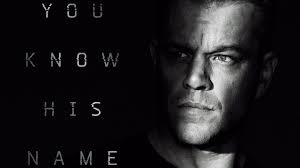
bourne

Here we have the first of three movies I had waited on because of less than favorable reviews. As will become a theme for all three, it was better than I expected.

Though their trademark “shaky camera” fight scenes always leave me near nausious, I enjoyed the previous three Jason Bourne movies and was happy with Damon’s return to the role. This was definitely a retread in numerous thematic ways, but I thought the story fit with and expanded upon the previous narratives nicely. Not fantastic, but good enough.


Suicide Squad

ssquad

Well first off this wasn’t nearly as horrible as I’d heard. It was a mixed bag though, with highlights and weakness throughout the film. My biggest worry from what I’d seen in trailers was Smith as Deadshot, and those worries were both justified and unfounded. Smith actually played a fine character and played it well, but it didn’t feel like Deadshot at all. Writing weakness there. Similarly while this was an ok action film with some interesting plot and character touches, it didn’t feel like Suicide Squad. Glad I checked it out, but nothing I ever need to see again.


X-Men Apocalypse

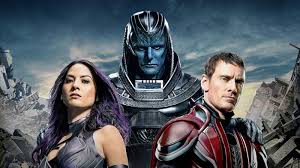
xmenapoc

From word of mouth I expected a trainwreck from the latest X-Men movie, and in contrast I found a solid story that built off of First Class and Days of Future Past well. It’s admittedly not as good as those two films and so big in scope some characters (looking at you Psylocke) got shorted in the script and were underdeveloped. The overall arc was good though, Apocalypse was a worthy foe, and my biggest worry (Magneto as a Horseman) was done logically.


——-

So overall I spent a pretty enjoyable time on my flight with four films that provided both nothing extraordinary and nothing really bad. I don’t regret either skipping them at the theaters nor eventually watching them.

Categories
Film Reviews

Rogue One: A Star Wars Story Review

“What chance do we have?”

“What choice do we have?


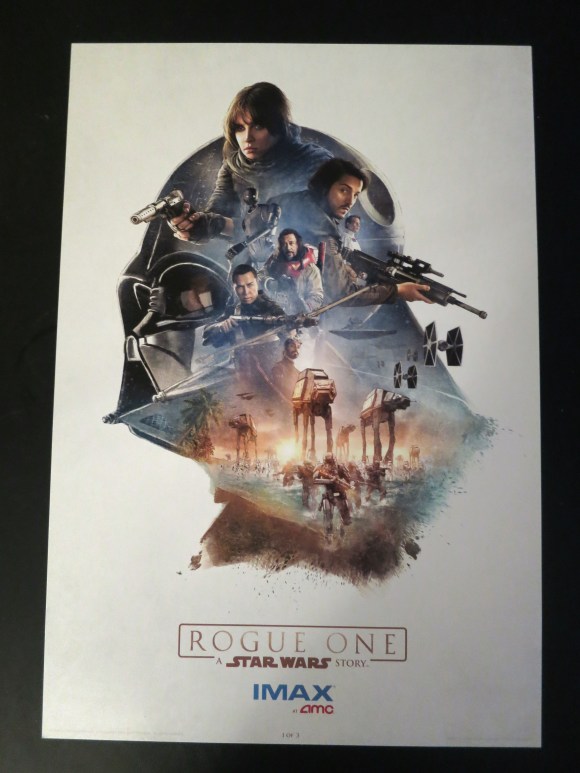
img_4944


At their core, the main Star Wars movies are high adventure tales of good versus evil. There is some depth to the characters, but the general themes always boil down to Rebellion / Light Side good and Empire / Dark Side bad in a black and white way. And there’s absolutely nothing wrong with that – the approach suited the stories being told and captured the imagination of the viewers leading to Star Wars becoming a beloved and near timeless universe.

But Rogue One beautifully demonstrates that there’s also room for something else in said universe: exploration of the shades of gray realities of warfare hidden in the crevices of Star Wars’ space opera scope. Whereas the main movies often embrace the themes of people losing their way and redemption, Rogue One is the story of people with with valid, nuanced reasons for things like wanting to avoid conflict, doing bad things for good reasons, etc.

It’s more drama than adventure, and yet feels just as right as a proper part of what’s come before. It’s fairly seamlessly woven into established mythos and provides a compelling prelude to A New Hope, retconning and explaining away some long standing possible plot holes without causing further logic problems.

In addition, as I mentioned above, there are harsh realities and difficult choices to be faced by the characters. I found the movie incredibly well written and acted. There’s a particularly fantastic confrontation in the middle where both participants in an argument are right, and both are wrong, and the movie rightfully resists any sort of easy answers. It’s the type of scene I simply don’t see existing with such effectiveness in the main movies, and I adore the extra layer it adds to the franchise. I also love the fact that this exploration was done in a spin-off and given proper space to develop as needed, rather than crammed into the “regular” movies where the formulas might clash.

Rogue One was excellent and I hope we see more side stories of this type to compliment the continuing epic adventures told in the main series in the future.


Categories
Comics Film Reviews

Doctor Strange Review

“We never lose our demons, we only learn to live above them.

drstrange

Doctor Strange is perhaps the hardest Marvel Comics hero they’ve tried to adapt so far, yet the casting of Benedict Cumberbatch (and several excellent supporting actors) had expectations fairly high for the latest puzzle piece in the unfolding Marvel Cinematic Universe. I was extremely curious as to how the mythical elements and certain parts of the mythos would be handled, and for most part really liked what they came up with.

Being both a Marvel movie and the origin of a new hero to the MCU, there are formulaic and cliched elements to Stephen Strange’s introduction. Also, some of the supporting actors are considerably better than what they were given to work with.

That said, everything did come together extremely well due to nice touches of foreshadowing here and there and a couple of strong twists. Strange himself, the Ancient One, and Mordo were given nice complexities and reasonable depth, and were all superbly acted. The special effects were brilliant and really anchored the idea of magic in the MCU along with of course providing the expected spectacles and chaotic actions sequences. The climactic battle is stunning, clever, and totally in character, which is everything I could have asked of it.

There are little things in Doctor Strange that could have been done to elevate it even farther, but by the same token there are numerous little things that WERE done that add up to make the Sorcerer Supreme’s screen debut a thoroughly enjoyable endeavor.


Categories
Anime Film Reviews

Paprika Review

“Night dreams of Day, and Light dreams of Darkness.”

A groundbreaking technological advancement called the “DC Mini” aims to enable revolutionary treatments by directly interacting with patients’ dreams. However test patient Detective Toshimi Konakawa and Doctor Atsuko Chiba are caught up in much more than an experiment when the DC Mini is stolen.

paprika

Satoshi Kon’s four movies are all excellent and form a collection of extremely diverse, impactful tales, and his final film is perhaps the most ambitious of them all. I recently had an opportunity to revisit Paprika in 35mm glory thanks to a special 1oth Anniversary screening at Japan Society. It was such a treat to see this glorious assault on the senses in that form.

paprika9

Paprika feels different in emotional resonance from Kon’s other films, perhaps due to it being an adaptation instead of original work. The characters are interesting and carry the story well, but don’t have quite the depth of those in Perfect Blue, Millennium Actress, and Tokyo Godfathers (although both Konakawa and the titular heroine do face some nice introspection and growth at points).

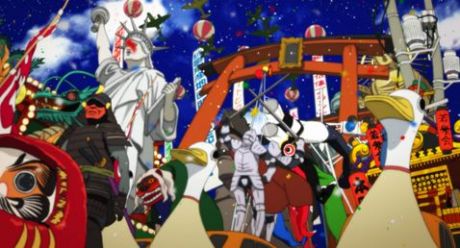
Here the events and action are spotlit somewhat more, with a constant barrage of weird happenings that manage to be both zany and creepy at every step. The visuals are absolutely incredible, with vivid colors and wild, semi-abstract images pouring all over the screen.

paprika8

But the genius is that there is always a framework, with repeated dream images and themes and limits to how abstract things get, as well as equally impressive environments and attention to the art during the quiet moments. It all comes together to ensure the story can always be tracked and suspense can build. There are several beautifully executed moments that are just breathtaking.

paprika10

Elevating all I’ve mentioned even further is a phenomenal score that blends seamlessly and unobtrusively accentuates the action as well as the emotional undercurrents of each scene. Pieces of music from the movie have been stuck in my head for days, which in this case I have no objections to. 😉

One last thing I’ll mention is the plethora of delightful references and Easter eggs strewn throughout, from fun characters and costumes donned by Parprika in the dream sequences to amusing nods to Kon’s other films. Filmmaking is a theme as prevalent in Paprika as the meaning of dreams is, and excellent use is made of both for both story gravity and added layers of fun.

paprika2

There’s disagreement over whether Paprika quite reaches the heights of Kon’s other movies, but either way it is a wonderful experience in its own right. Strap in for the ride, and enjoy the trippy, wild visual feast.

Categories
Film Japan

Japan Society Talks+: Gifu, The Heartland of Japan

Japan Society’s Talks+ program features a variety of lectures and events throughout the year that provide wonderful examinations of numerous aspects of Japanese culture. Currently there are several related events running that provide a spotlight on the Gifu prefecture, which began with a lecture and reception entitled “Gifu, The Heartland of Japan.”


The lecture portion of the evening was introduced by Japan Society president Motoatsu Sakurai and had opening remarks by The Honorable Hajime Furuta, Governor of Gifu, who gave historical context to Gifu and talked about his current US trip and some exciting new developments in terms of cooperation towards tourism and historical preservation and recognition between Gifu and parts of the US.


Moderator Susan Miyagi Hamaker then explained the basics and traditions of Jikabuki, including audience participation and the amateur nature of the performers, and introduced an abbreviated ten-minute performance by the Tono Kabuki Nakatsugawa Preservation Society. It was fun to watch and a nice spotlight on this form of Kabuki theater that is most active in Gifu.


After the performance Graeme Howard, Coordinator for International Relations for Gifu Prefecture’s Tourism Promotion Division, gave the longest section of the lecture in which he talked about some of the wonderful places and things to see and experience in Gifu as well as their culinary and artistic specialties.


img_2548


Following Graeme’s presentation the lecture concluded with a personal tale from Dr. Sylvia W. Smoller, whose parents survived the Holocaust due to the decision of humanitarian Chiune Sugihara, who issued transit visas to Jewish refugees during the Holocaust despite his government’s orders. In addition to the emotional tale of her family’s journey and Sugihara’s selfless actions, her talk including interesting thoughts about the character behind such important acts and the environment needed to foster them.


The entire lecture was wonderful, highlighting everything from the history to the art and culture to the food of Gifu, as well as the people themselves.


But that was only half the evening, as afterwards attendees were treated to a sampling of incredible dishes featuring Gifu’s famous Hida Wagyu beef and sake brewed using Gifu’s pristine waters as well as an exhibition of some of Gifu’s pottery and a chance to meet and gets pictures with the Jikabuki performers.


Excellent even above Japan Society’s Talks+ already high standards, “Gifu, The Heartland of Japan” was a great evening that provided a multitude of information and experiences related to the subject province.


img_2559


Categories
Film Reviews

Kubo and the Two Strings Review

“If you have to blink, do it now.”

Kubo lives a quiet life in exile with his mother, whom he takes care of as needed while they hide from the night sky. He spends his daylight hours telling legends of questionable veracity to the local village. But Kubo’s longing for more concrete knowledge of the past will bring that same unknown, and dangerous, past into his present in an upending way.

kubo

The central plot is quite simple, and classic, at its base. It’s the way the story embraces these elements and how the characters approach and react to their journey that elevates Kubo’s adventure into something special. From genuine sounding dialog and relatable emotion grounding a fantastical tale to incredible animation and visuals that make everything come alive and enthrall the viewer, every piece of this film works together perfectly. In particular the animator’s approach to the origami aspects is INCREDIBLE and a delight to watch.

Of course beyond the timeless and recognizable elements to the story there are also some surprises cleverly built to within the classic structure, executed with a deft touch that maximizes their impact without going overboard. The themes of the power of stories and what defines happiness and identity are favorites of mine, and are given proper due and weight while being integrated seamlessly enough that they never slow down the pace of call undue attention to themselves. I really can’t say enough about the care put into the making of this movie, nor how clearly that comes across during viewing.

At its core Kubo and the Two Strings has plenty of the thing most important to the selfsame stories it trumpets: heart.

Categories
Film Japan

Japan Cuts 2016: Flying Colors, Kako: My Sullen Past, and Emi-Abi Reviews

Japan Society’s annual Japan Cuts Film Festival for 2016 ran from July 14th through July 24th. These were the last three movies I saw as part of this year’s screenings. My thoughts on last year’s festival can be read starting here.

Check out my thoughts on other films from this year in posts about Bitter Honey and Lowlife Love,  Nagasaki: Memories of My Son and Bakuman, and The Shell Collector and Being Good.


Flying Colors

“Once you achieve the impossible, you can do anything.”
flyingcolors

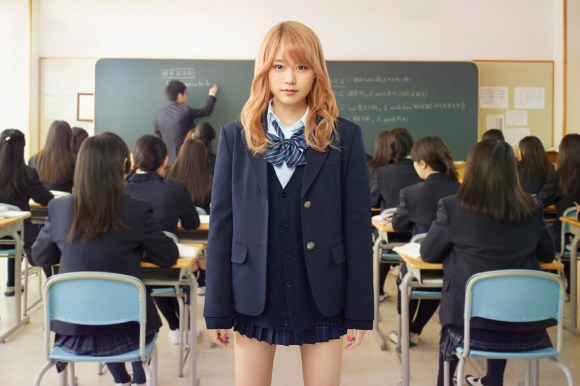
Sayaka is a social butterfly content to scrape by in dead last place among the students at a high school that guarantees admittance into its partner college to all who attend. But when an unusual cram school teacher sets her sights on one of the most prestigious colleges in Japan, years of being called worthless combine with the surprise of having someone believe in her to make Sayaka determined to prove everyone who thinks she has no chance wrong.

Flying Colors is a wonderful story about pursuing dreams and attempting to defy expectations. Structured brilliantly, the movie starts by providing some strong background scenes of Sayaka’s scholastic past to set up how she ended up in her starting status quo, content to know nothing. Her complete lack of shame about being stupid while not resenting those smarter than her is one of the big comedic hooks early on, and cements her as a lovable doofus that the audience is happy to cheer for. Kasumi Arimura plays the part perfectly, and the pairing with Sayaka’s unconventional teacher who knows how to encourage poor students to start to enjoy learning is not only hilarious but also gives the film its core. Their shared enthusiasm about Sayaka getting the slightest things right early on provide outrageously funny scenes. The various ways in which the teacher played by Atsushi Ito brings out the best in his band of misfits and genuinely sees their potential and cares about their success and improvement is phenomenal.

Expertly interwoven with the humor and Sayaka’s educational journey is a touching family drama centered around her father’s projection of his own dream of big time baseball success onto Sayaka’s brother and the complete lack of support any of the women in the family get from him. Sayaka’s mother and her complete devotion to her children anchor the film, with Yo Yoshia giving an extraordinary supporting performance as someone who truly wants nothing more than her children’s happiness. The drama is genuinely emotional without ever getting overly sappy or melodramatic, and adds a perhaps unexpected amount of heart beneath all the humor.

As I’m sure is clear at this point I loved just about everything about this film. Easily one of my favorites of the festival.


Kako: My Sullen Past

“Isn’t everybody lonely? Alone or even if you’re with family.”

kako

High schooler Kako spends her summer days bored out of her mind, listlessly going through the motions of helping in her family’s restaurant and staring at a local river looking for a crocodile she knows isn’t there. Then her activist, long thought dead aunt shows back up on the family doorstep.

Japan Cuts has been my first introduction to the incredible talent of Fumi Nikaido, and it was fascinating to see her here playing such a different character from Akako in Bitter Honey. Akako popped off the screen with an infectious playfulness and a larger than life feel. Kako is compelling in a different way, with apparent apathy arising from her boredom completely infusing her body language and making her susceptible to insatiable curiosity about her mysterious aunt. The flatness Nikaido achieves in Kako’s everyday actions and personality makes it all the more intriguing when she takes interest in anything. The contrast in the two characters and the skill with which she plays both highlights her versatility and why she’s such a highly regarded and awarded actress even at such a young age.

The feelings and sounds of summer come across well, and appropriately compliment the film’s odd tone, which examines the slow yet relentless passage of time in the lives of Kako and her family.  Boredom is portrayed as so pervasive its relief is more important to the characters than even the well being of others. The disaffected nature of both Kako and her aunt’s personalities adds humor to some very dark moments in a way that generally works, yet still feels strange when the viewer realizes what they just laughed at.

There’s a lot simmering just underneath the surface of the depicted events, both in theme and in production. Such as the significance of Kako’s interactions with her aunt’s mysterious companion, or the facts that Kako’s baby sister remains unnamed, is constantly commented upon for how little she moves, and is clearly played by a doll if the viewer looks closely at the bundle of blankets.

There are aspects of Kako: My Sullen Past that I really liked and aspects that I didn’t. I’m not entirely sure how I feel about it as a whole, but it was well made and acted, and quite interesting. I’m glad I saw it.


Emi-Abi

“… if you can make me laugh.”

Emi Abi


During the Q&A following the world premiere of Emi-Abi at Japan Cuts, director Kensaku Watanabe explained his desire when making the film to show genuine comedy yet constantly undercut it with dramatic and somber elements. He really succeeds in this goal, giving his story of a comedian trying to move on after the loss of his partner a tone that constantly switches and balances between light hearted comedy and deeper, sadder themes.

The plot progression was solid, but not at all as I expected. The film is extremely flashback heavy, focusing a lot on deceased partner Unno, what happened the night of his passing, and a surprisingly well developed romantic story involving him and a young fan. Unno steals the movie from his surviving partner Jitsudo, who is well portrayed but while we understand and sympathize with his grief we never really feel it, making nearly every character in the film more sympathetic than the supposed main character trying to find his new path in life.

The entire supporting cast was quite good, but I was especially impressed with what Haru Kuroki did as Jitsudo’s manager, making the most of a small role as someone totally devoted to seeing Jitsudo at his best once again despite the tragedy.

I found parts of Emi-Abi disjointed and the balance of characters a bit off, but it’s a decent film overall made with a specific vision in mind and supported with strong acting.

IMG_1927

——-

Fantastic festival overall as usual from Japan Society Film. Definitely check out some of these great movies as you are able.

Categories
Film Japan

Japan Cuts 2016: The Shell Collector and Being Good Reviews

Japan Society’s annual Japan Cuts Film Festival for 2016 started on July 14th and is running through July 24th. My thoughts on last year’s festival can be read starting here.

My thoughts on Bitter Honey and Lowlife Love can be read here, and those on Nagasaki: Memories of My Son and Bakuman here.


The Shell Collector

“Being alone is intimate.”

shell2

In The Shell Collector Japan Cuts 2016 recipient of the Cut Above award Lily Franky plays an elderly blind man who has isolated himself from society and spends his time collecting shells along the beach. The opening of the movie has a serene quality as it shows his everyday life and events that bring a trouble woman unexpectedly into it. From there the movie’s tone and direction changes a couple times, dealing with escalating events and consequences arising from the intersection of the old man’s hobby and a mysterious disease affecting the islands around his reclusive home.

The entire movie is incredibly well acted and directed to convey a real feeling of blindness of the main character. Little touches regarding the way he searches for his shells and finds his way around his home really sell the concept, which is so important to the way the plot unfolds. Excellent cinematography featuring fantastic locations and great integration of art, props, etc heighten the atmosphere and impact of the film expertly.

The themes are abstract, and I’m still not sure quite what to make of the film as a whole. I realize it was bound by being an adaptation of a short story and is quite faithful to the source material from what I understand, but I wanted something more/different from story. The early portion of the film was my favorite, and it seemed there was great potential to continue in that same vein throughout.

The Q&A afterward with the director, the producer, and star Lily Franky was interesting and once again the moderator had great questions and asked the question I had in mind. Franky’s sense of humor was off-color and a little inappropriate at times, but overall this was another good Q&A.

IMG_1854

Overall I think I liked The Shell Collector, although some parts quite a bit more than others. I didn’t find it great in total, but parts of it certainly were and it was certainly a good film.


Being Good

“I don’t know how to be good.”

being good

Being good tackles numerous related difficult societal issues regarding forms of abuse and ingrained standards, attitudes, and expectations that facilitate these tragic situations. It’s a poignant, raw look at both these difficult situations as well as some of the obstructions to dealing  with them.

The key to the movie is the careful touch with which this delicate subject matter is presented. The film does not shy away from illustrating the harshness of the problems being addressed in a blunt manner, but it is done with a point and completely without sensationalism and none of the scenes ever feel the least bit exploitive. Abuse is sadly a part of the lives of the characters, and it needs to be shown matter of factly in order for the audience to understand its nature and depth, and for the characters to be able to contemplate what to do about it.

This of course makes parts of the film (extremely) hard to watch, but the important things the story has to say about abuse make these scenes both worth watching and indispensable to the film. The most important thing is that there are glimmers of hope and genuine efforts and desire from certain characters to break these cycles. These are stories that don’t just present an upsetting status quo, they express a wish for things to be better.

Through three parallel stories in the same town, Being Good tackles subjects ranging from a young school teacher trying to learn how to deal with bullying within his classroom as well as trying to help a student he suspects is being abused, to a mother who disciplines her child through violence and hates herself for it, to society’s attitudes towards the metal ill and how it changes with the person’s age, to some of the emotional realities of raising an autistic child. This variety of related issues and the skill with which they were integrated together into a single film are incredibly impressive. Each of the three parallel tales are balanced perfectly, without any characters, stories, or themes feeling shortchanged and with all of them receiving equal and appropriate weight.

That the director was able to bring all of this together is amazing. Being Good is an adaptation of three short stories from a collection of five. Making everything work in the balanced manner I described without losing any of the underlying messages or their impact is a huge accomplishment. The acting is equally superb, both from the adults grappling with moral dilemmas and feelings of bitter realities beyond their control, and from child actors tasked with communicating heart wrenching emotional distress. I found this film just phenomenally made from top to bottom.

The Q&A with director Mipo O following the screening was illuminating, as she covered topics ranging from how this film differed from her other movies, to the process of adapting these stories and approaching the subject matter, to the care with which certain scenes needed to be approached, specifically in making sure the child actors were not suffering emotion distress themselves in the process of having to portray it.

IMG_1883

Being Good is a masterpiece, and may very well be the best film of an extremely strong Japan Cuts Festival this year.

——-

So these were two more unique and thought provoking films featured during the festival. Will be back with more a couple more reviews as Japan Cuts concludes. 🙂