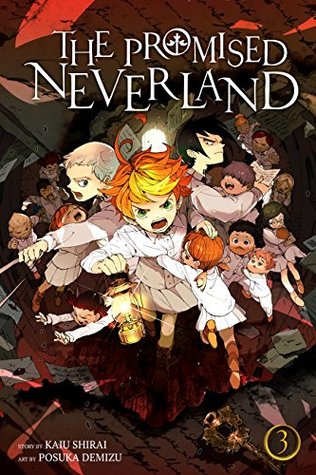
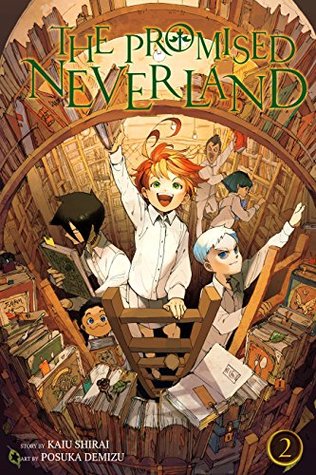
The Promised Neverland features an overarching story with a terrible, previously revealed underlying secret. Best to start reading with volume 1.
Emma and her compatriots continue slowly building their escape plan, hampered at every turn by their “mother” and Sister Krone, who each have their own goals and agendas. There’s a real sense of moving forward while maximizing the slowly escalating tension. There’s significant time spent with “secondary” characters, and Krone’s maneuvering in particular becomes a main focus. As I’ve mentioned previously I’m extremely impressed with the way the characters are all extremely intelligent without being infallible, and the constant efforts of them all to outthink each other is one of the manga’s best points.
It all adds even more layers to everything that’s happening and begins to show real consequences for the choices being made, including various levels of palpable threat. The gradual world building and major gambits and moves in this volume heighten the impact of the unfolding mysteries and lead to a huge cliffhanger. Strong third volume with a ton of important developments and even more intriguing plot lines set up for the future.
Due to a tight train schedule and being out in Sendai for Sendai’s Girls’ show earlier in the day I missed half of this show live. What I did see was incredible, and I’m looking forward to catching up on what I missed (and revisiting the matches I saw) with this DVD.
1- Leon vs Mei Suruga
Side note: It always brings a smile to my face to see Mei joyfully coming out wearing Aoi Kizuki’s wings.
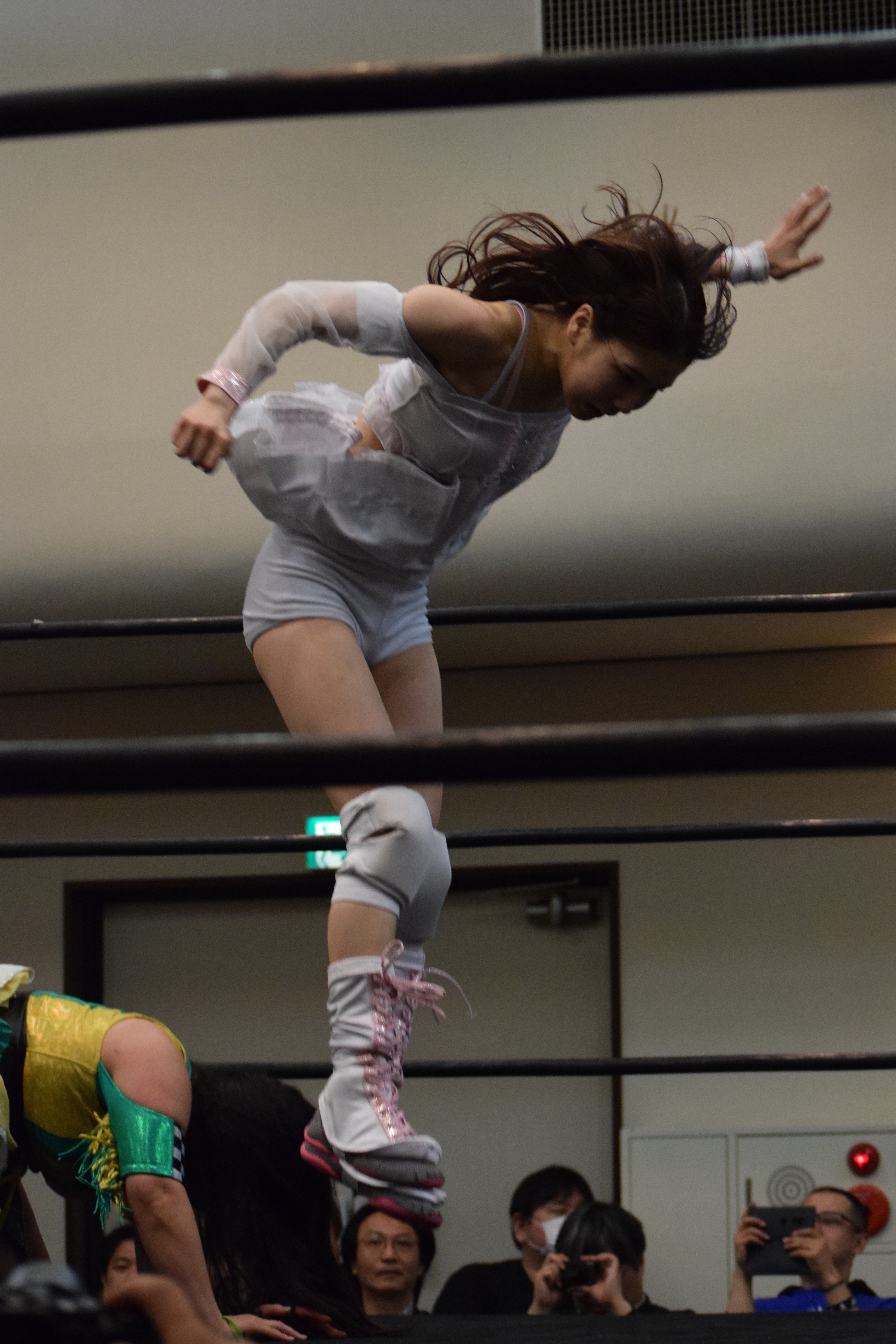
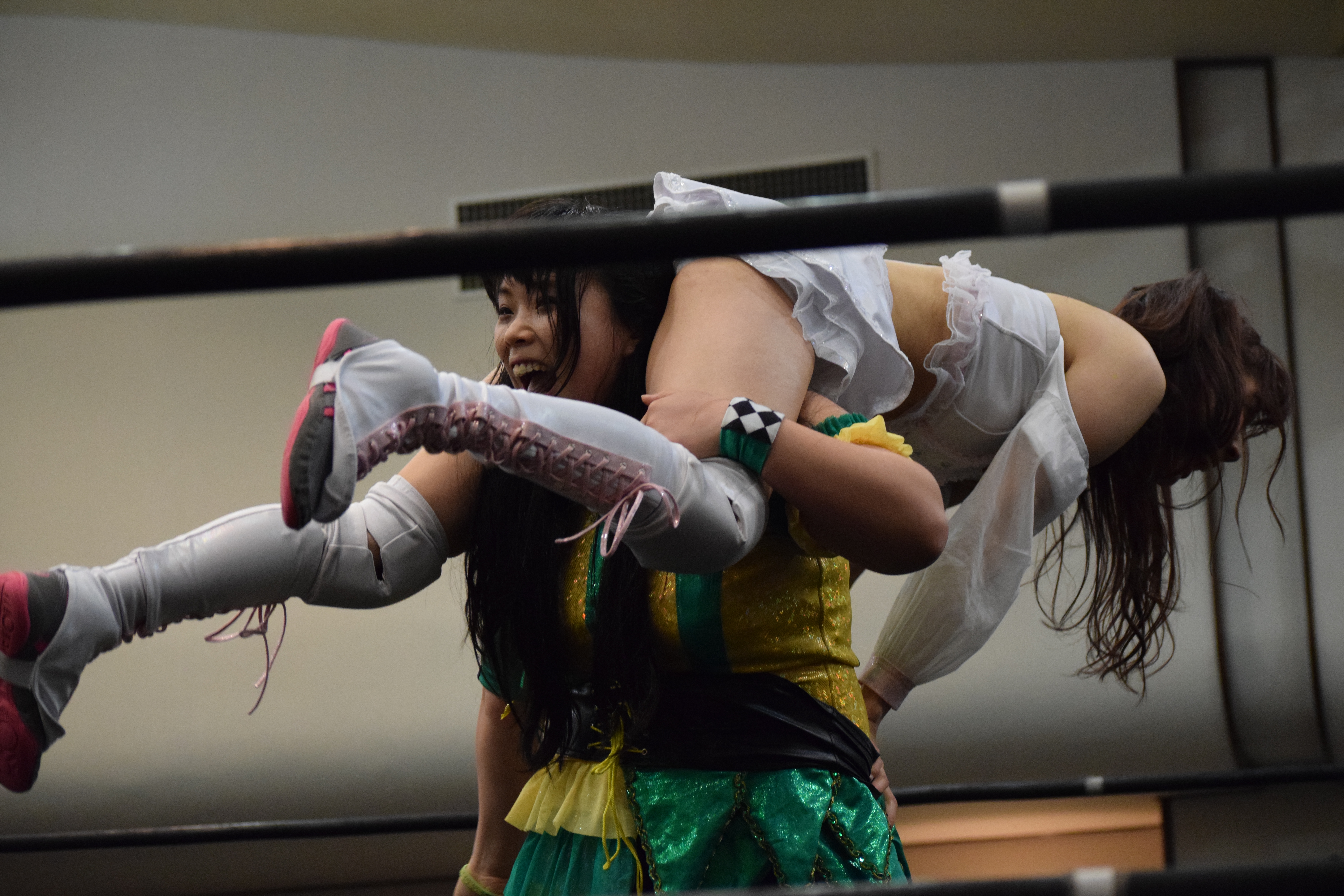
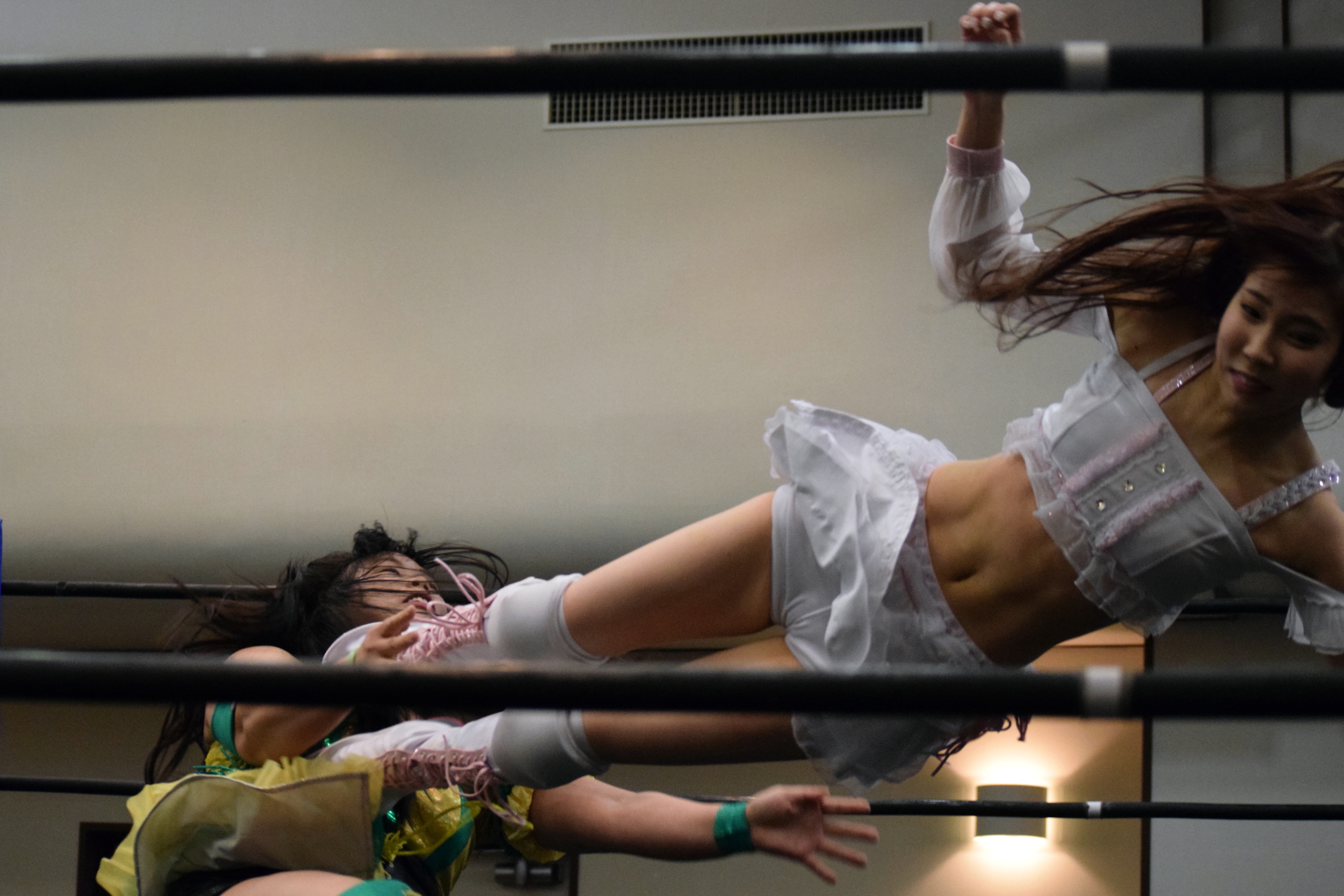
Nice opportunity for Gatoh’s rising star against a visiting veteran. Even better, this felt more like an encounter of equals than a typical “rookie vs vet” match, which is another indication of great things ahead for Mei. Her energy and creativity in the ring always adds a little extra spark to her matches.
This featured nice back and forth chain wrestling interspersed with high octane offense that made for a good, face paced opener that really picked up towards the end. Leon defeated Mei with the frog splash.
2- Baliyan Akki vs Asuka
This is of course the formerly of WAVE Asuka (and not the former Kana who now wrestles for WWE). Big matchup for Akki.
Highlights included a great sequence of back and forth dodges going outside the ring and back early on and a section where they forearmed and elbowed the HELL out of each other. In general this excelled during rapid back and forth, with the rhythm feeling a bit off during the sections where Asuka was on extended offense. Solid and well paced overall though, and it didn’t feel like they were going for the time limit draw until it happened.
The first glimpse of a strong night of intergender wrestling from Gatoh Move.
3- Mitsuru vs Sawasdee Kamen
The superhero team had issues of late going into this and the former partners squared off to settle their issues here. The setup also furthered the ongoing undercurrents of Mitsuru’s frustration and desire to prove herself.
They went right at each other, with Sawasdee actually being the initial aggressor during his introduction. This featured some really nice counters speaking to their familiarity as teammates.
It was also the shortest match of the show at about five and a half minutes, and I wish they had gotten a little more time. They made good use of what they had and this was decent, but it did kind of feel like a longer, better match on fast forward.
Mitsuru got a decent amount of offense, and looked like her partner’s equal even in defeat. Second match of the night to end with a frog splash of only two matches so far with finishes, which was a little odd.
Sawasdee helped Mitsuru up after the match, and they fully reconciled at the end of the show.
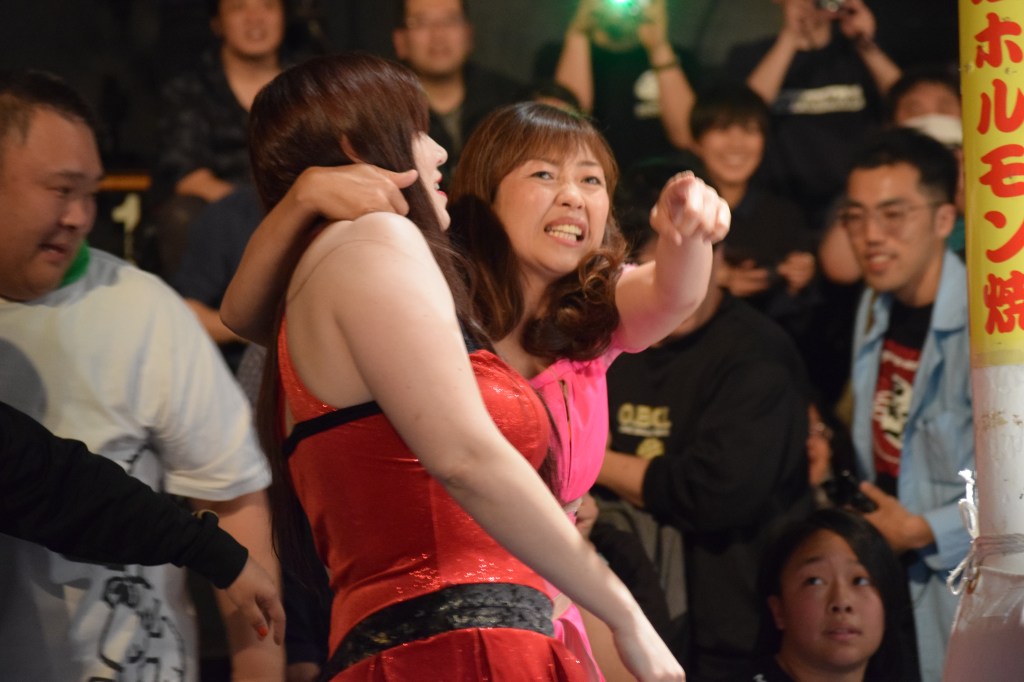
I love Yone coming out in a matching Sakura outfit when they team. The crowd was behind the men to start, feeding off of Sakura and Yone’s somewhat natural heel tendencies. This set up a really interesting match long story as things unfolded.
Things built to a long section in the middle of Cho-un and Tamura targeting Sakura’s bad back and repeatedly knocking her off the apron with cheap shots. It both switched the crowd’s allegiance and made two 20+ year veterans seem like major underdogs without feeling cheap or sexist. I can’t stress enough how exceptional Gatoh Move is at intergender wrestling, and that skill and deft touch was on full display here.
This match is where I came in live, and the crowd was electric for the ending stretch, leading up to Sakura and Yone hitting consecutive moonsaults from the same turnbuckle for a big win. Great stuff.
5- Yuna Mizumori vs Mizuki
The semi-main event featured one half of Gatoh’s reigning tag champions against one half of Tokyo Joshi Pro’s reigning tag champs in singles competition. Really awesome to see Yuna getting some big singles match spotlights, and she had another vs Hiroyo Matsumoto days later.
Yuna decides early to poke fun at Mizuki’s “Mizupyon” nickname and declares herself “Mizumoripyon,” complete with bunny poses and other taunts to Mizuki’s rapidly increasing annoyance. It provided a nice start to the match and a backbone story to center the match on.
Yuna’s been adding really cool, off the wall stuff to her arsenal and combined with Mizuki’s natural athletic ability and attention to little touches that enhance her matches this was great fun.
There was a tangible sense of desperation and escalation at the end, leading to Mizuki hitting a GORGEOUS Cutie Special variation on her larger opponent for the win.
6- Riho vs Masahiro Takanashi
While I love Gatoh Move in general and was excited about the entire show, this match in particular is primarily why I came rushing back from Sendai.
Riho was a couple months out from leaving Gatoh Move to go freelance and this was one last big singles match against their most frequent male visitor.
Takanashi is an absolute master at working with smaller opponents in a believable way, and Riho of course is a expert in her own right (and usually faces larger opponents). The combined experience in this match was close to 29 years, and did it ever show.
The match built from careful counter-grappling to high impact offense naturally, telling an incredible story along the way. During the opening sequence of hold-for-hold struggles there was a particularly excellent exchange of stranglehold reversals.
Throughout the match there was realistic use of Takanashi’s size advantage (in certain counters, the way moves were applied/executed, etc), which is one of my favorite little touches. It adds so much to the match and forced Riho to get clever and make good use of her speed, etc to nullify that edge.
They made each other fight for EVERYTHING, which is so important to immersion and feeling like they’re both doing everything they can to win. The constant counters and back and forth in this are amazing, and it was all so smooth. Takanashi eventually had one counter too many in his bag of tricks and small packaged Riho out of a suplex attempt for the win. This was a wonderful way to end the show, and my match of the night against some stiff competition.
When the biggest criticism I have of a show is that one of the matches deserved more time, it’s a sign things went quite well. Simply fantastic from top to bottom with a variety of great matchups, styles, and of course talent. One of my favorite shows of this trip.
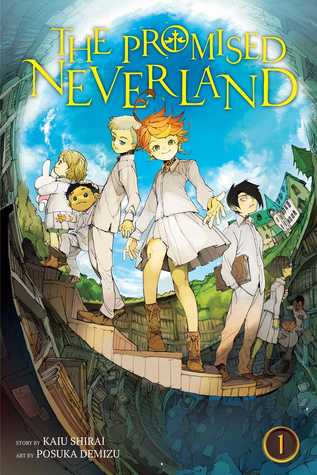
The Promised Neverland features an overarching story with a terrible, previously revealed underlying secret. Best to start reading with volume 1.
This volume builds off the revelations of the first as the children start to formulate plans and decide how best to proceed. Themes of appearances vs reality and the ongoing impacts of choices each character needs to make are escalating and nicely interwoven. Krone provides a good third “side” and adds interesting new context and complications to everyone’s maneuvering. To complicate things further, Emma and her compatriots must deal with the possibility of a traitor in their midst in the wake of bringing others into the fold.
One of the things I like most about this manga is how smart everyone is without being infallible. And on the flip side, how they can be wrong or make small missteps without acting foolish. It’s a hard aspect to balance properly, and so far author Shirai is doing an excellent job of it.
Good followup volume overall continues to build a complex web of characters and agendas while keep a real sense of dread and tension pervasive.
Eleven year old Emma lives a happy and idyllic life as one of the oldest orphans at Grace Field House under the supervision of a loving caretaker… paying no mind to the rigorous daily tests, identification numbers on everyone’s necks, or surrounding wall with a locked entrance gate they are forbidden to venture beyond.
I only had the barest inkling of what to expect from this going in, and certainly wasn’t quite prepared for what awaited me. The first chapter sets the stage in excellent fashion, both feeling like it spends enough time introducing the status quo and getting into the gruesome details of what the story is really about fast.
I won’t get into specific spoilers, but fair warning: this is a dark, tense read. Grace Field House becomes the scene of a cat and mouse game, wonderfully engaged in by smart, differing agents acting with a variety of goals and agendas. It already stands out among its genre (something awful lurking underneath a seemingly perfect life), as the layers and levels at play even throughout just this first volume are impressive and intriguing.
The art is intentionally exaggerated often, which works sometimes to increase the impact and eeriness of certain situations but feels extremely odd and jarring at others. Hopefully it’ll even out a bit in future volumes.
There are moments of info dumping, but given the nature of the story it’s somewhat unavoidable and done well enough. Several characters are trying to plan several steps ahead and outthink each other covertly, and the author does a great job of balancing this and the ways in which they interact with / run afoul of each other.
Strong start overall for this creepy, layered manga.
I adore magic and related disciplines. In recent years I’ve been lucky enough to see some great variations, ranging from Penn & Teller’s playful look behind part of the curtain to Joshua Jay’s intimate masterpiece Six Impossible Things.
Somewhere in between and off to the side in content and presentation is another excellent experience I had the good fortune to attend, Derren Brown’s Secret.
I’ve heard a lot about Derren Brown and his particular type of magic, but this was my first time seeing him perform outside of a couple random clips over the years.
In fact brown doesn’t primarily call himself a magician at all, acknowledging his art is a combination of that and related and intertwined disciplines like illusion, misdirection, and showmanship. The term “mentalist” has been used at times. Brown’s act is largely psychological in nature, giving the appearance of things like mind reading, Neuro-Linguistic Programming, cold reading, etc.
He uses a variety of approaches and skills to generate and maintain interest, engagement, and amazement. One of the many things that sets his performances apart is the subtle and interesting use of a particularly technique that elevates the audience’s investment in the proceedings. I won’t specify to avoid spoilers (beyond that being a general policy for me when it comes to magic Brown reasonably asked details of the show no be shared), but it’s a masterstroke of showmanship and mastery of his craft.
Secret fully involves the audience in every aspect of the show and feels extremely interactive. Brown’s also chosen wonderful themes to explore, and the show is expertly built use them to enhance the impact of the magic and illusions at the same time. Secret is extremely engaging from start all the way through to a wondrous, satisfying finale.
Secret is on Broadway through Jan 4, 2020, and I highly recommend checking it out if at all possible.
A brief look at some games I got to try out (somewhat) recently.
Walking in Burano
Walking in Burano is a spacial card game in which players choose building sections to add to their area under ascetic and other point related restrictions. There’s an interesting balance created by the different sections needed for building, elements on cards that lead to scoring, placement restrictions, and the cost of taking actions. It all gives a nice layer of depth here. Subtle aspects of needed strategy might not be immediately obvious, but the gameplay itself is easy enough to jump into.
I’ve only played this 2 player thus far, and there’s a mechanic specific to that version that really makes long term strategy difficult in how quickly cards disappear. I imagine it will be a VERY different game with more players because of this. Still enjoyed it quite a bit though and look forward to playing again.
Chronicles of Crime
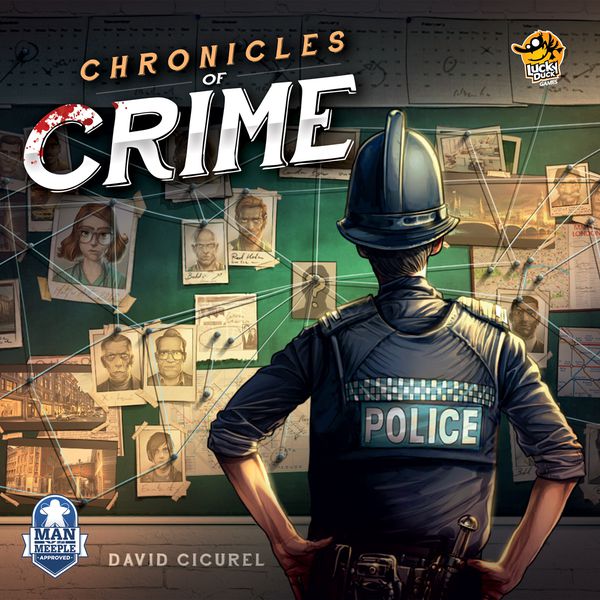
Here’s another game to join things like Watson & Holmes and Detective right in my sweet spot of providing decent mystery complexity in a way that’s still accessible and fun. This is incredibly application heavy, needing use of a phone to analyze clues, check answers, and even look around crime scenes. But it’s extremely well done and integrated. Excited to continue to progress with this one.
Planet
Planet provides an interesting variation on tile placement games as players fill in the twelve sides of their planet trying to maximize sections of their secret land type collected while satisfying certain conditions to claim animal cards (both of which provide victory points at game end).
The gimmick is a fine one, although the all important magnets that secure tiles in place should be stronger. It’s much too easy to knock off a piece accidentally when turning the planets around or otherwise handling them, which is pretty much what the whole game is based on doing.
The variation of goals and rules surrounding them is reasonable, as is the drafting aspect that governs who gets what tile. It feels like there could have been a little more to this, although I’ll admit I’m not sure in what respect. Decent, quick playing, reasonably unique game none-the-less.
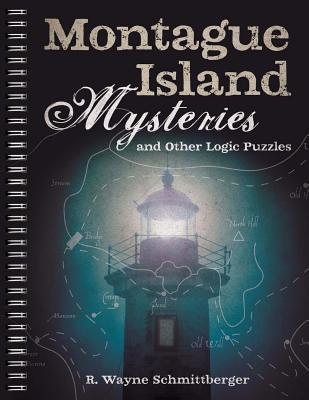
Montague Island Mysteries is a collection of logic puzzles thematically presented as a series of visits to a remote island. Your hosts, as well as the fellow guests, are fellow puzzle enthusiasts who gather at the island for twelve weekend visits, during each of which a mystery puzzle is presented along with several ancillary ones. The theme is used nicely as the reader will be determining things like the guests’ backgrounds, what room everyone’s in, further details about the island, etc.
Of course with a book like this the quality of the puzzles is paramount, and in this respect MIM is spot on. Classic grid based logic puzzles are mixed in with a nice variety of spacial reasoning, unique visualizations, etc. The mystery puzzles feature a mechanic I particularly adore that involves the “culprit” secretly being among the guests and giving statements that might or might not be true. It provides a nice twist and was used with just about the right frequency (although a few more in this style would have been great).
There are a couple of minor missteps. A few puzzles are based on every attendee, including the player, being given two cards or something similar with the instructions “don’t show them to anyone else” and the solution based on determining who has what. But the reader’s own cards are not revealed, their persona just presents statements that may or may not be true like everyone else. This does not affect solving the puzzle, but is thematically awkward given the presentation and a bit of a missed opportunity as well.
Some of the puzzles were too long and/or required too much brute force for me, although given the scope and variation of what’s presented a few puzzles not being to my particular tastes is no big deal. One pushed mathematical logic versus linguistic logic a bit far for my liking, but again that’s personal preference.
Overall Montague Island Mysteries is a wonderful collection of puzzles with a solid connecting theme. I enjoyed this book quite a bit and look forward to checking out the sequel.
DASH Chisako opened with an apology that she would miss her first Sendai show in her career due to injury. She had a mild concussion, and has thankfully since recovered and returned.
1) Mikoto Shindo vs Manami
Mikoto is from Marvelous and one of a trio of rookies there that have been making a strong impression as they wrestle for a variety of different companies gaining experience. Manami’s been honing her own skills here in Sendai Girls, and the two proved nicely complimentary foils for each other. Solid match between two rookies that should both have bright futures ahead.
2) Hiroyo Matsumoto vs Hikaru Shida vs KAORU
This was a fun triple threat, with good action and underlying issues playing up having Dash’s two regular partners against each other (she teams with Karou in Marvelous as Riot Crown and Hiroyo elsewhere as Reiwa Utima Powers). Dash was ringside and involved in some of the antics as much as she was able, which was nice to see.
The match ended with a really cool double pin on Karou (Hiroyo in sunset flip position on Karou while Shida small packaged her). The ref awarded match to Shida, over Hiroyo’s protests.
3) Sakura Hirota vs Alex Lee
Hirota, in honor of Dash, tried to be hardcore here. That worked about as well as one might expect. Alex picked up the eventual win in a fine for what it was encounter.
4) MeikoMei (Meiko Satormua & Mei Suruga) vs Sareee & Yuu
I was excited about just about every aspect of this encounter: my first time seeing MeikoMei team, wrestling’s biggest rising star against one of its greatest established veterans AND one of its brightest rookies, another chance to see how Yuu is evolving her craft since going freelance, etc. This is exactly the type of unusual mix of wrestlers and styles I hope to see with all the cross promotion that has been happening lately.
And for a full twenty minutes they delivered. Everyone was one point, every matchup was different and interesting, and this was a thoroughly enjoyable, hard hitting affair right up until the time limit expired and the match was declared a draw. Would love to get to see any pairing of these four as a singles contest sometime.
5) Beauty Bear (Chihiro Hashimoto & Mika Iwata) vs Medusa Complex (Millie McKenzie & Charli Evans)
I was previously familiar with and a fan of both Millie (from Sendai’s 1/6/19 show) and Charli (from Shimmer), but this was my first time seeing them as a team. Side note: I adore their team name.
Big match for them in the main event against Sendai mainstays and reigning tag team champions Mika & Chihiro (who was also Sendai’s reiging world champion). Solid tag team wrestling all around and a good main event. Medusa Complex’s (upset) victory in this non-title encounter and a resulting challenge set up Beauty Bear’s first title defense at a future date (despite holding the belts for over a year).
I always enjoy Sendai Girls, and this was certainly no exception. While I did miss seeing Dash in the ring I’m glad she took the time she needed to recover and am happy it wasn’t serious in the end. Really good show overall.
” Even if it’s meaningless… sometimes, nice things happen.”
Tales of two girls and a small tank climbing what’s left of civilization, and there isn’t much…
I’ll be sharing thoughts on the entire series (volumes 1-6) as a whole here, but it will be kept as spoiler free as possible.
Girls’ Last Tour is a dystopian slice of life story, following a gradual journey through the remains of a futuristic world gone to ruin. I found it atmospheric and engaging, being drawn in bit by bit as our protagonists make their way.
It could have been something very different, and while I enjoyed this for what it was I certainly understand if some readers wanted something different. This is rather light for a post-apocalyptic tale in many respects, and more about Chito and Yuuri’s wandering and the occasional philosophical question than their survival in a harsh landscape or other natural directions the story easily could have veered into.
There are a lot of questions left unanswered, particularly about the world before it collapsed and the particulars of the collapse itself. To be honest not much of anything is explained, and I’m not sure the sparse tantalizing clues presented add up to much of a whole. But while they would have been nice to have those details are in some sense beyond the point of the story, and I found the slowly unfolding themes, ruminations, and details that were present interesting enough.
Girl’s Last Tour admittedly had more potential lurking beneath it than what was realized, but for me it was a compelling, great little read overall regardless.
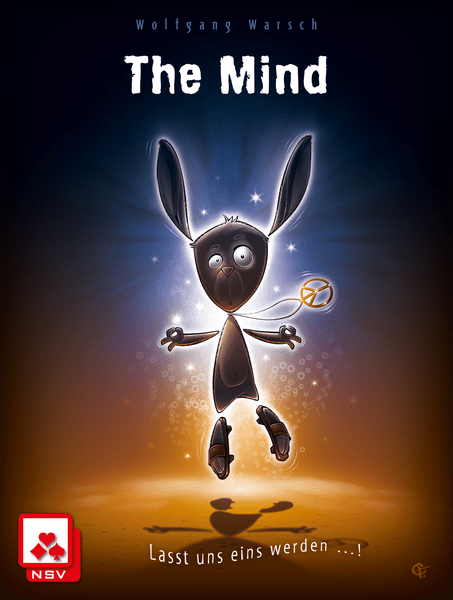
Note: The rules treat the main aspect of how the game is played as a spoiler, which is beyond ridiculous but consider this a “warning” that going by the rulebook my discussion starting below the box image includes “spoilers.”
Welcome to “waiting: the game.” In The Mind players try to play cards of increasingly large hands drawn from a deck numbered 1 to 100 in order without sharing any information or signals about what cards they have.
So the communication becomes “teasing” playing cards and how long you wait to play. They dress this up with a “vitally important” phase where all players put a hand on the table and concentrate on the level they’re about to play (no, I’m not joking) and other mumbo jumbo about being in tune with the flow of time.
Some will get into the window dressing. Personally I wish that effort went into adding something to the actual game instead. It was a curious experience for a couple of rounds, but seems way overrated to me.
I’m a mathematician, and this largely bored me. This game is simply subconsciously playing the deck odds (which is a pure crapshoot with few cards in hand) and guessing how long a pause is appropriate (which is close to a pure crapshoot with many cards in hand). I felt no real engagement or investment in whether or not I can guess with no contextual info whether my fellow player was holding a card between the one I just played and the ones left in mind hand nor felt much of anything but annoyance when we lost a life because he happened to be holding say a 71 instead of 73 when I played a 72. There’s no “better move” to have been made there, nothing to be learned or refined.
Put another way, I could simply count to myself and play my cards as I reach it’s number (without telling the others players that what I was doing, because it would be cheating otherwise) and achieve roughly the same level of success. The only way to get better at this game is subconsciously learning how long my friends mentally wait to signal a jump in numeric value of 25 vs a jump of 10, etc and that just holds no interest for me whatsoever.
So as the meaningful experience the instruction book (jokingly?) implies this falls flat. As a filler game it’s just feel so slow (the main mechanic is *waiting* after all) not matter how short the rounds are and I have a closetful that are more interesting and fun. For games that do no talking / contextual info only better I have things like Magic Maze, Ravens of Thri Sahashri, etc. Kudos for trying something different and to each their own, but this was a big miss for me.
























 Derailments of Thought