Categories
Board Games Reviews

Journal 29 Interactive Book Game Review

I stumbled upon this as an Amazon recommendation and was extremely intrigued with the idea.

Here’s some of the self description:

“A top secret excavation did not bring any result for 28 weeks.
It was on the 29th week that something unexpected happened.
The team disappeared and the only thing that was left behind was their Journal.
You must solve the riddles in order to solve the mystery.

To solve the riddles you will need to think out of the box.
Write, draw, search, tear paper, fold pages, combine and more.
You don’t need any special app to play the game.
Just a browser will do
(preferably on your smartphone)”


journal29


Journal 29 is one of the most interesting concepts I’ve seen in a while. Somewhere in between classic pen and paper puzzles and phenomenons like escape room games, the book does a great job of adding something new to the genre.  

It’s a book of 63 puzzles with a loose thematic theme tying them together. The puzzle themselves are generally great, but it’s the clever implementation that really sets this apart. First, each puzzle leads to an answer (usually a word or number) to be entered on a specific webpage to receive a “key” for the puzzle (again, usually a word or number). QR codes are provided so things are very smartphone friendly, but urls are also given and it was fine to play using a laptop. Keys are often used in future puzzles, so there’s a nice feeling of progress throughout the book.

Second, there are a lot of interesting puzzle variations, with some inventive uses of the internet involvement, connectivity between the puzzles, and the book format to stretch the genre a bit. There are also some similar looking puzzles here and there, but with different approaches and solutions that creates an additional level of intrigue. It’s really well put together, with solid levels of variety, originality, and challenge.

The story elements provide a nice theme and aesthetic, but are also minimal from a narrative point of view. This is a book of puzzles with a story framework, not any sort of complete tale. Which is perfectly fine, but should be kept in mind if you’re particularly intrigued by the story setup.

The book can be “played” solo or with a group (each person having their own copy is recommended). For people (like me) who opt for the solo play and have no other minds to bounce ideas off of, there are online message boards one the same site answers are entered that have hint threads by page. It’s a pretty good resource and reasonably useful help is provided without full spoilers. I referenced it several times for a little help to get started or when stuck (some of the puzzles are a bit obtuse and a push in the right direction greatly appreciated), and its availability generally prevents anything from getting too frustrating.

There was one puzzle I was unable to solve even with the hints (I know exactly what I need to do, but am not capable of it and got tired of trying different combinations of educated guesses). The hints were good, so short of someone handing me the answer there’s no further help to be gained. I was however able to reverse engineer that particular key from a later puzzle (which certainly won’t be possible in the vast majority of cases) so I wasn’t kept for completing anything else nor from finishing the book. The idea of that puzzle was quite good too, just the implementation was off for me. A little disappointing, but only one out of sixty three missing the mark is pretty good odds and it didn’t significantly detract from my enjoyment.

I managed to complete the book without writing in it, damaging pages, etc (by using scratch paper and occasionally photocopying pages), but if I had it to do over I probably would have just used the book straight up as intended. It’s well worth the price ($18 retail) and I likely spent too much effort and made some things harder on myself trying to keep it pristine to potentially be lent out / used again.

Overall Journal 29 is a unique puzzle experience that comes together really well. Recommended to anyone who enjoys stretching their brain a bit.


Categories
Board Games Reviews

Castles of Mad King Ludwig Board Game Review (First Impressions)

With all the comparisons made to Suburbia (which was great) and pieces somewhat reminiscent of Princes of Florence (which is my favorite game of all time) Castles of Mad King Ludwig certainly piqued my interest, and I had been looking forward to trying it out.


castles_cover


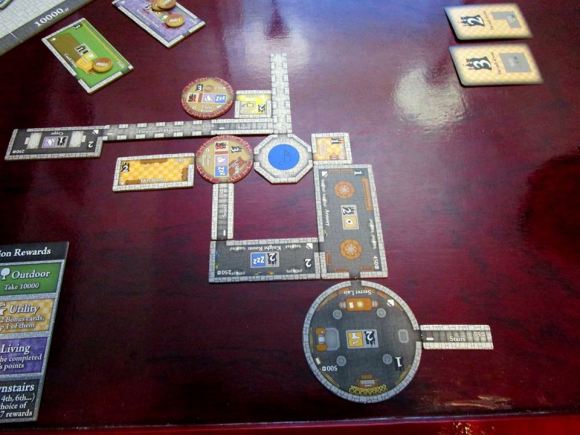
Castles of Mad King Ludwig takes various mechanics I’ve seen in other games (the tile selection method, bonuses for taking pieces that have been available longer, etc) and combines them all with a nice layer of spacial gameplay by utilizing different shapes and sizes of tiles/rooms that players need to fit together. Add in different types of rooms with specific rewards and various scoring options and bonuses and there’s a great deal of depth apparent right from the outset.

It all comes together well and my general impression of the game is quite good. I like the idea and implementation, and it’s extremely well designed in the way rooms of different size and shape can interact.


madking3


But I have to admit as good as it is I’m not sure it’s as good as I expected. Given the extra layers the different shaped buildings add and a couple of other mechanical differences I feel like I should prefer it to Suburbia, but I don’t think I do. In Suburbia what opponents build can have a scoring effect on your area, and even that small amount of additional interaction has a large effect on the dynamics of the game.

Beyond comparisons to other games though the biggest drawback of this one was the feeling that my castle was just really getting interesting as game ended. I’m sure it’s specifically balanced but the amount of rooms I could build feels low and my initial impression was I wanted the opportunity to do more. Since the number of rooms available is determined by the player count I don’t see this changing in future plays, it’s just something that I’d have to get used to.


madking5


Overall Castles of Mad King Ludwig is solid though. It’s unique in presentation and the spacial elements associated with the different room sizes and types add a nice dimension to the gameplay.  My initial impression is there’s perhaps a little too much variety in the rooms for the set collection / chaining powers aspects, but obviously one play’s not enough to determine that definitively.

So I enjoyed Castles of Mad King Ludwig but I’m not sure I’m completely sold on it. I’d like to try again to see if it feels as abrupt the second time, and/or see how it scales with more players.

Categories
Board Games Reviews

Top Five “New to Me” Games Mid-2017

As in the past, I’d like to look at some of the best games that I’ve tried for the first time (relatively) recently. Things were even tighter than usual among the new gems I’ve discovered in the past six months, and while I did order this based on my feelings at this exact moment it can really be labeled “too close to call” for me among several of these great games.

Ground rules:

  • The only qualification for this list is that I personally played the game for the first time since my late-2016 list.
  • I’ve tried 10+ new games since then, so as usual it was difficult to narrow this down. Honorable Mentions include, but aren’t limited to Deception: Murder in Hong Kong, Mottanai, and The Daedalus Sentence.


5. Kabuki

kabuki

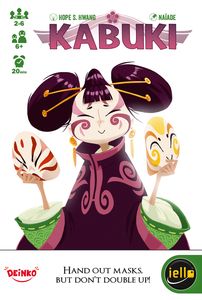
For a game that’s essentially “memory,” Kabuki is incredibly well designed and addictive. The art design is key, as the mask cards are just different enough to be recognizable and distinct side by side while making it difficult to remember exactly which cards of each color are in each stack. Incredibly easy to learn, and a lot of fun.

Further thoughts here.


4. Santorini

img_6842

One of the best possible ways to make an excellent abstract is to have simple rules that combine to form deep and compelling gameplay. It is of course easier said than done, and Santorini deserves ample credit for the success it achieves. Add in great theming and production value and special power cards that completely transform the game into something distinctly different but just as compelling and this is definitely a keeper.

Full review.


3. Yokohama

18582380_1685130231512165_7067184585474929987_n

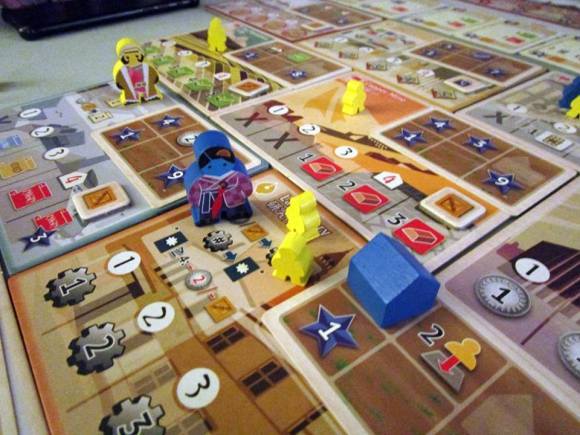
At first glance Yokohama could be a bit overwhelming in terms of the sheer number of components and disparate elements, but it all comes together really well. The basic actions taken each turn are straightforward, but the implications of executing those actions become complex and far reaching. It’s the type of game that could take a few plays to really wrap your head around, but is immediately engaging regardless. This is a game of meaningful choices and immense replayability.

First impression review.


2. Ars Alchimia

img_4881

Ars Alchimia is the crafting side system of rpg video games turned into a board game in a gloriously fun way. If that sentence alone adequately explains why it’s my #2 on this list definitely check it out immediately.  😉

Of course if more info’s needed, there’s my full review.


1. Hanamikoji

img_6849

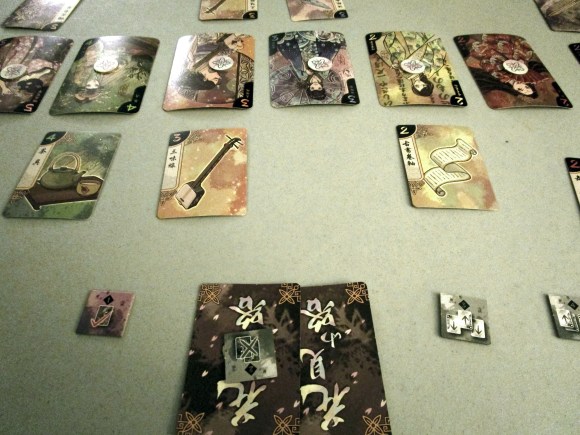
The gorgeous little card game called Hanamikoji takes a simple majority collection core concept and builds it into a deceptively deep game through the use of innovative playing actions. The give and take way in which opponents get to play a few select cards from each others hands is wonderfully done and provides and incredible hook for a fantastic game

Full review.


——-

That’s it for now. Continues to be a great time for gaming, and everything here is well worth at least giving a try.

What are everyone else’s new favorites?

Categories
Board Games Reviews

Quick Thoughts: Mottainai, Clank, and Dark Tales: Snow White

Some quick impressions on my first experiences with a trio of card based games.


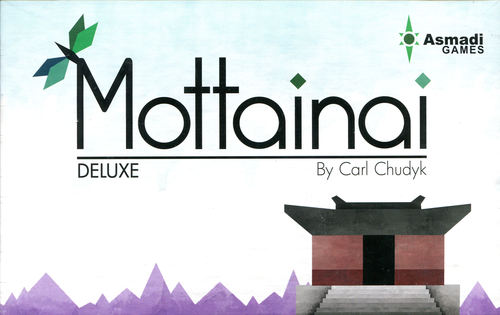
Mottainai

mottainai

Carl Chudyk has a propensity for creating card games that pack an insane amount of information and functionality onto each card, and after having played Innovation (and Impulse) I would have easily known Mottainai was from the same designer even if not previously informed.

The cards in Mottainai have different functions based on placement around all four sides of each player’s playmat. This leads to a bit of rule overload during initial explanation, but it all fits well once the game gets going and the multiple ways to use each card leads to interesting choices. It felt SLIGHTLY less chaotic than Innovation (during which chains can develop out of the player’s control towards the end), but there is that same feeling of escalation as different types of card abilities become available later in the game. It’s another extremely well designed (and reasonably fun) card game from Chudyk and while I won’t necessarily rush it back to the table I’m interested in playing again at some point.


Clank

clank1

Clank is a Dominion style deck builder tied to board actions. Moving, buying items from shop spaces, and fighting monsters all require symbols from your player deck that’s built up Dominion style via buying new cards from a general supply.  The currencies and board elements are well implemented, and the concept of getting into a subterranean cave and back out with treasure is a fun one.

clank2

However in end it’s still a VP game (right down to having a “Province” analogue) and feels a little too much like Dominion for me (which I’ve gotten beyond tired of and don’t really play anymore), even given the unique twists it adds. Something that had a different goal, or at least was farther from Dominion in terms of the deck mechanics, would have been appreciated. The additional elements do elevate it beyond its inspiration though and the plethora of gamers who love Dominion should jump all over this immediately.


Dark Tales: Snow White

darktalessnowwhite

I found the Dark Tales base game reasonably enjoyable, but to be honest was rather disappointed with my first experience with the Snow White expansion. The new cards didn’t add much variety of mechanics (some were actually copies of base game cards with different names) and the distribution and way cards interacted seemed really screwed up by the added cards. There is a recommended variant where some of the base cards are removed, but it was presented as something that affected game length and was totally optional (and removing single copies of certain cards shouldn’t help distribution issues anyway).

The other expansions look more interesting and varied, so hopefully this was just a single misstep, but Snow White was a big miss for me and I’m more likely to go back to the base game alone than trying this again.


——-


So two solid games (though one’s not to my personal tastes) and a lackluster expansion this time around. As always your milage may vary.

Categories
Board Games Reviews

Daedalus Sentence Board Game Review (First Impressions)


Recently had a chance to try a fun co-op with an intricate setup and thematic elements of the minotaur’s labyrinth adapted into a sci-fi setting (a treat for a mythology buff like me).

daedalus3

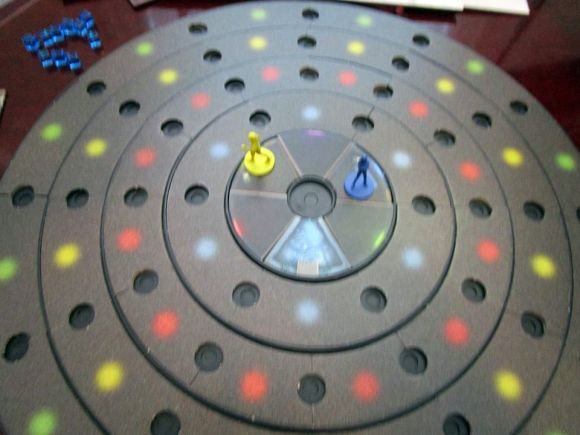
It starts with a great concept: players are captives of an alien race trying to perform a jail break and escape. All players must reach the exit (escape pod) at the same time to escape/win. The hook with Daedalus Sentence is the board comprised of concentric circles that rotate in between player turns. The mechanic is well implemented and nicely compliments independently moving guard patrols (including amusingly named/themed shock troops called Minotaurs) to really give the feeling of navigating a maze as players try to adapt. There’s an exploration aspect too, as the rooms start face down and have different powers available (and possibly extra guards to avoid) as the players reveal them.

The pace of the game really ramps up as players progress to each new ring and raise the game’s “alert level.” The higher the alert the more times the rings rotate and the guards move per turn. So at the beginning the players have some breathing room to plan a bit, but then things get extremely hectic. I liked the progression and the way the increasing pressure keeps the game engaging.

daedalus4

It did seem like the game could bog down at the end as players have incentives to play things slow and safe though. The capture mechanic is also a mixed bag, as it makes a lot of sense thematically but having a player literally have nothing to do until someone comes all the way back to the beginning of the “maze” to get them can hurt the pacing.

I tried this with 2 players, and liked the game balance. I’m not sure about the scalability with more players, as it felt like I had the perfect number of actions to make my turns meaningful. I understand to keep the difficulty intact the players as a group need to be limited to a certain number of actions, but there’s a lot of upkeep between turns and with fewer actions per player I could see upkeep vs actual playing time (for each person) to skew in the wrong direction. Curious to find out.

There is a small amount of randomness in what rooms are used on the outer rings, but for the most part after a couple games you’ll know what you’re going to find on each level. Some extra exploration incentives (items to find, etc) would help replayability. It would also be nice to have ways to help people get back to cells, or something for captured players to do while they wait.

daedalus2

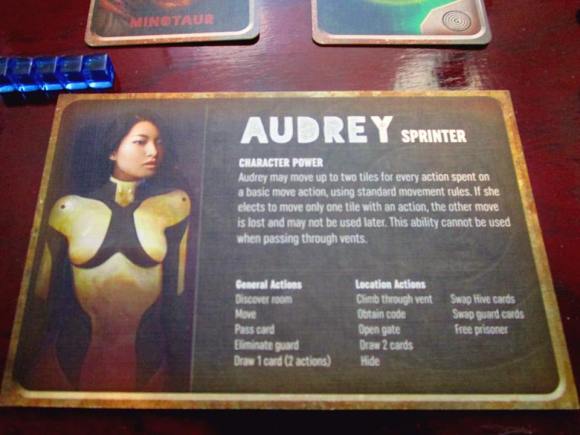
Overall though while there’s room for improvement in Daedalus Sentence what is here is fairly innovative and a lot of fun. I can see myself playing several times before it felt “solved,” and having varying player powers to try also helps shake things up a bit from game to game.  While longevity could be an issue, the atmosphere is incredible and the game will be a blast for at the very least a few games.


Categories
Board Games Reviews

Takenoko: Chibis Review (First Impressions)

Takenoko has become one of my go-to games for when I want to play something a little lighter while still enjoying a bit of strategy and depth. It’s easy to teach and fairly straightforward to play, but still has a good number of strategic choices and room for competitive play.

So I was quite excited about trying the expansion, hoping it would supplement and enhance the game without diluting it or making things too complicated. It did.


chibis


This is a direct expansion, and as such requires the base game to play. It introduces a “Miss Panda” figure, new land types, additional goals for each of the three kinds, and baby panda tokens (3 for each bamboo color).

The new land types have a Miss Panda icon, which determines when she comes into play, additional movement, and is relevant for some goals. They also have various powers that activate when the gardener is moved to them such as growing bamboo on all irrigated plots of the same color anywhere on the board, one plot where players can chose to grow an color of bamboo, and a “gardener’s hut” tile that allows the player to look at the top card of each goal deck and choose one. All the tile abilities make sense and work well within the established gameplay framework.


img_6855


The baby panda tokens can be claimed for one piece of bamboo of the same color whenever a player moves Miss Panda to the location of the (original) Panda, and provide small immediate bonuses (including the new ability to exchange a goal card from your hand for a new one) as well as 2 points per token at the end of the game. They are well balanced and seem reasonable in terms of powers and point value.


img_6851


The new goal types are great natural extensions of the ones in the base game. New land goals include having a set number of a land type on the board and formations involving the Miss Panda symbol. The new panda goals are worth more points than the base game goals for the same color/number of bamboo, but can only be redeemed if the Panda is on a lake tile. The new gardener goals are perhaps the most interesting, involving having bamboo stalks of minimum height(instead of exact heights) as well as goals needing varying heights of the same type of bamboo. The point values seemed reasonable and the variety was nice.


img_6853


Overall the new rules expand the depth of Takenoko nicely without being overwhelming. However I would still introduce new players to base game first, if only because of the numerous new tiles with “powers” and the intricacies of having two pandas to move with different effects. The theme of the expansion is quite cute (although the thematic ties of mechanics had my group chuckling often) and it all fits well in the established framework.

Best of all there are small nuances added that increased depth without making things too complicate. Everything in here is integrated well and nothing felt extraneous or unneeded. Excellent expansion, and an easy recommendation if you like the base game.


Categories
Board Games Reviews

Hanamikoji Review (First Impressions)

Emperor S4’s version of Hanamikoji attracted me with its beautiful art and some good word of mouth, but I didn’t know much about the game going in.

Simply put: it’s fantastic.


hanamikoji


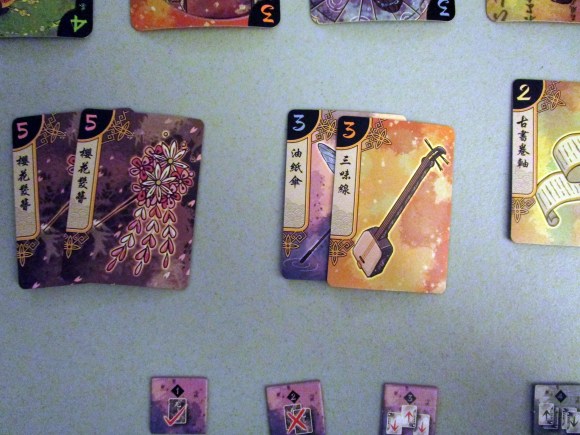
This edition has a classic Japanese theme to it. Seven oversized cards representing Geisha (female artisans) placed in the center of the table. For each Geisha there are 2-5 associated item cards which will be played on either player’s side, and whoever has more of that Geisha’s items played at the end of a round wins her favor (represented by a victory marker). If at the end of any round a player has won four Geisha markers or has markers for Geisha worth a total of 11 “charm value” (value on Geisha cards, corresponding to the number of her items in the deck), that player wins the game.

If neither player satisfies a victory condition, another round is played in the same manner except victory markers are not reset. So you can win the favor of a Geisha that your opponent did in previous rounds, but any claimed Geisha will never be “neutral” again during the game.


The key to the game is in how cards are played. Each player has four action tokens and will use each exactly once during the round.

  1. Pick one card to play face down that will count for you during end round scoring.
  2. Pick two cards to play face down that will NOT count for end round scoring.
  3. Pick three cards to reveal. Your opponent then chooses one to play on their side of the board, and you play the other two.
  4. Pick four cards to reveal and separate them into two pairs. Your opponent then chooses one pair to play on their side of the board and you play the other two.


So in a round each player will see a total of ten cards in their hand, but three of them will end up on the opponent’s side for scoring and two . This “pick and choose” system is easy to understand and teach but creates significant strategic depth. Every step is a difficult decision, from deciding what order to take actions in to picking which options to present to your opponent.


img_6845


The gameplay design here is phenomenal. You can essentially only ever guarantee a single card in your hand each round is going to count for your own scoring, and the psychology and  strategy of picking what options to give your opponent are vexing in the best possible way. The fact that a single item card is discarded face down before play begins adds the perfect amount of uncertainty and luck, is while players can make reasonable guesses about hidden cards in play things can never be fully counted out.


img_6849


This is an abstract game at its core, and as such the theme is lightly integrated and honestly could have been anything. But the chosen theme fits well, and the gorgeous art style and graphic design really do enhanced the game significantly.


img_6848


.


Overall Hanamokoji is a wonderfully deep 2 player game with simple mechanics that comes together beautifully. I’m quite excited to play it again soon.

Categories
Board Games Reviews

Santorini Review (First Impressions)

Had been really looking forward to getting to try this out, as both the concept and aesthetics looked fantastic.

santorini

The basic game of Santorini hits the easy to learn yet hard to master sweet spot all abstracts strive for. Each player has two builder pawns on the board, and a turn consists of picking one to move one space in any direction then building one level (as appropriate) on an adjacent space to the moved builder. When builders move they may change levels (up one or down as many as they like), and a player wins if they get a builder on level three of any building.

Adding strategic choices are two restrictions: a fourth level can be built on buildings, capping them and preventing builders from scaling them, and if any a player can’t legally move one of their builders on a their turn they lose the game.

img_6842

It’s a wonderfully realized abstract that I immediately enjoyed. There’s a depth to it that will take some time to get a firm grasp on, like any good game of this type. It also supported by beautiful, high quality pieces. The theme doesn’t matter much for the base game, but the aesthetics are great and do add a “centerpiece” feel to the game.

In addition, the theme DOES matter for the included variants. Each player can pick a character to play (based on Greek Gods and Heroes) that grants them a specific powers. The powers make Santorini a COMPLETELY different game, adding asymmetry and numerous new strategic options that must be considered. One power we played with even added an alternate victory condition for one player.

Players HAVE to significantly adjust playing style depending on both their own power and opponent’s, which is great as it takes a phenomenal base game and changes it into something equally compelling. Both versions great and indicate impressive longevity for the game as players experiment with various pairings of powers and likely also switch back and forth with the base game.

img_6843_trim

Rules are also included for the forthcoming expansion, with explanations of the new powers. There are also pieces and variant rules for playing with three people or even four (with team rules), although it’s mentioned the game is really designed to be one one one.

Put it all together and Santorini is an wonderful game that clearly had a lot of effort put into every aspect to present to really make it something special. Thrilled with how this one turned out.

Categories
Board Games Reviews

Quick Thoughts: Red Riding Hood, The Pied Piper, & Kabuki Board Games

I recently tried more younger player aimed games with my niece. While they didn’t all have quite the hook for older / more experienced gamers like my previously examined Abraca…What? and Sushi Go!, they still presented fun experiences simple enough for younger players yet with a bit of depth to entertain those playing with them.


Red Riding Hood, The Pied Piper (Tales & Games)

The first two I’ll talk about are from the Tales & Games series, which are games based on stories and fairy tales that come in wonderfully thematic boxes designed like books.

Immediately striking is the quality of components and visual style of these games. The boxes don’t just look like books, the top flips open like a bookcover. Inside said covers are setup diagrams for the included game, which is a great touch. The cardboard chits and tokens are of decent weight, and each game had at least a couple of wooden character pieces.

In deciding to try these my main concern was that they’d be generic games with the theme haphazardly pasted on. Reviews seemed to indicate that wasn’t the case, so I chose two that seemed most interesting and had the most postive buzz. There are six different games in the series so far.

I’m happy to report my concerns were in fact unrealized. Each game is fairly suitable to it’s inspirational story, with goals and mechanics that make sense.

In Red Riding Hood the goal is to get Red to Grandma’s house before the wolf. There are two game modes, one with everyone alternately controlling Red and one with one player as the wolf against everyone else. We only played the co-op version, so I can’t comment on the differences nor the mechanics of playing the wolf.

Gameplay centers around a press your luck element where each drawn card can increase the number of spaces Red might move, but at any point if you draw a card with lower value than those already on the board everything is cleared, Red doesn’t move, and the wolf gets closer.  There are a couple other aspects, like a shorter but risky secret path to take and bonus movement when a card depicting Red is drawn, that add depth without making things too complicated. My niece loved this and the rest of us found it fun enough.

Pied Piper has a little more to the mechanics, with each player trying to keep their house from becoming infested with rats. The infestation level is marked with a tracker that moves up whenever a rat passes their house and down when the Piper does. Movement is determined by player directional arrows on cards that are color coded to correspond to specific rat tokens in between the various houses. We tried this with just two players, which was fine but it really seems the game would be more interesting with more people.

Like Red Riding Hood I think this is great for the target ages, but here the younger players are at a clear disadvantage against older players who can process and plan what the different arrows will do in sequence. Be careful not to be too ruthless when playing this one with young gamers, as I imagine it could frustrate them quickly.

Overall though these are two distinct, well done games that make good use of the recognizable themes. I’m curious to see what the other games in the series are like.


Kabuki

kabuki

Kabuki really is a brilliant little gem. It’s a “simple” memory game that has an actual game built around it. There are four performer cards, which are the bases for four piles. On each turn a player draws a mask card and places it on one of the piles. That’s it. The key is you’re trying to play it on a performer that isn’t already “wearing” that particular mask. If another player thinks the mask you played is already in the pile, they say “stop” and call for a check of the pile. If they’re right they take one of your victory points. If not they lose one to the bank. That’s it. Most points at the end of the game wins.

It’s a wonderful elegant variation that puts everything in the players’ hands. The chosen theme lends itself wonderfully to the concept, as the mask cards can be stylistic in a way that makes it hard to remember exactly what’s in each pile. Yet when masks are side by side they’re quite distinct and easy to tell apart (which is equally important). Beautiful, vibrant artwork enhances both aspects. Most colors have 2 different mask versions (blue has 3 and green only 1), and each mask version has 5 copies in the deck. So eventually a copy of every single mask will HAVE to be played in a pile that already has a copy.

The straightforward core mechanics make Kabuki extremely easy to teach, yet remembering the contents of the piles as the 60 mask cards are played will tax anyone’s memory. Perhaps best of all the playing field is pretty even, regardless of age and experience of the players. Overall my niece was just a little faster at calling out misplays and a little less likely to be wrong and won most of the games we played (with a variety of opponents all older than her). While she enjoyed all five games mentioned between this column and the one linked to above, I think this was her favorite (with Sushi Go! and Red Riding Hood close behind).


——-

That’s all for now. Hope to be back with more soon. 🙂

Categories
Board Games Reviews

T.I.M.E Stories: The Marcy Case Board Game Review

I love the general setup of T.I.M.E Stories and really enjoyed the initial adventure (Asylum). I’d heard mixed things about this followup first expansion and was curious to see if the potential of the established mechanics would continue to be capitalized on.

marcycase


As with my review of the base game / first mission I’ll try to be as spoiler free as possible.

The overarching structure and premise of T.I.M.E Stories remains the same: the players work for a time travel agency and go back in time on missions. Each player is sent back into a receptacle (character), Quantum Leap style, and they must work together to figure out what’s happening and complete the mission. This expansion provides a new story deck representing a completely new mission from the one included in the base game.

Here the brilliance of the design choice to use token and symbols that can be reassigned to different meanings from mission to mission really shows. It allows context appropriate and specific characteristics and items that enhance the story and fit within the particular adventure and time period the players find themselves in.

For example where in Asylum characters might have to talk their way out of certain situations using a “glibness” trait, here the ability to “search” affects how the scenario unfolds for the players. There are other traits, items, etc that are defined within the scenario being played yet use the same components and rules established in the base game.

And highlighting the flexibility those design choices allow might very well have been one of the primary design goals of this expansion. A friend of mine summarized it best with the comment that The Marcy Case “demonstrates the versatility of the system.” It does feel and play quite different from Asylum, and I think that was pretty much the whole point.

I understand why people expecting more of what Asylum was would be somewhat disappointed (and I honestly do think Asylum was just a little better), but this was still an excellent entry in the series that captured that same atmosphere of tension and adventure. Perhaps most importantly like Asylum also had a strong theme and story, including meaningful choices to be made and some of the best and well executed red herrings I’ve ever seen (even if they did sometimes make me want to pull my hair out).

Additionally the conveyed detail and nuance of the environments to be explored and general immersion that is achieved with just cards continues to be amazing. I know I’m harping on it a bit but the framework of T.I.M.E Stories and what can be done with it just incredible.


That’s not to say that this was perfect. As I mentioned in passing above I did like Asylum a touch more, and there are a couple of minor things here I would have liked to seen done differently (that I can’t get into due to spoilers). But I thought it was great overall and don’t agree with the idea that it suffers for being different.


Overall

The more I play T.I.M.E Stories, the more and more I adore it. Bring on the next expansion. 🙂