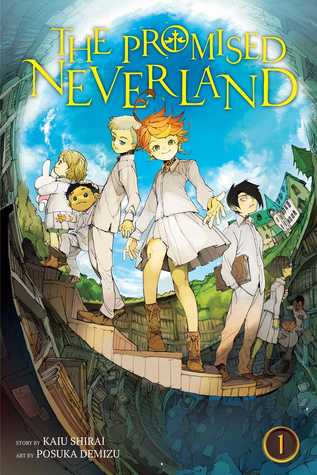
Eleven year old Emma lives a happy and idyllic life as one of the oldest orphans at Grace Field House under the supervision of a loving caretaker… paying no mind to the rigorous daily tests, identification numbers on everyone’s necks, or surrounding wall with a locked entrance gate they are forbidden to venture beyond.
I only had the barest inkling of what to expect from this going in, and certainly wasn’t quite prepared for what awaited me. The first chapter sets the stage in excellent fashion, both feeling like it spends enough time introducing the status quo and getting into the gruesome details of what the story is really about fast.
I won’t get into specific spoilers, but fair warning: this is a dark, tense read. Grace Field House becomes the scene of a cat and mouse game, wonderfully engaged in by smart, differing agents acting with a variety of goals and agendas. It already stands out among its genre (something awful lurking underneath a seemingly perfect life), as the layers and levels at play even throughout just this first volume are impressive and intriguing.
The art is intentionally exaggerated often, which works sometimes to increase the impact and eeriness of certain situations but feels extremely odd and jarring at others. Hopefully it’ll even out a bit in future volumes.
There are moments of info dumping, but given the nature of the story it’s somewhat unavoidable and done well enough. Several characters are trying to plan several steps ahead and outthink each other covertly, and the author does a great job of balancing this and the ways in which they interact with / run afoul of each other.
Strong start overall for this creepy, layered manga.
A brief look at some games I got to try out (somewhat) recently.
Walking in Burano
Walking in Burano is a spacial card game in which players choose building sections to add to their area under ascetic and other point related restrictions. There’s an interesting balance created by the different sections needed for building, elements on cards that lead to scoring, placement restrictions, and the cost of taking actions. It all gives a nice layer of depth here. Subtle aspects of needed strategy might not be immediately obvious, but the gameplay itself is easy enough to jump into.
I’ve only played this 2 player thus far, and there’s a mechanic specific to that version that really makes long term strategy difficult in how quickly cards disappear. I imagine it will be a VERY different game with more players because of this. Still enjoyed it quite a bit though and look forward to playing again.
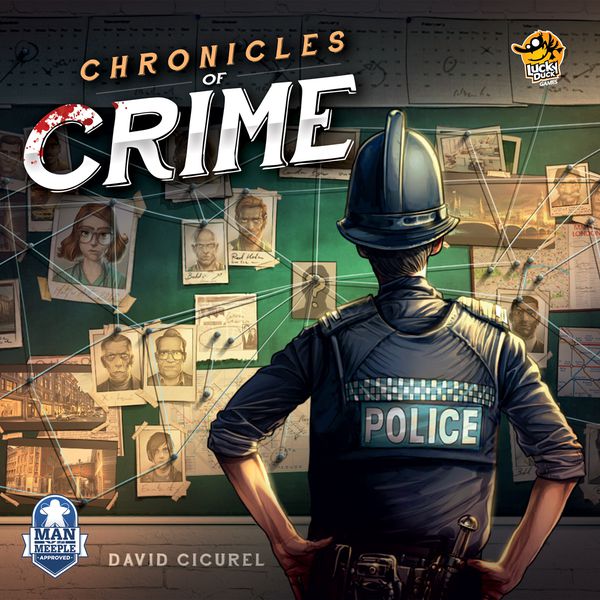
Chronicles of Crime
Here’s another game to join things like Watson & Holmes and Detective right in my sweet spot of providing decent mystery complexity in a way that’s still accessible and fun. This is incredibly application heavy, needing use of a phone to analyze clues, check answers, and even look around crime scenes. But it’s extremely well done and integrated. Excited to continue to progress with this one.
Planet
Planet provides an interesting variation on tile placement games as players fill in the twelve sides of their planet trying to maximize sections of their secret land type collected while satisfying certain conditions to claim animal cards (both of which provide victory points at game end).
The gimmick is a fine one, although the all important magnets that secure tiles in place should be stronger. It’s much too easy to knock off a piece accidentally when turning the planets around or otherwise handling them, which is pretty much what the whole game is based on doing.
The variation of goals and rules surrounding them is reasonable, as is the drafting aspect that governs who gets what tile. It feels like there could have been a little more to this, although I’ll admit I’m not sure in what respect. Decent, quick playing, reasonably unique game none-the-less.
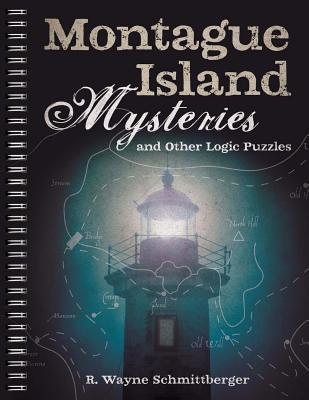
Montague Island Mysteries is a collection of logic puzzles thematically presented as a series of visits to a remote island. Your hosts, as well as the fellow guests, are fellow puzzle enthusiasts who gather at the island for twelve weekend visits, during each of which a mystery puzzle is presented along with several ancillary ones. The theme is used nicely as the reader will be determining things like the guests’ backgrounds, what room everyone’s in, further details about the island, etc.
Of course with a book like this the quality of the puzzles is paramount, and in this respect MIM is spot on. Classic grid based logic puzzles are mixed in with a nice variety of spacial reasoning, unique visualizations, etc. The mystery puzzles feature a mechanic I particularly adore that involves the “culprit” secretly being among the guests and giving statements that might or might not be true. It provides a nice twist and was used with just about the right frequency (although a few more in this style would have been great).
There are a couple of minor missteps. A few puzzles are based on every attendee, including the player, being given two cards or something similar with the instructions “don’t show them to anyone else” and the solution based on determining who has what. But the reader’s own cards are not revealed, their persona just presents statements that may or may not be true like everyone else. This does not affect solving the puzzle, but is thematically awkward given the presentation and a bit of a missed opportunity as well.
Some of the puzzles were too long and/or required too much brute force for me, although given the scope and variation of what’s presented a few puzzles not being to my particular tastes is no big deal. One pushed mathematical logic versus linguistic logic a bit far for my liking, but again that’s personal preference.
Overall Montague Island Mysteries is a wonderful collection of puzzles with a solid connecting theme. I enjoyed this book quite a bit and look forward to checking out the sequel.
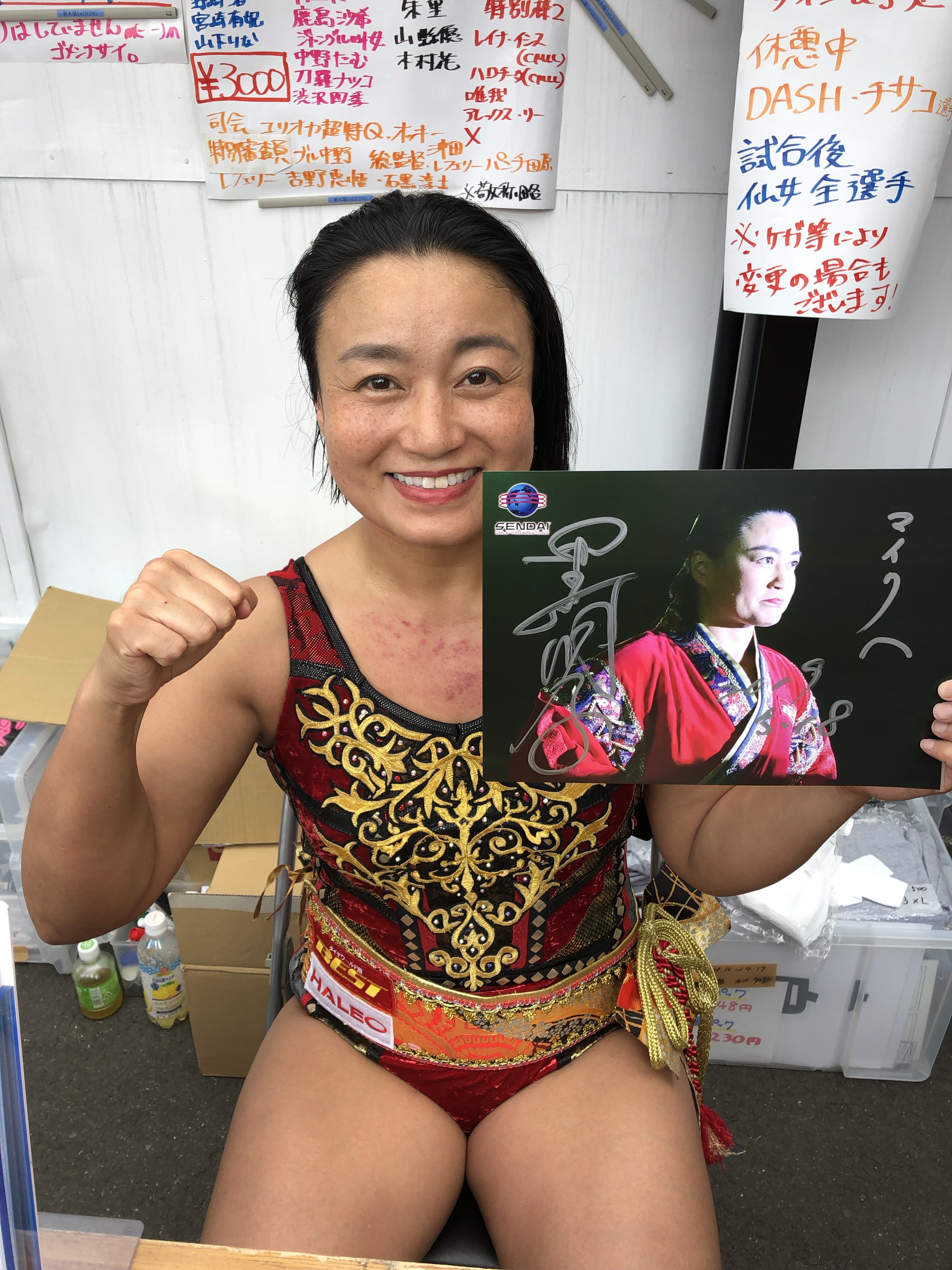
DASH Chisako opened with an apology that she would miss her first Sendai show in her career due to injury. She had a mild concussion, and has thankfully since recovered and returned.
1) Mikoto Shindo vs Manami
Mikoto is from Marvelous and one of a trio of rookies there that have been making a strong impression as they wrestle for a variety of different companies gaining experience. Manami’s been honing her own skills here in Sendai Girls, and the two proved nicely complimentary foils for each other. Solid match between two rookies that should both have bright futures ahead.
2) Hiroyo Matsumoto vs Hikaru Shida vs KAORU
This was a fun triple threat, with good action and underlying issues playing up having Dash’s two regular partners against each other (she teams with Karou in Marvelous as Riot Crown and Hiroyo elsewhere as Reiwa Utima Powers). Dash was ringside and involved in some of the antics as much as she was able, which was nice to see.
The match ended with a really cool double pin on Karou (Hiroyo in sunset flip position on Karou while Shida small packaged her). The ref awarded match to Shida, over Hiroyo’s protests.
3) Sakura Hirota vs Alex Lee
Hirota, in honor of Dash, tried to be hardcore here. That worked about as well as one might expect. Alex picked up the eventual win in a fine for what it was encounter.
4) MeikoMei (Meiko Satormua & Mei Suruga) vs Sareee & Yuu
I was excited about just about every aspect of this encounter: my first time seeing MeikoMei team, wrestling’s biggest rising star against one of its greatest established veterans AND one of its brightest rookies, another chance to see how Yuu is evolving her craft since going freelance, etc. This is exactly the type of unusual mix of wrestlers and styles I hope to see with all the cross promotion that has been happening lately.
And for a full twenty minutes they delivered. Everyone was one point, every matchup was different and interesting, and this was a thoroughly enjoyable, hard hitting affair right up until the time limit expired and the match was declared a draw. Would love to get to see any pairing of these four as a singles contest sometime.
5) Beauty Bear (Chihiro Hashimoto & Mika Iwata) vs Medusa Complex (Millie McKenzie & Charli Evans)
I was previously familiar with and a fan of both Millie (from Sendai’s 1/6/19 show) and Charli (from Shimmer), but this was my first time seeing them as a team. Side note: I adore their team name.
Big match for them in the main event against Sendai mainstays and reigning tag team champions Mika & Chihiro (who was also Sendai’s reiging world champion). Solid tag team wrestling all around and a good main event. Medusa Complex’s (upset) victory in this non-title encounter and a resulting challenge set up Beauty Bear’s first title defense at a future date (despite holding the belts for over a year).
I always enjoy Sendai Girls, and this was certainly no exception. While I did miss seeing Dash in the ring I’m glad she took the time she needed to recover and am happy it wasn’t serious in the end. Really good show overall.
” Even if it’s meaningless… sometimes, nice things happen.”
Tales of two girls and a small tank climbing what’s left of civilization, and there isn’t much…
I’ll be sharing thoughts on the entire series (volumes 1-6) as a whole here, but it will be kept as spoiler free as possible.
Girls’ Last Tour is a dystopian slice of life story, following a gradual journey through the remains of a futuristic world gone to ruin. I found it atmospheric and engaging, being drawn in bit by bit as our protagonists make their way.
It could have been something very different, and while I enjoyed this for what it was I certainly understand if some readers wanted something different. This is rather light for a post-apocalyptic tale in many respects, and more about Chito and Yuuri’s wandering and the occasional philosophical question than their survival in a harsh landscape or other natural directions the story easily could have veered into.
There are a lot of questions left unanswered, particularly about the world before it collapsed and the particulars of the collapse itself. To be honest not much of anything is explained, and I’m not sure the sparse tantalizing clues presented add up to much of a whole. But while they would have been nice to have those details are in some sense beyond the point of the story, and I found the slowly unfolding themes, ruminations, and details that were present interesting enough.
Girl’s Last Tour admittedly had more potential lurking beneath it than what was realized, but for me it was a compelling, great little read overall regardless.
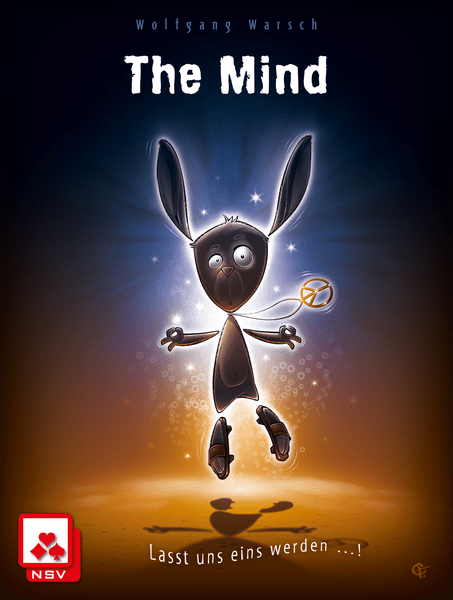
Note: The rules treat the main aspect of how the game is played as a spoiler, which is beyond ridiculous but consider this a “warning” that going by the rulebook my discussion starting below the box image includes “spoilers.”
Welcome to “waiting: the game.” In The Mind players try to play cards of increasingly large hands drawn from a deck numbered 1 to 100 in order without sharing any information or signals about what cards they have.
So the communication becomes “teasing” playing cards and how long you wait to play. They dress this up with a “vitally important” phase where all players put a hand on the table and concentrate on the level they’re about to play (no, I’m not joking) and other mumbo jumbo about being in tune with the flow of time.
Some will get into the window dressing. Personally I wish that effort went into adding something to the actual game instead. It was a curious experience for a couple of rounds, but seems way overrated to me.
I’m a mathematician, and this largely bored me. This game is simply subconsciously playing the deck odds (which is a pure crapshoot with few cards in hand) and guessing how long a pause is appropriate (which is close to a pure crapshoot with many cards in hand). I felt no real engagement or investment in whether or not I can guess with no contextual info whether my fellow player was holding a card between the one I just played and the ones left in mind hand nor felt much of anything but annoyance when we lost a life because he happened to be holding say a 71 instead of 73 when I played a 72. There’s no “better move” to have been made there, nothing to be learned or refined.
Put another way, I could simply count to myself and play my cards as I reach it’s number (without telling the others players that what I was doing, because it would be cheating otherwise) and achieve roughly the same level of success. The only way to get better at this game is subconsciously learning how long my friends mentally wait to signal a jump in numeric value of 25 vs a jump of 10, etc and that just holds no interest for me whatsoever.
So as the meaningful experience the instruction book (jokingly?) implies this falls flat. As a filler game it’s just feel so slow (the main mechanic is *waiting* after all) not matter how short the rounds are and I have a closetful that are more interesting and fun. For games that do no talking / contextual info only better I have things like Magic Maze, Ravens of Thri Sahashri, etc. Kudos for trying something different and to each their own, but this was a big miss for me.
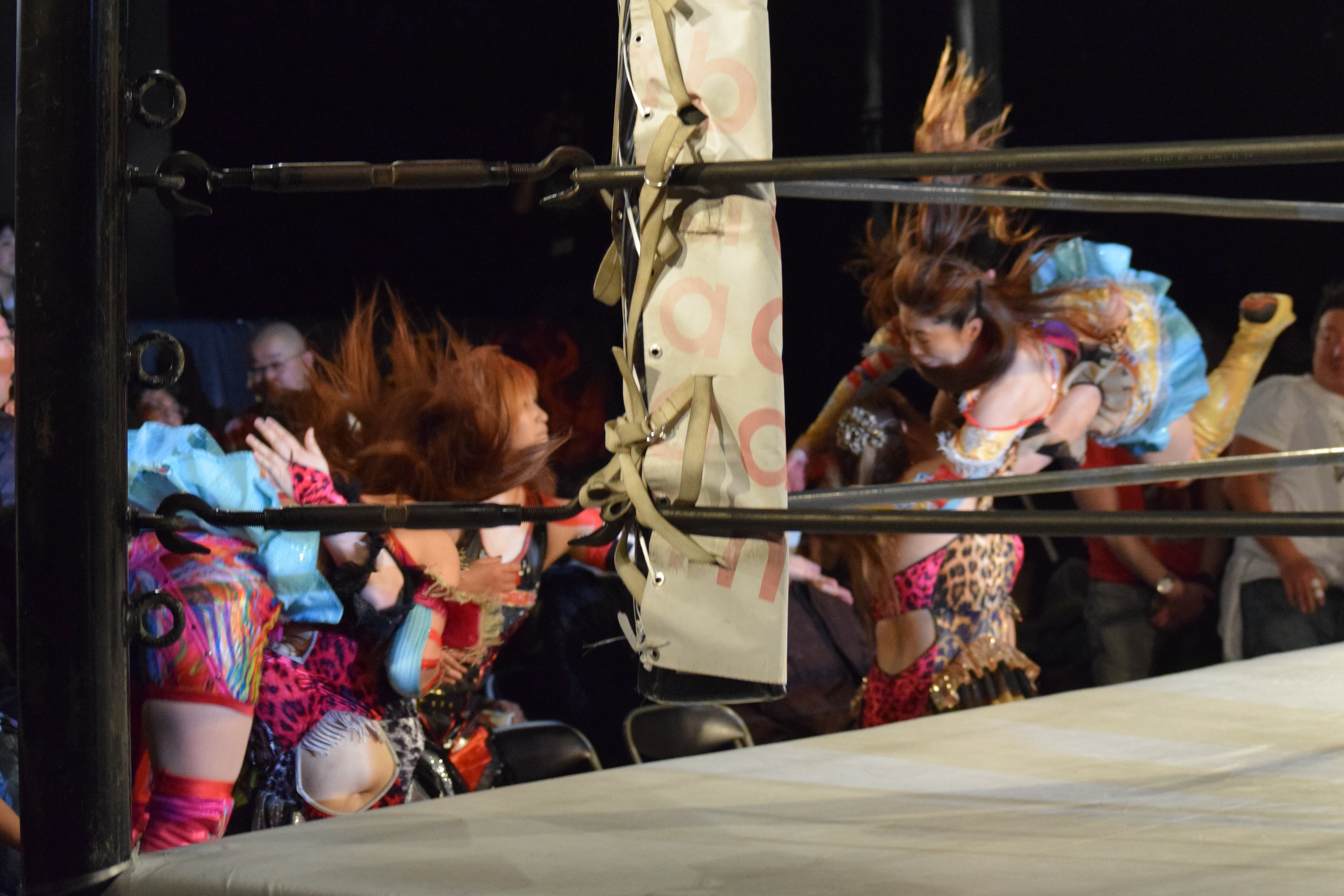
It’s going to be impossible to talk about this show without addressing the atmosphere, so let’s start there. There was a trio of loud, obnoxious foreign fans being rather disruptive throughout. Among other things, they were CONSTANTLY trying to start American style chants, which really aren’t done in Japan. I understand wanting to have fun and be a fan in your own way, but there is a level of respect that needs to be given to the fact that we are visitors in another culture with different norms and expectations. The problem was how incessantly they were doing it and the complete lack of awareness (or caring) that they were disturbing other fans (not to mention the wrestlers). After the first few times of literally no one in the arena joining in one would think they would have stopped, but instead they got increasingly louder.
Summarizing the whole fiasco was their insistence afterwards (when people tried to point out how poorly received their behavior was) that “the wrestlers loved us” and “what we were doing wasn’t illegal.” Yeah, they literally argued if they couldn’t get arrested then their actions must be ok. They actually were annoying enough to make a Japanese veteran wrestler pause in her post show comments to tell them to shut up, which is kind of insane given the culture over there.
I hate having to bring all this up at all, but it did impact the show so is unfortunately highly relevant.
1- Beyond the Sea Tag Title: Arisa Nakajima & Sae (c) vs Miyuki Takase & Himeka Arita
Ok, on to the wrestling. This was a fine opener, shining whenever Arisa was in. To be honest Sae just isn’t at the level of the others (including Himeka, who similarly has only been wrestling about a year and a half) and it did show at times. It was also tough to get into things here with the aforementioned disruptive fans at their worst, literally unsuccessfully trying to start “Let’s Go Arisa” chants TWENTY TIMES IN A TEN MINUTE MATCH. The wrestlers did their best to overcome it though and this ended up a nicely energetic opener, featuring what felt like a big title change. Takase has gotten incredibly good really quickly.
2- High Speed Match: Mei Hoshizuki vs Amazon vs Tsukushi
Ice Ribbon’s super-brat was in her element here, creating chaos and eventually settling on a shared victory with Mei as they double pinned their larger opponent (which liberal involvement from referee Natsuki). Perfectly acceptable in a high speed match, and a good way to keep Amazon looking like a threat even in defeat. These high speed triple threats tend to be quite enjoyable in general, and this one was no exception.
Mei had some of the coolest moments in the match, and how impressive she and her compatriot Marvelous rookies always are is definitely going to be a recurring theme in my reviews.
Amazon was decent here and utilized her size and power advantages well. She was a little off at times but actually noticeably evolved and improved over the course of the different shows I saw her at in the short time I was there, which was actually really cool to see. She’s got a lot of potential.
3- Best Friends (Arisa & Tsukasa Fujimoto) & Takumi Iroha vs Lovely Butchers (Hamuko Hoshi & Mochi Miyagi) & Yoshiko
Just a ton of fun all around with this one. Yoshiko did the full dancing Butchers entrance with her teammates, and after teasing reluctance Iroha sang along with Best Friends during theirs.
It’s always a treat to see Best Friends together, and everyone was on point in a high octane, exciting contest. Neck and neck with the main for best of the night, with Arisa and team proving victorious to make her 1-1 for the night going into the main event.
4- Tequila Saya & Mima Shimoda vs Maria & Tomoko Watanabe
I’m a big fan of both Saya and Maria and their sections against each other were a treat. Would love a singles match down the line. Fine but somewhat unmemorable match otherwise, with Shimoda & Saya picking up the win at the rookie’s expense.
Main Event- Nanae Takahashi vs Arisa Nakajima
SEAdLINNNG owner Nanae was their top singles champion at the time, but this was non-title. I have mixed feelings on her in general (both in and out of the ring), but she’s certainly capable of great matches and this was an excellent, hard hitting war.
My instinct is that she honestly didn’t need to go over Arisa here, and a time limit draw would have served better in a variety of ways, but it was Arisa’s third match of the night and again Nanae was the reigning champ so I do understand the decision. Great match to end the show with.
Outside factors aside this was a really good show overall, and kudos to the wrestlers for performing at a high level regardless and constantly reengaging the crowd.
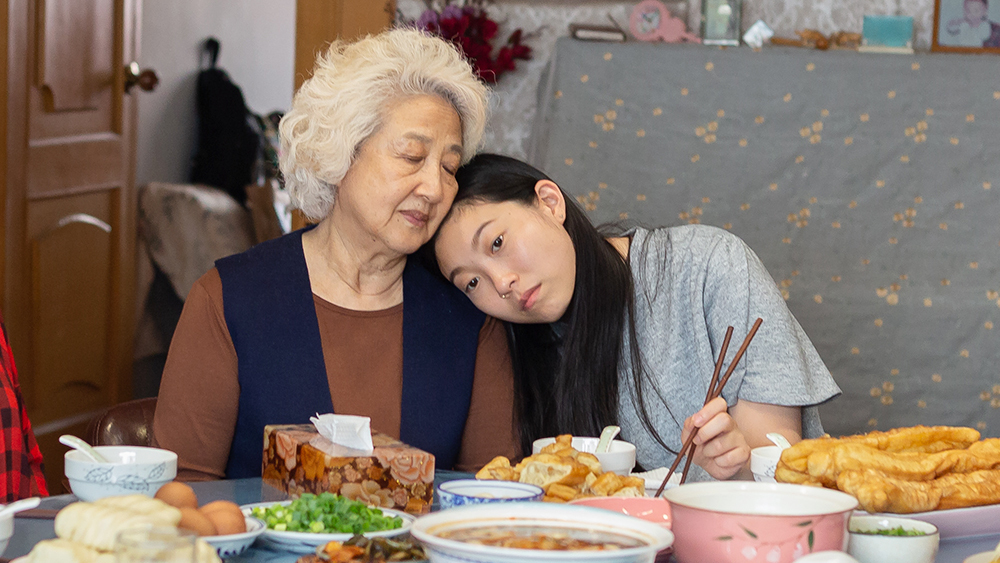
Billi’s family moved to New York when she was young, but she remains close and in touch with her grandmother. When her grandmother is diagnosed with cancer and given just a few weeks to live, Billi makes a difficult trip back to China under the pretense of a family wedding to see a loved one who hasn’t been told she’s dying.
Let’s just state things up front: The Farewell is FANTASTIC. It’s an emotional, genuine feeling depiction of a family making, arguing about, and going through with a tough decision as they seek to bear their matriarch’s potential emotional burden in her stead.
Director/writer Lulu Wang built off of personal experience and presents a deeply resonant story that transcends the specifics of the involved cultures while lovingly embracing them and making the pressures and beliefs that motivate the characters understandable to all viewers. There’s an incredibly authentic feeling of family permeating the film that’s completely relatable at the same time it presents weighty glimpses into a culture that isn’t my own. Flashes of humor, awkwardness, conflict, love driven actions both admirable and misguided, etc make Billi’s family feel real in way seldom so perfectly captured in any form of media.
But even beyond the deft presentation of the subject material and masterful acting (particularly by lead Awkwafina, who spends the film completely torn and wrecked over figuring out what the right thing to do is) that captivated me as I watched, the film shines even further through brilliant cinematography. I don’t often get into camera treatment, etc because it should be largely invisible when done right. And it is both here, but the stunning way everything’s done to heighten emotion and drawn the viewer in deserves special mention.
The way scenes are framed, the general use of when longer range shots that let emotion sit for a moment when it needs to and magnifies the impact of the film’s few close ups when they happen, etc all combine to create a very real feeling of being present and included in the events. I didn’t feel like I was watching Billi’s story, I felt like a was there. I can’t overstate what a difficult and impressive achievement that is.
A day later and I still feel the full impact of the thoughts and emotions swirling about in the wake of seeing The Farewell. Excellent in pretty much every possible aspect of it’s creation, appropriately tough to watch in parts, bittersweet, and genuine, I can’t recommend this engaging, thought provoking, emotional gut punch of a film enough.
Knight is the second installment in the Sibyl’s War series, and this review will contain some spoilers for the first book, Pawn. The story is a direct continuation of events in Pawn, and I highly recommend reading that first.
As one of the special humans who can communicate with the starship Fyrantha, Nicole found herself of even more mysteries and trouble than the others kidnapped to work as the ship’s repair crew. Now parts of the ship itself have chosen Nicole as its new Protector, a role that will be particularly difficult since she needs to keep the competing factions from realizing the true potential of her fellow humans if she wishes to save her planet.
Pawn was a good start to Sibyl’s War that presented an extremely interesting world with decent characters whose actions and characterizations felt occasionally unnatural due to the necessities of the plot. Overall though I enjoyed it and was curious about where things would go from there. I wasn’t able to confirm this 100%, but I think this is a trilogy which would make Knight the middle portion of the ongoing story.
Knight has a slower, more deliberate pace than Pawn, with a LOT of establishing geography, etc. Zahn manages not to turn these sections into info dumps, but there’s still a lot of detail in constant streams woven throughout. I could see and certainly understand some pushback over this style and the resultant pacing, but I actually found it appropriate and enjoyed this book a touch more than the first.
I found characters’ actions more reasonable and internally consistent which allowed me to get even more caught up in the intrigue and Nicole’s efforts to outplay the various competing influences and figure out what was truly happening on the Fyrantha. The build for the next installment felt natural and the revelations in Knight set things up for another direct sequel while feeling like this story still had a suitable end point. I like the way things are building and will be impatiently waiting for the next book since I’m now caught up with what’s been published thus far.
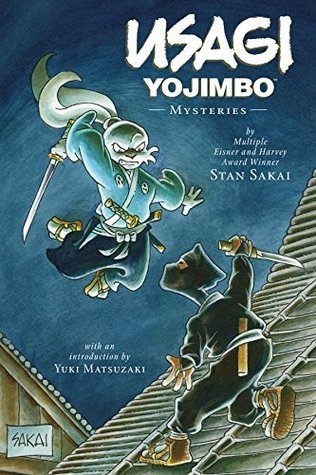
Mysteries is volume 32 of Stan Sakai’s samurai epic, Usagi Yojimbo. It’s another volume that benefits from having read Usagi’s previous adventures but also stands reasonably well on its own and would not be a bad point to jump in.
For those who are new to Usagi, a comment from my review of Vol. 1 on Sakai’s choice of medium that has remained relevant throughout the comic’s long run:
“The use of amorphous animals as the characters might seem unusual to first time readers, but it gives Sakai more visual diversity and symbolism to play with, and is executed with such finesse that it quickly becomes impossible to imagine the book without this choice. Don’t mistake the presence of animals as people as a sign this is a ‘kid’s book.’ Usagi Yojimbo covers a period of war, political unrest, and an unhealthy level of danger and can get dark and bloody at times.”
Detective Ishida is as much a main character as Usagi now, and I continue to enjoy the time the series is spending focusing on the two of them together solving mysteries. Things have a little bit of a different feel now that Usagi has been in one place for a while, but it still stays true to the heart of the series.
This volume starts with two single chapter stories, followed by two and three part stories respectively, then finishes with a couple short “Chibi Usagi” installments.
There are elements in the main stories that connect a bit, giving a nice sense of progression throughout the volume. The stories are interesting and the mystery elements well done as usual.
The inclusion of recurring characters Kitsune and Nezumi (in separate stories) is starting to present a characterization problem with Usagi. The lengths to which he trusts the thief who routinely takes advantage of him and distrusts the other (who has helped investigations and acts in a Robin Hood mold) are becoming exaggerated and risk making Usagi seem oblivious and borderline unsympathetic at times.
Outside of that though, this is another strong volume of intrigue and action. The Chibi Usagi shorts are light and amusingly silly.