Categories
Anime Art Cards Comics Manga Video Games Wrestling

Beautiful Dreams 2: More Art of Juri the Dreamer

As I mentioned in Beautiful Dreams, I’ve been a fan of Juri H Chinchilla’s amazing art for several years and have been fortunate enough to develop a nice collection of her work. Here I’d like to share and talk about more of it (as well as ramble a bit about the stories and inspirations behind certain pieces).


Juri continues to be heavily featured in Perna Studios excellent card sets. I’ve been lucky enough to get several diverse, beautiful sketch cards of hers from sets like Witchcraft, Elementals, etc, in addition to having the opportunity to commission some incredible Artist Proofs (APs) as well.

Juri’s also done promo and base card art for Perna’s sets, and special cards including metal and spot foil chase cards and variants.


Some particularly interesting pieces of my collection include unique original works, such as Juri’s original pencils underlying her Mistress of the Night piece (the final version of which I featured in Beautiful Dreams) and colored and original art versions of her page from Sarah “Sakky” Ruth Ford’s Magical Girl Coloring Book.


Juri’s Personal Sketch Cards (PSCs) have been more fantastic additions to my collection, with the great opportunity to request particular subjects and design elements.

As always I adore her use of color, particularly in her hand drawn work, and like with her Perna sketch cards and APs above that aspect also really shines in her PSCs. Seeing her visions of some of my favorite characters come to life has been a real treat. I’m a diehard gamer, with particular preference to RPGs and fighting games over the years. With Juri’s pitch perfect confrontation between Kasumi and Ayane from Dead or Alive and jaw dropping melding of Morrigan and Lilith from Darkstalkers joining the original sketches I got from her featuring Millia Rage, Jam Kuradoberi, and Dizzy from Guilty Gear, I now have incredible renditions of all of my favorite characters to play from each of my favorite fighting game series.


Valkyrie Profile is my single favorite RPG of all time, and Juri’s intricately detailed, soft yet strong interpretation of Lenneth Valkyire is exquisite. Favorite series honors go to Persona, and I adore Juri’s vibrant, striking depiction of a key supporting character from one of the series’ best entries.


One of the more unique requests I’ve made is a card featuring one of my favorite professional wrestlers, Mitsuru Konno from Gatoh Move. Mitsuru’s already showing great potential and instincts even with only a little over a year in wrestling, and I adore the incredible way Juri’s captured and combined her strength, determination, grace, and beauty in this remarkable rendition.
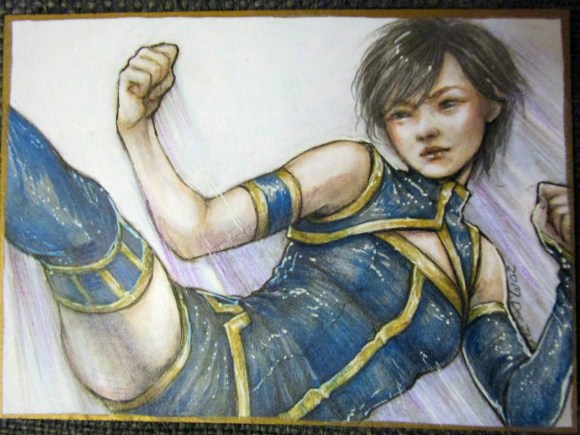
 

IMG_9736
Mitsuru Konno PSC by Juri Chinchilla.


The last two pieces I’d like to talk about are anime/manga related. I’m using the word “favorite” a lot, but in explaining the inspirations for choosing these subjects across various mediums it has been appropriate and illustrative in every case. Gorgeous animation, thought provoking stories, and an incredible atmosphere come together to make Kino’s Journey my all time favorite anime. Juri perfectly related Kino’s cool, somewhat detached demeanor resting for a moment atop Hermes against a wonderful background horizon that evokes the show’s sense of traveling through a vast, intriguing world.


Rosario Vampire is an amusing, fan-service and action heavy harem style manga based around a high school for monsters where students regularly get into fierce battles with one another. It has solid story progression once it gets going, but is admittedly largely formulaic and trope ridden. However halfway through the second “season” of the manga there’s a side story,  introducing a relatively minor supporting character (who didn’t even make the anime adaptation), which embraces and upends cliches in equal measure to present a nuanced, emotional story that is easily at the top of the (long) list of things I’ve read. San Otonashi is a phenomenal character and (here’s that word again 😉 ) an absolute favorite of mine despite her relative obscurity. Even with being initially unfamiliar with San, Juri was able to create a gorgeous, spot on card of her, conveying both delicacy and strength and again really elevating the final work with her incredible coloring.


More information about Juri’s art can be found on her artist page. I hope to continue to follow and collect her incredible creations for a long time to come. 🙂


——-

Edit 2/9/18: I recent received three more wonderful Personal Sketch Cards by Juri, and wanted to add them to this celebration of her art.

Shoulder-a-Coffin Kuro is an incredible, unique adventure. At its heart are Kuro’s ever curious companions Ninjuku and Sanju, enjoying their journey but also gradually losing their blissful ignorance of the larger world around them. Juri’s wonderfully captured their playfulness and variation of personality.
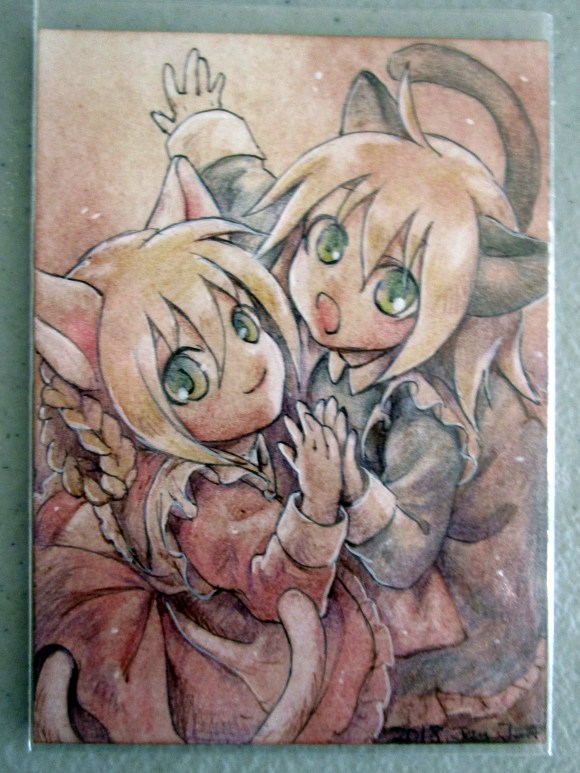
 

IMG_0079


Brian Q Miller’s Batgirl series was an wonderful comic with the headstrong yet lovable Stephanie Brown in the titular role. One of my favorite issues of the run was a lighthearted story about her friendship with Supergirl. I absolutely love Juri’s rendition of the two of them together.


IMG_0080


Finally, Food Wars is a surprisingly fantastic manga/anime with a sports competition manga feel applied to idea of a highly competitive cooking school. Beneath the (admittedly enjoyable) humor,fan service, and general ridiculousness are compelling story arcs featuring an interesting, fun cast. A personal favorite of mine is prodigy Alice Nakiri, who’s simultaneously sheltered/immature and world traveled/formidable in a highly amusing way. Her confidence and attitude are perfectly reflected in Juri’s depiction.

 

IMG_0078

Categories
Reviews Video Games

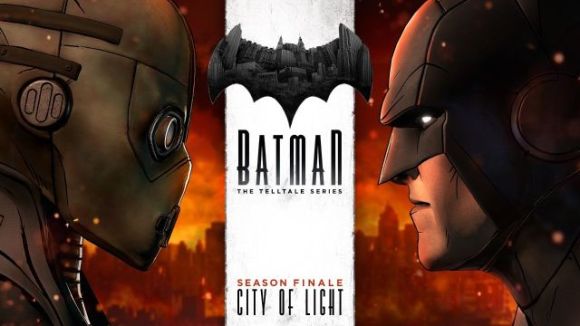
Batman: The Telltale Series Episode 5 Review

As with all Telltale episodic games Batman focuses on a building story throughout the “season,” and this is the finale for Batman season 1. Start of course with episode 1. Also see my reviews for episodes 2, 3, and 4.


batmanep5


There’s a a lot to wrap up in this first season finale, starting with the villain I chose not to confront at the end of last episode. I assume that first scene is reversed if I chose differently in Guardian of Gotham, which is a nice way to make the choices seem important even if the net results of everything are pretty much the same.

Of course while interesting I still have the feeling that as opposed to other Telltale games I’ve played most of the choices had a “right” answer. The statistics provided at the end explicitly show they were trying to balance things like mercy vs brutality, being pragmatic vs compassionate, etc, but it practice the harsher dialog options were too harsh and I ended up firmly in the majority on nearly every choice. Less “black and white” choices would have been nice.

The careful balance of the Batman and Bruce Wayne identities continues to great effect. There are reasonable yet escalating reveals and developments, including a suitable climactic battle with Lady Arkham and an expected tease for season 2.

On the technical side things were still reasonably solid, although loading times seemed significantly worse here. There were a lot of interruptions to action scenes where the screen would freeze frame as the next part loaded. It made it hard to get fully immersed in the flow of battle.

Strong finish overall though. Telltale’s first season of Batman wasn’t perfect and had a lot of unusual and possibly divisive elements, but overall it was a compelling story from start to finish and fun to play.


Categories
Reviews Video Games

Batman: The Telltale Series Episode 4 Review

As with all Telltale episodic games Batman focuses on a building story throughout the “season.” Start of course with episode 1. Also see my reviews for episodes 2 and 3.


batmanep4


New World Order (episode 3) ended with a significant reveal and things going horribly wrong for Bruce Wayne. Guardian of Gotham directly runs with those developments and the player immediately has to deal with the realities of Wayne’s new situation.

In some ways Telltale is just screwing with the players now with shocks and twists, but it remains intriguing and all fits fairly well. There is some railroading in the plot where obvious, logical arguments are suppressed or ignored for the sake of the story and the villains are losing some nuance in favor of presenting greater danger, but for the most part it’s internally consistent and the plus side is nicely escalating drama and tension. There are numerous games and schemes in play and the various plot threads weave together nicely.

The supporting cast is being slowly expanded in small doses with more familiar faces (some for those who read Batman comics), and the variations are interesting. I’ll again warn that you have to take this series as it is, and check a lot of preconceived notions at the door so to speak. Most characters still feel right, but some are completely different from any previous incarnation. There continues to be some interesting major choices that don’t necessarily change how events resolve overall but provide different ways of getting there and significantly different scenes and playing choices.

The mystery elements were one of my favorite parts of the early episodes, so with a lot of that gone this installment feels different. But it’s still quite good and the building conflicts have set up for what should be a strong finale.


Categories
Reviews Video Games

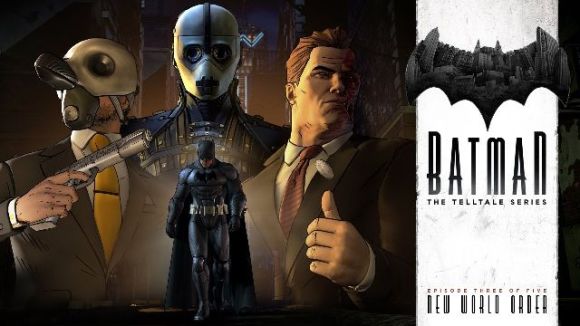
Batman: The Telltale Series Episode 3 Review

As with all Telltale episodic games Batman focuses on a building story throughout the “season.” Start of course with episode 1.


batmanep3


The significant choices from previous episodes are reflected in the opening story summary and the first new scene heavily depends on the major choice made in Children of Arkham. In general this series seems to have the most significant and meaningful choices of all telltale games I’ve played, but I won’t know for certain until/unless I play through again changing some things. A lot of them (and a lot of the dialog choices) seem to have “right” answers though, as Bruce’s responses and actions can generally be kind or bitter.

The plot proceeds with interesting parallel developments and threats on multiple fronts. Some of things are a bit heavy handed, but they fit the growing narrative all the same. Like the previous two episodes New World Order has a good balance of investigating aspects, story, and action.

Pretty big surprise to end here, providing a pretty good payoff to one of the main mysteries. I can imagine a fair amount of backlash, but it fit with the story they’ve been telling and raises interesting possibilities for the rest of season 1. Halfway through and this remains a compelling play, albeit with a plot and some characters majorly at odds with normal Batman canon which may bother some people. It still feels like a Batman story though, and it’s a good one so far, which is what matters most to me.

Categories
Reviews Video Games

Batman: The Telltale Series Episode 2 Review


batmanep2


Children of Arkham jumps right in to deal with the bombshell unleashed at the end of (episode 1 – see my review of that for general gameplay information). It’s an unexpected direction for a Batman story, and the implications are  quite interesting. Telltale is providing extremely different takes on some familiar characters, which gives the story a lot of freedom. But they’re also doing a great job of preserving core elements so the mythos and overall atmosphere still feel like a true Batman story. The focus continues to be split between the Batman and Wayne personas, making the plot nicely character driven.

At first the previous choices didn’t seem to be having much effect, but there are some huge ones in this episode that seem like they could have far reaching consequences. Very curious to see if that potential’s followed through on in later episodes. There are a fair number of shocks and twists here too, including an event that comic fans have been expecting, and I really like the way all the intrigue and mysteries are building. Wayne has significant ethical and moral dilemmas to deal with in addition to physical and societal dangers.

There are a few spots where I feel the quick time events are a little too unforgiving (specifically the ones where the right thumbstick and a target are involved), but they’re doable and the resulting instant deaths don’t rewind things too much.

The graphical environment continue to impress, particularly in the attention to details like the light marks from Catwoman’s swipe to Bruce’s chin from last episode staying visible on the character model. Little consistencies like that improve immersion greatly.

There’s a good amount of story and things to do in each episode to feel like a solid installment while building the overarching plot in a logical manner and providing clues and cliffhangers to keep anticipation high going forward. Really enjoying this series so far.


Categories
Reviews Video Games

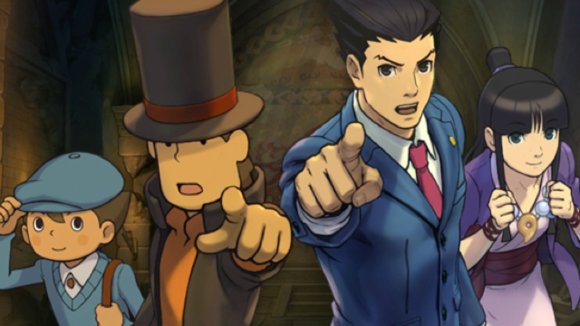
Professor Layton vs Phoenix Wright Ace Attorney Review

This combination of two distinctly different, beloved franchises takes an archeology professor, a lawyer, witches, and shakes liberally until thoroughly mixed.


Wait… witches?! O_o


…ok sure why not. It’s not like a fantasy setting can really make Phoenix Wright’s adventures much stranger. 😉


laytonwright


The prologues set up things well, with related events separately running afoul of Professor Hershel Layton and Phoenix Wright. These segments serve to establish the gist of each character’s gameplay elements as well as the central characters.

In an interesting choice the art style from each separate game is kept for its characters. The mix is a little weird at first, but I got used to it quickly and it was probably a better approach than trying to force one set of iconic characters into the other world’s style. Also, the backgrounds tie it all together pretty well.

Similar to the mixing of art styles is the mix of going back and forth between the disparate gameplay mechanics.  I found it jarring at first and a bit forced as during the first half of the game it was basically switching each chapter. But it ended up melding together much more naturally and seamlessly by the end.

While I’ve played and enjoyed both series, I’m traditionally more of a fan of the Phoenix Wright games. Yet here the Professor Layton elements were perhaps just a touch better, likely due to fitting the story more naturally. The trials were a bit contrived, and some of the constructions and limitations implemented to extend them (and thus the gameplay) were ridiculous.

However they were still enjoyable, and the new mechanics introduced (group testimony and related elements) were fun and well done. Also, the “railroading” feeling and unreasonable burden of proof being foisted on the defense fit the themes and historical events obviously being alluded to.

On the opposite side the puzzle elements were pretty much classic Layton. Sometimes appropriate and interwoven into the narrative well, sometimes shoehorned in, yet nearly all reasonably fun and varied in difficulty.

Once everything starts to come together, Professor Layton vs Phoenix Wright uses a couple of strong, nuanced characters to anchor the plot amidst a silly supporting cast that keeps the tone from getting too dark. Parts were overly melodramatic, but that’s par for the course with both these series and it never derailed the tension.

Things just kept escalating and provided an excellent story with compelling mysteries, strong foreshadowing that simultaneously avoided spoiling things, and some phenomenally clever twists and red herrings. The story’s climax was fantastic, and overall I left Professor Layton vs Phoenix Wright extremely satisfied with the journey I’d been taken on.

Highly recommended to fans of either series, just make sure to stick past the somewhat uneven start.


Categories
Reviews Video Games

Zero Escape: Zero Time Dilemma Review

The Zero Escape trilogy comes to a close with a departure from the Nonary Game. Life and death are on the line again, but this time in a deadly Decision Game…

Zero Time Escape is a direct continuation of VLR, features numerous characters from first two games, and ties up plot threads running through all three games. While ZTE does a good job of summarizing important points from previous games I feel a ridiculous amount of important context would be lost without having played the others first, so I highly recommend not starting with this one.

In an effort to remain as spoiler free as I can while still getting into detail about what I liked and didn’t about the game, I will avoid using character names as I discuss things to prevent spoiling elements of 999 and VLR.


ztd


9 Hours, 9 Persons, 9 Doors remains one of my favorite games of all time, and I was pleasantly surprised that while not quite up to 999 its sequel Virtue’s Last Reward was still an excellent game that continued in the vein of the first in fine fashion.


I mentioned in my review of VLR that I wasn’t sure I liked where everything was going storywise, and while I couldn’t possibly predict what I was in store for here I was in some respects both right and wrong to be trepidatious. In classic form ZTE’s greatest strength is also its biggest weakness: its ambition. In attempting to be more mysterious and mind bending than 999 and VLR, tie up three games worth of reality twisting plot,  AND introduce no less than FOUR major shake ups to the gameplay formula it was bound to collapse under its own weight at points.

Let’s start with the changes to gameplay. Changing the nature of the game our protagonists play is expected and needed, and the specifics of the Decision Game are reasonable enough (if contrived at times).

Two of the other big changes go hand in hand. The group of nine this time is divided into subgroups of three people. These divisions are preset, so the player has no control over who gets paired with whom. The player will jump from one group leader to another throughout the game, temporarily controlling that character for the duration of the chosen “segment.”

The concept of segments is the other big change that ties into this structure. The Zero in control of this game gasses the characters after each game and erases their memories. So things do not unfold chronologically. The player chooses one of the segments available for the team they feel like playing and get a chunk of the story (with appropriate decisions and puzzles) which could be anywhere in the timeline flowchart. The flowchart is filled in as these are completed so long term you can see how things are coming together, but between playing things out of order and jumping between different point of view characters constantly the flow and immersion of the game is severely hampered.

Another drawback of having three isolated teams is the timelines being traversed are no longer a full exploration of the various combinations of choices made. The first two games used choices made by a single character as branching points, and as such were able to fully consider the consequences of those choices. Here it simply can’t be done due to the unwieldy number of combinations. So as the chart gets filled in there are particular combinations that are simply not represented. Now the story is certainly big and complicated enough as it is, but having “gaps” surprisingly makes the game feel more “linear” and out of the player’s control in a way despite the looser structure of choosing fragments.

With all that said, everything from the amnesia approach to the point of view jumping has an in-game, story based explanation and reason. That makes it all more understandable looking back once finished with the game, but it doesn’t necessarily make these aspects more enjoyable while playing.


Which brings us to the last major shakeup in gameplay. Progression from certain branch points are determined by chance. That’s right, there are points in the game that have to be played over and over until the game chooses to give you the result you need to get on the other branch and proceed. This is beyond ridiculous and annoying. Again, there is a important story related reason they needed to be there, but there had to be a better way to address and implement them.

Having to explain these complicated points in such detail to properly convey my issues with them likely gives the impression that I didn’t like the game (and that impression will no doubt grow when I start dissecting the story). But that’s not the case. The mysteries are compelling, the atmosphere appropriately tense and harrowing, and the puzzles and gameplay decisions interesting.

As for the story, it’s insane in scope and yet still manages to come together nicely and ties up the trilogy rather neatly in the end. The philosophical aspects get more and more captivating as things go along, and the numerous different threads intersect in jaw dropping ways.

The biggest problem with the scope is some important things invariably end up being underexplained. I have particular problems with the characterization of one person from the previous games whose actions and reasoning are inconsistent and inadequately justified. Things with this character happen for the sake of the plot of VLR, and result in erratic, unlikeable behavior. The writers also try way too hard to be clever, and at least one of the many shocking reveals is more groan inducing than interesting.

Yet everything is internally consistent (both within ZTE and with what has come before), most of the characters have good depth and are suitably intriguing, and some of the reveals are legitimately brilliant and engrossing. It’s harder to talk about what I liked in the story without spoilers, but there was more than enough here to keep me engaged until the end.


So I have major mixed feelings about Zero Time Escape. It’s easily the weakest in the series, most of the changes attempted fell flat for me, and I wasn’t happy with some of the story choices. On the other hand it juggled an insanely complicated plot reasonably well, felt like a Zero Escape game with all the puzzles and mind bending mysteries that go along with it, and had some legitimately compelling characters and twists.

Definitely worth playing to close out the series, but it wears its flaws on its sleeve much more apparently than 999 and VLR.

Categories
Reviews Video Games

Batman: The Telltale Series Episode 1 Review

I’m a lifelong fan of Batman and the mythos surrounding him in various incarnations. I also have enjoyed previous episodic adventure games from Telltale such as The Wolf Among Us and Life is Strange.  As such I’ve been quite excited to check out Telltale’s foray into Gotham City and their exploration of its iconic hero.


batmantelltaleep1


Adventure games of this type are primarily about the story, and Telltale had the proper insight to realize any strong Batman story is at least as much about Bruce Wayne as it is his alter ego. The core plot arises from the Wayne persona, while Batman provides the action. The balance is quite good so far. The themes and certain events are quite dark, but of course a serious take on Batman lends itself to such treatment.

This is set early on in Batman’s career, and the worldbuilding and introduction of their version of familiar characters is well handled. There are several nice cameos and Easter eggs, and the combination of characters used at this point is excellent. I really like one reimagining of classic villain in particular, and there’s a great twist involving another.

The actions sequences seemed a bit different from what I’m used to from Telltale, as the commands I missed didn’t seem to impact the scene at all. Batman still appeared to dodge in the indicated direction even if I missed the input. I could be wrong, or the inputs in this game might just determine a failure of scene if enough are failed. Can’t say at this point.

The conversation parts were the expected solid stuff from Telltale. The choices have small effects so far, but they are there and appreciated. The staying silent option continues to add nice layer to conversation choices. It’s simple but important.

A third part of this game involves investigation of a crime scene. These aspects are interesting and have a lot of potential.

Overall I found this to be a strong start to what will hopefully be a captivating ride. There’s a nice mystery at the center and this episode ended with a big hook for future episodes.

The environment is fantastic. It captures the feel of the locales perfectly, including a boarding school, associated dorms, a run down house, etc. I found myself stopping to look at all the posters and flyers as much out of curiosity as to find clues. There’s a significant amount of little things to poke around.

Some players will find it on the short side, but it had good progression and found a decent stopping point, and is after all just episode 1. I enjoyed this and will definitely be checking out further chapters.

Categories
Reviews Video Games

Chase: Cold Case Investigations – Distant Memories Review

Idealistic Koto Amekura works in the cold case unit, and is less than pleased with her boss Shounosuke Nanase’s lack of motivation. But when a mysterious tip implies a five year old death wasn’t an accident, they’ll both poke at what ever obscured leads they can find.

chase1

I loved Hotel Dusk: Room 215 and its sequel Last Window: The Secret of Cape West, so when I heard their director had a new detective game coming out I simply marked it for purchase and did no further research. So when it came out I was surprised and perhaps a touch disappointed to find out it’s an episodic series rather than a “full” game. Still, it’s priced appropriately for the content and harkens back to the atmosphere of those previous games while being something new and different.

One of the most interesting things about Distant Memories is the limited setting. It takes place solely in a police interrogation room and relates the story through almost entirely through conversation and interrogations. Some flashback images help flesh things out. It’s a hard structure to pull off but works well here.

This is almost a visual novel in concept, with the only gameplay elements being selecting which questions to ask people (which are often extremely obvious), occasional memory quiz summaries, and a couple of “deduction” moments where the player has to identify something suspicious in a photograph. So the gameplay is light, but it’s integrated well and fit the narrative.

The background mystery was decent and fairly intriguing, but also a little too transparent and while this episode stood alone reasonably well it definitely felt more like a prologue than a complete adventure in its own right. There was a lot of foreshadowing and dropped hints providing setup for the next chapter/game.

So while I admittedly wanted a bit more from Distant Memories, it was still a decent couple hours of police procedural style mystery and definitely did an effective job of making me want to play the next in the series.

Categories
Reviews Video Games

Last Window Review

It’s 1980, and Kyle Hyde is four years and a lot of miles from his past life as a NYC Police Detective, and a year removed from the events of Hotel Dusk.

Last Window sees Hyde in a state of unmotivated limbo after the revelations of his visit to Hotel Dusk, and he’s pushing the patience of his boss perhaps one time too many. Yet the job might not be done with Hyde yet, as he receives a mysterious request unusually delivered straight to him at home.

lastwindow

I adored Hotel Dusk: Room 215, and a long while back I picked up the sequel, Last Window: The Secret of Cape West. Last Window was never released in the US, but was translated into English and released in the UK. While 3DS is region locked for 3DS games, it is NOT for DS games, and as such the European release of Last Window will play on my US 3DS. So I got it when it came out, and have finally gotten around to experiencing Kyle Hyde’s second (and by all appearances final) adventure.

Last Window has the same purposeful, noir sensibilities that were present in Hotel Dusk, and I love them just as much here. As I said about Hotel Dusk, Last Window knows exactly what it wants to be and sticks to that vision from start to finish. All the little immersive touches are back, including holding the DS like a book, an almost sketchy art style with varying degrees of limited color use depending on the situation, and a deliberate, tense atmosphere that surrounds the central mystery.

lw2

The basics of story and gameplay are introduced with a strong, short prologue tutorial, which is followed with excellently paced first chapter to get things moving. A good portion of the cast is introduced pretty naturally in first chapter yet with surprising speed. Four minutes in I had met seven new characters and been reintroduced to three from Hotel Dusk, yet nothing felt rushed or overwhelming.

Kyle Hyde is a classic hard boiled detective protagonist: surly and blunt, but capable of compassion. He’s living in a soon-to-be-sold building called Cape West, formerly a hotel and rumored to be the site of mysterious crimes many years prior.

Like the titular Hotel Dusk from the first game, Cape West provides the entirety of the locales for gameplay. Unlike the hotel however, Kyle will occasionally leave his apartment building for story related reasons during cutscenes. Last Window also takes place over the course of days, not hours, which allows for much more natural story pacing and room for developments to breathe a bit. A couple of small but nice refinements to gameplay mechanics and a clever nod to Hotel Dusk in the extras that allows some fleshing out of story points do a good job of moving things forward as a series without losing what made Hotel Dusk great.

lw3

I feel Last Window is tighter than Hotel Dusk overall. Outside of one rather HUGE one in the premise, there are fewer coincidences here in terms of timing and motivations. I understand that the tighter plot might leave some feeling things tie together too neatly in some respects, but I thought it was all within the realm of believability for the story being told and really liked the way things came together for the most part. The events of Hotel Dusk were referred to and important to Last Window in certain respects so I do highly recommend playing that first, but Last Window has its own story that’s fairly distinct and removed from Hyde’s quest in Hotel Dusk involving his past as a detective.

The self given “interactive mystery novel” is once again a perfect description for this series. There are puzzles, and they are integrated well, but everything is geared towards satisfying the mental itch that gets ahold of Hyde when things don’t quite make sense and piecing together connections and explanations for the mysterious happening surrounding him. Both the characters and plot are very well built and developed by the end, and I might have ended up liking this a touch better than Hotel Dusk overall.

The events in Last Window are appropriately tied up, but room was left for more adventures with Kyle Hyde. From the general direction of the story I was afraid things would feel forced, but I was pleasantly surprised that I found it fit together and unfolded well instead. Easter eggs are also plentiful for fans who’ve played the first game.

I’m as thrilled that Last Window turned out to be a more than worthy successor to Hotel Dusk as I am disappointed that it was never released in the US and that it was the end of Kyle Hyde’s stories. Mystery fans and retro-gamers should definitely seek this (as well as Hotel Dusk) out.