Categories
Books Reviews

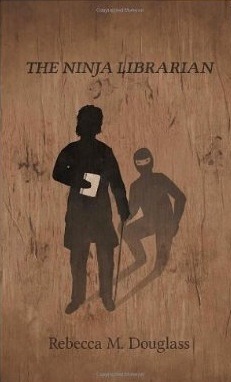
Ninja Librarian Review

The Ninja Librarian is a collection of stories told to us by Skunk Corners’ unlikely school teacher, Big Al, who watches with fascination as an older gentleman comes to town one day. The stranger means to reopen the town library, which no one in town thinks they have a use for. But a funny thing happens when they try to scare him off: he calmly reaches into his pocket for something that isn’t a black handkerchief after all…

ninjalibrarian

Completely absurd in premise but wonderfully realized, these stories follow Al and the ninja librarian (Tom) as problems large and small pop up, and are solved, in Skunk Corners. The writing captures the feeling of tales told around a campfire, and I’d imagine would make for great out-loud reading to children. However there is a depth and flow here that makes The Ninja Librarian equally enjoyable for adults. Big Al is an excellent point of view character and has a “voice” that makes this volume very easy reading and hard to put down.

Check any preconceived notions or predisposition against the off-beat at the door and experience a book that does one of the best things good stories can: make the reader smile a lot.

Categories
Manga Reviews

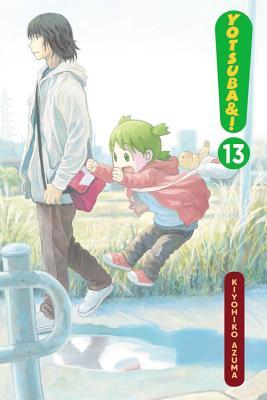
Yotsuba&! Volume 13 Review

Yotsuba&! is a slice of life manga about a somewhat strange little girl. While I highly recommend reading it in order the previous books aren’t a prerequisite.

yotsuba13

Yotsuba’s grandmother comes for a visit. Yep, that’s the volume.

Yotsuba&! has always been about the titular character’s everyday adventures and the humor that arises from them, but I feel like some of the magic is missing from this entry (outside of a wonderfully simple sequence of Yotsuba making her way through her house in the creepy darkness of the night). Her usual whimsy and uniqueness seems toned down just a tad and it isn’t as engaging to watch her interact with her grandmother as it feels like it should be. There’s nothing bad nor out of place for the manga here, but I didn’t find this volume nearly as fun nor captivating as previous ones.

Not much else to say. Unremarkable volume in a fantastic series.


Categories
Comics Reviews

“There are some people in the world who are just too evil to exist.”

Thieves and Spies is volume 30 of Stan Sakai’s samurai epic, Usagi Yojimbo. I recommend beginning with Vol. 1 of course, but the tales here don’t really depend on long running story lines. There are some returning characters it would help to be familiar with, but the gist of anyone we’ve seen before is well conveyed, so this isn’t a bad place to start overall.

usagi30

For those who are new to Usagi, a comment from my review of Vol. 1 on Sakai’s choice of medium that has remained relevant throughout the comic’s long run:

“The use of amorphous animals as the characters might seem unusual to first time readers, but it gives Sakai more visual diversity and symbolism to play with, and is executed with such finesse that it quickly becomes impossible to imagine the book without this choice. Don’t mistake the presence of animals as people as a sign this is a ‘kid’s book.’ Usagi Yojimbo covers a period of war, political unrest, and an unhealthy level of danger and can get dark and bloody at times.”

This trade opens with a three part story, and follows with four shorter ones.

“The Thief and the Kunoichi” features the return of some familiar faces and has an interseting set of circumstances placing some of them at apparent cross purposes. The length gives everyone a chance to shine a bit, and this is a strong start to the volume. It was great to see my favorite ninja back, although on the other hand a certain reccuring thief is moving more and more away from “charming rogue” and into “selfish to the core and unlikable” territory. I expect there will be consequences on the horizon.

There’s a dark edge to entire volume, and the remaining four stories all have overtones of selfish and cruel people valuing themselves and their desires above the lives of others. It could just a be a coincidence that these stories were told in succession, but more likely I feel that Sakai is building to some larger crossroads point for Usagi. All four stories are conflict heavy, featuring a one-armed swordsman, a samurai escort on an unusual job, a foreign dignitary with ruthless curiosity, and a promised bride under attack by bandits. All are equally intriguing and provide interesting variations on similar themes.

Thieves and Spies is a serious and thought provoking entry in Sakai’s epic, and is another excellent read as per usual for this series.

Categories
Books Reviews

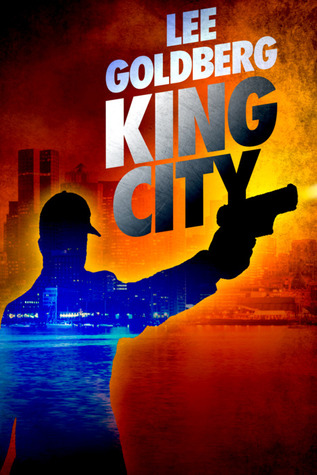
King City Review


“I’m all there is.”

Print

Tom Wade is a cop driven by doing what’s right. So while he’s not beholden to every rule and law he’s ever met, the corruption in the major crimes unit he’s assigned is too much to overlook. He secretly helps the justice department build a case against the others, and when their successful prosecutions are over and the dust settles, he’s promptly given a “lateral move” by a police chief who felt Tom should have come to him so things could be “handled quietly.”

Tom’s sent into a part of King City so bad it no longer has an official name on the map so it can be more easily forgotten, with only two unwanted rookies for staff (one who is the definition of unexceptional and one who has the “gall” not to be while also being a woman and black) and the thinly veiled insinuation that there will be no backup, no support, and no hope.

The brilliance of Goldberg’s tale in Tom’s approach to the difficulties that arise, and a writing style that provides vivd detail while keeping everything moving at a compelling pace. Tom doesn’t care about opinion nor playing nice, just about doing his job and sees his exile into the area nicknamed Darwin Gardens as a chance to do police work somewhere where it will matter. The procedural, mystery and relationship elements all rise naturally from the story and characters and blend amazingly well. There are some small conveniences of plot here and there, but generally everything is reasonably character driven and organic.

Overall King City is a captivating, excellent police procedural with a fascinating main character and a tremendous supporting cast.

Categories
Books Reviews

A Good Start With Little Else

When first read Corsair a few years ago, I thought I was reading the first of a short story series called Outer Pendulum. Corsair is a good little tale of a starship captain leading a fleet to protect a valuable freighter from the pirate who killed his wife. It has a lot of detail packed in a short length, and while some events and background could have used more explanation there’s a nice, character driven core plot to latch onto that unfolds well and tells what seems like a complete story. There was room for expansion, but Corsair had a beginning, middle, and end.

Now that I’ve finally gone back to read the other “short stories” in the series, I realize Outer Pendulum was actually supposed to be a “serialized novel,” not a series of short stories, and Corsair was actually its the prologue. Why does this matter to the point of so much explanation from me? Because Parts 2 and 3 are clearly chapters, and feel like it, rather than connected yet stand alone stories that can/should be sold individually. I highly enjoy series of connected stories. Buying a novel chapter by chapter on the other hand is not something I ever intend(ed) to do knowingly.

Part 2 took a different direction, featuring a reveal that took a lot of the impact and intrigue out of what happened in the first book, introducing new concepts and explaining them even less than Corsair did, and drastically reducing the scale of the story and subsequently making things less interesting. And it thoroughly felt like a chapter, with events happening but no complete arc and a huge cliffhanger for an “ending.”

Once I read Letter of Marque and realized its nature, even more warning bells went off about there only being one more part to read. Sure enough, Pirates of Omega Polaris is another chapter, not a finale, and it seems like the author decided to abandon this concept/book, as nothing further has been published going on five years now. I liked Part 3 better than Part 2 in general and a new character with some potential was introduced, but a lot of the developments felt forced and it was largely set up for a big future confrontation, which as mentioned doesn’t exist.

So this “trilogy” is a huge miss overall for me. Corsair was very engaging and had several great directions it could have been spun out into. Unfortunately the chosen direction wasn’t all that interesting and didn’t capatalize on the momentum, and between the odd structure choice and the series apparently being abandoned Parts 2 and 3 were extremely disappointing. I would still recommend checking Corsair out for a strong (if somewhat cliched) sci-fi short story, but stop there and pretend the “sequels” don’t exist.

Categories
Manga Reviews

Witchcraft Works Volume 1 Review

“Today’s Weather: Mostly clear skies with occasional school buildings.”

Honoka Takamiya is constantly just outside the sphere of influence of Ayaka Kagari, the class “Princess.” However after having his world turned upside down by being attacked by a witch at school, the shocks just keep coming as Ayaka reveals herself to be a witch herself… and his protector.

witchcraft

Total mixed bag from the get go here. There are interesting aspects, but the lack of explanation of the general situation and why Takamiya is important is already getting old. The over the top school worship of Kagari and the general atmosphere around her is amusing, but Takamiya so in over his head and has so little personality outside of being a target he becomes a cipher. The battles are fine, but Kagari is so powerful there’s little tension or drama. And so on. It’s just continuous sparks of potential almost immediately negated by the execution being all over the place.


Witchcraft Works has some potential and this initial volume ends with a particularly intriguing hook, but it’s flaws are rather apparent at this point. I’d be willing to try a little more, but I’m in no rush.

Categories
Art Cards

A Personal Piece of Magic: Perna Studios APs

Last Fall I wrote about the wonderful card sets available from Perna Studios,  and now I’d like to focus on/share an associated part of the sets: Artist’s Proofs (APs). Sketch cards are a often used form of “chase card” for art related collectible card sets, where the various artists involved in a set get blank cards with the card set’s printed back and create one of a kind art directly on the cards, which are then inserted randomly in card packs. The skills shown in painting and drawing on such a small workspace and the amount of detail achieved is incredible.

AP sketch cards are a similar creation. Artists sometimes get a few of these blank cards designated as Artist Proofs to sell themselves and create specifically for the purchaser (with subject matter appropriate to the related set and subject to publisher approval). As directly commissioned art the prices are generally higher than buying packs/sets in trade off for getting to choose the artist and having input into the subject/design.

The wonderful painted pieces Ingrid Hardy does on these relatively tiny trading cards always amazes me, and the first AP I got was from her for the Classic Fairy Tales set and features Red Riding Hood. It’s absolutely gorgeous and I can’t imagine a better design. I tend to be rather unspecific when commissioning these cards, usually just asking for a particular subject and letting the artist go from there. I’ve always been extremely pleased with the results.

It can be fun to get APs from different artists reflecting the same general subject. I collect grim reaper art when it comes to the Hallowe’en sets, so had both Ingrid Hardy and Kokkinakis Achilleas do APs featuring him for Hallowe’en 2. Both are fantastic representations capturing a sense of foreboding, with Ingrid’s reaper having an atmospheric, looming edge to it and Kokkinakis’ an active feel showcasing the dynamic style and coloring his work is know for.

I’d already gotten some excellent grim reaper sketch cards from Hallowe’en 2 by Alexis Hill and Peejay Catacutan, so went in different directions with their APs. I find Alexis’s style absolutely perfect for the halloween theme and the witch AP I got from her is a wonderful addition to all the gorgeous sketch cards I have of hers from the set.

With Peejay I floated the general idea of either a succubus or a witch, and he sent me a few pencil rough ideas. I loved the above succubus design as well as his imaginative idea to do a Japanese folklore inspired witch so much I commissioned both, and the final cards brought those rough ideas to life gloriously.

Depending on the set, the permitted subjects can be rather wide or extremely specific. For example, Classic Fairy Tales and Hallowe’en 2 allowed anything related to the titular theme (within normal Perna guidelines), while Spellcasters 2 had a subtheme of specific magical creatures, so all cards (base, sketch, inserts, and APs) from that set had to feature mermaids, unicorns, elves, fairies, or dragons. In either case, there is plenty of room for individual style and visions and both the variety and quality of work Pernas’ chosen artists produce is incredible.

I wrote about being a longtime fan of Juri Chinchilla in Beautiful Dreams, and I was lucky enough to get one of her APs from Spellcasters II. She did a great piece of art for a metal insert for the set that she referred to as “evil mermaid.” Inspired by that work, I requested an “evil fairy” for my AP, and received the gorgeous card above titled Red Moon. Juri’s soft yet vibrant colors are breathtaking, and I adore the fact that even leaning against a skull and clearly planning something sinister, her fairy still has a touch of cuteness to it.

The entire concept of evil fairies amuses me greatly, and so has become my theme for other APs for Spellcasters II, including the dark, regal looking fairy Peejay drew above that has a wonderful layered effect with the skull providing a visual second set of wings. I have two more coming, from the previously mentioned Ingrid Hardy and Alexis Hill. Can’t wait. 🙂

The coloring and detail on Norvien Basio’s cards in general is incredible, and my jaw literally dropped when I saw the vibrant mermaid AP he did for me.

Sometimes artists will choose their own subject for an AP and sell the completed pieces rather than commission the card. Such was the case with the butterfly fairy I got from Sean Pence. This couldn’t have been a more perfect card for me if I had requested the subject, showing a delicate, serene subject with Sean’s trademark ability to draw exquisite, realistic feeling faces even within a fantasy setting.


Of course there are MANY more phenomenal artists featured in Perna Studios’ sets and anyone with an interest in high quality fantastical art collectibles should definitely check out their offerings and/or check in with the artists about commissioning an AP.


Categories
Board Games Reviews

Android: Mainframe Board Game First Impressions

Mainframe is a nice little abstract game themed in the Android Universe.

mainframe

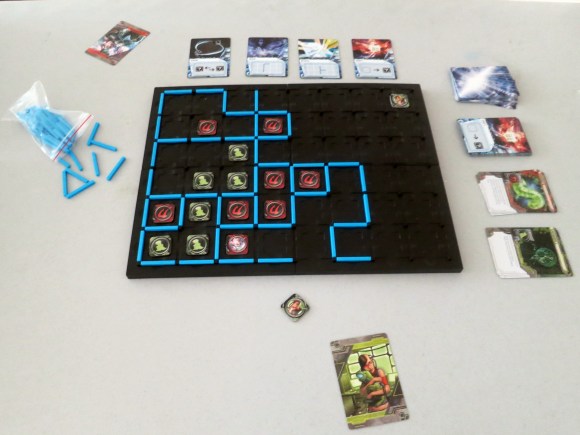
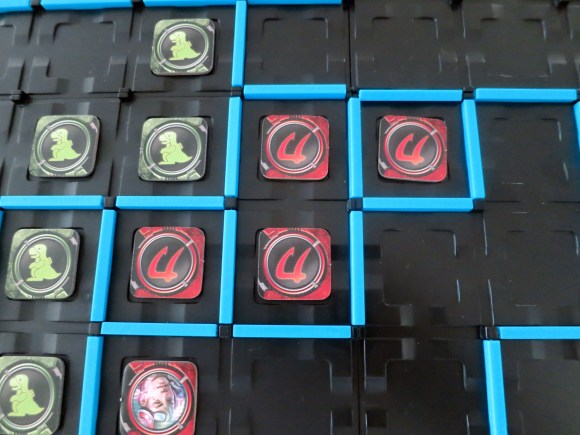
Players take the role of one of six possible runners (hackers) trying to secure the most of an infiltrated mainframe for themselves. Players place nodes (tokens) on an 8×6 board and try to enclose their nodes with barriers by executing programs (playing cards) both from a generic supply available to all players and from a hand of a few unique cards representing their particular runner’s abilities. Programs generally add, move, or swap nodes and partitions to/on the board. Endgame scoring depends on how large your enclosures are and how many of your tokens are inside each.

IMG_1950

The theme is well done, adding some flavor to what’s strictly speaking a pure abstract in gameplay. The characters have a nice bit of backstory that ties to their cards, such as one being an intrusion expert and thus having “programs” that generally revolve around manipulating “entry points” (nodes). The facts that you play with three of your character’s five special cards in any given game and that there are more different characters (six) than max players (four) seem like they’ll add a good amount to replayability.  There seems to be a decent amount of depth for how simple and easy to learn the rules are.

IMG_1951

The board seemed a little big for two players, but it was workable and with numerous cards that can reposition nodes the board layout changes often so the size isn’t that big a deal. I feel like things will be much tighter and harder to adapt to with more players though, and am extremely intrigued to play that way.


Overall

Fast to learn, fast to play, more thematic than most abstracts, and fun. Great addition to the gaming closet.

Categories
Reviews Video Games

Zero Escape: Virtue’s Last Reward Review

The Nonary Game returns…

vlr

I loved 999, but hadn’t played this sequel yet due to glitching issues with the 3DS version. With the third game out and me now having a Vita, I decided to go back to this to finish the trilogy in order.

The general setup is largely the same, with nine people kidnapped and forced to play a life and death game at the whim of their captor, who is hinted to be posing as one of the nine. Once again the game is a combination of almost visual novel type story sections and adventure game style puzzle sections. There’s a very different feel to this versus 999, but the atmosphere is still appropriately dark and foreboding and things come together pretty well. The puzzles are good, the characters nicely varied and reasonably engaging, and the narrative compelling. When the game first came out I wasn’t a fan of the change in visual style from the first game, but I found now I barely even noticed. The game looked good and the graphics were appropriate.

The plot is intriguing, and makes good use of the branching aspect. I found the philosophical incorporations of both the Prisoner’s Dilemma and Schrodinger’s Cat quite interesting, but I’ll admit I’m a sucker for that kind of stuff in general. There’s a TON going on as things progress. Magnitudes more so than in 999. It leads to an end with almost too many twists, but I was fine with it overall (although I have mixed feelings about what this all means as a follow up to 999). The parallel branching nature does undermine some of the drama, as the Ally/Betray choices don’t have the same kind of impact when you eventually have to go back and choose the other.

There were a couple instances of “carrying the idiot ball,” but otherwise the characters’ reactions and motivations fit well among branches. A couple of things (mostly related to game’s workings) were left implied when they should have been made explicit, which is kind of surprising given all the exposition in parts. There were also a few instances of wasted potential, such as a clever development that should have had big implications but is instead used only when it’s introduced and never mentioned again, and a character who oddly fades into the background at points where they could/should have been important.

While not being quite as tight as 999 nor reaching the same heights, Virtue’s Last Reward is an excellent sequel that is more ambitious than its predecessor and largely succeeds on the grander scale. I don’t know that I entirely like where this is all going story-wise, but I am definitely fully invested in seeing how it turns out. Bring on Zero Time Dilemma.


Categories
Film Japan

Japan Cuts 2016: Flying Colors, Kako: My Sullen Past, and Emi-Abi Reviews

Japan Society’s annual Japan Cuts Film Festival for 2016 ran from July 14th through July 24th. These were the last three movies I saw as part of this year’s screenings. My thoughts on last year’s festival can be read starting here.

Check out my thoughts on other films from this year in posts about Bitter Honey and Lowlife Love,  Nagasaki: Memories of My Son and Bakuman, and The Shell Collector and Being Good.


Flying Colors

“Once you achieve the impossible, you can do anything.”

flyingcolors

Sayaka is a social butterfly content to scrape by in dead last place among the students at a high school that guarantees admittance into its partner college to all who attend. But when an unusual cram school teacher sets her sights on one of the most prestigious colleges in Japan, years of being called worthless combine with the surprise of having someone believe in her to make Sayaka determined to prove everyone who thinks she has no chance wrong.

Flying Colors is a wonderful story about pursuing dreams and attempting to defy expectations. Structured brilliantly, the movie starts by providing some strong background scenes of Sayaka’s scholastic past to set up how she ended up in her starting status quo, content to know nothing. Her complete lack of shame about being stupid while not resenting those smarter than her is one of the big comedic hooks early on, and cements her as a lovable doofus that the audience is happy to cheer for. Kasumi Arimura plays the part perfectly, and the pairing with Sayaka’s unconventional teacher who knows how to encourage poor students to start to enjoy learning is not only hilarious but also gives the film its core. Their shared enthusiasm about Sayaka getting the slightest things right early on provide outrageously funny scenes. The various ways in which the teacher played by Atsushi Ito brings out the best in his band of misfits and genuinely sees their potential and cares about their success and improvement is phenomenal.

Expertly interwoven with the humor and Sayaka’s educational journey is a touching family drama centered around her father’s projection of his own dream of big time baseball success onto Sayaka’s brother and the complete lack of support any of the women in the family get from him. Sayaka’s mother and her complete devotion to her children anchor the film, with Yo Yoshia giving an extraordinary supporting performance as someone who truly wants nothing more than her children’s happiness. The drama is genuinely emotional without ever getting overly sappy or melodramatic, and adds a perhaps unexpected amount of heart beneath all the humor.

As I’m sure is clear at this point I loved just about everything about this film. Easily one of my favorites of the festival.


Kako: My Sullen Past

“Isn’t everybody lonely? Alone or even if you’re with family.”

kako

High schooler Kako spends her summer days bored out of her mind, listlessly going through the motions of helping in her family’s restaurant and staring at a local river looking for a crocodile she knows isn’t there. Then her activist, long thought dead aunt shows back up on the family doorstep.

Japan Cuts has been my first introduction to the incredible talent of Fumi Nikaido, and it was fascinating to see her here playing such a different character from Akako in Bitter Honey. Akako popped off the screen with an infectious playfulness and a larger than life feel. Kako is compelling in a different way, with apparent apathy arising from her boredom completely infusing her body language and making her susceptible to insatiable curiosity about her mysterious aunt. The flatness Nikaido achieves in Kako’s everyday actions and personality makes it all the more intriguing when she takes interest in anything. The contrast in the two characters and the skill with which she plays both highlights her versatility and why she’s such a highly regarded and awarded actress even at such a young age.

The feelings and sounds of summer come across well, and appropriately compliment the film’s odd tone, which examines the slow yet relentless passage of time in the lives of Kako and her family.  Boredom is portrayed as so pervasive its relief is more important to the characters than even the well being of others. The disaffected nature of both Kako and her aunt’s personalities adds humor to some very dark moments in a way that generally works, yet still feels strange when the viewer realizes what they just laughed at.

There’s a lot simmering just underneath the surface of the depicted events, both in theme and in production. Such as the significance of Kako’s interactions with her aunt’s mysterious companion, or the facts that Kako’s baby sister remains unnamed, is constantly commented upon for how little she moves, and is clearly played by a doll if the viewer looks closely at the bundle of blankets.

There are aspects of Kako: My Sullen Past that I really liked and aspects that I didn’t. I’m not entirely sure how I feel about it as a whole, but it was well made and acted, and quite interesting. I’m glad I saw it.


Emi-Abi

“… if you can make me laugh.”

Emi Abi


During the Q&A following the world premiere of Emi-Abi at Japan Cuts, director Kensaku Watanabe explained his desire when making the film to show genuine comedy yet constantly undercut it with dramatic and somber elements. He really succeeds in this goal, giving his story of a comedian trying to move on after the loss of his partner a tone that constantly switches and balances between light hearted comedy and deeper, sadder themes.

The plot progression was solid, but not at all as I expected. The film is extremely flashback heavy, focusing a lot on deceased partner Unno, what happened the night of his passing, and a surprisingly well developed romantic story involving him and a young fan. Unno steals the movie from his surviving partner Jitsudo, who is well portrayed but while we understand and sympathize with his grief we never really feel it, making nearly every character in the film more sympathetic than the supposed main character trying to find his new path in life.

The entire supporting cast was quite good, but I was especially impressed with what Haru Kuroki did as Jitsudo’s manager, making the most of a small role as someone totally devoted to seeing Jitsudo at his best once again despite the tragedy.

I found parts of Emi-Abi disjointed and the balance of characters a bit off, but it’s a decent film overall made with a specific vision in mind and supported with strong acting.

IMG_1927

——-

Fantastic festival overall as usual from Japan Society Film. Definitely check out some of these great movies as you are able.