Categories
Japan Wrestling

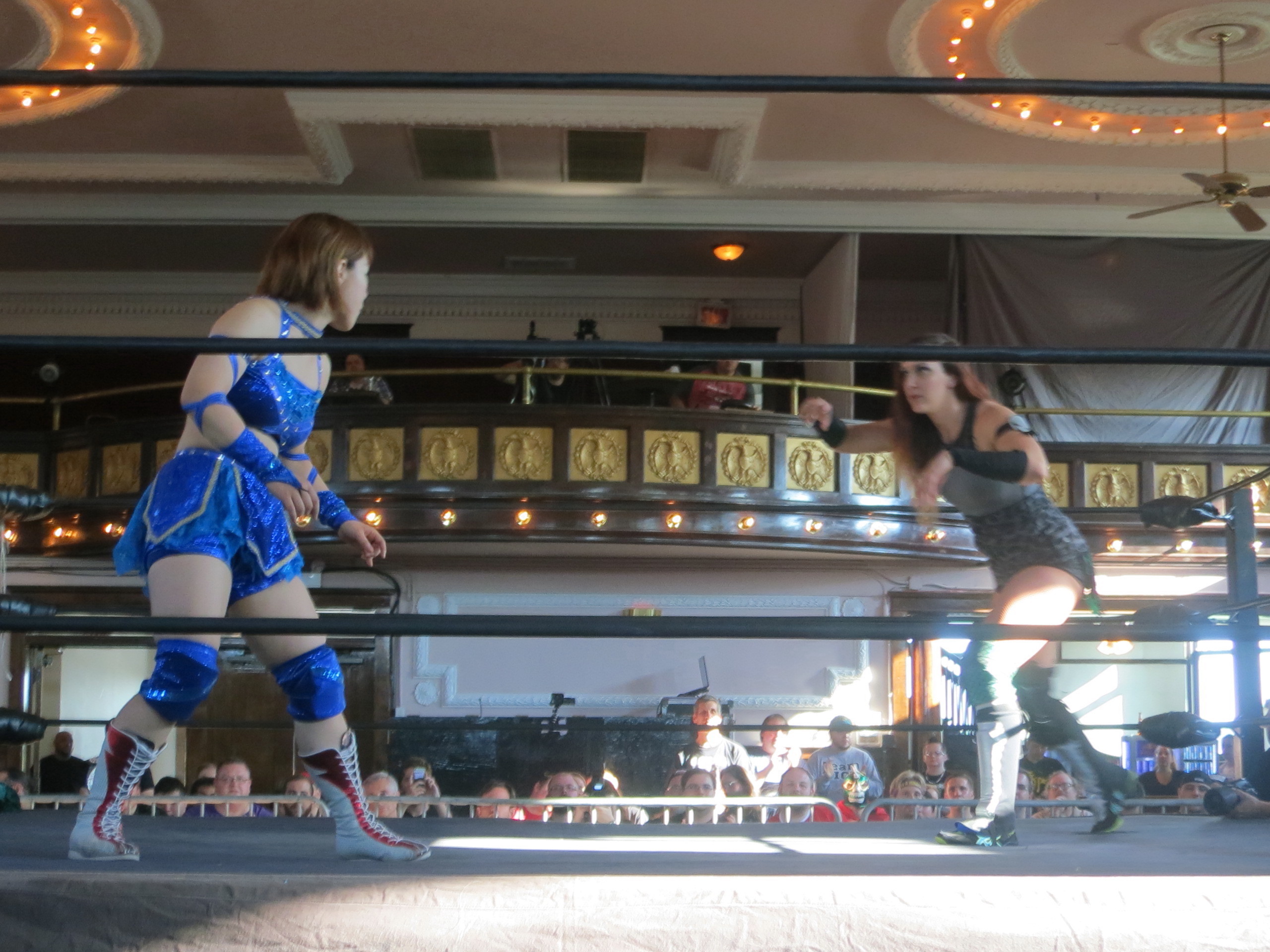
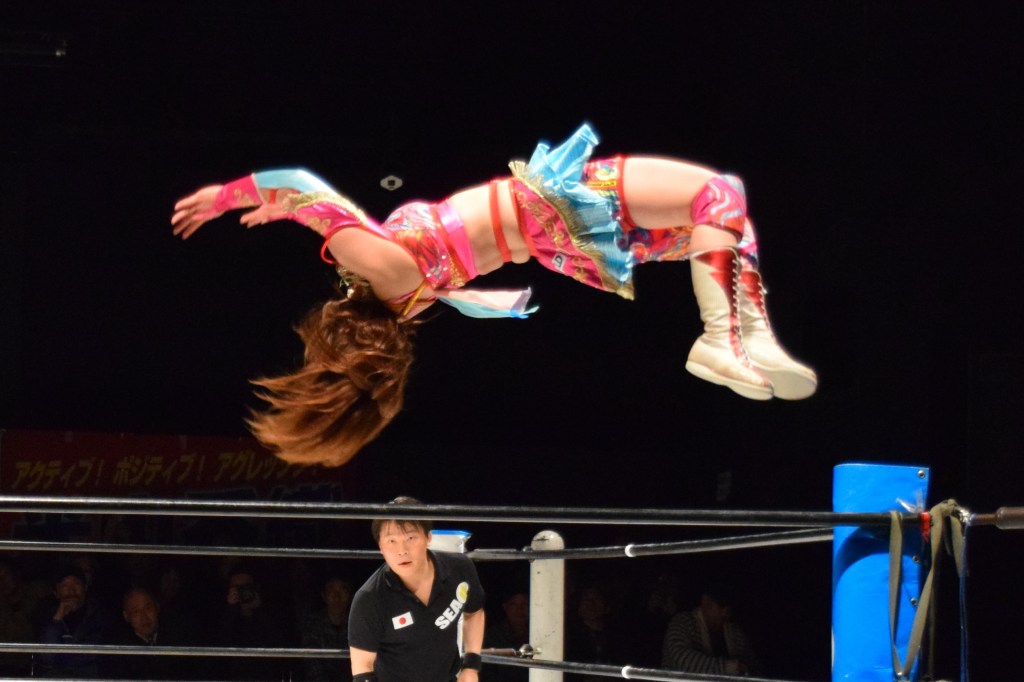
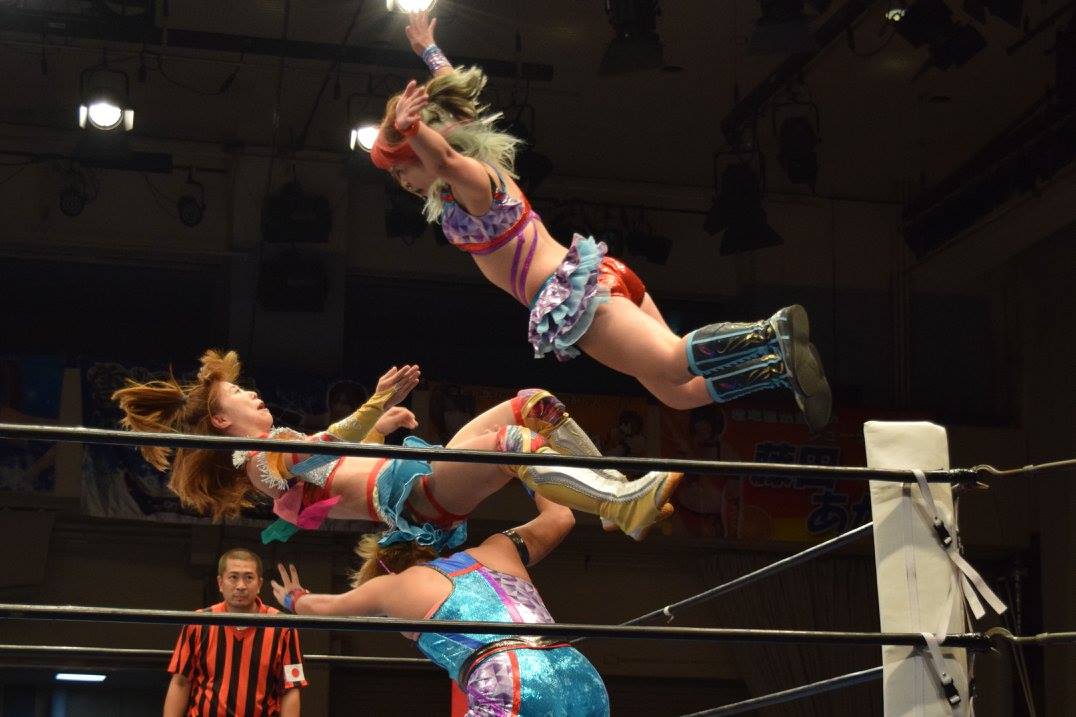
Farewell Gatoh Move, Long Live ChocoPro

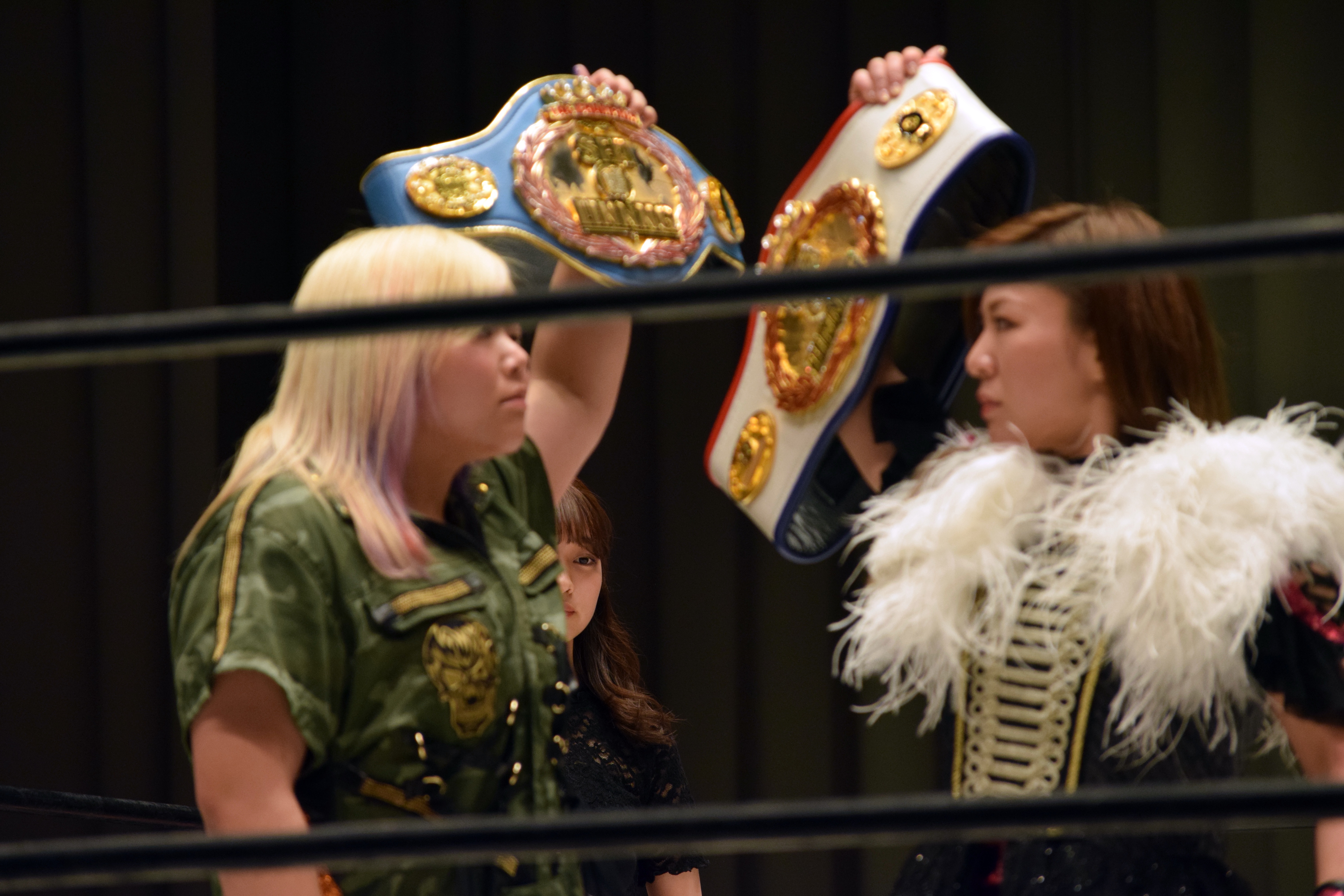
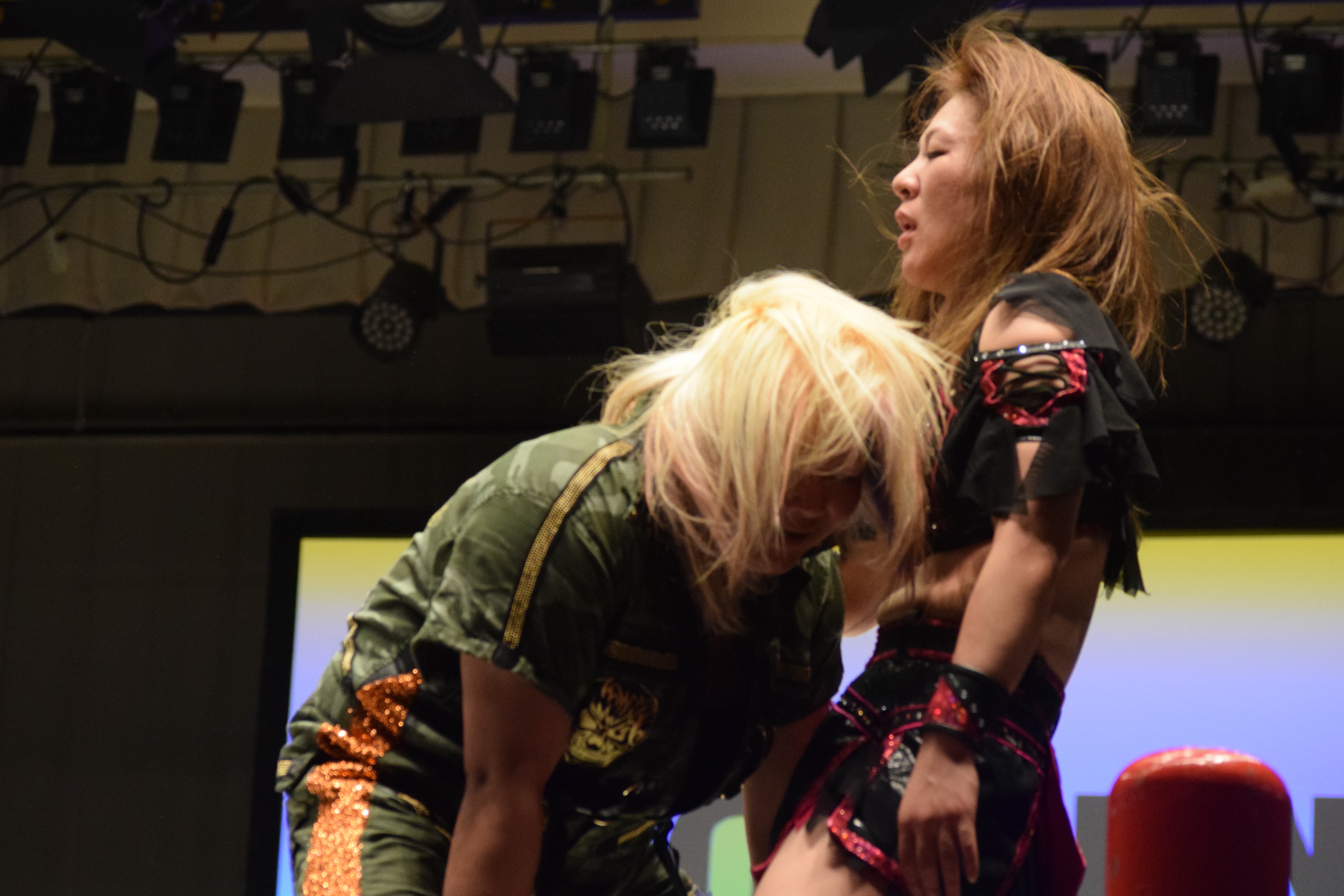
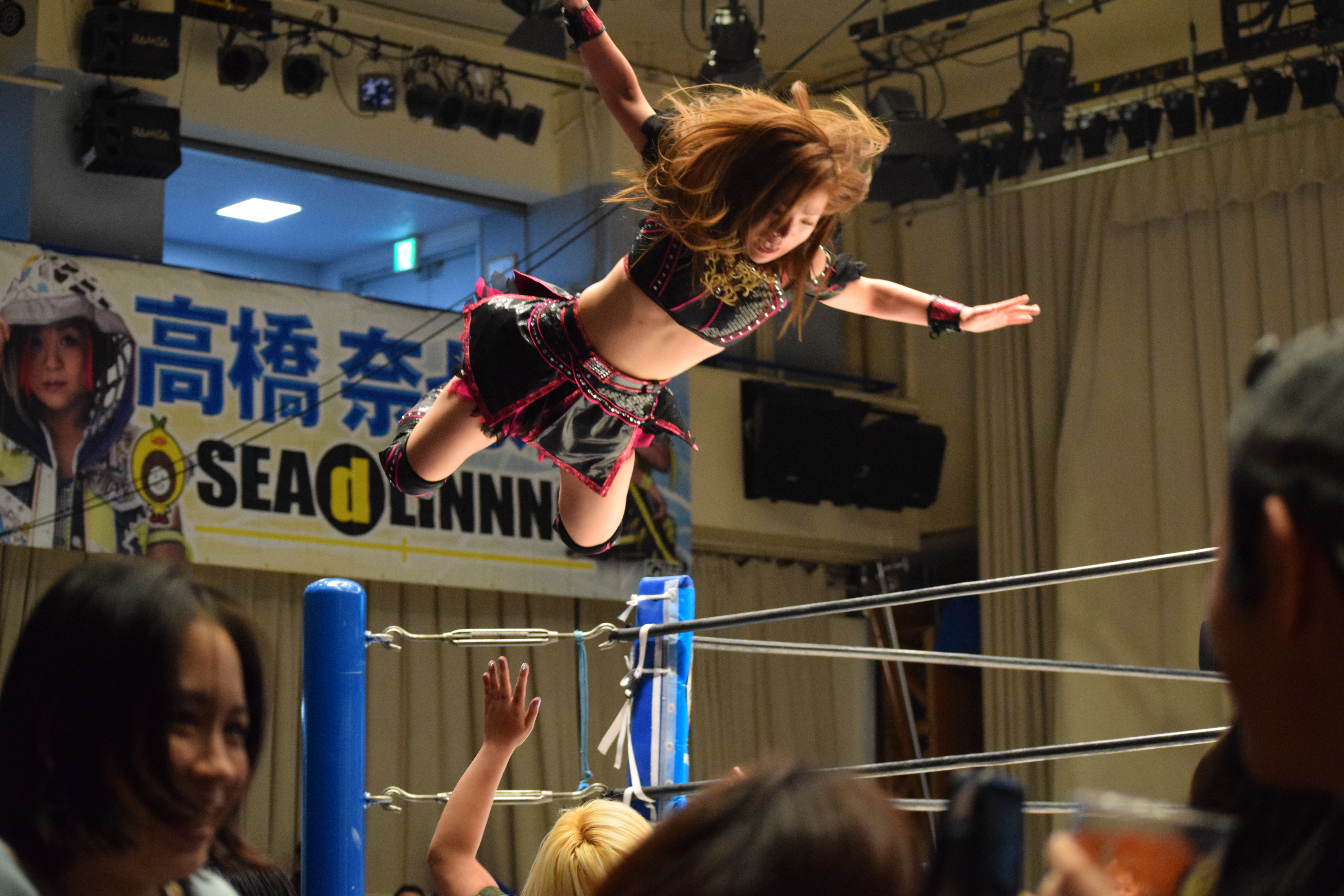
On August 31, 2024 Emi Sakura’s promotion Gatoh Move held a show at historic Korakuen Hall for the first time in eight years (full show available on YouTube). It was a great show and a huge milestone for the small company that fought tooth and nail to survive and evolve during difficult and turbulent times.

One of their evolutions was the creation of a second promotion/brand, named ChocoPro, during the pandemic. Once performing in front of crowds became possible again Gatoh Move and ChocoPro existed side by side.

After the Korakuen show, Sakura announced that her two brands would officially be merging, to be known only as ChocoPro going forward. As such I wanted to take a quick look back on the significance of the merge, and what separated the brands in the first place.

In 2012 Emi Sakura left a company that she founded called Ice Ribbon (that to this day still running and highly enjoyable), and founded a new joshi (girl/woman) promotion named Gatoh Move.

Likewise built around the idea that wrestling should be fun for both the wrestlers and fans, Gatoh’s general approach to wrestling wowed me when I initially saw them during my first trip to Japan both in ring and in the unique environment of Ichigaya Chocolate Square.

A deep dive into the promotion is beyond the purpose of this post, but check out this retrospective I wrote for their 10 year anniversary highlighting a lot of what I adore about both Gatoh Move and ChocoPro.

As mentioned above ChocoPro was created as a direct response to the difficulties of operating during the pandemic. Sakura didn’t want to just proceed as if they were doing Gatoh Move shows without fans. She approached the idea of streaming empty venue shows as something completely new that should be tailored and targeted as such.

When ChocoPro started there were three key differences to Gatoh Move. First was the absence of an audience in attendance.

Second, all the shows would stream live, where Gatoh shows had been primarily for the attending audience with big shows released on dvd and nothin aired live. This also led to Sakura’s new No Pay Wall strategy of having all their shows and other content airing free on YouTube with a variety of optional support methods.

The third key difference was that while Gatoh Move had always incorporated a lot of guest male wrestlers into their shows and were known for great intergender wrestling, they were still a joshi promotion. The official Gatoh roster was all women, the titles were held by women or intergender teams, and outside of extremely unusual circumstances the main events would always feature a roster member.

While still based largely around the core Gatoh roster, ChocoPro immediately established itself as a fully intergender promotion with a main event of Baliyan Akki vs Minoru Suzuki on the first show. As ChocoPro went on the vacated Super Asia singles title would return as an intergender belt, and likewise the Asia Dream Tag Titles would become open to challenges by male teams.

As pandemic restrictions lifted and live crowds began to be allowed again, the delineation between Gatoh Move and ChocoPro changed.

ChocoPro started running “ChocoPro Peoples” shows, which were still aimed at the streaming audience but had live attendees as well.

When “Gatoh Move” officially returned it was specifically used for the ring shows, and ChocoPro essentially became the name for the Ichigaya shows. All other differences besides the official Gatoh Move roster still being all joshi wrestlers had fallen by the wayside.

So at this point the merge is mostly a symbolic action to make things more straightforward with a single name for the company. While I’m personally quite attached to the Gatoh Move name and sad to see it go ChocoPro is more reflective of what the company has become. The overall impact on the fans is minimal, as the same great people will be presenting the same great wrestling they have been for years.

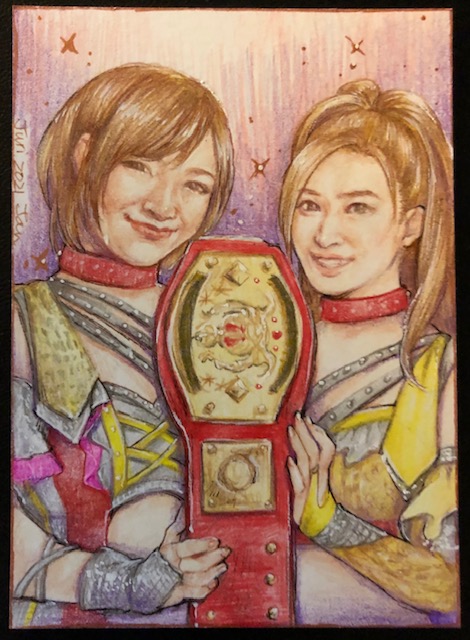
2019 Gatoh Move roster PSC puzzle by Juri Chinchilla.

So that’s why Gatoh Move/ChocoPro had two names, what the differences originally were, and what they became. Wishing all the best going forward for the newly “combined” ChocoPro.

Categories
Japan Wrestling

Pure Violence: Arisa Nakajima’s Retirement

August 4, 2024

Among near uncountable incredibly talented favorites of mine, there’s perhaps no wrestler who better encapsulates my time as a joshi wrestling fan in Japan than Arisa Nakajima.

Arisa was already a huge star who’d been wrestling for nearly a decade when I traveled to Japan for the first time in late 2015. Though I hadn’t seen any of her matches I was well aware of her reputation. She was already a two-time JWP Openweight Champion (of four eventual total reigns), and her battles with the equally tough as nails Kana (now WWE’s Asuka) were legendary.

I was also familiar with, and a big fan of, her tag partner Tsukasa Fujimoto from Tsukka’s appearance in Shimmer in fall of 2014.

So of all the wrestlers I’d be lucky enough to see live for the first time during that trip, I was far and away most excited about Arisa. Needless to say, she certainly didn’t disappoint.

I saw her wrestle for the first time in the main event of my fifth show in Japan, JWP’s 12/23/15 event . She faced Kayoko Haruyama, and made an immediate and lasting impression against her more veteran, larger opponent.

Arisa exudes self confidence and determination every second she’s in the ring. They beat the hell out of each other in a tremendous battle that confirmed everything I’d heard about Arisa and made her an instant favorite of mine.

Speaking of instant favorites, the same show was also my first time seeing Dash Chisako & Sendai Sachiko (the Jumonji Sisters). They were fantastic and my anticipation levels for their tag title match against Arisa & Tsukka (Best Friends) a few days later at JWP’s Climax 12/27/15 shot through the roof. It was amazing, and remains one of my favorite matches of all time to this day.

All in all I saw 84 matches featuring 144 different wrestlers during that first trip. Arisa was in all 3 matches at the top of my list of favorites (more on the third of those matches to come).

The trend of top tier matches would continue, with Arisa’s intensity and skill making her appearances highlights of every trip.

As luck would have it my next opportunity to see Arisa would come relativity quickly. A few months later I attended her first and only Shimmer weekend. It was her US debut, and it was really cool to see her compete in a different atmosphere against a variety of opponents she’d be unlikely to face anywhere else.

She had four matches over the course of the weekend, and made an immediate splash defeating former Shimmer Champion Nicole Matthews in her first match with the company. She also faced solid Shimmer mainstays Shazza McKenzie and Rhea O’Reilly on later volumes.

The true centerpiece of her weekend though was a Shimmer title match against reigning champion Madison Eagles. It can’t be overstated how special it was at the time to see the reigning JWP Openweight Champion coming into a US promotion and facing their top tile holder. It was a dream match for me, and they absolutely tore the house down.

Arisa’s intensity is ever-present. Her hard hitting style evokes a visceral response that draws fans into her struggles and battles.

Whether she’s displaying her deep technical prowess, breaking out the occasional high flying spectacle, or simply wearing her opponent down with a never-ending onslaught of brutal strikes, Arisa’s always captivating to watch.

Best Friends (Arisa Nakajima & Tsukasa Fujimoto) PSC by Juri H. Chinchilla.

I alluded to another top match from my first trip above, and it had long lasting influence on me in a number of ways. At Ribbonmania 2015 I saw Best Friends defend Ice Ribbon’s International Tag Ribbon titles against Misaki Ohata & Ryo Mizunami (Avid Rival). Misaki was another favorite of mine from her time in Shimmer, and seeing this particular group of wrestlers face off was such a treat. They’re two of the greatest tag teams of all time, and the chemistry they had was incredible.

The match was so special to me and made such an impression that when the teams were slated to wrestle a special three match series a year and a half after their initial encounter I made a specific trip to Japan planned largely around seeing two of the shows they were fighting on. The Ribbonmania match plus the best of three series were the only four times they faced each other, and they are all excellent contests well worth seeking out.

In addition, Misaki was an extremely similar wrestler to Arisa in terms of tenacity, style, and mastery of the German Suplex as a signature move. The rivalry the two had was enthralling, throughout interactions in both tag and singles matches over numerous years.

It’d be impossible to go through every single match of Arisa’s I adored. Just the small sliver of her career I was lucky enough to witness live is a treasure trove of impactful pro wrestling masterclasses.

A few more that are particularly fond memories for me include a war against cocky upstart Mio Momono (SEAdLINNNG 4/18/18), Best Friends against Kyuri & Maika Ozaki (Gekokujo, Ice Ribbon 12/24/17), and an underrated match of unusual pairings where Arisa teamed with Karen DATE against Misaki & Asahi (Ice Ribbon 10/8/18).

I haven’t been able to return to Japan since prior to the pandemic, so while I didn’t know it at the time Arisa’s main event against Yoshiko of SEAdLINNNG’s 1/24/2020 show would be the last time I saw her wrestle live. As far as an in person memory of her career, a big singles match against another major star of her current company is a good note to finish on.

Arisa’s retirement road has been as intense as the rest of her career. Tsukka made a temporary return from hiatus to properly send her partner off, and has been involved in several of Arisa’s last matches.

Getting to see Arisa cross paths with Mio Momono, Dash Chisako, and others one last time has been a blast. Best Friends also wrestled a number of dream matches on Arisa’s way out, including against Chihiro Hashimoto & Yuu (Team 200kg) and opposite Stardom’s ace Mayu Iwatani.

Arisa Nakajima’s final show will be SEAdLINNNG’s 8/23/24 event. She will wrestle twice and her last match is the main event teaming with Tsukka against Hiroyo Matsumoto & Hanako Nakamori.

While I wish Arisa could continue wrestling forever, she’s maintained an incredibly physical style for a long, wondrous 18 year career and no doubt has a long list of accumulated injuries to deal with. Stopping on her own terms is wise.

I’m grateful for all she’s done to entertain us fans and wish her all the best in life after wrestling.

Categories
Film Japan

Japan Cuts 2024: Great Absence

Japan Society’s annual Japan Cuts Film Festival for 2024 started on July 10th and is running through this Sunday, July 21st.

My thoughts on films from 2015’s festival can be read starting here, 2016’s starting here, 2017’s starting here, 2018’s starting here, and 2019’s starting here.

This screening ended up being a special one for me. Due to the pandemic and personal limitations this was my first time at Japan Cuts since 2019. In addition, while I had planned to see several films Great Absence ended up being the only one I was able to attend. It was nice to be back, even for a single film, and I lucked into an excellent one for my only viewing.

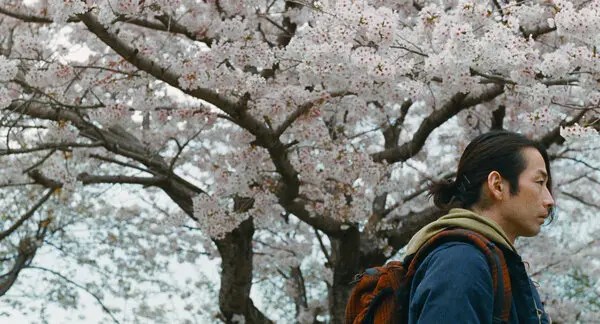
Great Absence is a gradually unfolding tale of an actor and his wife brought abruptly back into the middle of his estranged father’s life due to the latter’s rapidly worsening dementia. Hanging ominously over the visit is the puzzling absence of the father’s wife of twenty years.

The movie is intentionally disjointed and deliberately paced. With growing puzzlement and unease the viewer gets small glimpses of interwoven past and present, with new perspectives often re-contextualizing what’s come before.

The shifting ambiguity mostly works, and there are some incredibly powerful moments that are open to some interpretation in ways that add a lot of depth. A key scene seemed to have a second, fascinating nearly opposite possible interpretation from what I think we were supposed to take from it.

While there are a couple of aspects I really would have liked to see fleshed out a touch more by the end, for the most part this is an exceptionally well written drama where the explanations received and the things left open work together particularly well.

The movie doesn’t try to tell the viewer what to feel, but instead presents imperfect people in difficult situations frankly and lets the viewers take it in as they will. But the fragile nature of a story subject to some of the same type of fluid reality dementia brings occasionally turns it all on its head. Combined with an appropriately subtle score and beautiful cinematography it all elicits strong emotions across the spectrum as the film marches on in a gradual but unrelenting way.

This deeply affecting story hinged on the actors’ portrayals of complex emotions simmering beneath the surface and wouldn’t have worked with lesser performances.

Actor Tatsuya Fuji was in attendance and received Japan Society’s first Lifetime Achievement Award before the screening. The previous night his co-star Mirai Moriyama received the annual Cut Above Award for outstanding achievement in film (presented before a screening of Shadow of Fire). All four key roles, including those of Fuji, Moriyama, the third lead Hideko Hara, and supporting actress Yoko Maki, were played to perfection.

Great Absence is a subtly powerful film that I highly recommend.

After the film there was a Q&A with Fuji and director Kei Chika-ura. Important central concepts of Great Absence were taken from Chika-ura’s own experiences, and it was fascinating to hear about the various conditions that brought the film together. Fuji talked at length about his extensive career, his approach to acting, and the curious story of his only other trip to New York nearly fifty years ago. All in all it was an excellent session and a wonderful post script to the movie.

This showing was Great Absence’s New York premiere, and it will be playing from today at the Angelika Film Center. Fuji and Chika-ura will be attending and having Q&A’s after both tonight and tomorrow’s 7pm showings (July 19 & 20, 2024). I encourage anyone in the area to check it out.

Categories
Cards Japan Wrestling

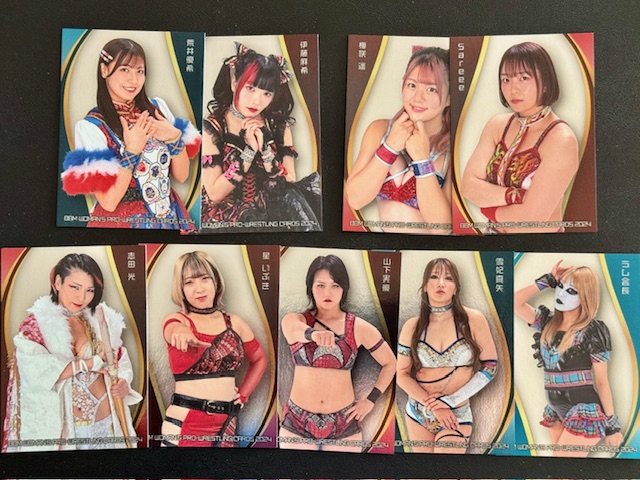
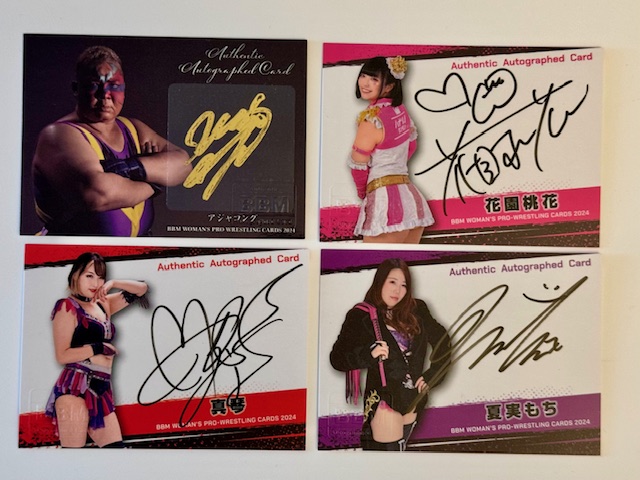
Collecting Spotlight: BBM Women’s Wrestling 2024 Card Set

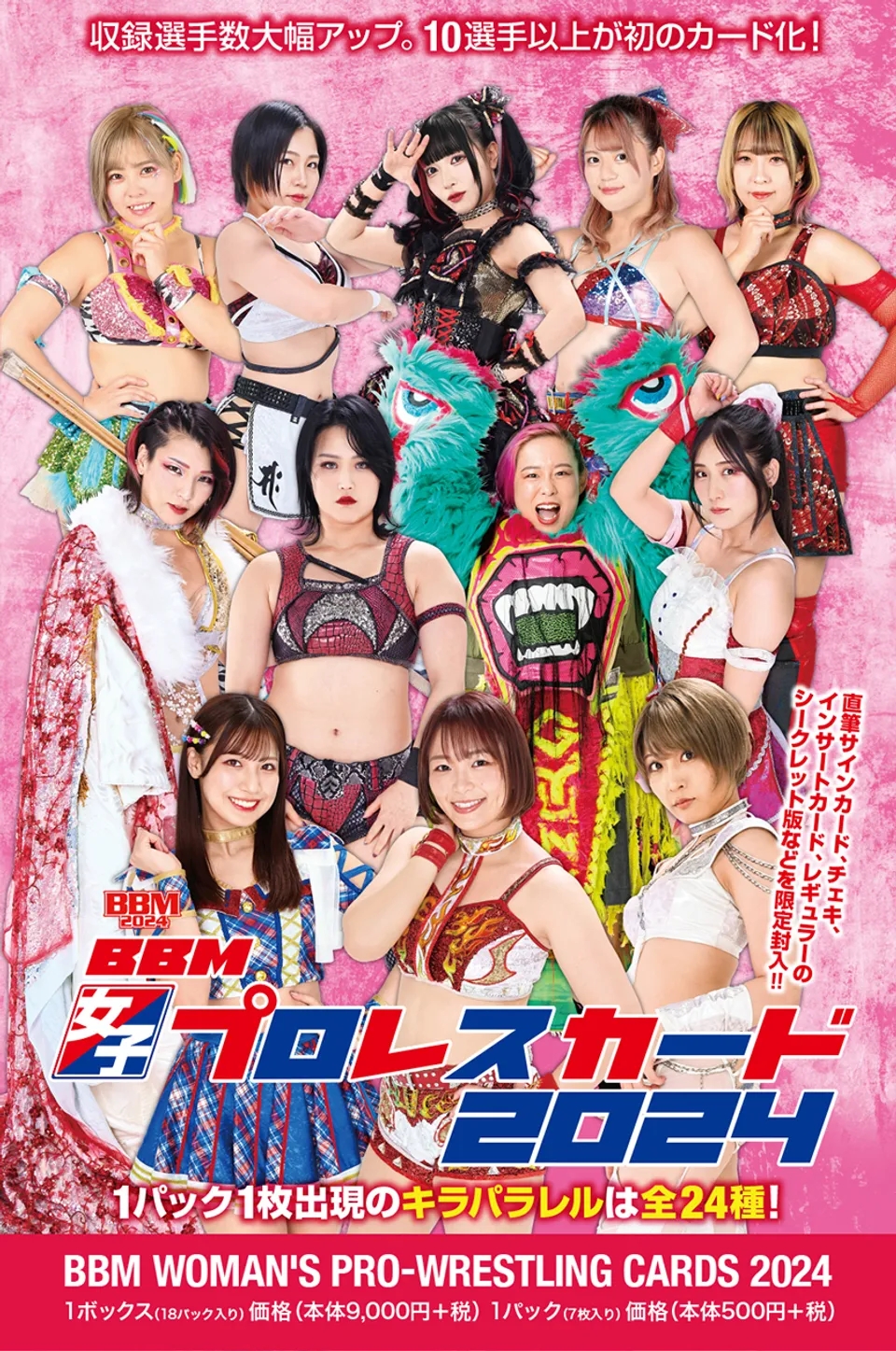
BBM releases yearly card sets for a variety of sports, and for over a decade I have been collecting their joshi wrestling sets. Here we’ll take a look at the details and differences in their most recent offering.

Known as True Heart until 2020 and simply Women’s Wrestling since then, these yearly sets focus on women wrestlers all across Japan. Most joshi wrestling companies and freelancers participate. The main exception is World Wonder Ring Stardom, whose roster members do not appear in these sets (Stardom has done occasional card based products on their own in the past).

There are also rare special sets released in addition to the yearly sets, such as the recent 2023 Ambitious. As opposed to the general random nature of packs and boxes, Ambitious 2023 was a box only release. Each box contained a complete 47 card base set, one of nine possible acrylic standee cards, and a small number of random chase inserts and signature cards.

The standard packing numbers for the last several years of Women’s Wrestling releases have been 6 cards per pack, 20 packs per box. Each box had some chase cards in random packs, with the chase card replacing one of the base cards (so you’re always getting 6 cards in a pack).

This release dropped from 20 packs per box to 18, but increased the cards per pack to 7. The seventh card in each pack is a one of the 24 “Kira” chase cards, shiny cards which feature a facsimile auto of the depicted wrestler. It’s a solid move for BBM, as now each pack has something a little special in it.

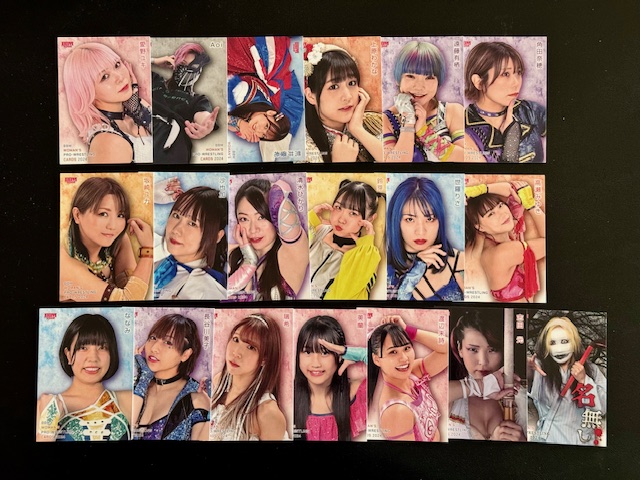
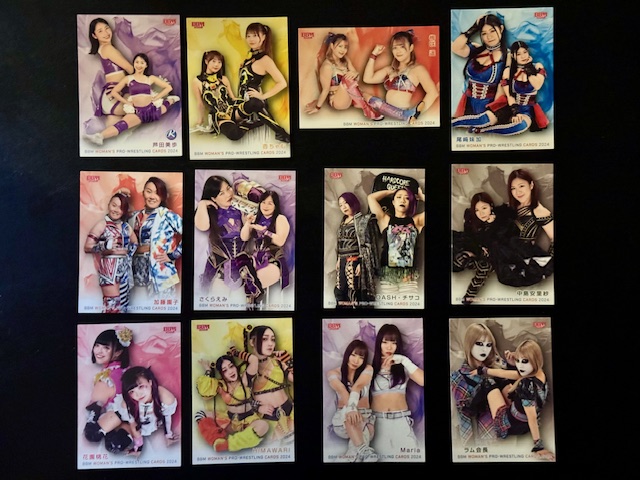
The other chase subsets in the 2024 set are a 9 card foil subset, and 19 “secret” chase cards (18 base card secret variants plus a secret card for Nanashi (“no name”)). The base cards generally feature two images of the featured wrestler while the various inserts highlight a single pose, headshot, etc. There tends to be 3 foil and 3 secret cards per box.

An assortment of base cards from the 2024 set.

The yearly base set varies in size each year to reflect new wrestlers, retirements, occasional special cards for tag teams, and so on. There are a lot of joshi wrestlers active in Japan and these are not small sets. The 2024 base set consists of 156 cards, which is a little over a box and a half of base cards (if no duplicates were drawn).

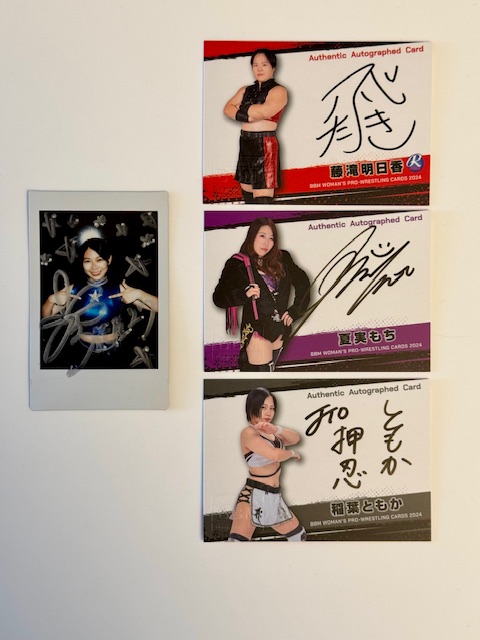
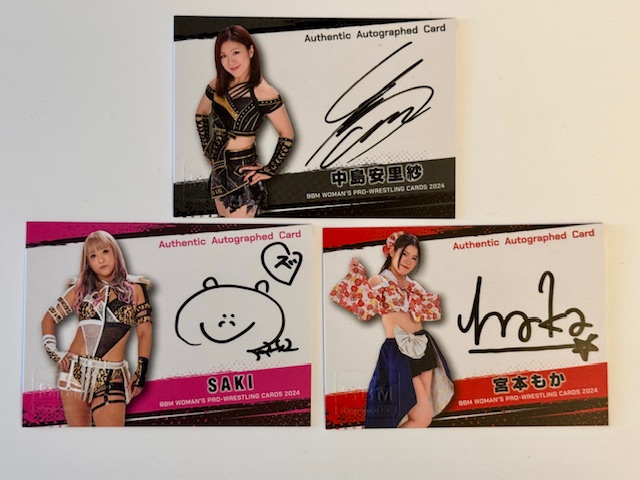
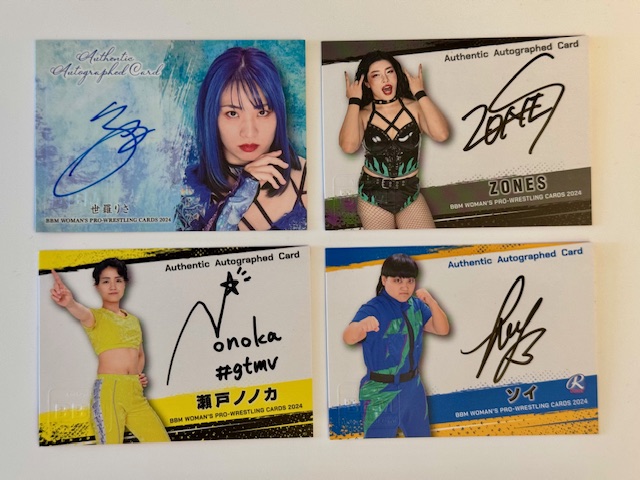
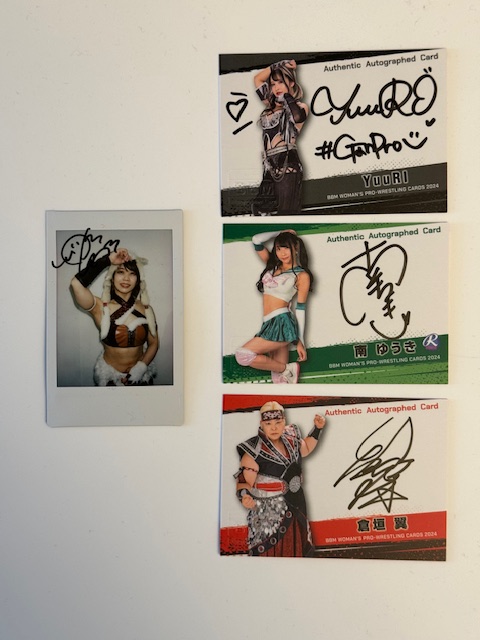
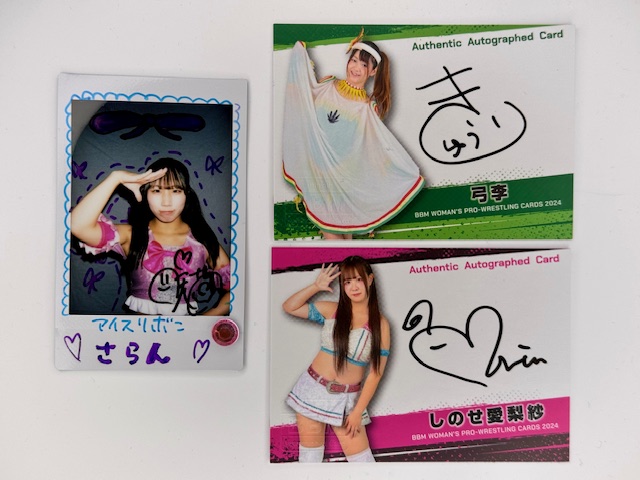
One of the main draws of the sets are the special randomly included cards signed by the wrestlers. This year there are 3-4 sig cards per box.

Anecdotally, for several cases I’m aware of, there were exactly 3 boxes in the 12 box case that had 3 sig cards with the remainder having 4. So it seems like a pretty stable 75% of boxes have 4 sig cards and 25% have 3.

These autographed cards are numbered and there’s generally around 100 of each base version. The vast majority of the base sigs cards this year are on card signatures (with stickers only used for included wrestlers currently based overseas), which is great.

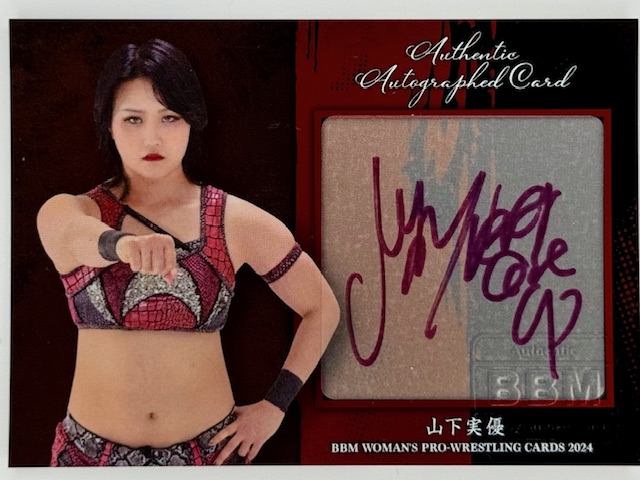
The base signature card design this year is very simple, but I personally like them a lot. The focus is firmly on the wrestler and their signature, and having a fair bit of white background on them makes the insert variants with fully colored backs contrast more.

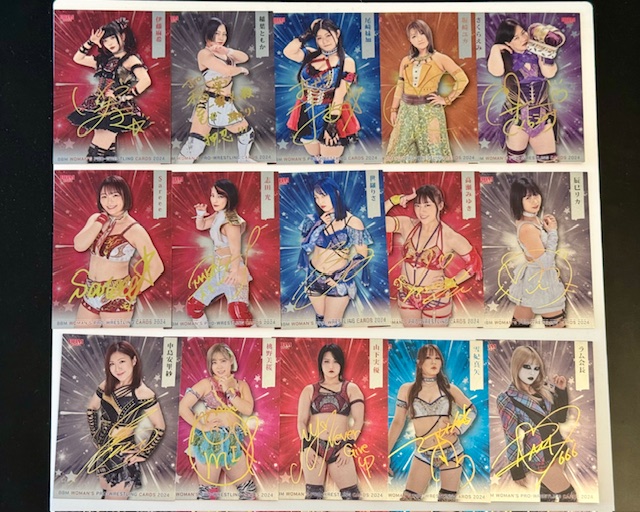
The 2024 set has signed secret variant cards for the wrestlers who have secret base versions. These are limited/numbered to 90. The foil insert subset has associated signature cards numbered to 60 each.

There are also a small number of “super secret” signature cards. Aja Kong has one limited to 30 copies, while five other wrestlers have versions limited to 10.

Stickers were used for all of the insert autos, which isn’t ideal but is understandable as they’re going for a certain look with these and the stickers limit signatures to a confined area on the card. All of the various insert autos this year look stunning.

The last chase items to talk about are chekis: mini polaroids of the wrestlers signed and sometimes decorated by them. There are generally 10 for each wrestler who does them (not everyone in the base set does), with a few wrestlers doing different outfits and having a total of 20 this year.

In past years chekis were generally extremely stable pull rate-wise at 3 per case (or 1 per 4 boxes). This year it has dropped to 2 per case (1 in 6 boxes). While they are among the most rare inserts to try to collect, they’re wonderfully unique and a focus of my personal collection.

So that’s it for my breakdown of this year’s BBM Women’s Wrestling release. I wish anyone who decides to collect some of this fun set good luck with their pulls and pickups.

Categories
Japan Wrestling

Deathmatch Daisuki: Hikari Noa’s “Graduation” from TJPW

By the beginning of 2018 I had been to Japan a number of times, and Tokyo Joshi Pro-Wrestling (TJPW) had morphed from a curiosity that wasn’t really aimed at me into one of my favorite promotions.

Their big January 4th show that year opened with the quadruple debut of a wrestling subset of the idol group Up Up Girls, and included someone who would go on to be one of my absolute favorites in the promotion.

The original Up Up Girls lineup, Miu, Hikari, Raku, and Hinano, wrestled in identical gear outside of their signature color versions. They made a solid impression in a basic but fun debut match that hinted at a lot of potential for the group.

A year later the group would transition to new, more individualized gear and tweak their names. This is when Hikari became Hikari Noa, touches of her goth aesthetic were introduced into her outfit, and her unique personality and infectious charisma really started to show.

From the boisterous powerhouse Miu Watanabe, to the sleepy train otaku Raku, to the deathmatch loving Hikari Noa the Up Up Girls became more and more beloved by fans as they let themselves shine. As Pipipipi Pinano (the former Hinano) retired in April 2019, the Up Up Girls would continue as this trio until Shino Suzuki’s debut in 2023.

For me Hikari in particular was a breath of fresh air in wrestling. She took to it well, and evolved quickly in her early career consistently improving and finding her own style within the ring. She was engaging to watch, easy to cheer for, and eventually became one of TJPW’s most popular roster members.

I thoroughly enjoyed her matches, relishing in the opportunities I had to see her compete live against some of TJPW’s top stars. She was the ultimate underdog babyface to me, and I enthusiastically followed along with her progress and celebrated every victory.

In 2021 Hikari became the first Up Up Girl to win singles gold, defeating Yuki “Kamiyu” Kamifuku for the International Princess Championship. She held it from May until January with four successful defenses before losing it to former champion Maki Itoh.

“Deathmatch Daisuki” (“I love deathmatches”) Hikari Noa was true to herself in her wrestling goals, making it well known she intended to someday participate in the type of deathmatches that captured her imagination and attracted her to wrestling in the first place.

She was at the forefront of TJPW beginning to stretch beyond their norms. Her first ever hardcore match main evented TJPW’s first Inspiration show, a spin off concept for unique matches outside of TJPW’s core model. She put up a valiant fight against hardcore veteran Rina Yamashita in a great showing.

Hikari would get her ultimate wish in August 2021, participating in an Electric Current Deathmatch as part of an eight-person inter gender tag contest on a DDT show also featuring TJPW’s Maki Itoh on the other team. In 2023 she’d have a singles Fluorescent Lighttubes Deathmatch against Sawyer Wreck to headline Inspiration #6.

Deathmatches generally aren’t my thing, but I was thrilled that Hikari kept pushing her personal dreams and got to realize the ambitions that brought her into wrestling in the first place.

In September 2023 Hikari and her partner Nao Kakuta, collectively known as Free Wi-Fi, won the Princess Tag Team Championships.

The reign was unusually significant for Hikari, who had three other regular partners (Pinano, Sena Shiori, and Natsumi Maki) who either retired or left TJPW before the team could achieve championship success. For Nao, it was her first championship ever (and only, as she’ll be retiring this July).

Free Wi-Fi was an incredibly fun, skilled team and I was overjoyed to see them ascend to the top of TJPW’s tag division.

In late December 2023, shortly before Free Wi-Fi was set to defend the Princess Tag Team Championships at TJPW’s 1/4/2024 show, a press conference was held announcing they were vacating the titles.

Hikari was not at the press conference (her partner Nao Kakuta and TJPW founder Tetsuya Koda spoke). It was initially reported that she was out due to illness. In mid February TJPW and Up Up Girls management announced she was on indefinite hiatus “due to personal reasons.”

Finally in May it was announced that “after discussions with her about her future” Hikari had left TJPW and Up Up Girls (the general term Japanese companies use for someone leaving, whether retirement or otherwise, is “graduation”).

There would be no farewell appearance or show, and no social media statement from her. The company statement included a general apology from her about not being able to live up to waiting fans wishing for her to return. Hikari has not made any public appearances nor any social media posts since before the original press conference in December.

At this time no one is aware if she’ll ever return to wrestling or public life in general. I will not speculate nor discuss this beyond the above presentation of the public timeline, but of course it is a shame to see one of my favorite wrestlers ever leave the company under such abrupt, clouded circumstances. But whatever the case, I hope things are going well for her.

If this is the end of her wrestling career, it will have spanned over 350 matches across six years. While I’d love for her to return, I am deeply grateful for all the time and effort she spent entertaining fans regardless.

Hikari was always cheerful and appreciative when greeting fans, and I am blessed to have had to the opportunity to meet her a number of times. My thanks again for all the fun she added to wrestling.

I will miss her terribly, but more importantly whatever she does in the future I hope she’s happy and I wish her all the best.

Categories
Art Cards Comics

Ethereal Impressions: The Art of Lydi Li

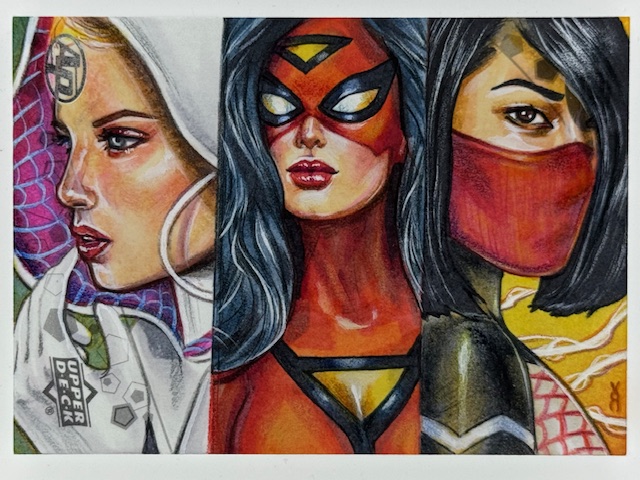
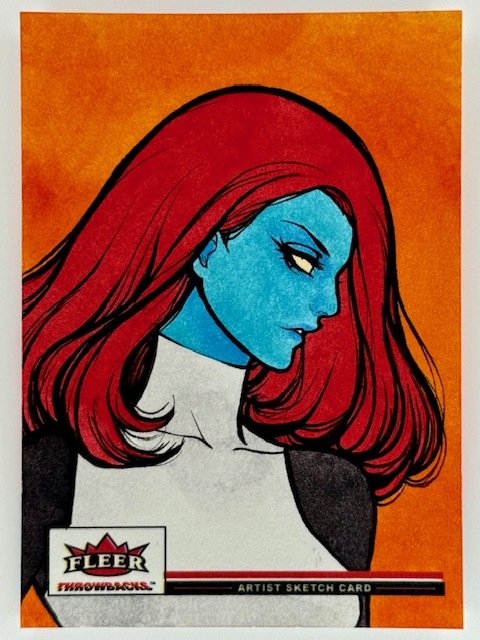
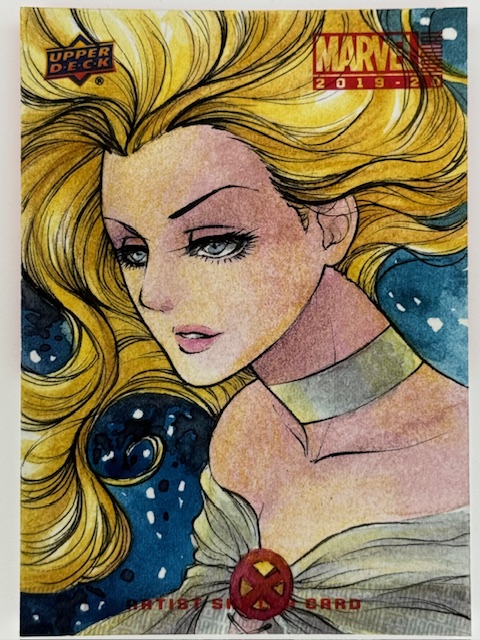
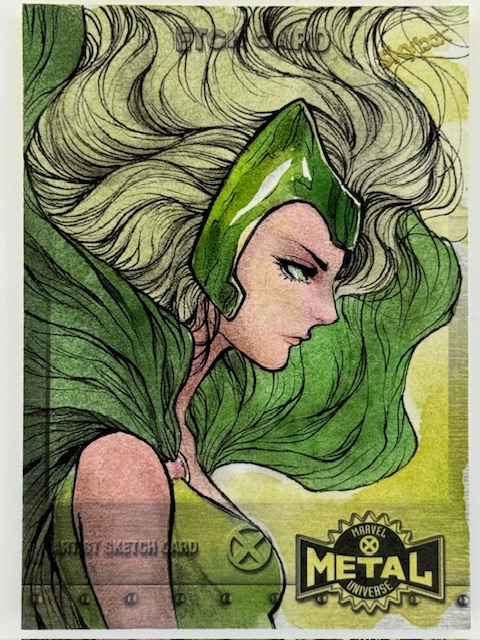
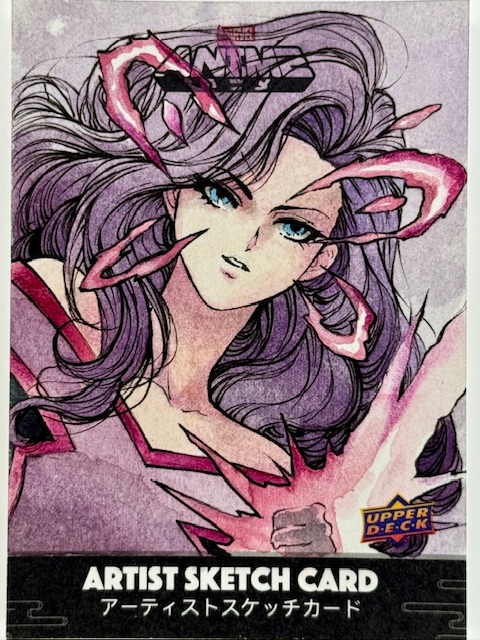
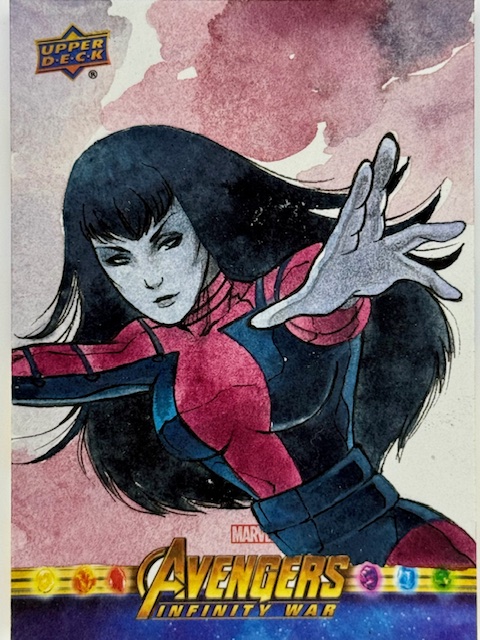
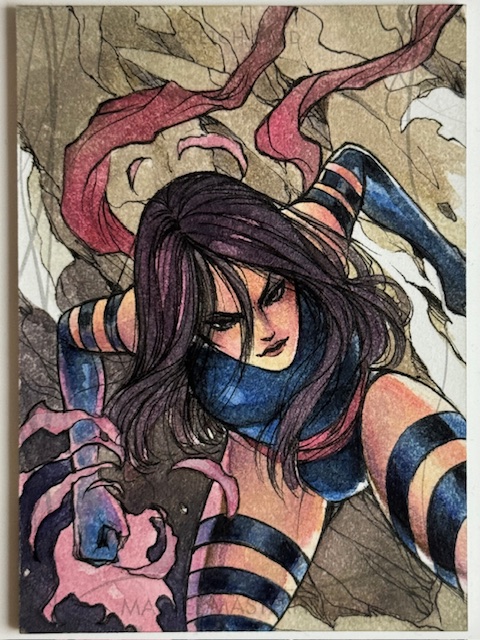
Sketch cards are unique pieces of art impressively created on extremely small workspaces. The Marvel comics related subset of these collectibles features a wide variety of styles from a great number of artists, and one of the very best is the phenomenal Lydi Li.

Lydi’s been a longtime favorite artist of mine. There’s something about her work that jumps out and leaves a lasting impression. Her cards are incredibly popular in general and are often prized possessions for those able to get them.

The subtle variety in her art of the same subject over multiple sets is a delight. Differing little touches depending on the theme and mood to be expressed make each masterpiece unique. The bold, saturated coloring on her Mystique from Throwbacks is stunning and perfect for the set.

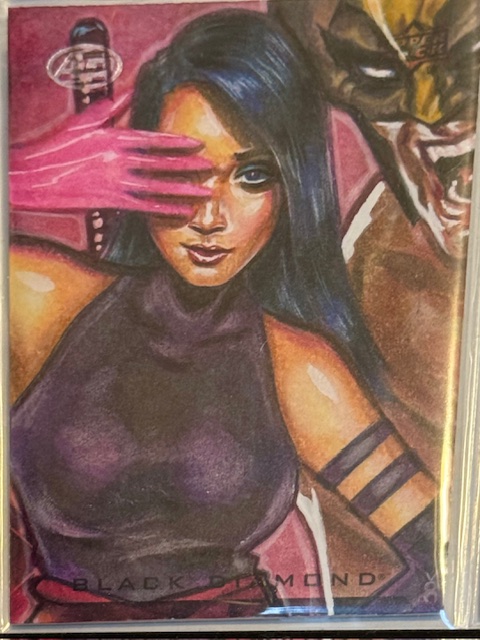
In contrast her portrayal of the same character for Black Diamond features more muted tones. It’s almost reminiscent of Juri Chinchilla’s work (another absolute favorite of mine). It’s striking in a different way. Both cards are incredible, made even further captivating by their differences.

In general Lydi’s style is a wonderful balance of softness with vibrance. It’s eye catching and immediately recognizable, conveying the essence of the chosen character in a distinct way.

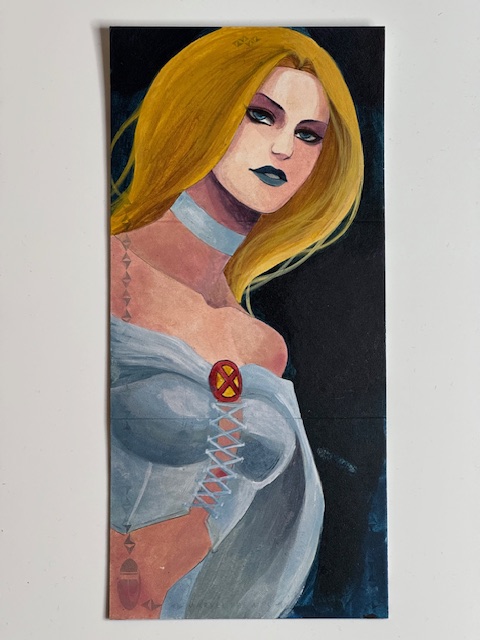
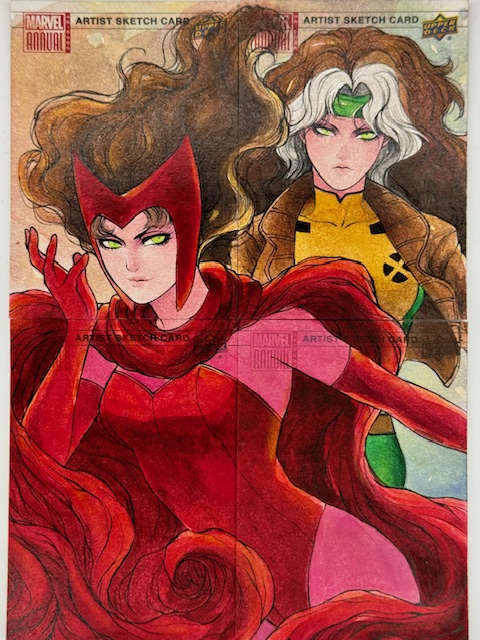
From great depictions of fun secondary characters like Armor to a vivd four card puzzle of powerhouses Scarlet Witch and Rogue every piece I have of hers demands immediate attention. A couple of recently acquired particularly cherished additions to the collection include a gorgeous triple panel of the White Queen Emma Frost and a jaw dropping Thanos framed by his beloved Mistress Death.

There’s a delicate touch to Lydi’s art that makes it evocative, with a sense of atmosphere and emotion simmering just below the surface. Her versatility makes seeing her cards side by side as fascinating as they are beautiful.

I’m extremely lucky to have so many of Lydi’s cards, and greatly appreciate the beauty and depth they add to my collection.

More information about Lydi’s wonderful art can be found on her instagram.

Categories
Art Cards Comics Japan Wrestling

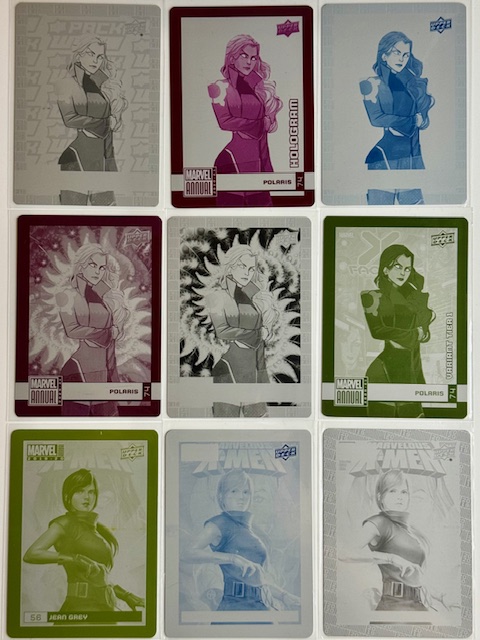
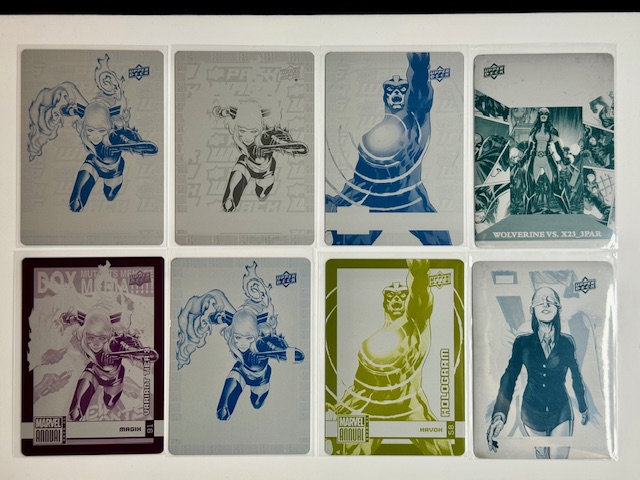
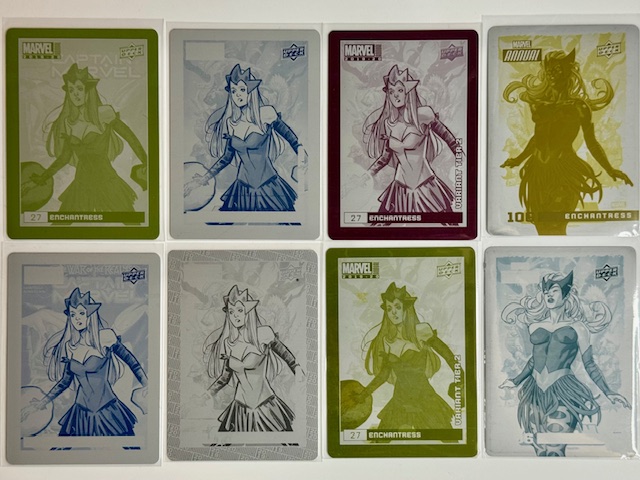
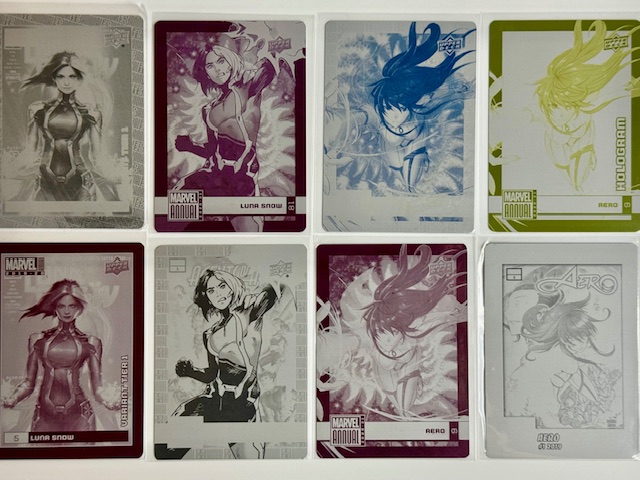
Monochrome Masterpieces: Collecting Printing Plates

Today I’d like to talk about one of the most unusual and unique trading card related collectibles: the printing plates used to generate the images on the cards.

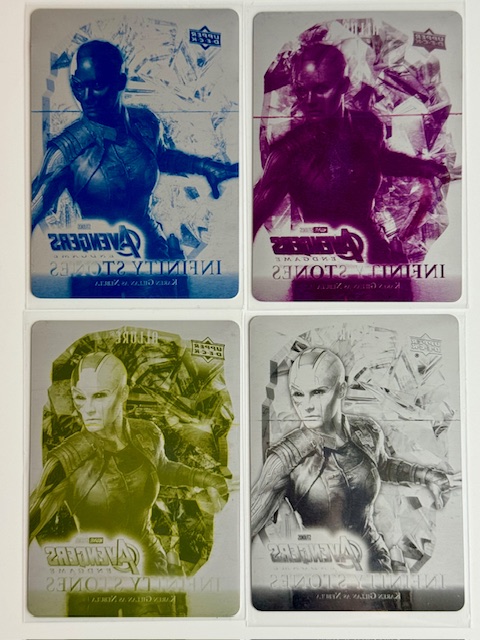
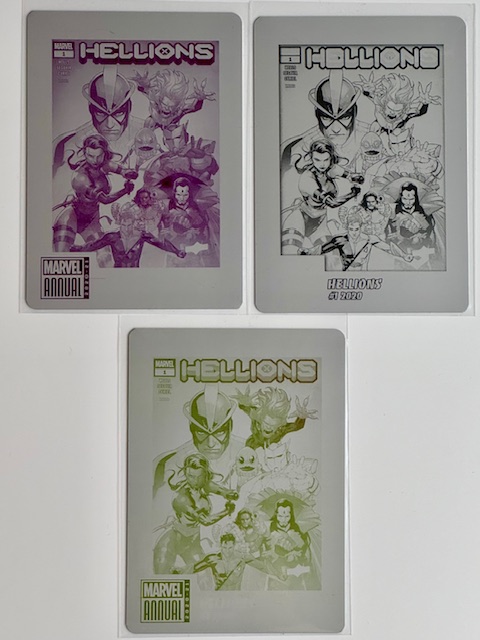
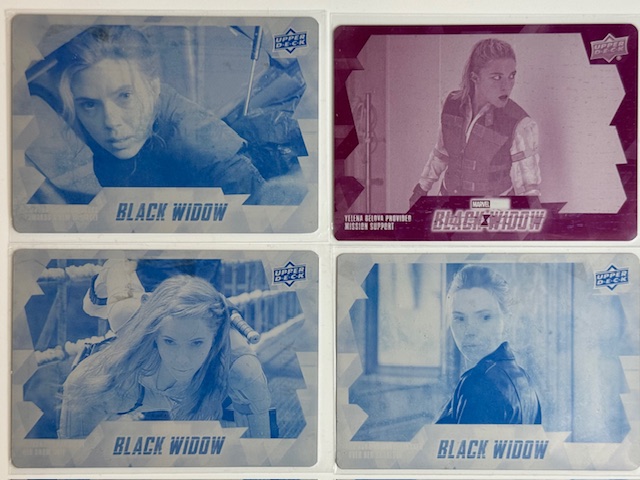
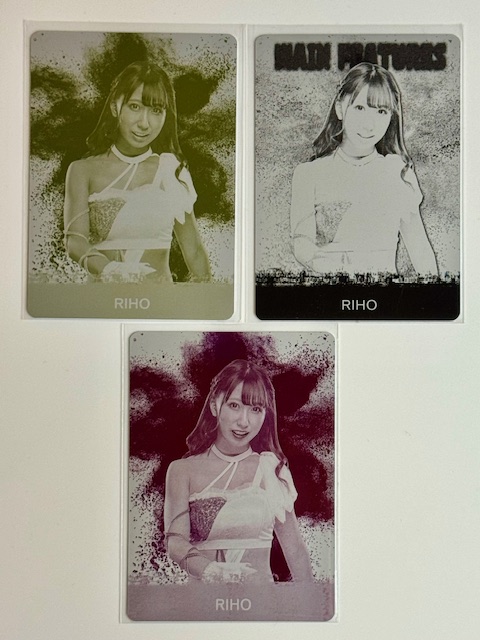
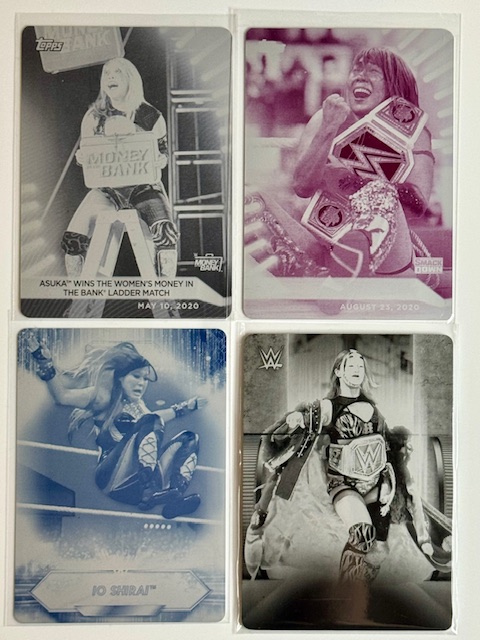
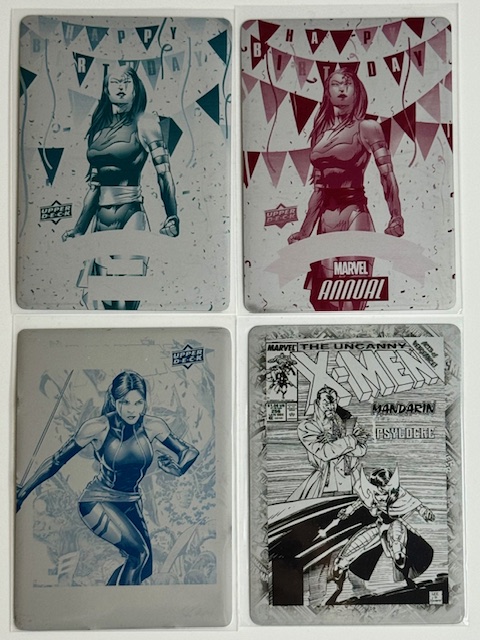
Printing plates are thin metal sheets used in the printing process of the card they represent. Generally there are four plates for a card corresponding to four basic component colors: black, cyan, magenta and yellow. When distributed plates usually have a sticker affixed to the back with publisher, set, card, and copyright information.

Different colored variants of a card won’t have different plates (changing ink saturation levels produces these versions) but variants with different background patterns, text or logos, etc will. Whether these other versions, or any plates at all, are distributed depends on the manufacturer, set, and distribution method.

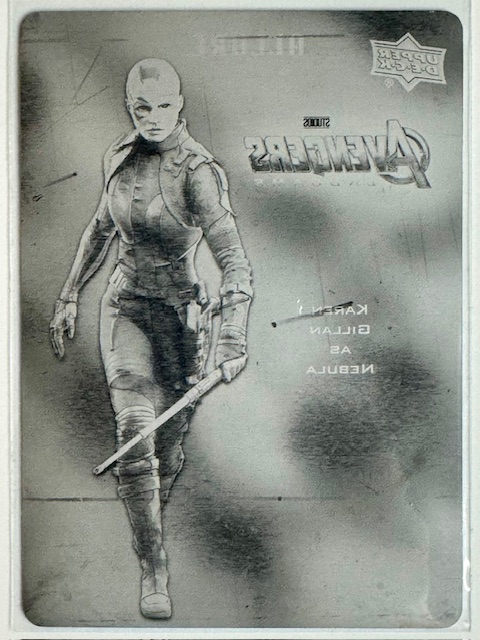
Printing plates are extremely unique as a collectible. While many of them are still in great shape, given their nature they are also often imperfect as they may contain smudges, printing lines, blurred images, scratches, or other after effects of the printing process. How much these imperfections affect someone’s desire to collect a particular plate generally depends on the extent and of course personal preferences.

Also certain ink colors may have been practically unused in creating an image and that corresponding plate could be largely blank or an otherwise incomplete image. While rare, this phenomenon is a risk and particularly pops up comic and other art based cards (as opposed to photo based cards, where underlying colors are generally present across the image).

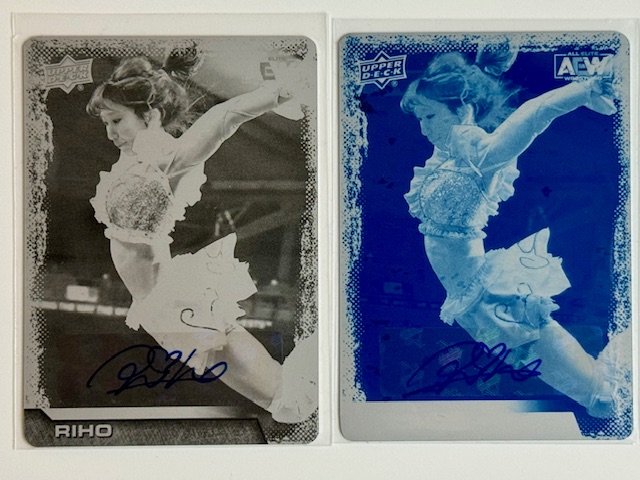
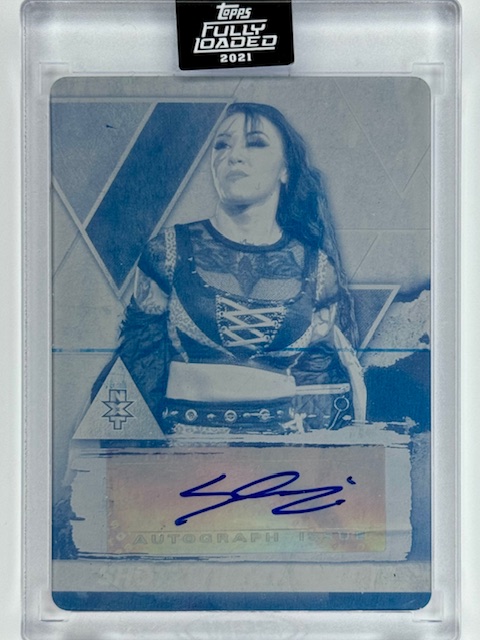
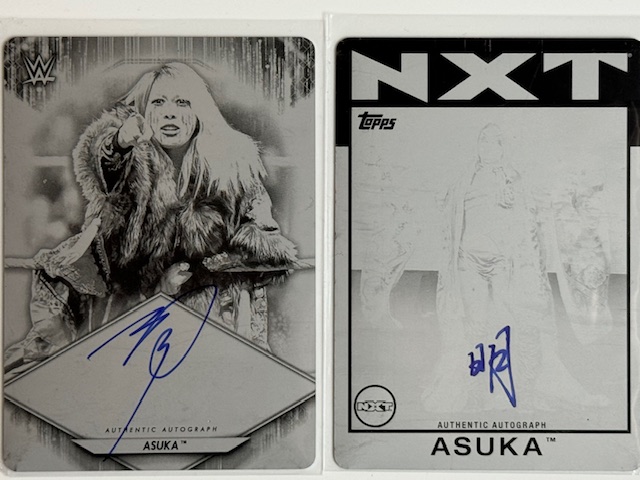
In certain circumstances printing plates may also be distributed with autographs. Actors or athletes depicted, or creators or voice actors of shown characters, sometimes have their autographs on the front of the plates. Usually it’s done via affixing a signed sticker, but direct signatures aren’t unheard of. This is an added layer of collectability and reward for the person who draws the plate.

In addition to printing plates being randomly inserted into packs of their card sets, they are also commonly used as special distribution prizes. Upper Deck often has certain plates set aside to be used as rewards for completing collection goals in their online buying and trading platform ePack.

Sometimes plates used for these purposes are grouped together as sets, occasionally even being collected in connecting booklets. This can be convenient for completionists, as trying to collect all four color plates for a particular card when the plates are separately randomly inserted is a daunting task.

Metal Universe X-men printing plate booklets in custom display cases by Hardball34.

My personal affinity for collecting plates evolved from getting several wonderful booklet collections from the Metal Universe X-men set, as well as drawing some for my favorite characters from Marvel Annual sets and my favorite wrestlers from WWE and AEW sets.

From there I started more proactively chasing/trading for/buying plates and they’ve become a cornerstone of my collections all around. I adore the way the underlying color images look, and there’s just something cool about having a piece of the process.

The lion’s share of my plates are Marvel related from Upper Deck (UD), featuring a dazzling array of comic book characters and MCU actors.

However I also heavily collect joshi wrestling cards, and plates of certain wrestlers from UD’s AEW sets as well as Topps WWE sets form an additional, smaller centerpiece of my collection.

Riho plate displayed with AEW 1/1s in a custom frame by Dion Divens.

Chasing plate “rainbows” (a complete color collection of plates for a given card) is a case by case basis for me. For certain images, characters, and wrestlers I collect everything of theirs I can find. In other cases a particular color plate for a particular card jumps out at me and I’m happy just to have that.

Occasionally a plate I’d otherwise want to keep just doesn’t look great to me in that color and/or with its particular imperfections. And of course as with any card related collectible rarity, availability, popularity with other collectors, and luck all greatly influence what actually ends up in the collection.

These little pieces of metal have become some of my favorite collectibles. I love monochrome art in the first place, and the fact that these are essentially art and photos broken down into that format appeals to me greatly. I’m sure I’ll be expanding their numbers for a long time to come.

I hope everyone’s enjoyed the look at my collection of these unusual inserts. Best of luck with wherever your personal collecting tendencies take you.

Categories
Art Magic

Magic That Doesn’t Wither Under One’s Gaze: Joshua Jay’s Look Closer

Five and a half years ago I saw a phenomenal close-up magic show called Six Impossible Things by the incredible Joshua Jay. So the announcement of his new show that adapted that kind of magic for a larger audience was extremely intriguing.

The idea behind Look Closer is rather daring. Using technological advances to present parlor/close up magic in a larger space opens up effects often meant to be quickly observed at limited angles to closer scrutiny. Jay further pushes the theme by revisiting his opening tricks again later in the show from different conceptual angles.

Six Impossible Things was an intimate affair. Performed in series of small rooms in front of a group of just twenty people, a real sense of wonder evolved as the show progressed. While the new show stands entirely on its own and is completely accessible, it was also fascinating to see how Jay echoed some of the ideas and tricks presented there in this new hybrid format. In some ways Look Closer’s structure formed an even stronger payoff to that sense of wonder, which is amazing given I was watching everything from further away in an audience several times larger.

The most interesting thing about Look Closer is that it’s a journey as much as it is a magic show. There’s a narrative structure to everything with breathable moments where Jay presents personal stories illustrating what the mysteries of magic mean to him. It adds an incredible depth to the evening, which is as much a masterclass in storytelling as it is in magic.

The tricks and stories Jay presents also fold back on each other as things progress, and a heavy customization aspect ties everything directly to the particular audience watching. Things that happen early in the show come roaring back at the end in mystifying fashion. The concept is unique and captivating, and the execution top notch.

I was at the final NYC performance, but the show will continue on in Chicago in April. I encourage anyone who has an opportunity to attend this wonderful experience to do so. “I was at the final NYC performance, but the show will continue on in Chicago in April. I encourage anyone who has an opportunity to attend this wonderful experience to do so.

Categories
Board Games Reviews

Suspects:Claire Harper Takes the Stage Board Game Review

Time for everyone to don their thinking caps. Suspects follows early 20th century adventurer Claire Harper in playable classic style mysteries.

Suspects is a card based mystery game that involves visiting locations, speaking to suspects, and examining items to try to unravel the secrets behind a crime. Claire Harper Takes the Stage includes three separate cases.

Each case has a couple extra things to go with the deck of cards to help direct and unravel the mystery. There’s usually some type of list of suspects as well as a a map to show the locations you can look at which gives a nice mental image of the crime scene. Anyone and anything that can be investigated has a number next to it, and you can take the card of any visible number (unless a restriction tells you otherwise).

I really like the system. It’s a great way to handle a somewhat free investigation with a deck of cards. The production quality is excellent and the oversized cards are great for this type of game. Specific mechanics range from evidence links where lines on the various cards will line up if related to certain cards only being available if a set number of identical symbols has already been revealed. The former is great, the latter not so much. The idea’s interesting but which cards would reveal the symbols seemed arbitrary at times and as such was more of a stumbling block than something to puzzle out.

The goals are stated up front in the form of questions the players are trying to answer. The rules explain that there is some meta information in the questions, (for example: if it asks who the murder, singular, is there will be no accomplice) but for me this was a plus not drawback. It prevented things from being too ambiguous to solve. Which is good, because these were quite challenging.

Some of the questions were open ended with room for interpretation on whether answers are right “enough,” but it didn’t detract much from the experience.

The main hurdle in this cases is the overabundance of information. For a game based on what can be fit into a deck of cards, the stories are fully formed and well fleshed out. Numerous suspects have compelling motives, and it’s easy to be led astray by what feels like the strongest. There’s a need to focus on small contradictions and/or method conjecture in order to catch on to what actually happened.

I adore mysteries and am fairly good at these types of games, but didn’t completely solve any of these. I don’t feel cheated at all though. The game is difficult and requires reading things extremely carefully, but the cases are solvable. I left each wanting to do better in the next one, determined to be a little more thorough. Some of the clues and deductions to be made are extremely subtle, but the information is all there to be found.

Which leads to an aspect where I made things more challenging unknowingly: I played all three of these cases solo. While I usually enjoy this type of game equally on my own or with a few friends, this is one of the rare examples where I think it’d play much better with 2 or 3 people. A second set of eyes on cards and someone thinking differently to bounce ideas off of is almost necessary to fully solve the cases. That said, personally I still really enjoyed trying to puzzle these out and will probably attempt the second set solo as well.

There’s a solid, interesting scoring system based on the number of cards seen before answering each question correctly (although there’s a bit of thematic disconnect with the descriptions of the end game tiers – they’re a little more negative in outcome at times than seems appropriate). There’s luck involved in what the player chooses to investigate first, but there are often little hints that point at the most important stuff.

Claire is a decent point of view character for these cases. She has just enough backstory to drive things, but at the same time is enough of a cipher to feel like the player is the one doing the investigating.

The instructions recommend playing the cases in order. While one character does repeat in a later case it wouldn’t spoil much to play these in any order you choose. There really isn’t increasing difficulty across the cases or anything like that. They’re different but roughly equivalent in challenge. But while it’s not really necessary here to play the cases in order, there’s no reason not to either.

As is expected with “solve a mystery” type games there’s no real replayability here, but three cases is a good amount and the game’s fully resettable and can be passed on to others.

Overall I had a great time with Suspects and am looking forward to the subsequent games.

Categories
Art Wrestling

Ice Ribbon’s Bridge to Dynamic Illustrations: The Art of Yappy

I’ve written a lot about art I collect of several of my favorite professional wrestlers from a variety of artists. A couple years ago, in Another Wonderful Way Pro-Wrestling is Art 3, I briefly talked about an unusual case: one of those wrestlers is a wonderful artist herself. Yappy has done a number of pieces of her coworkers (as well as self portraits) and today I’ll be spotlighting more of her work.

Yappy has been wrestling for a women’s wrestling company in Japan named Ice Ribbon for nearly five years. She has a naturally upbeat and energetic personality that translates into engaging ring charisma and fun matches. She’s a huge part of Ice Ribbon’s interactions with foreign fans, from explanatory videos to spearheading their international store, and has appropriately nicknamed herself Ice Ribbon’s Bridge to the World. Her soon to return Weekly Ribbon Unravel YouTube show highlights general happenings in Ice Ribbon in English for a foreign audience.
Ice Ribbon’s ace Tsukasa Fujimoto.

Yappy’s larger pieces are wonderfully dynamic, with a strong sense of style and motion to them that beautifully captures the personality of her subjects. The above rendition of Ice Ribbon’s ace Tsukasa Fujimoto is also carefully accentuated by metallic highlights that really bring it to life.

Yappy has also done pieces of (now former) regular guest participants such as former ICE Cross Infinity Champion Saori Anou and former multi-time International Tag Ribbon Champion Maika Ozaki.

I adore playing card style art, and Yappy’s Queen of Foxes illustration of Anou is so creatively done. The regal pose is perfect for the concept, and it’s finished with the same type of great shimmering metallic highlights as the Tsukka piece.

Maika’s piece is adorable and colorful, showing the cute side of one of joshi wrestling’s strongest powerhouses.

One of my favorite illustrations Yappy’s done is Ice Ribbon’s Totoro Satsuki with their mascot Ribbonne in a tribute to the wrestler’s namesake, Studio Ghibli’s animated classic My Neighbor Totoro.

Totoro Satsuki and Ribbonne.

One of the coolest things about Yappy’s art is her willingness to experiment and the resulting variety of styles she can work in. Her joyous black and white illustration of Saran feels quite different from her colored work, but is just as engaging.

Another great example of this is her playful, comic strip style depictions of her interactions with former Ice Ribbon wrestler Nao Ishikawa.

Yappy and Nao Ishikawa.
Tequila Saya illustration by Yappy for Charles Short’s second Ice Ribbon book.

Yappy did a series of illustrations for Charles Short’s second book about Ice Ribbon, titled Wonderland. These portrayals show off her range, as the chibi influenced versions still capture the essence of the wrestlers’ likenesses and charisma.

The last batch of art I’ll spotlight here is Yappy’s art nouveau pieces. Three pieces in total (more on that to come), they are extremely striking and pop with color to make an immediate impression.

Yappy incorporated wonderful detail into these. Ice Ribbon’s Mugendai (“infinite potential”) Girl Kaho Matsushita’s has an infinity motif, and Tsukina Umino’s other job as a murder mystery game GM heavily inspired the theme for her piece.

——-

More information about both Yappy’s art and her wrestling can be found on her social media.

There’s one more wonderful art nouveau piece to discuss, left to last because there’s unfortunately some sad news that now goes along with it. In early February 2024 Actwres girl’Z reported a 21 year old wrestler named Asahi had unexpectedly passed away. Asahi started her career in Ice Ribbon and was a dear coworker and friend to Yappy. She was also a personal favorite of mine, being a joy to watch in the ring and an inspiring presence in general. Yappy’s incredible rendition of the Sunrise of Hope that originally started her art nouveau series is cherished momento of someone gone far too soon.

Rest in Peace Asahi.