Match wits with the Riddler as Edward Nygma presents his personal puzzle box for you to solve.
The Riddler: Puzzle Box by Edward Nygma is made by McFarlane Toys, and as such expectedly looks fantastic. The 5-6 inches a side box has great detailing and largely looks like worn/distressed metal rather than the plastic it’s made of. It’s just plain cool to look at and play around with.
Solving puzzle boxes is often made more enticing by including a prize locked within, and the encased prize here is awesome. Solving each of the three sections is rewarded with a piece of a hefty metal “1:1” batarang replica. They went all out with this aspect of the box.
The website description claims the Riddler Box “features 4 challenging Batman themed puzzles.” To be perfectly blunt, this is not even remotely true. These are some of the easiest puzzles imaginable, made more difficult only by so-so implementation. One puzzle is solvable completely by accident. One I solved without the required tool, leaving me confused as to what that tool was for throughout the experience. One puzzle is a tad misleading on when the player should be trying to solve it, which led me to have the right solution but thinking it was wrong because I had to do something else first.
All that said I had a fun time with the box despite its imperfections. The puzzles are conceptually and thematically good even if easy, and I found it all interesting and engaging despite its flaws.
Which brings us to the puzzling aspect of this puzzle box as a purchase. The detail, inherent nature of making a puzzle box with hidden mechanisms, and high quality prize all add to the cost. But with a msrp of $100, which admittedly is entirely reasonable for what it is in total, people are likely to expect more from the actual puzzle box itself.
Now this has been out a while and at it’s currently available price (under $40) it’s *easily* worth it for Batman and/or puzzle box collectors. But to be completely fair with the review I’m not sure I’d have been as happy with it at full retail price.
Overall this is a great collectible containing an equally great collectible as a bonus prize, with an ok puzzle experience attached. Score one for Edward Nigma.
Thanks to everyone who’s given this a read. 2024 was a sporadic return for this blog and I hope to have more regular updates going forward in 2025. Derailments of Thought currently updates on Wednesday and Saturday.
If you enjoy the blog any support is appreciated, including shares on social media and simply continuing to read. If you happened to be inclined and able to help out monetarily please see my Ko-fi page. Every little bit helps.
A senator’s daughter has died mysteriously in prison, and you’re the lucky one in charge of figuring out what happened before giving a press conference to a gaggle of reporters after a long night of investigation.
The Guilty series is a new entry into the ever expanding genre of games that try to capture full fledged mystery investigations in board game form. The short, short version is it’s got the weight of a Detective case in a box closer to the size of the Exit series.
The setting is perfect for this type of game: it’s within a contained area of investigation with believable constraints and reasons for time pressure. The atmosphere is well developed, and the economical descriptions befitting a game confined to cards are on point. The box advertises the game as “immersive,” and I agree wholeheartedly. More than any other mystery game I’ve played that doesn’t use external elements this really felt like conducting an investigation the players are in control of.
The time deck mechanic is really well done. Cards are flipped from a separate deck representing the passage of time as the player chooses which leads to investigate. At different points in the deck game affecting events happen. It presents ongoing pressure and twists without making the game feel too short and is really well implemented.
Guilty thrives via its design and setup. The board that grounds the display and organizes the numerous investigative choices available really helps present the overwhelming options in an accessible manner. The progression of the investigation is completely open. The player is in control, and most uncovered cards/information feel interesting if not always vital.
This game consists of one case, but it’s a DENSE, meaty one. This takes 3-4 hours and as mentioned feels more equivalent to a round of Detective than other stand alone mystery games or even a round of Suspects (which I found weighty and challenging itself, but this is on a different level). That they accomplished this with a system that’s completely contained in the box (ie no internet component like Detective, etc has) is impressive.
There’s an overload of information to sift through throughout, but it’s by no means a negative. The case is compelling and it was extremely engrossing. There are important minute details, so players should be ready to read and observe carefully. However there really wasn’t one key piece of information that derails everything if missed. This has a mix of several visual and textual clues and figuring out how it all comes together is the goal.
Two players is probably the sweet spot for this series. Even for veteran gamers be at peak concentration level when soloing. I overlooked a couple vital points and was a bit off in my solution. That said in was still a blast as a solo experience.
The scoring system is a little odd, but good enough. It’s forgiving in a way I didn’t expect. I didn’t really solve the case (I got twisted around in my own head and picked the wrong killer), but figured out enough of everything else to get best evaluation. I have mixed feelings on that, as on one hand it seems like getting the criminal wrong should be disqualifying but on the other being recognized for solving a majority of the questions and piecing together all the other details is nice. Like I said: a bit odd but still fine.
There were a couple of red herrings I found mildly frustrating, but most of them connect to ancillary things to figure out if you dig enough so it’s not the issue it could be.
Nothing gets destroyed so the game is resettable and can be passed on to other players (the box insert isn’t great for storing the cards once they’ve been unwrapped, but that’s a minor quibble).
Overall this was excellent, and one of the best of this type of game I’ve played. Looking forward to future entries in the series.
Thanks to everyone who’s given this a read. 2024 was a sporadic return for this blog and I hope to have more regular updates going forward in 2025. Derailments of Thought currently updates on Wednesday and Saturday.
If you enjoy the blog any support is appreciated, including shares on social media and simply continuing to read. If you happened to be inclined and able to help out monetarily please see my Ko-fi page. Every little bit helps.
“The toughest thing about a case is never the case.”
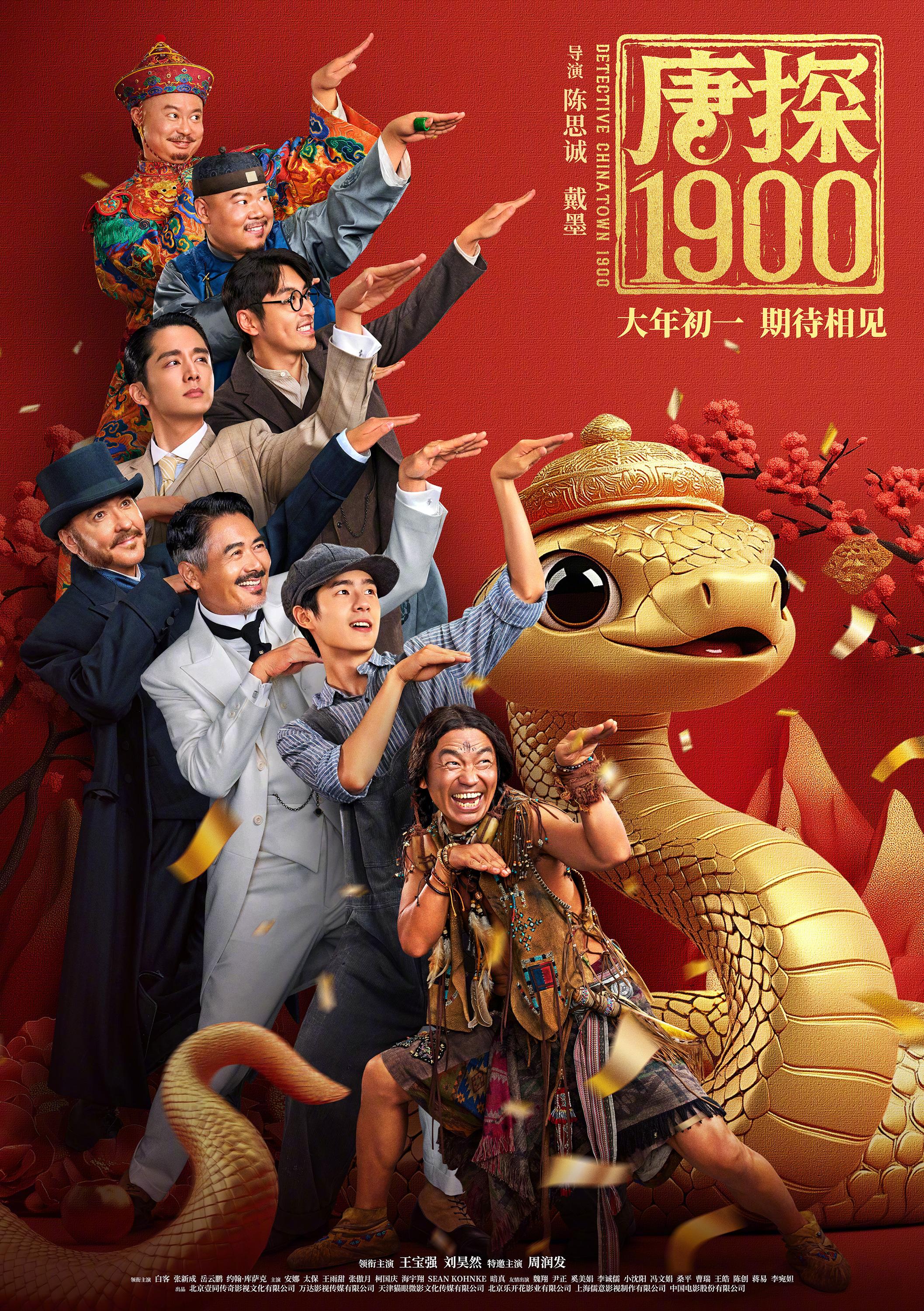
Sherlock Holmes who isn’t stumbles into a web of murder and political intrigue in early 20th Century San Fransisco.
I feel like I was peripherally aware of the series Detective Chinatown 1900 reimagines, but I’ve never actually seen any of it. And as this is a new take set in a different time period no prior knowledge is necessary.
The film is a blend of political commentary regarding a period of high racial tension and straight up comedy all tied together with a murder mystery central plot. It sounds like an absurd mix, but the melding of genres is really well done. It descends into complete farce at moments without ever having trouble reestablishing gravitas when the plot or themes need it.
The movie as I saw it in an NYC theater was presented with both English and Chinese subtitles. It’s a Chinese film largely set in San Fransisco and the dialog ends up being roughly half Chinese and half English, with some other languages mixed in. So a vast majority of viewers will need at least one of the sets of subtitles at times.
I’m a regular watcher of foreign films (usually in Japanese), so am used to reading subtitles. But even for me, the speed of the Chinese dialog and the resulting quickness that the subtitles flew by was a bit challenging at times. But key plot information was always presented somewhat slower (as it tended to land during dramatic moments) so I had no trouble following the story overall.
The mystery itself is reasonable and compelling, the humor juxtaposition masterfully done, and the societal commentary and historical aspects well presented and easily accessible even to those unfamiliar with the time period.
As far as criticism goes the film felt a little long in the tooth at times, a couple things strained credulity (beyond the things that were supposed to be absurd), and I’m not certain they completely stuck the landing. But I’m largely nitpicking here.
Overall I found Detective Chinatown 1900 to be a thoroughly engaging and entertaining movie. Definitely worth a watch.
Thanks to everyone who’s given this a read. 2024 was a sporadic return for this blog and I hope to have more regular updates going forward in 2025. Derailments of Thought currently updates on Wednesday and Saturday.
If you enjoy the blog any support is appreciated, including shares on social media and simply continuing to read. If you happened to be inclined and able to help out monetarily please see my Ko-fi page. Every little bit helps.
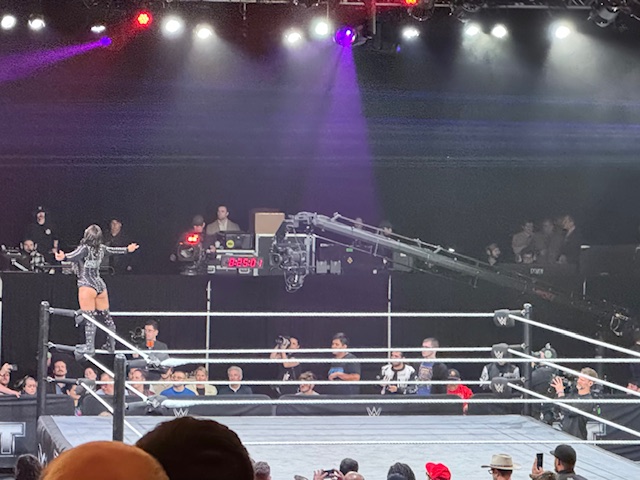
Was lucky enough to be in attendance for a stacked NXT show at the smaller Theater venue within iconic Madison Square Garden.
Due to health constraints/limiting factors towards travel and live events this was my first live wrestling show of any kind in a couple years. Was thrilled to attend and looking forward to seeing Ethan Page and the women’s double title match in particular.
This was a fast paced, breezy watch and I’m going strictly off memory so this’ll be more impressions than any kind of full recap.
1) TNA Tag Team Championship: Matt & Jeff Hardy (c) vs Nathan Fraizer and Faxiom
As always the NYC crowd was over the moon for the Hardy’s, making this a super hot opener. They seem to be in good form, and played the hits while Fraxiom supplied their usual high octane offense. Straight forward, crowd pleasing tag team wrestling.
Which titles were on the line made this a forgone conclusion, but that didn’t detract from the fun.
2) Roxanne Perez vs Jordynne Grace
Standard “put over the next big NXT star on your way out to the main roster” encounter. Roxanne showed great ability to work a body part dissection match, going after Grace’s leg incessantly. Grace sold it well, with it affecting her offense at key moments. Always nice to see psychology done properly. Grace eventually overcame, making this a well done, textbook heel vs face story.
3) NXT Championship: Oba Femi (c) vs Moose
Moose is TNA’s reigning X-Division Champion, so this is the second NXT champ vs TNA champ contest of the night.
Never been much of a fan of Moose to be honest, but he seemed motivated here and played his role well enough. Oba looked like a monster putting him down. This was two big men throwing bombs and showing wild strength, which is exactly what everyone wanted from it. Could have been a touch shorter, but that’s mild criticism at best.
4) NYC Street Fight: Je’Von Evans vs Ethan Page
Page had been a favorite of mine since his Evolve days and was super excited to see him live again.
He’s been tormenting Je’Von for months, ever since he turned from heel to even bigger evil douchebag heel at Je’Von’s expense when Je’Von tried to reach out to a despondent Page and paid for his empathy with a broken jaw.
Had everything the crowd wanted from a street fight, including a couple of big table spots. In a nice callback Ethan got a close two off countering a Je’Von backspring with a hard punch to the injured jaw, which won Page their last encounter.
Ending was suitably insane, as Je’Von hit a cutter on Page with the latter’s head wedged in a chair. This was all about Je’Von getting revenge on the asshole who’s hurt him and beat him at every turn until now, and it hit all the right notes.
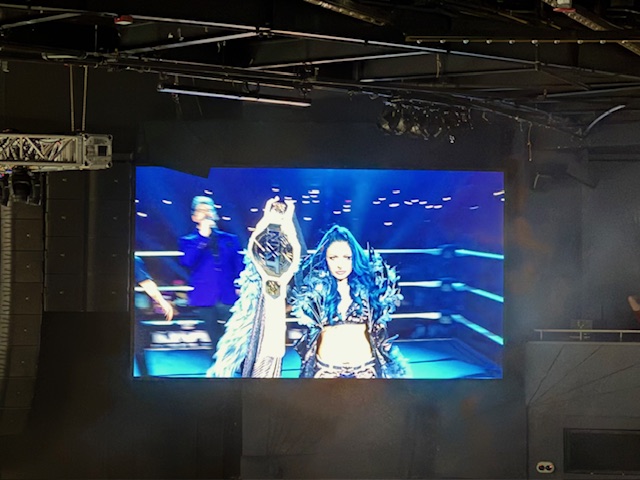
5) NXT Women’s Championship/Women’s North American Championship Double Title Match: Giulia (c) vs Stephanie Vaquer (c NA)
Lots of rumors about the possibility of injury or others reasons for this happening so soon. Vaquer just won the NA title last month, and with Wrestlemania weekend and NXT’s big Stand and Deliver show coming up many expected this match to happen then.
To be clear, this was not a unification match. Both were on the line and the winner would hold both titles, but they are still separate titles.
Huge fan of Vaquer, and this was my first time seeing her live.
Last time I saw Giulia wrestle live was a couple lifetimes ago when she was still in Ice Ribbon, so it was downright surreal getting to see her wrestle in MSG.
I’ve heard complaints about the length and pacing from TV viewers, but live this came off great. Yeah it might’ve gotten more time if there wasn’t a hard out on the broadcast, and it was technically the shortest match of the night by a few seconds (I looked that up post show, wouldn’t have guessed it otherwise), but live it was an engaging sprint between two wrestlers just straight up trying to put the other down. If Giulia’s banged up as rumored she still worked a great match here.
I was half expecting Meiko Satomura to come out to challenge the new champ for Stand and Deliver (Meiko was rumored to be in attendance and she has a conspicuous gap in her announced retirement schedule WrestleMania weekend), but it didn’t happen. Show closed with and extended confetti celebration for the new double champ.
Amusing subtle moment happened when the ref clearly had to give Vaquer a heads up to turn around and do some of her celebrating for the crowd. The way the venue is set up when she was celebrating towards the hard cams her back was to 90% of the audience.
Prior to the show I was afraid this card was too packed for two hours and something would get short changed, but instead it was a really well crafted show with everything between 11 and 15 minutes and nothing really feeling too short or too long. Sure the main could have been longer and Giulia and Vaquer certainly have an epic in them, but the sprint we got played well live and was great in its own right. Just a fantastic show to have had the privilege to see live all around.
Thanks to everyone who’s given this a read. 2024 was a sporadic return for this blog and I hope to have more regular updates going forward in 2025. Derailments of Thought currently updates on Wednesday and Saturday.
If you enjoy the blog any support is appreciated, including shares on social media and simply continuing to read. If you happened to be inclined and able to help out monetarily please see my Ko-fi page. Every little bit helps.
Suspects is a card based mystery game that involves visiting locations, speaking to suspects, and examining items to try to unravel the secrets behind a crime. Claire Harper, Eternal Investigator is the second collection in this series and includes three separate cases.
I enjoyed the first Suspects game, Claire Harper Takes the Stage, despite not doing particularly great solving its cases. They required catching little details, and were generally harder than other games of this type I’ve played. But it was still a well crafted game and quite fun and I was looking forward to the sequels.
Eternal Investigator provides a deeper look at the protagonist introduced in the previous collection. She’s the thread tying the cases together and this group features different times in her life.
The game plays extremely similar to the first with a deck of cards driving the gameplay with information to uncover as the cases proceed. Each case has a couple extra things to go with the deck that help frame the investigation and present initial leads to follow. Things that can be investigated are numbered and drawing the corresponding cards is how the game proceeds. It’s extremely open in letting the players decide what order to poke at things at, although at times certain mechanics hold parts of the investigation back a bit until certain progress has been made.
With the mechanics out of the way the main question is how good the cases are. In the end it’s rather hard to compare this to the first set. I again played solo, did a little better, and for the most part enjoyed these. But while one of my favorite cases in the series was here, my absolute least favorite case in any of the Suspects series was here too (including the third collection, review to come). I won’t get into spoilers but I felt it just didn’t come together and unlike all the other cases relied a bit on educated guesses (which mysteries never should).
Playing the cases in order makes sense as it progresses through Claire’s life, but they most definitely ARE NOT in progressing difficulty. The game’s fully resettable and can be passed along to others after playing.
Overall I enjoy and recommend the series and with one really good case and one solid one out of three the good still outweighs the less so in this collection. Far from perfect but still well worth checking out if you enjoyed the first batch.
Thanks to everyone who’s given this a read. 2024 was a sporadic return for this blog and I hope to have more regular updates going forward in 2025. Derailments of Thought currently updates on Wednesday and Saturday.
If you enjoy the blog any support is appreciated, including shares on social media and simply continuing to read. If you happened to be inclined and able to help out monetarily please see my Ko-fi page. Every little bit helps.
Perhaps the best comic book hero one could ask for is one who isn’t bound by the rules of the very comics he inhabits. Such a hero might truly be invincible…
MiSTER iNViNCiBLE: Local Hero collects Mister Invincible #1: Justice and Fresh Vegetables and Mister Invincible #2: Local Hero as originally published.
Pascal Jousselin’s everyday adventures of an extremely unusual superhero takes a creative core idea and runs with it to great effect.
Mister Invincible’s powers are simple in concept: he alone is aware he’s in a comic and can transcend the framework everyone else is trapped in. He can see and act into other panels, across pages, and so on.
It’s Jousselin’s incredible use of the premise that makes the comic shine. From Mr. Invincible helping himself fight in other panels, to explaining to confused police that he needs to wait for the page to turn before he can solve their current problem, to many other endearingly absurd page breaking situations everything is fascinating and amusing at the same time. There are times when things get surreal, but it’s captivating to unravel what’s happening more than confusing.
The true genius of it all is how Mr. Invincible uses his powers as a part of his everyday life just as often as he does for fighting crime. The mundane uses are just as interesting, such as a great page where he uses a paper airplane traveling up the page to “remind” himself to add something to his grocery list before he’s told to get it.
I can’t speak to the original French version, but the translation seems quite good. Everything flows well and sounds natural and I’m pretty confident I’m getting as close to the full experience as a translation can provide.
Mr. Invincible is light and fun while also being mind-bendingly clever. It’s as enjoyable for an adult reader as it would be for the publisher’s noted middle grade target demographic (with an older reader perhaps more likely to catch more of the genre bending subtleties). Highly recommended.
Thanks to everyone who’s given this a read. 2024 was a sporadic return for this blog and I hope to have more regular updates going forward in 2025.
If you enjoy the blog any support is appreciated, including shares on social media and simply continuing to read. If you happened to be inclined and able to help out monetarily please see my Ko-fi page. Every little bit helps.
Time for everyone to don their thinking caps. Suspects follows early 20th century adventurer Claire Harper in playable classic style mysteries.
Suspects is a card based mystery game that involves visiting locations, speaking to suspects, and examining items to try to unravel the secrets behind a crime. Claire Harper Takes the Stage includes three separate cases.
Each case has a couple extra things to go with the deck of cards to help direct and unravel the mystery. There’s usually some type of list of suspects as well as a a map to show the locations you can look at which gives a nice mental image of the crime scene. Anyone and anything that can be investigated has a number next to it, and you can take the card of any visible number (unless a restriction tells you otherwise).
I really like the system. It’s a great way to handle a somewhat free investigation with a deck of cards. The production quality is excellent and the oversized cards are great for this type of game. Specific mechanics range from evidence links where lines on the various cards will line up if related to certain cards only being available if a set number of identical symbols has already been revealed. The former is great, the latter not so much. The idea’s interesting but which cards would reveal the symbols seemed arbitrary at times and as such was more of a stumbling block than something to puzzle out.
The goals are stated up front in the form of questions the players are trying to answer. The rules explain that there is some meta information in the questions, (for example: if it asks who the murder, singular, is there will be no accomplice) but for me this was a plus not drawback. It prevented things from being too ambiguous to solve. Which is good, because these were quite challenging.
Some of the questions were open ended with room for interpretation on whether answers are right “enough,” but it didn’t detract much from the experience.
The main hurdle in this cases is the overabundance of information. For a game based on what can be fit into a deck of cards, the stories are fully formed and well fleshed out. Numerous suspects have compelling motives, and it’s easy to be led astray by what feels like the strongest. There’s a need to focus on small contradictions and/or method conjecture in order to catch on to what actually happened.
I adore mysteries and am fairly good at these types of games, but didn’t completely solve any of these. I don’t feel cheated at all though. The game is difficult and requires reading things extremely carefully, but the cases are solvable. I left each wanting to do better in the next one, determined to be a little more thorough. Some of the clues and deductions to be made are extremely subtle, but the information is all there to be found.
Which leads to an aspect where I made things more challenging unknowingly: I played all three of these cases solo. While I usually enjoy this type of game equally on my own or with a few friends, this is one of the rare examples where I think it’d play much better with 2 or 3 people. A second set of eyes on cards and someone thinking differently to bounce ideas off of is almost necessary to fully solve the cases. That said, personally I still really enjoyed trying to puzzle these out and will probably attempt the second set solo as well.
There’s a solid, interesting scoring system based on the number of cards seen before answering each question correctly (although there’s a bit of thematic disconnect with the descriptions of the end game tiers – they’re a little more negative in outcome at times than seems appropriate). There’s luck involved in what the player chooses to investigate first, but there are often little hints that point at the most important stuff.
Claire is a decent point of view character for these cases. She has just enough backstory to drive things, but at the same time is enough of a cipher to feel like the player is the one doing the investigating.
The instructions recommend playing the cases in order. While one character does repeat in a later case it wouldn’t spoil much to play these in any order you choose. There really isn’t increasing difficulty across the cases or anything like that. They’re different but roughly equivalent in challenge. But while it’s not really necessary here to play the cases in order, there’s no reason not to either.
As is expected with “solve a mystery” type games there’s no real replayability here, but three cases is a good amount and the game’s fully resettable and can be passed on to others.
Overall I had a great time with Suspects and am looking forward to the subsequent games.
Disclosure: The author of this book is a friend of mine and introduced me to Ice Ribbon years ago. This has had no influence on the opinions in this review, although obviously my status as a fan of the promotion does affect my appreciation of the subject matter.
This is Charles Short’s second book about Ice Ribbon. Please also check out my review of the first, Be Happy.
Ice Ribbon is a women’s professional wrestling company based in Tokyo, Japan that approaches wrestling in an accessible way to be fun for both the audience and performers.
Wonderland opens with a foreword from Ice Ribbon’s ace Tsukasa Fujimoto herself and a solid section of bios with pictures for all of the Ice Ribbon roster members during the covered time period, before heading into the results section that comprises the majority of the book.
The results section is an incredibly detailed chronicle of match outcomes that picks up immediately after last book and goes 5 years and change through Ice Ribbon’s 15th Anniversary show in early August 2021. It not only covers results for all Ice Ribbon events, but also every match members of their roster participated in for other companies.
The amount of specific information provided and the meticulous record keeping it entails is incredibly impressive. Extensive context is included from match times to attendance figures and even things like when originally scheduled matches were changed (due to injury/illness/etc).
The time period covered in Wonderland is particularly interesting to me as I was attending a lot of Ice Ribbon shows live during this period. It’s really cool to revisit a snapshot of this particular time in the company’s existence.
A number of major moments in Ice Ribbon’s history are covered, including Tsukushi’s re-debut and Giulia’s departure. Short approaches everything without sensationalism or rumor, covering things in detail but appropriately keeping to the factual happenings known to the public.
The book features a number of wrestlers who have gone on to wrestle for other companies, which may be of particular interest to those familiar with their later work and wanting to learn about those wrestlers’ history.
Ease of reference and reading is incredibly important when presenting the sheer amount of data contained a volume like this. Like with Be Happy, and perhaps to an even greater extent, the careful formatting, interesting ancillary information, and inclusion of a variety of pictures keep everything accessible and engaging.
There are also several wonderful little touches that make the book special. One of the coolest is stylized section illustrations by Yappy, who is a talented artist in addition to being one of Ice Ribbon’s own wrestlers.
Tsukasa Fujimoto illustration by Yappy.
ThoughWonderland covers five years of the company compared to the first book’s ten, it ended up being longer (including over 150 more pages of content after the results section, compared to Be Happy’s 40). This is due to more context and detail added to returning information sections like title histories, as well as greatly expanded pictorial sections.
A huge variety of event posters, banners, wrestling gear, and merchandise is displayed with explanatory context notes as appropriate. As with Be Happy all of the pictures are in black and white, but that does not diminish the treasure trove of stuff to look through.
The book wraps up with a section featuring career summaries for wrestlers and staff that retired during the subject time period. Like the rest of the book, these are thorough, well presented, and quite informative.
At its heart Wonderland and its predecessor are reference books, and milage will vary with an individual’s interest in this unique little joshi wrestling company. But for anyone with even the smallest bit of curiosity about Ice Ribbon or the wrestlers who worked for it during this time the book is so well done and so overflowing with carefully assembled and interesting information it’s really a must have.
Emi Sakura is one of the most incredibly multifaceted people in professional wrestling. The 27 year veteran can wrestle nearly any style, has trained a ridiculous number of other excellent wrestlers, and founded two different still running joshi promotions on the common idea that wrestling should be fun for both fans and wrestlers.
Gatoh Move, the promotion Sakura currently runs, is an absolute joy. In anticipation of their big 10th anniversary show this week (entitled Phoenix Rises) I wanted to take this opportunity to talk about one of my absolute favorite wrestling promotions.
Of course 10 years is a lot to cover and this won’t be complete nor an attempt at a proper history of the promotion for various reasons (starting with the fact that I was introduced to it a few years in). Rather I hope to provide a personal look back at some of what’s made Gatoh Move so special to me while also highlighting a few key moments and points of interest in depth.
At the end of 2015 I was lucky enough to make my first trip to Japan. I was already a big fan of women’s wrestling in general and was familiar with several joshi via their appearances in Shimmer (including several who had been trained by Emi Sakura, although I had no idea of that at the time). I was extremely excited to see as much wrestling as I could, and my schedule was packed with shows by a variety of promotions.
Due to strong recommendation of a good friend who was already a big Emi Sakura fan at the time, on the third day of my trip my fourth overall show introduced me to Gatoh Move. The four shows at four different venues from four different promotions were all wonderfully unique, interesting, and fun. Gatoh Move however was perhaps the most different from any show I’d seen before, and this was one of their ring shows in Itabashi Green Hall.
From the opening song and dance numbers, to the intergender tag match, to marveling at the skill of the younger wrestlers (although I’d later discover one of them already had nearly a decade of experience and was the company’s ace apparent), and so on it was a unique and enthralling experience.
And course the wrestling itself was extremely good. I only knew three of the wrestlers going in (Hiroyo Matsumoto, Hikaru Shida, and Makoto) but nearly all the rest would become familiar faces as time went on both in and out of Gatoh Move. Looking back at the main event in particular of Emi Sakura & Nanae Takahashi vs SAKI & Mizuki is kind of mind blowing.
I had a lot of fun, and was eager to see more of the promotion. As the saying goes, I hadn’t seen anything yet. The following week I went to my first (and second) show at Ichigaya Chocolate Square.
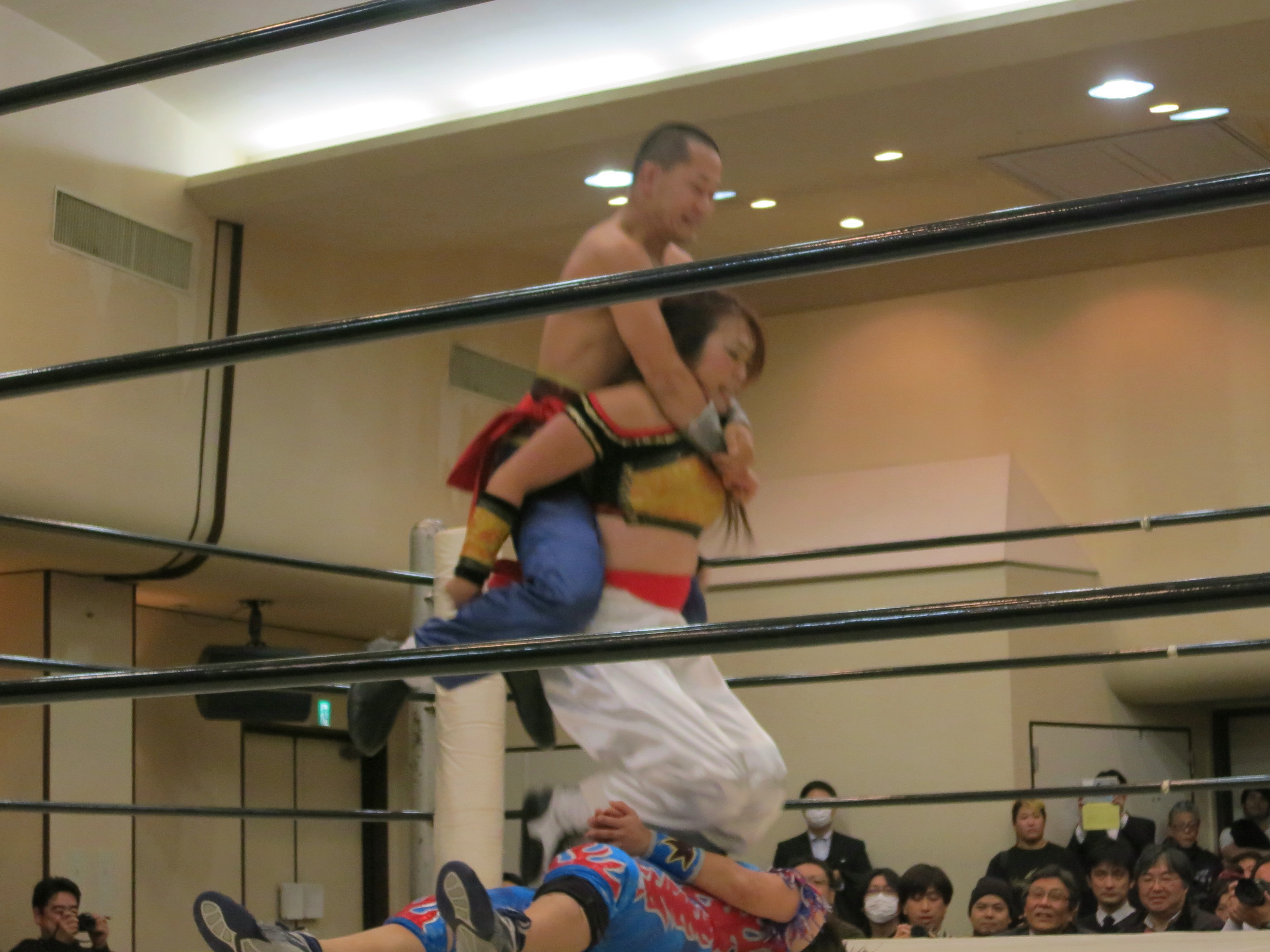
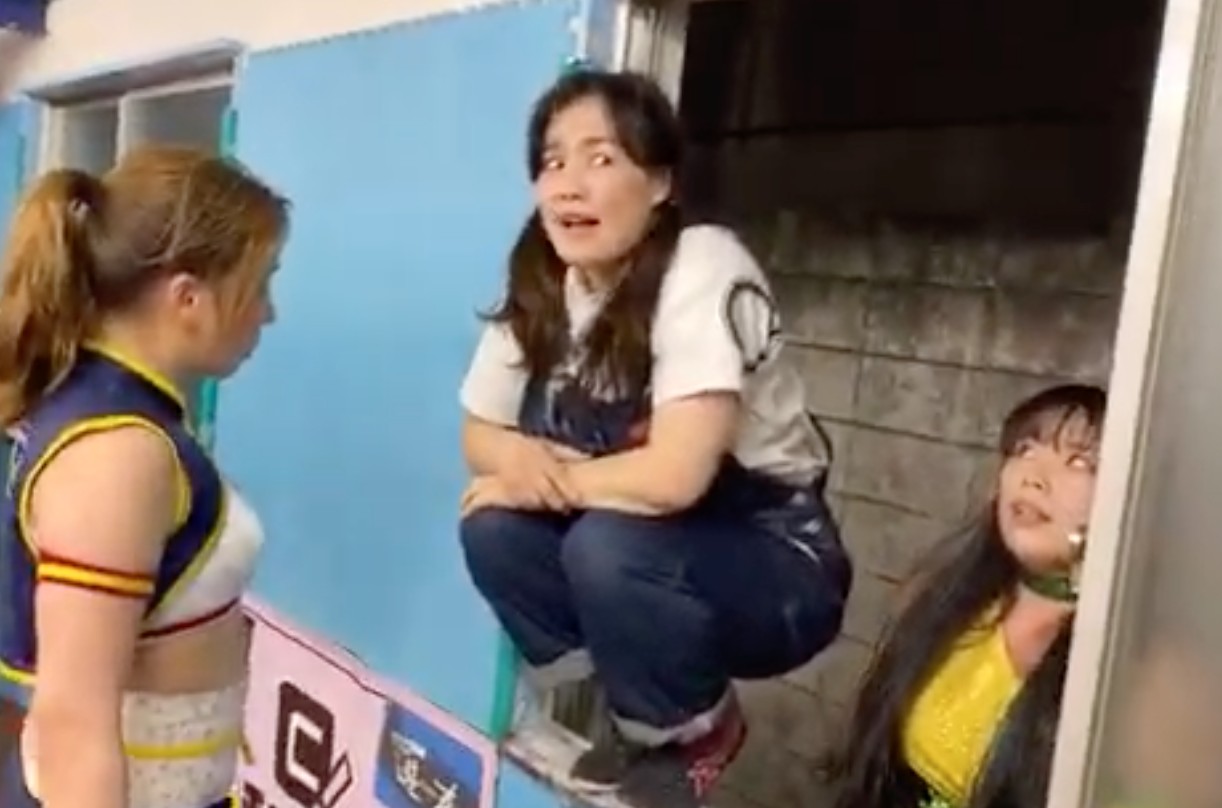
The venue has no ring and just barely holds a mat to wrestle on and a packed in audience (at the time) of about 70 people maximum including some watching through two large windows while standing in a side alley. The crowd is effectively the out of bounds marker and the wrestlers will often use the windowsill to jump off of. It’s a unique format and a great atmosphere.
The quality of matches they’re able to perform in such an environment speaks volumes of the talent of all involved, and I was instantly hooked. The wrestling Gatoh Move presents is unlike anything I’ve seen before or since, and the live experience is something special. I attended at least one Ichigaya show, as well Gatoh ring shows when they happened to coincide with my trip dates, every time I went back.
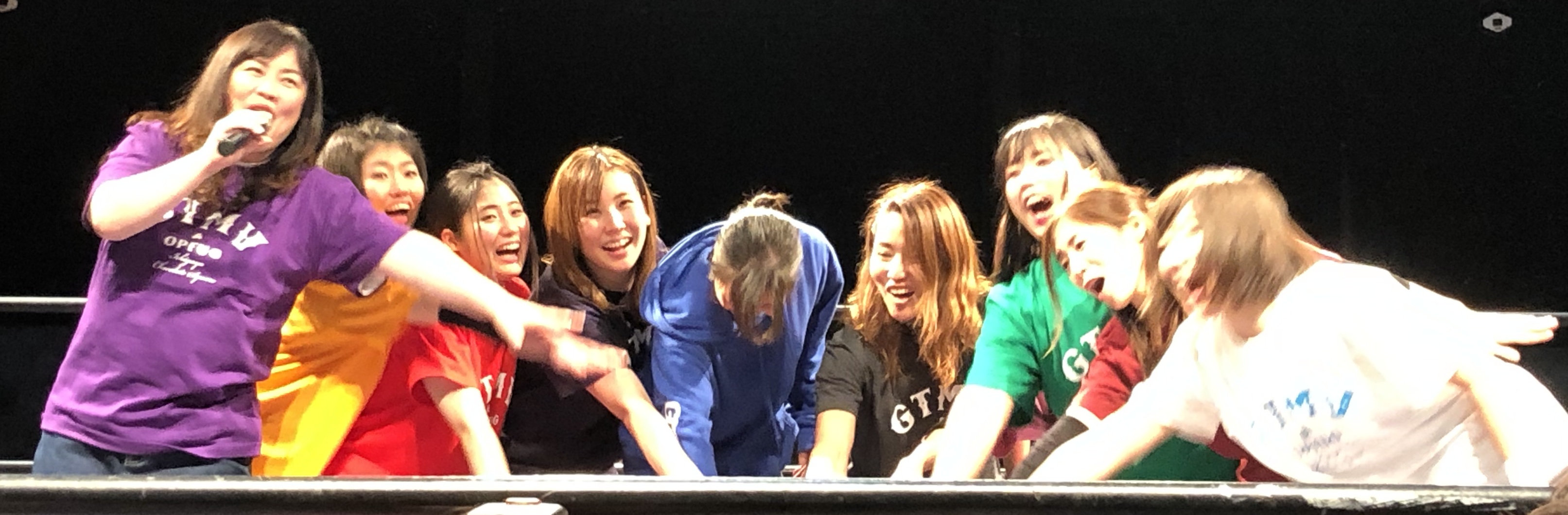
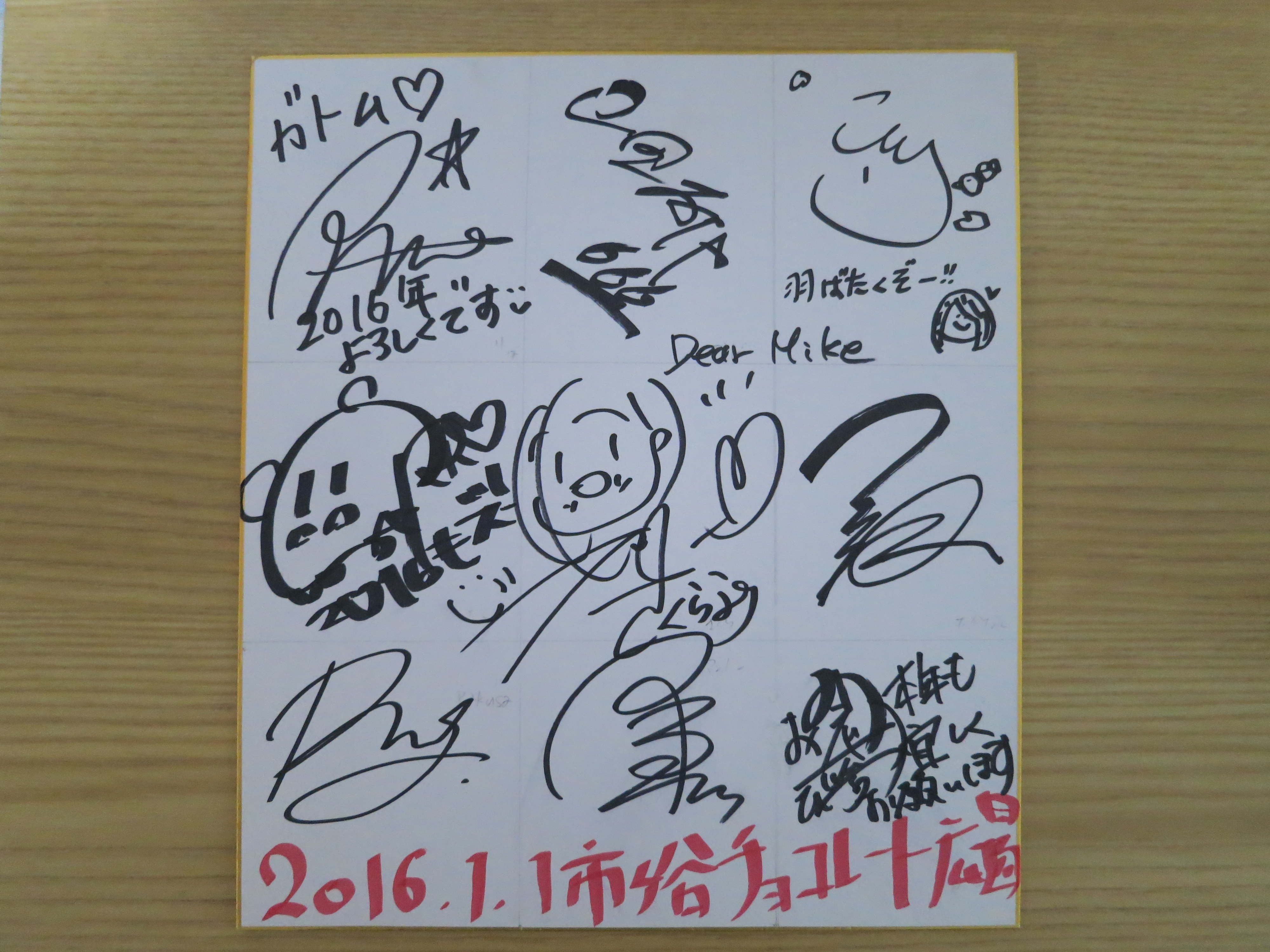
Signboard won in an audience-wide janken tournament.
Gatoh Move was about three years old at the time, and it already had a sense of identity and a lot of the same elements that persist to this day. Which is incredibly interesting since one of the promotions’ greatest strengths is Sakura’s willingness to innovate and try new things.
But the central concept and feel of a small core roster of joshi wrestlers supplemented by both men and women guests from other promotions putting on fun shows has remained throughout the years I’ve watched, and among the many things that gives Gatoh Move it’s appeal.
I’ve (rightfully) mentioned Emi Sakura often as the shaping force of Gatoh Move, but part of that is also her wonderful ability as a trainer to identify and accentuate her trainee’s personal charisma and skill strengths.
The resulting vast differences in personalities and styles of the roster determine what Gatoh looked and felt like in any given time period. Sakura’s genuine appreciation of fan support also carries through and everyone in Gatoh has always been an absolute pleasure to meet.
When I started watching Sakura, Riho, Sayaka Obihiro, and Kotori were Gatoh Move. A year later the addition of Mitsuru Konno and Aasa Maika and regular appearances of freelancer (and former Sakura trainee) Aoi Kizuki brought a different dynamic.
And so on through the debuts of Yuna Mizumori and Mei Suruga, the eventual retirements of Kotori, Aasa, Aoi, and Mitsuru, and Riho’s departure and the resulting debut of Gatoh Move Generation 4 (Chie Koishikawa, Sayuri, Sayaka, Tokiko Kirihara, Lulu Pencil, and Rin Rin (now Yukari Hosokawa of GLEAT)).
Each person/roster had a distinct effect on the promotion and matches and stories emerged from each group that both felt unique to them and at the same time like it fit perfectly into what Gatoh Move was.
The ability to change and innovate drastically while still maintaining a core identity is a recurring theme over the years I’ve watched Gatoh Move. A couple years ago it became more important than ever.
To me Gatoh Move’s intergender matches were always intergender done right. From the very first match I ever saw of theirs to the wonderfully fun annual Go Go Green Curry Koppun Cup annual intergender tag team tournament to the previously mentioned Riho vs Masa and so much more Gatoh has always known how to capture the proper feel of everyone in the match just being wrestlers competing.
This ended up playing a big part in one of most daring innovations Sakura had ever tried.
When Covid changed the world in 2020 Sakura’s small promotion with a home base unable to properly handle distancing requirements for an attending crowd was faced with a real question of how to survive.
Sakura embraced a rather crazy direction that could only have worked with her particular sense of innovation and risk taking, as well as an adaptable roster that was more than game for the challenges that would arise. Thus Gatoh Move’s twin promotion ChocoPro was born.
Not convinced that just doing Gatoh Move with no audience would be the right approach, Sakura envisioned a new presentation directly designed for streaming to bring live wrestling to fans all over the world in a way specifically tailored to the unique opportunities of wrestling without an audience in Ichigaya Chocolate Square.
While some might consider this philosophical premise a bit thin to differentiate a brand on, ChocoPro shows have developed their own feel and characteristics that make them distinct from Gatoh Move despite sharing a roster, creative forces, etc. One difference is that ChocoPro is a fully intergender brand, while Gatoh Move is technically a joshi company that has men wrestlers as guests (again a subtle but noticeable distinction).
But perhaps the biggest change to come from the creation of ChocoPro was the No Pay Wall philosophy. Every type of viewable content ChocoPro creates is put up on their YouTube channel for free, supported by optional sponsorship purchases, YouTube and Patreon memberships, etc as people choose and are able to contribute.
The commitment to make it work from everyone involved was incredible, and ChocoPro is as much a creation of Akki and Mei joining with or in place of Sakura on the live streams they started doing as added content to Gen 4 who all had to adapt to an extremely challenging situation in their rookie year to regular participants Masa, Choun Shiryu, Antonio Honda, Chris Brookes, and many more as it was Sakura’s. Seeing it succeed was both amazing and wonderful, as it really doesn’t seem like something anyone else could have pulled off.
Yet here we are two and a half years later with ChocoPro firmly established as a beloved sub brand of Gatoh Move to the point where it has and will continue even once Gatoh Move shows were able to start up again. Here’s hoping it will continue to prosper for a long time to come.
One last thing I’d like to talk about that I think perfectly underscores what Gatoh Move brings to the wrestling world is their casual trading program, Darejyo.
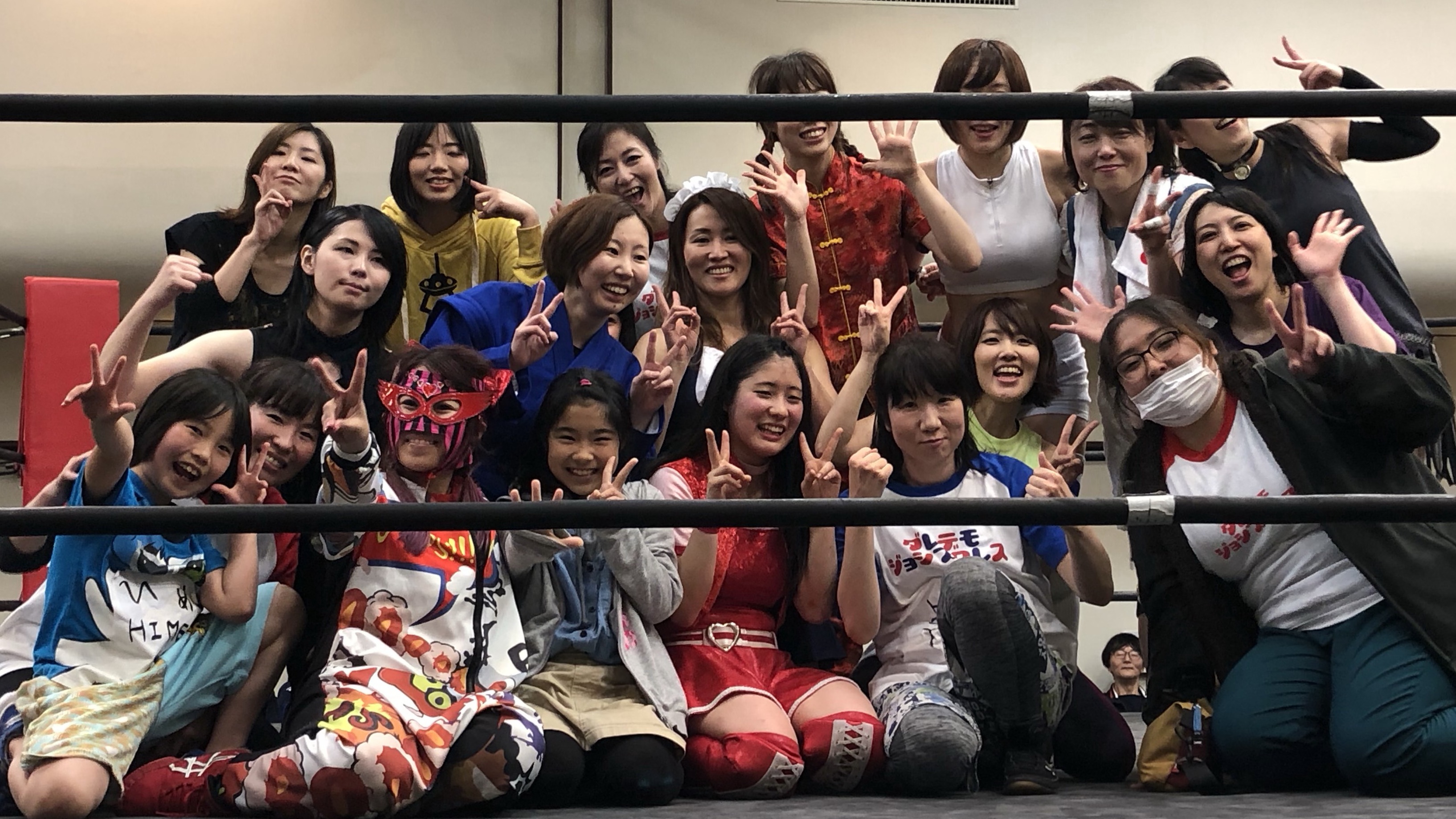
Darejyo is short for “Daredemo Joshi Puroresu” or Anyone’s Women’s Professional Wrestling. Started by Sakura and currently run by Mei (herself a former participant), the idea is to offer a suitable environment for any woman, regardless of age, experience, etc, to learn the basics of pro wrestling in a casual manner within a professional, safe environment. There are limits on the types of things they learn and try (avoiding more difficult and potentially dangerous aspects like certain types of strikes, etc) while still giving a strong introduction and base to build off of.
Darejyo’s had participants ranging from under 10 years old to women in their forties, and several participants have gone on to train and debut as full wrestlers including Mei herself and Gen 4 in Gatoh Move and even some in other promotions such as Diana’s Haruka Umesaki and Madeline.
There’s a ton more details that could be shared and praises to be sung about Gatoh Move, but I hope what’s here has been interesting and enjoyable. Here are the details on the 10th anniversary show, and it’s an extremely exciting and suitable card for such an event.
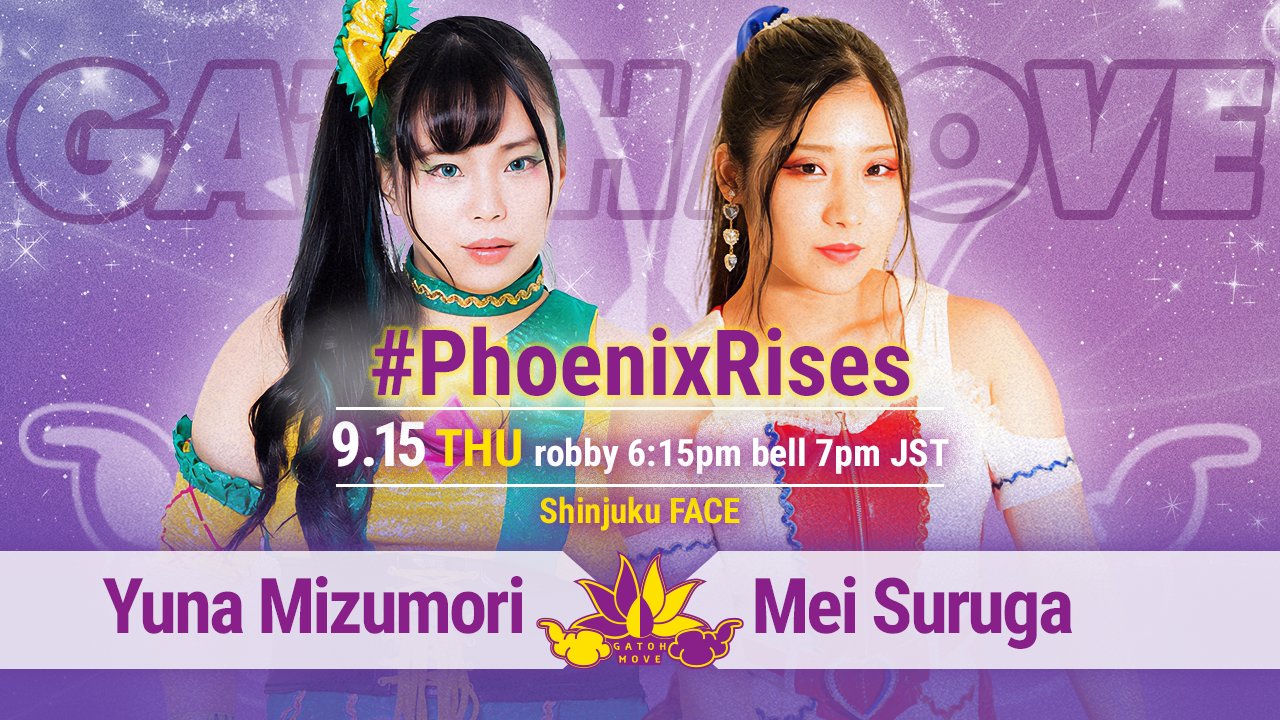
Phoenix Rises: (7pm JST on 9/15/22, to be aired on YouTube at a later date)
Toru Owashi & Sayuri vs Tokio Kirihara & Antonio Honda vs Sayaka Obihiro & Sawasdee Kamen
Orange Panna Cotta (Sayaka & Chie Koishikawa) vs Daisy Monkey (TJPW’s Suzume & Arisa Endo)
Asia Dream Tag Title match: CDK (Chris Brookes & Masahiro Takanashi) (c) vs Isami Kodaka & Yuko Miyamoto
Yuna Mizumori vs Mei Suruga
Visit Gatoh Move’s YouTube channel to check out all of their content. As previously mentioned everything they are doing goes up for free under Sakura’s “No Pay Wall” initiative, so if you do enjoy and are able / would like to support please see their patreon, join as a member of their YouTube channel, visit their store and/or donate directly via their PayPal.
Thanks to everyone in Gatoh Move for a wonderful 10 years and I wish them all the best for many more.
Been a while. I hope to have the blog off its long hiatus and back to regular updates sometime in September. In the meantime there are a couple of things I though it would be useful to have reference for and decided to do a quick write up.
Exhibition Matches
Exhibition matches are matches that generally have short time limits and are happening for some sort of special reason or circumstances, including special events, return matches, or occasionally for retirements (such as with Reika Saiki’s retirement earlier this year).
Here I want to specifically talk about pre-debut exhibition matches, like the ones new Gatoh Move trainee Miya is currently having (and that I’ve seen wrestlers in other companies go through as well).
These exhibitions are “unofficial” semi-practice matches for a trainee to face an established wrestler (usually a roster member of the company they are training to join). In the past these often happened as a pre-show of sorts only for the live audience, but more of them are being broadcast the last few years (still generally before the show officially starts though).
There are a few special things about these matches to take note of. Both the trainee and her opponent wear training clothes/sweats as opposed to full wrestling gear, underscoring the nature of the match.
The matches are short, generally with a three to five minute time limit with unlimited falls (although occasionally exhibition matches can end with a single decision).
Finally, again these matches do not count towards the career of the trainee in that the trainee is not considered to have debuted as a wrestler by having exhibitions. They are exactly as described: a chance to get a look at someone preparing to be a wrestler and an opportunity for them to challenge themselves a bit in an actual match environment before they debut. There is no set number of exhibition matches or timing for them before a debut. It can vary greatly from trainee to trainee.
It’s really cool to be able to see these, and Miya’s been impressive in the ones she’s had thus far. I’m extremely excited for her official debut at Gatoh Move’s 10th Anniversary show on September 15 and happy for her. Good luck Miya!
Ichigaya Chocolate Square
Gatoh Move and its alter ego of sorts ChocoPro (which was specifically designed with the strengths and limitations of a streaming based wrestling show in mind and often runs shows without a live audience present) have a unique home base in Ichigaya Chocolate Square. It’s a venue that just barely holds a rectangular mat to wrestle on, and when an audience is present its maximum is about 50 people nowadays (including spectators watching through two large windows while standing in a side alley).
Chocolate Square’s peculiarities as a space to train and wrestle in not only lead to a great deal of innovation and adaptability among the participating wrestlers, but also give rise to some unusual rules and conventions.
Here’s a brief overview:
The edge of the mat and the wall it’s pushed up against act as a “rope break” for submission holds only (when there is a crowd the crowd is essentially the rope break marker).
For pinfalls, as long as the shoulders of the person being pinned are on the mat the pin counts. There is no “rope break” for pinfalls in Chocolate Square.
There are no countouts: action can (and typically does during ChocoPro shows) spill outside the windows.
The referees in Gatoh Move/ChocoPro (perhaps even more than elsewhere in puro) are very lenient about DQ’s. There have been maybe five total DQs or no contests in all 250 ChocoPro shows, and they were only when things got particularly blatant and/or out of hand.
Double teams and double pins are allowed in tag team matches. As long as the legal person is being pinned and the legal member of the other team is involved the pin counts.
There is a lot more to the special environment and atmosphere in Ichigaya Chocolate Square to discover by watching, but I just wanted to give a little bit of context and reference here for newer viewers.