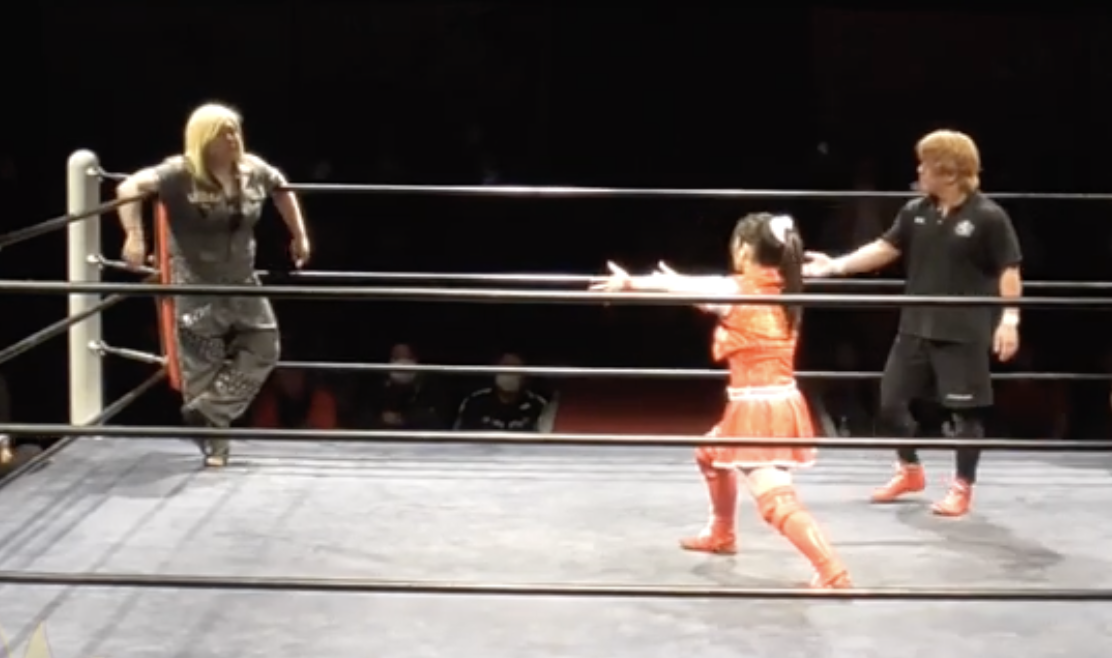
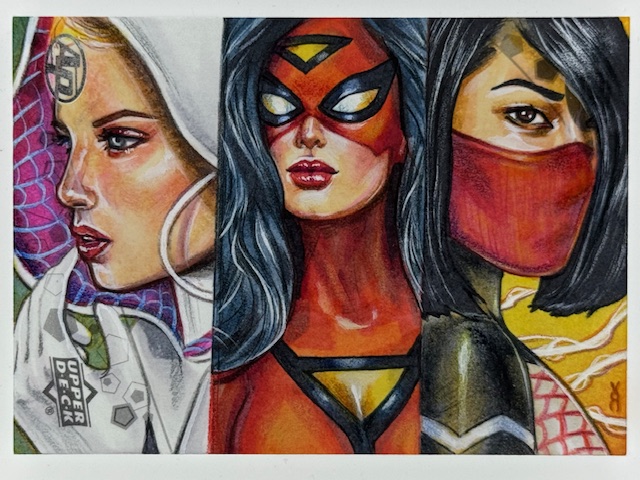
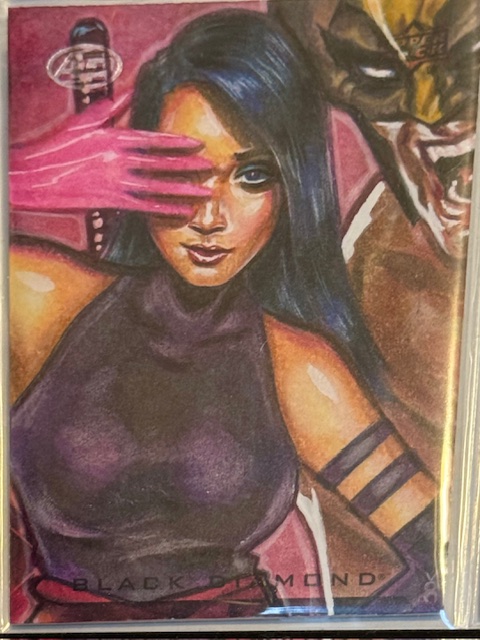
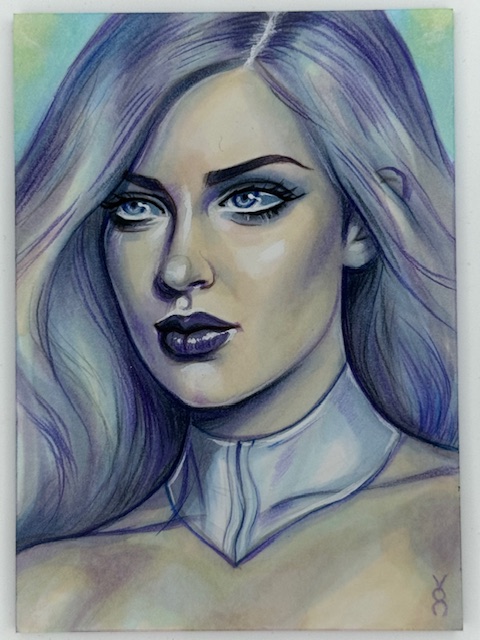
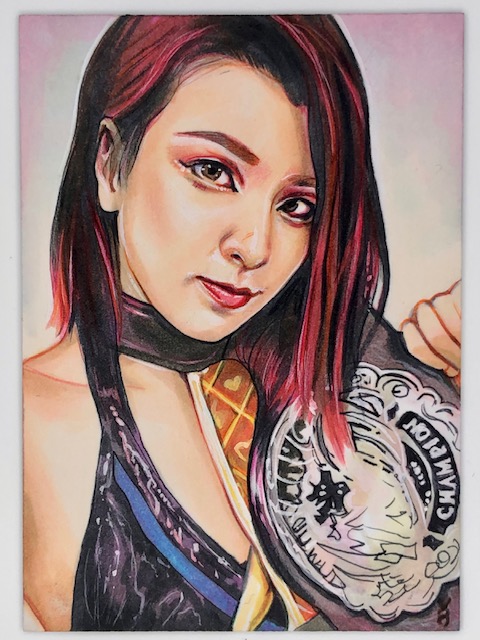
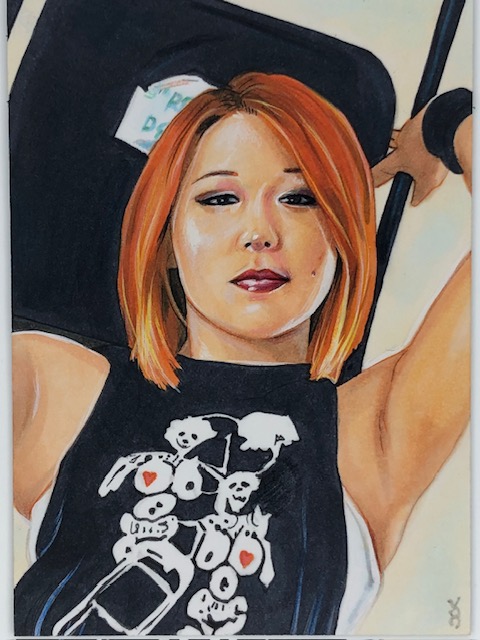
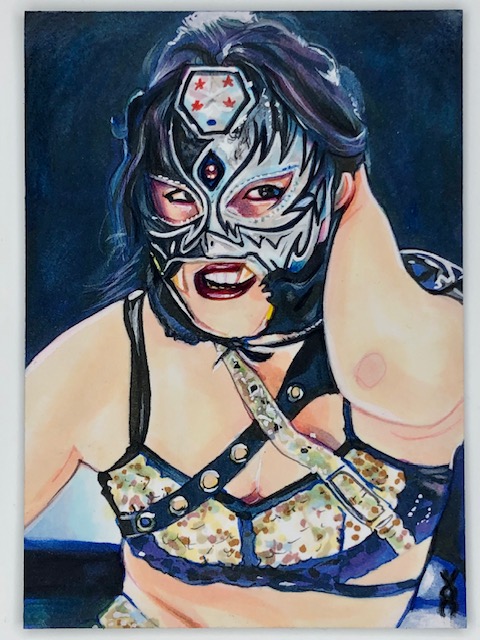
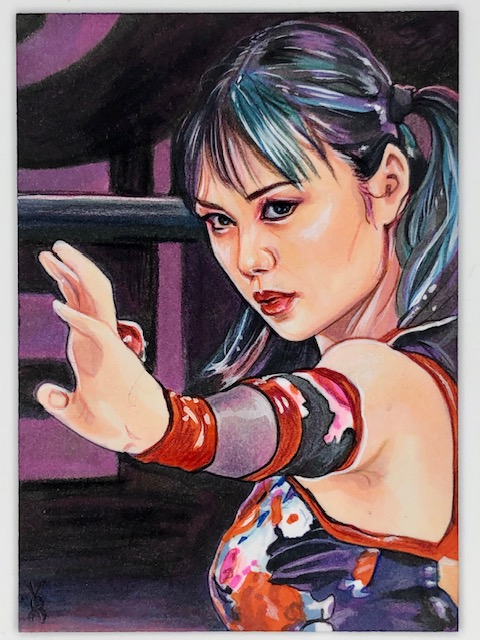
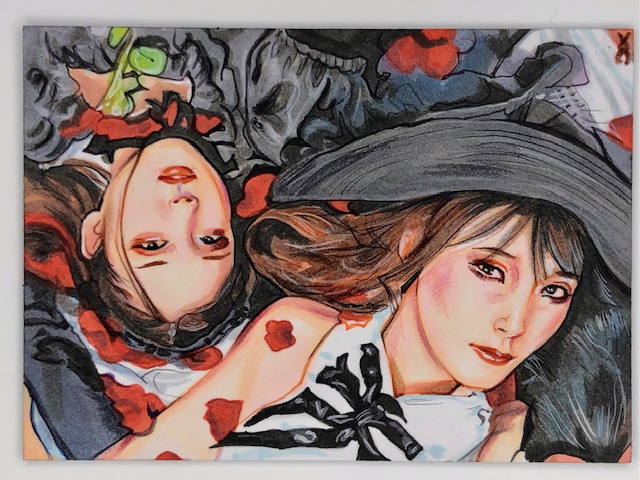
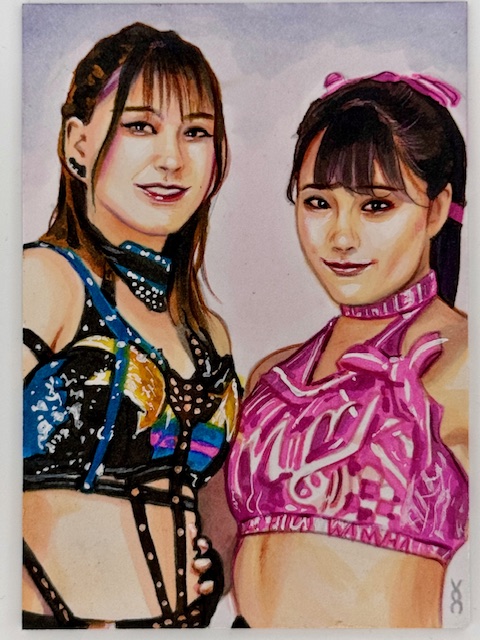
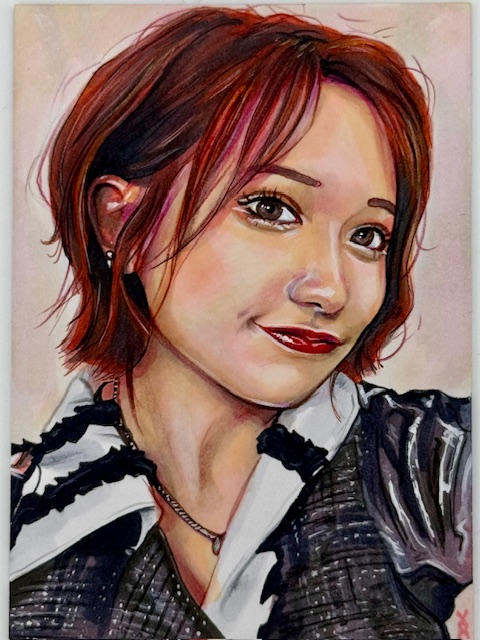
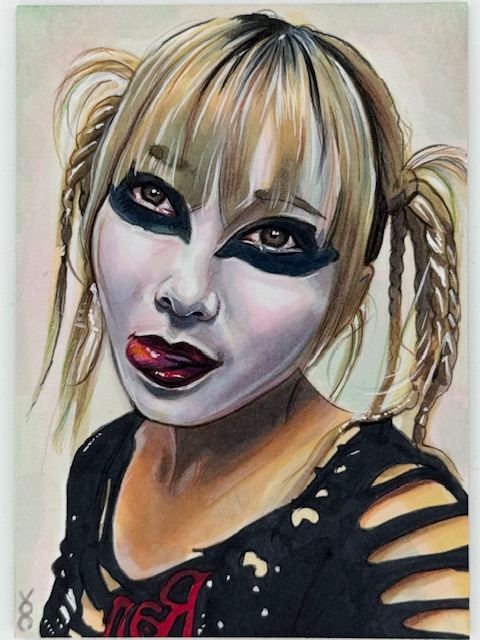
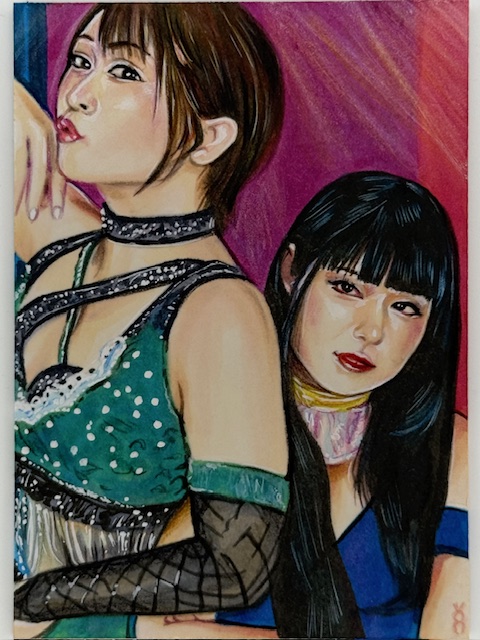
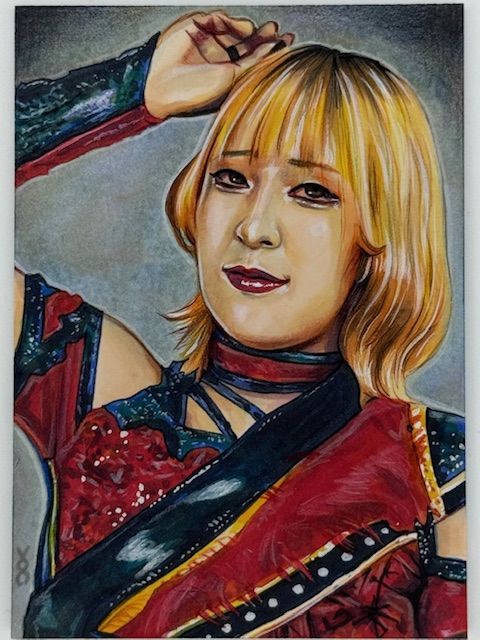
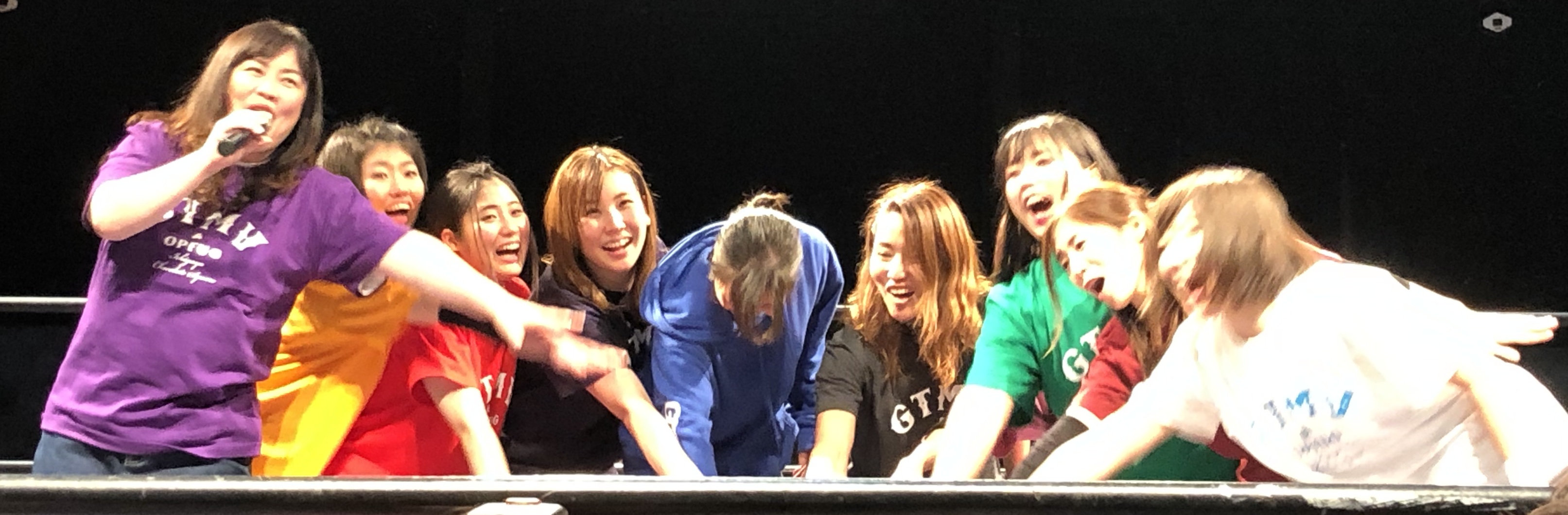
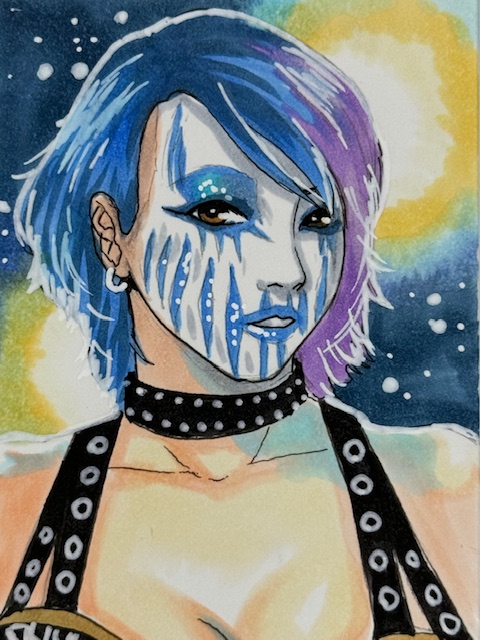
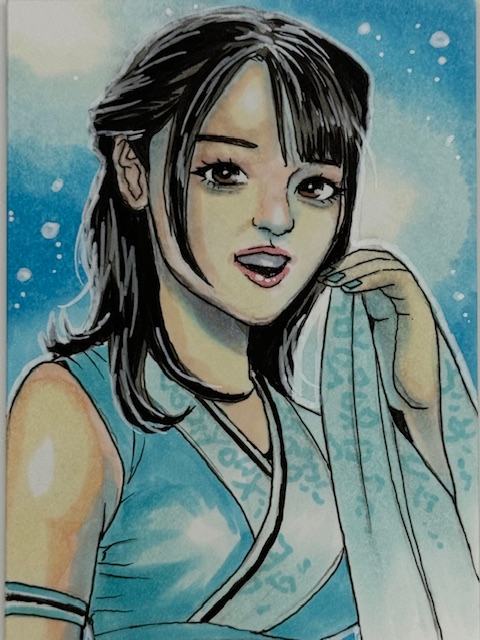
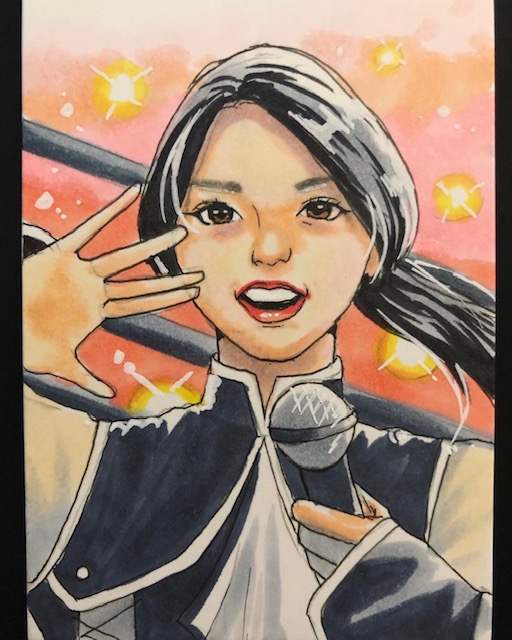
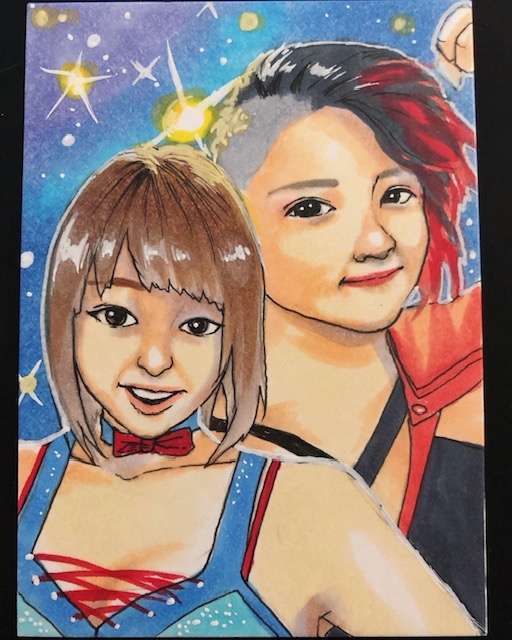
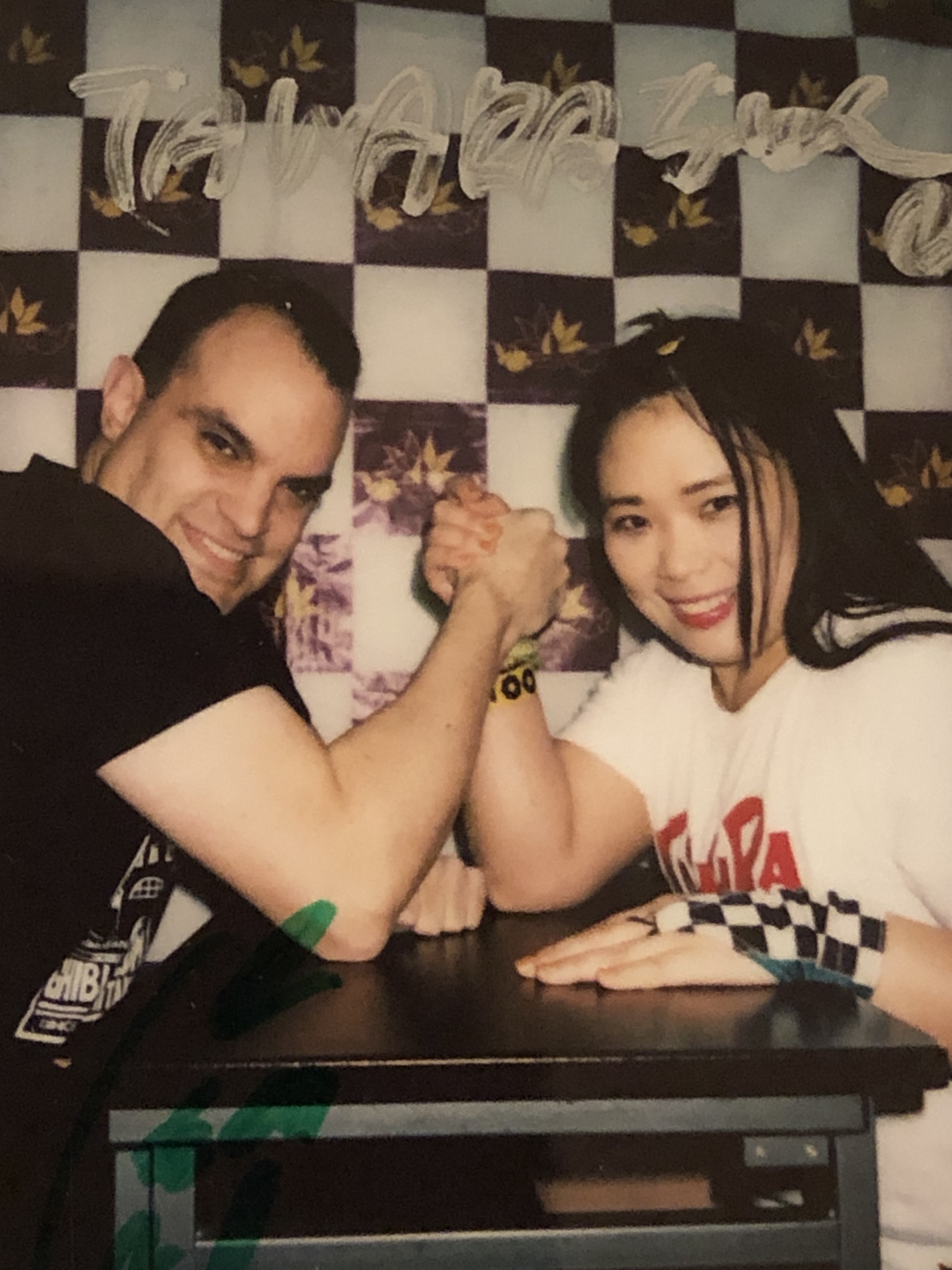
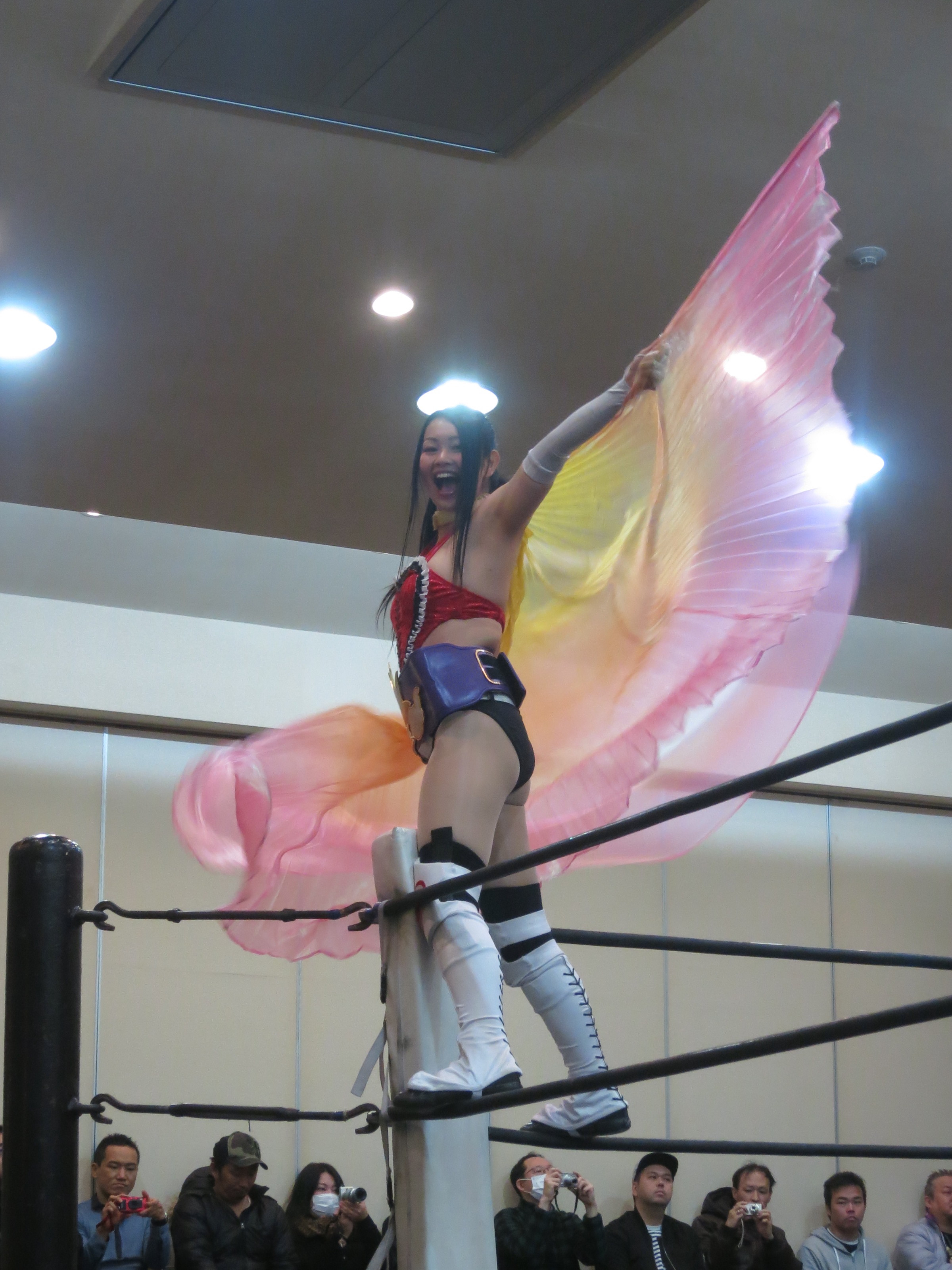
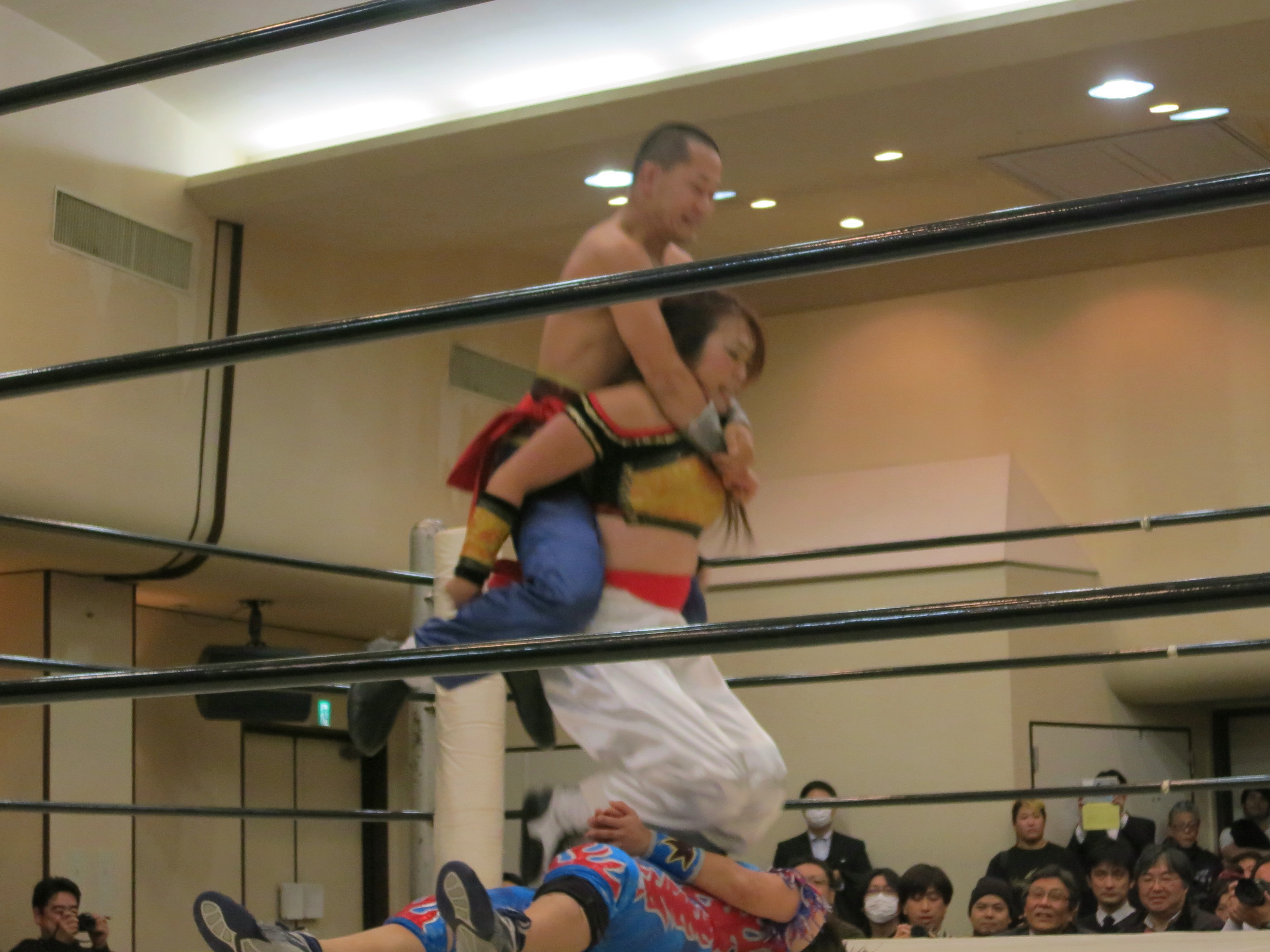
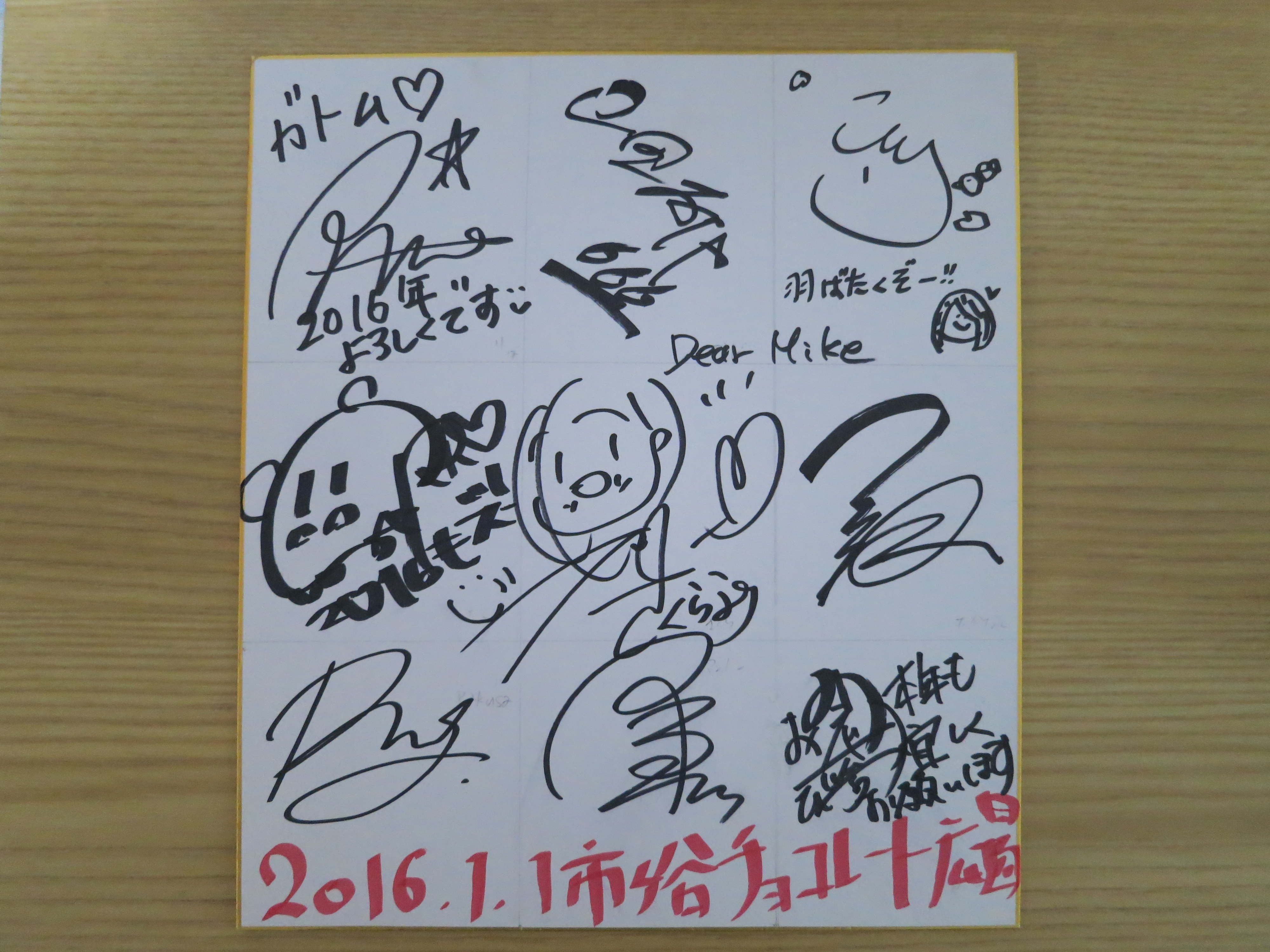
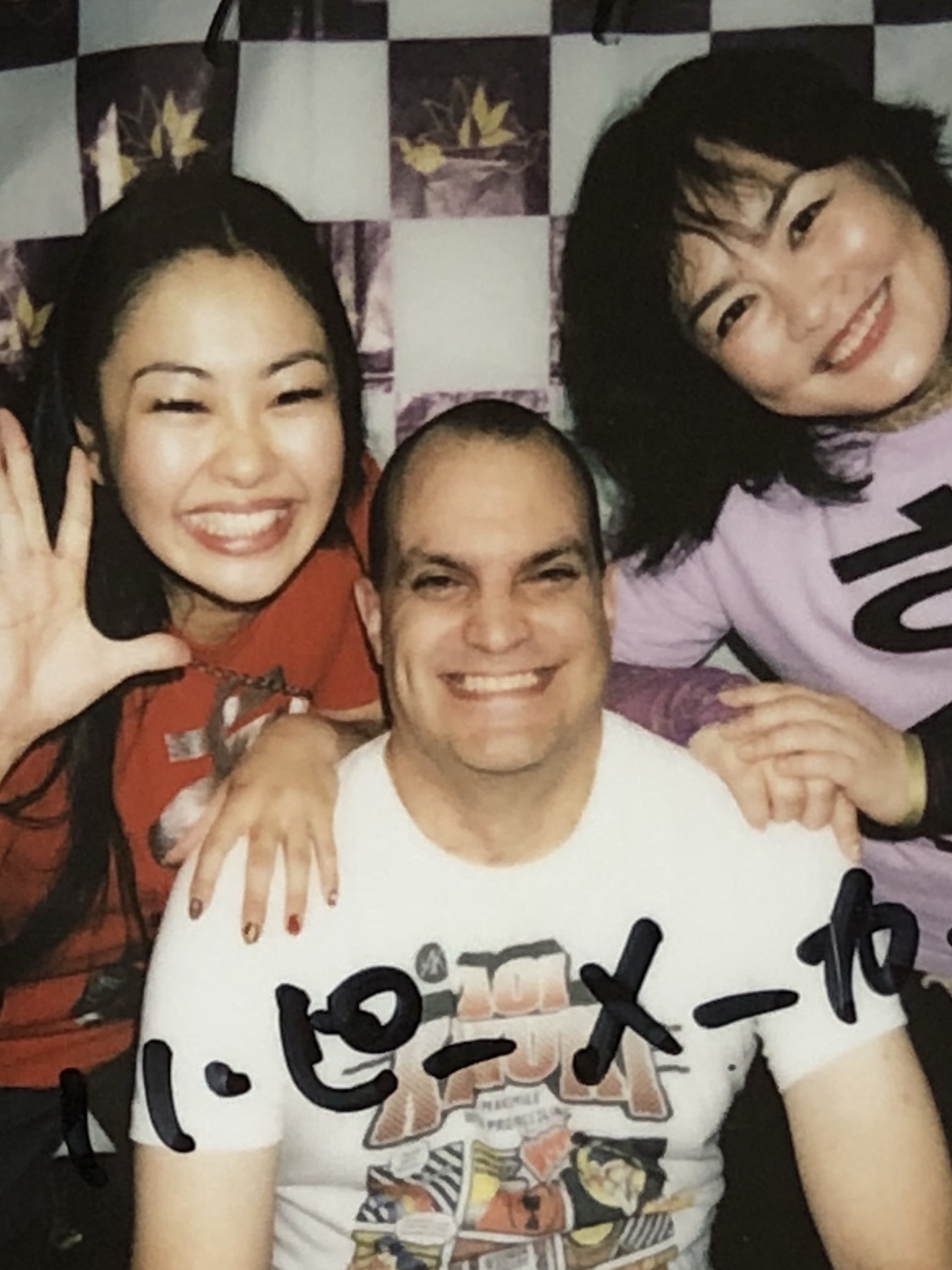
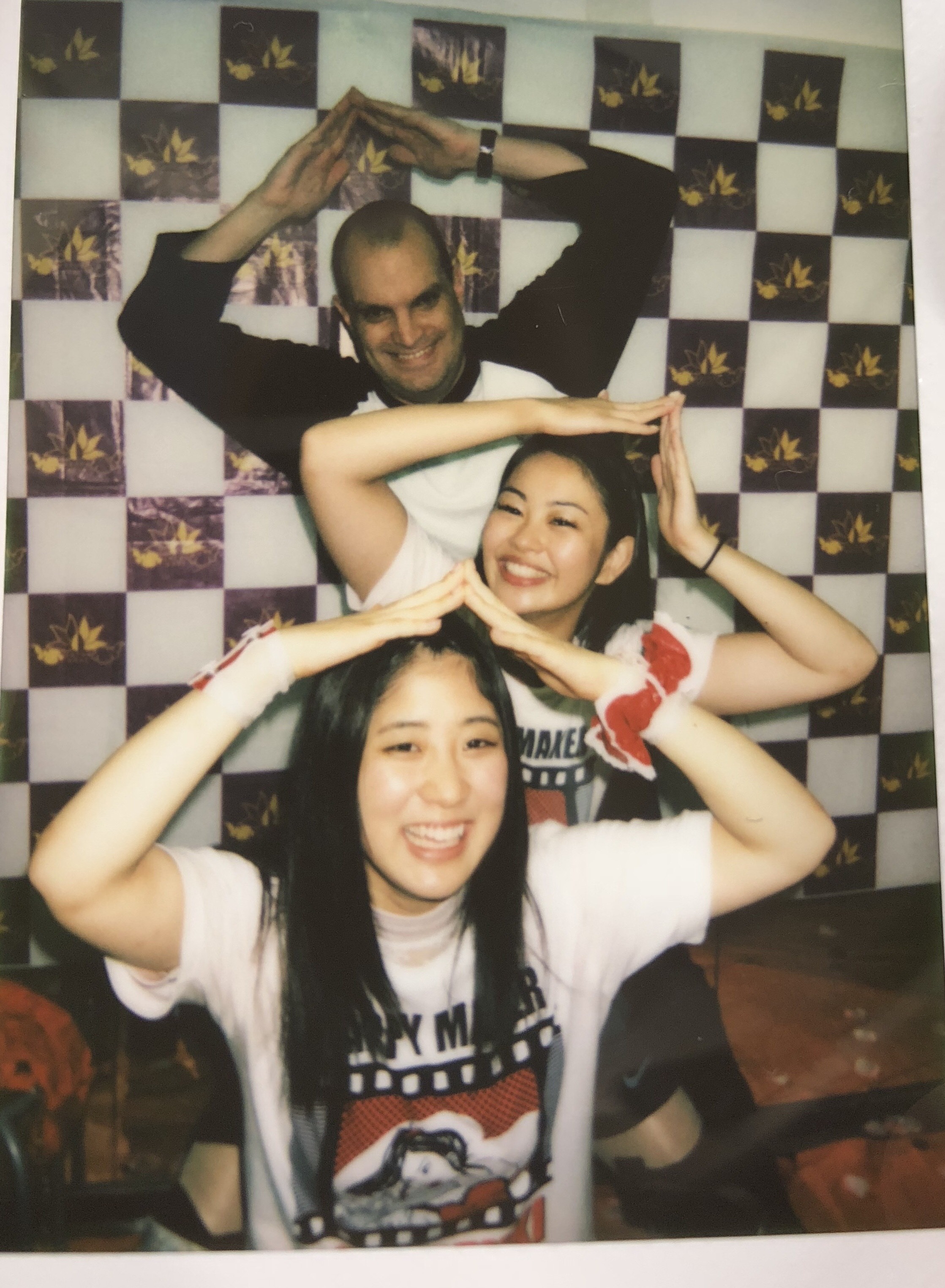
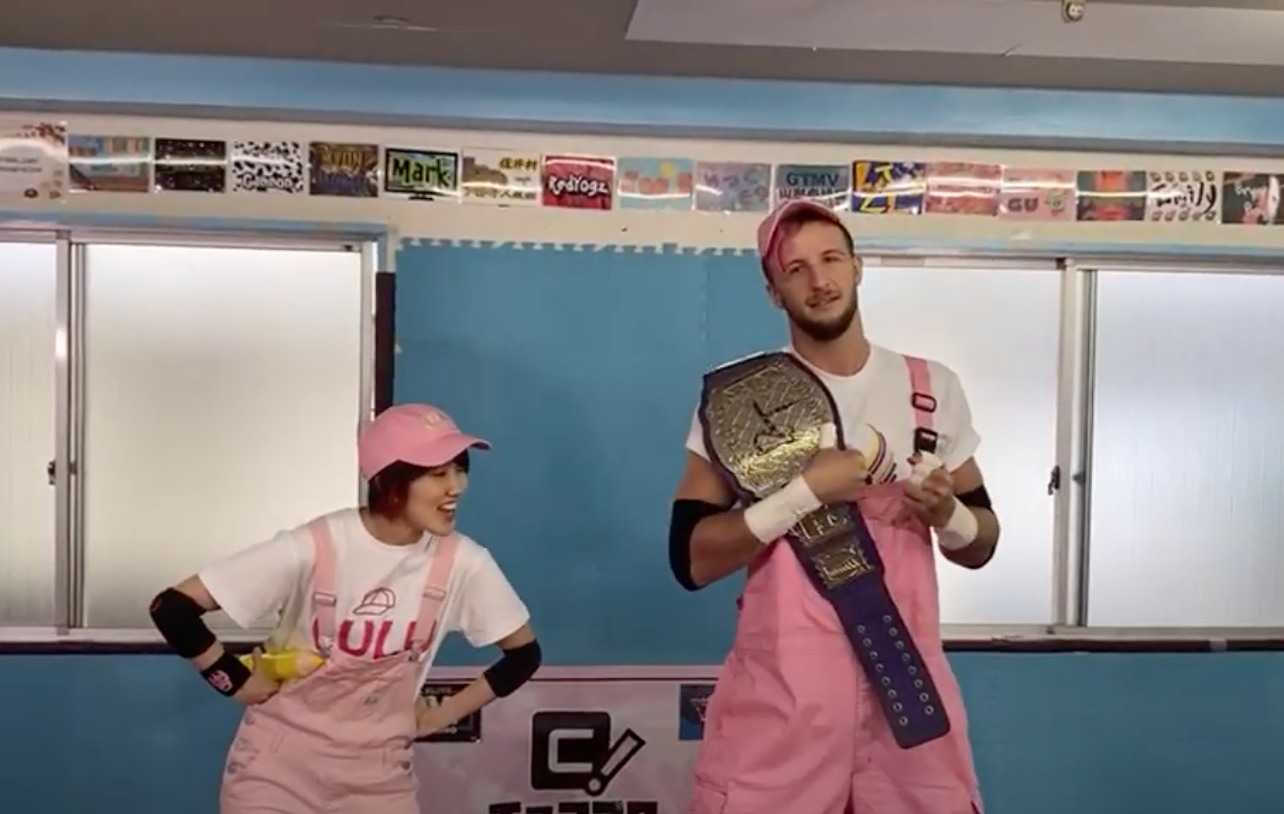
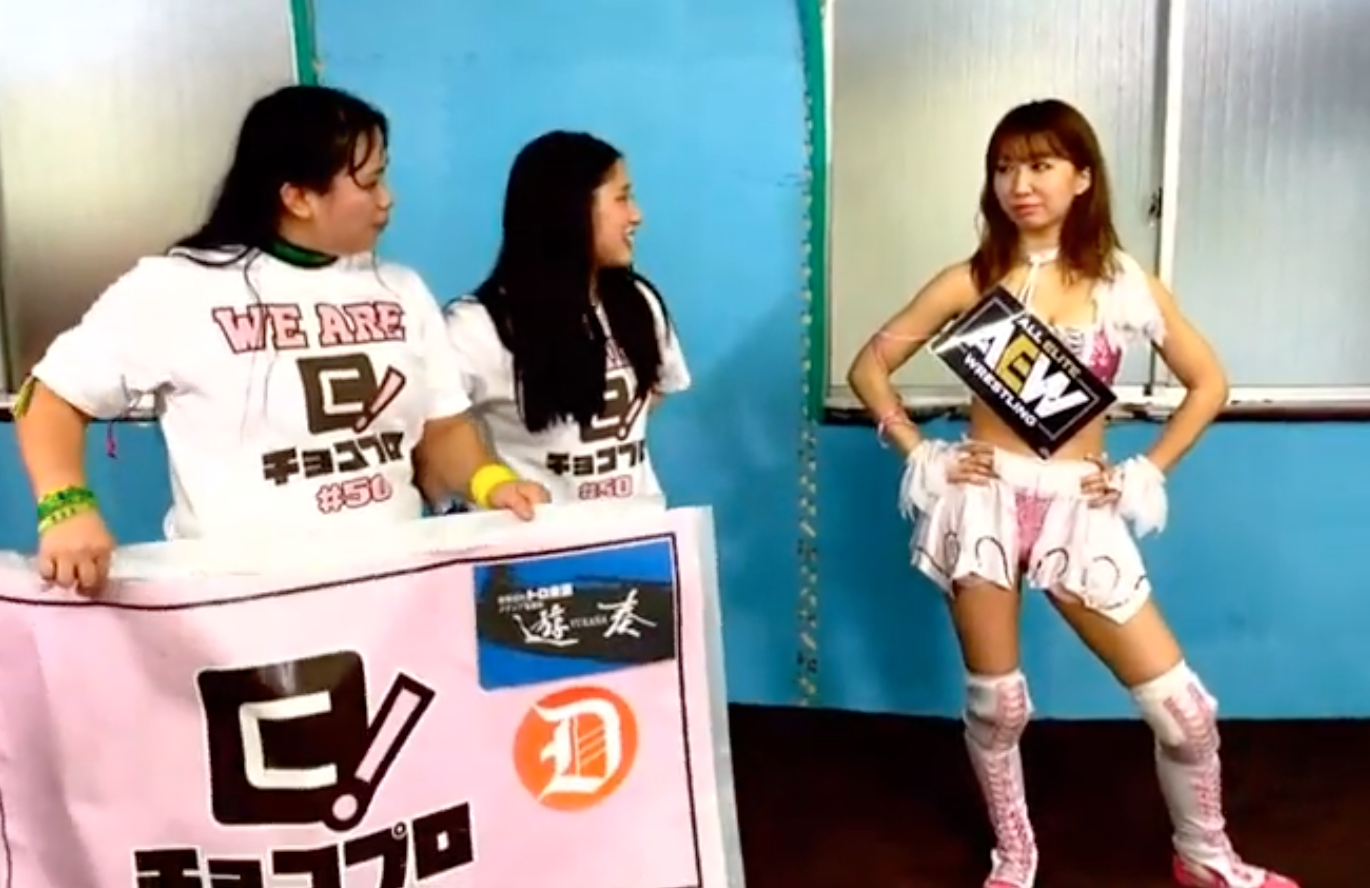
On August 31, 2024 Emi Sakura’s promotion Gatoh Move held a show at historic Korakuen Hall for the first time in eight years (full show available on YouTube). It was a great show and a huge milestone for the small company that fought tooth and nail to survive and evolve during difficult and turbulent times.
One of their evolutions was the creation of a second promotion/brand, named ChocoPro, during the pandemic. Once performing in front of crowds became possible again Gatoh Move and ChocoPro existed side by side.
After the Korakuen show, Sakura announced that her two brands would officially be merging, to be known only as ChocoPro going forward. As such I wanted to take a quick look back on the significance of the merge, and what separated the brands in the first place.
In 2012 Emi Sakura left a company that she founded called Ice Ribbon (that to this day still running and highly enjoyable), and founded a new joshi (girl/woman) promotion named Gatoh Move.
Likewise built around the idea that wrestling should be fun for both the wrestlers and fans, Gatoh’s general approach to wrestling wowed me when I initially saw them during my first trip to Japan both in ring and in the unique environment of Ichigaya Chocolate Square.
A deep dive into the promotion is beyond the purpose of this post, but check out this retrospective I wrote for their 10 year anniversary highlighting a lot of what I adore about both Gatoh Move and ChocoPro.
As mentioned above ChocoPro was created as a direct response to the difficulties of operating during the pandemic. Sakura didn’t want to just proceed as if they were doing Gatoh Move shows without fans. She approached the idea of streaming empty venue shows as something completely new that should be tailored and targeted as such.
When ChocoPro started there were three key differences to Gatoh Move. First was the absence of an audience in attendance.
Second, all the shows would stream live, where Gatoh shows had been primarily for the attending audience with big shows released on dvd and nothin aired live. This also led to Sakura’s new No Pay Wall strategy of having all their shows and other content airing free on YouTube with a variety of optional support methods.
The third key difference was that while Gatoh Move had always incorporated a lot of guest male wrestlers into their shows and were known for great intergender wrestling, they were still a joshi promotion. The official Gatoh roster was all women, the titles were held by women or intergender teams, and outside of extremely unusual circumstances the main events would always feature a roster member.
While still based largely around the core Gatoh roster, ChocoPro immediately established itself as a fully intergender promotion with a main event of Baliyan Akki vs Minoru Suzuki on the first show. As ChocoPro went on the vacated Super Asia singles title would return as an intergender belt, and likewise the Asia Dream Tag Titles would become open to challenges by male teams.
As pandemic restrictions lifted and live crowds began to be allowed again, the delineation between Gatoh Move and ChocoPro changed.
ChocoPro started running “ChocoPro Peoples” shows, which were still aimed at the streaming audience but had live attendees as well.
When “Gatoh Move” officially returned it was specifically used for the ring shows, and ChocoPro essentially became the name for the Ichigaya shows. All other differences besides the official Gatoh Move roster still being all joshi wrestlers had fallen by the wayside.
So at this point the merge is mostly a symbolic action to make things more straightforward with a single name for the company. While I’m personally quite attached to the Gatoh Move name and sad to see it go ChocoPro is more reflective of what the company has become. The overall impact on the fans is minimal, as the same great people will be presenting the same great wrestling they have been for years.
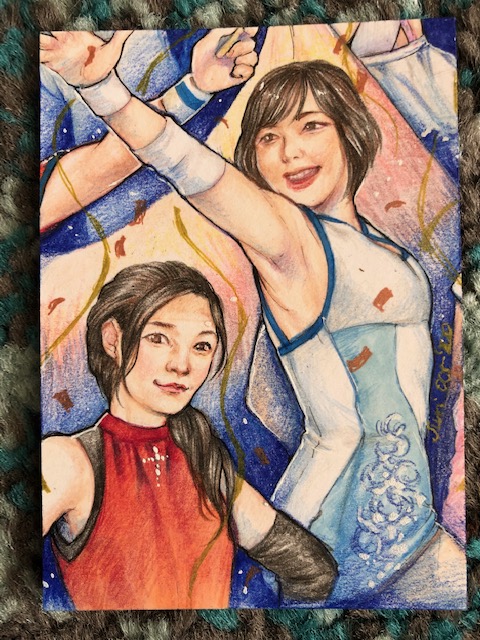
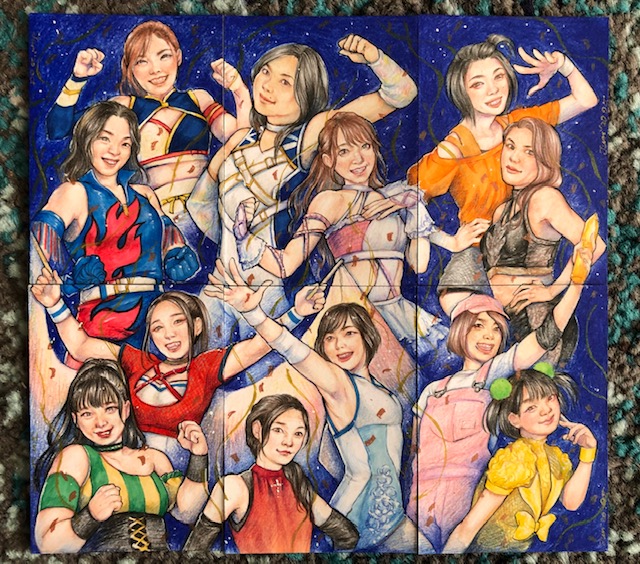
2019 Gatoh Move roster PSC puzzle by Juri Chinchilla.
So that’s why Gatoh Move/ChocoPro had two names, what the differences originally were, and what they became. Wishing all the best going forward for the newly “combined” ChocoPro.
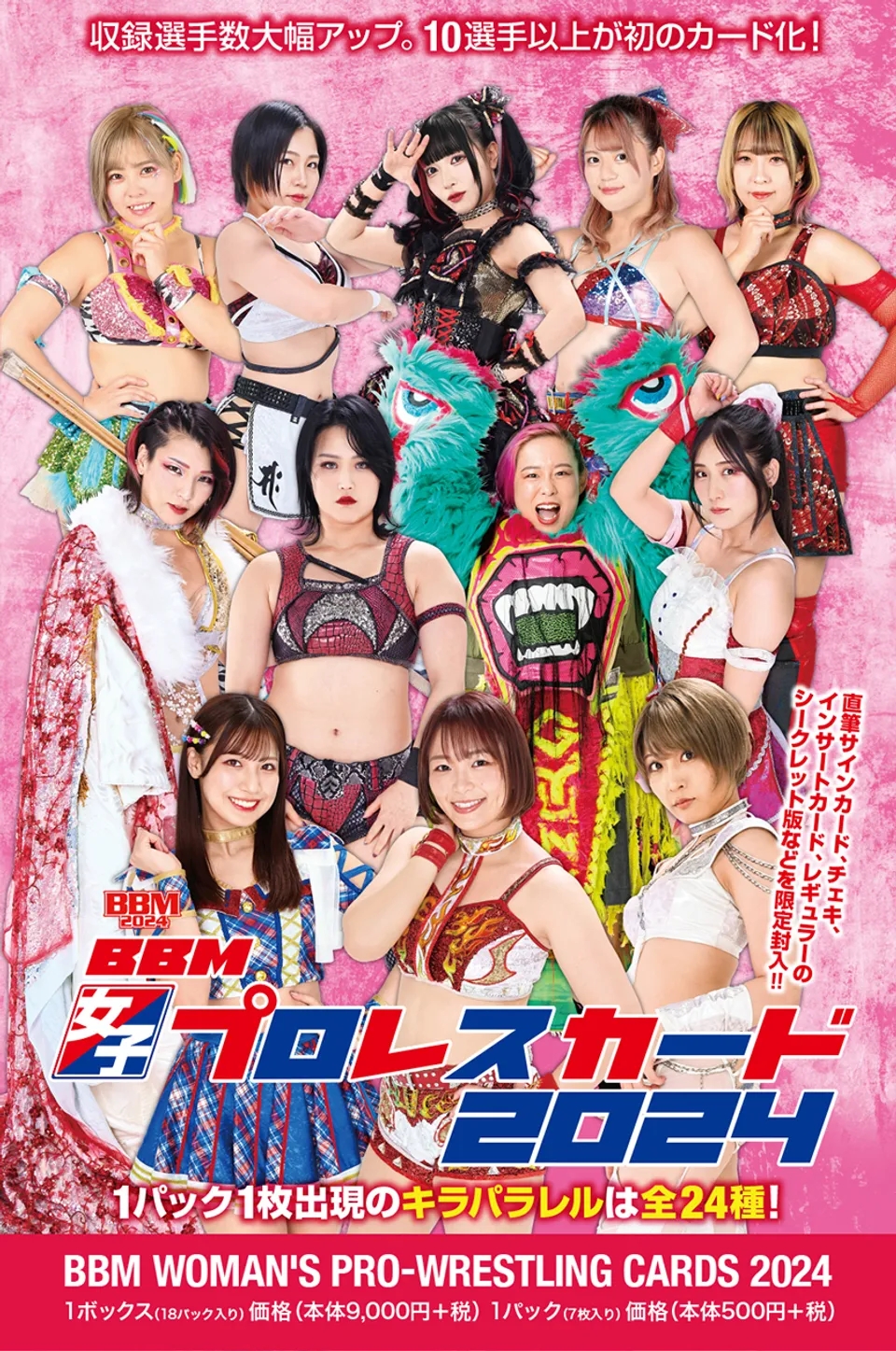
BBM releases yearly card sets for a variety of sports, and for over a decade I have been collecting their joshi wrestling sets. Here we’ll take a look at the details and differences in their most recent offering.
Known as True Heart until 2020 and simply Women’s Wrestling since then, these yearly sets focus on women wrestlers all across Japan. Most joshi wrestling companies and freelancers participate. The main exception is World Wonder Ring Stardom, whose roster members do not appear in these sets (Stardom has done occasional card based products on their own in the past).
There are also rare special sets released in addition to the yearly sets, such as the recent 2023 Ambitious. As opposed to the general random nature of packs and boxes, Ambitious 2023 was a box only release. Each box contained a complete 47 card base set, one of nine possible acrylic standee cards, and a small number of random chase inserts and signature cards.
The standard packing numbers for the last several years of Women’s Wrestling releases have been 6 cards per pack, 20 packs per box. Each box had some chase cards in random packs, with the chase card replacing one of the base cards (so you’re always getting 6 cards in a pack).
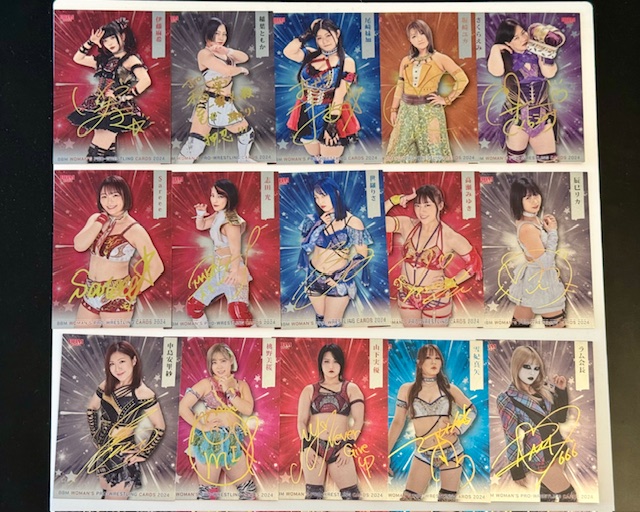
This release dropped from 20 packs per box to 18, but increased the cards per pack to 7. The seventh card in each pack is a one of the 24 “Kira” chase cards, shiny cards which feature a facsimile auto of the depicted wrestler. It’s a solid move for BBM, as now each pack has something a little special in it.
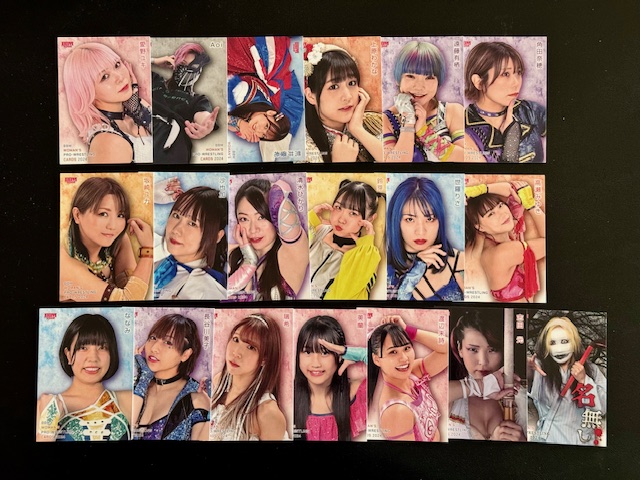
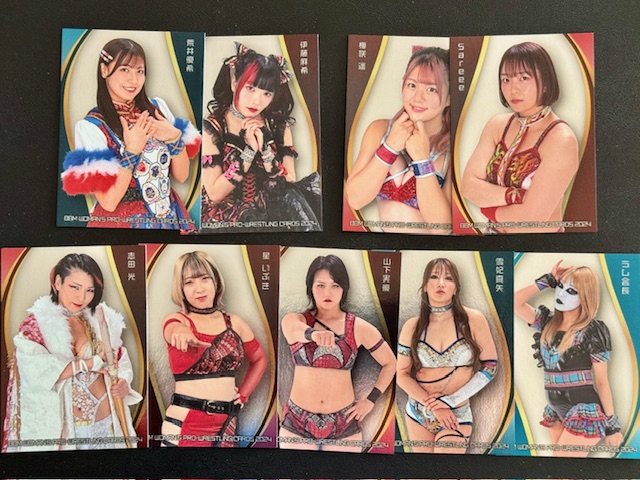
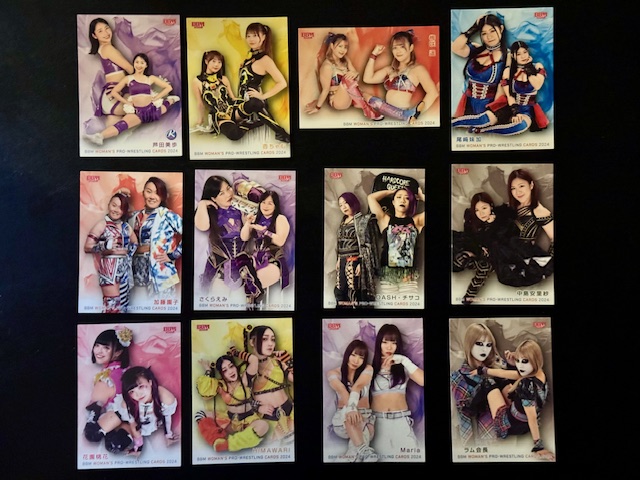
The other chase subsets in the 2024 set are a 9 card foil subset, and 19 “secret” chase cards (18 base card secret variants plus a secret card for Nanashi (“no name”)). The base cards generally feature two images of the featured wrestler while the various inserts highlight a single pose, headshot, etc. There tends to be 3 foil and 3 secret cards per box.
An assortment of base cards from the 2024 set.
The yearly base set varies in size each year to reflect new wrestlers, retirements, occasional special cards for tag teams, and so on. There are a lot of joshi wrestlers active in Japan and these are not small sets. The 2024 base set consists of 156 cards, which is a little over a box and a half of base cards (if no duplicates were drawn).
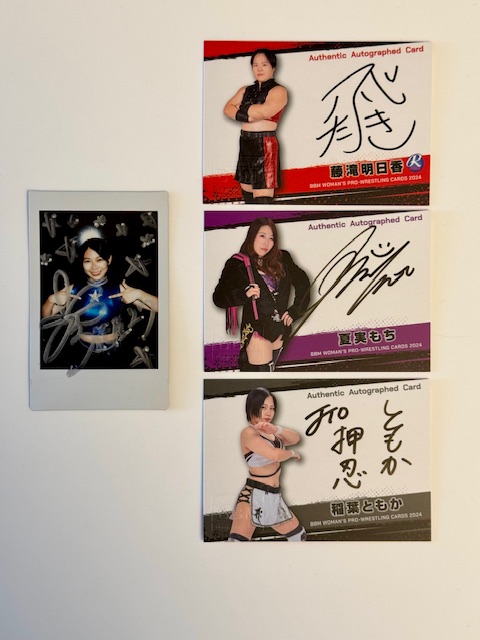
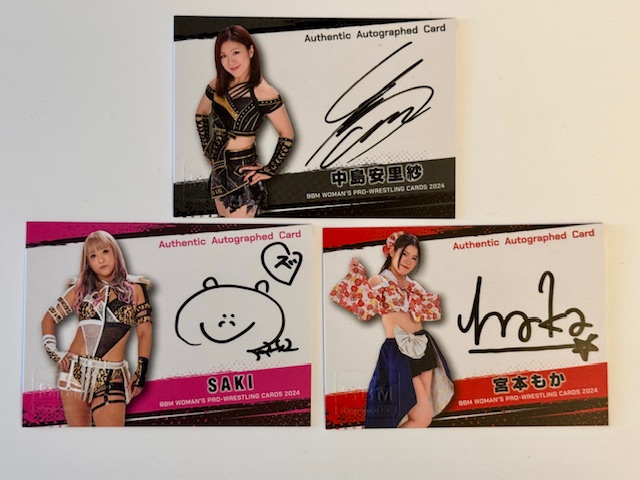
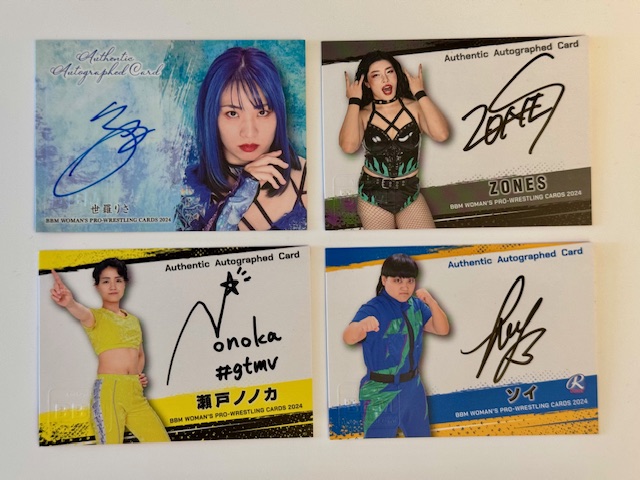
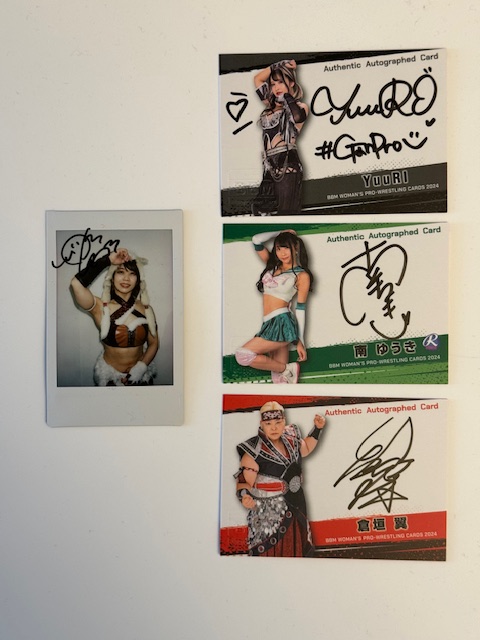
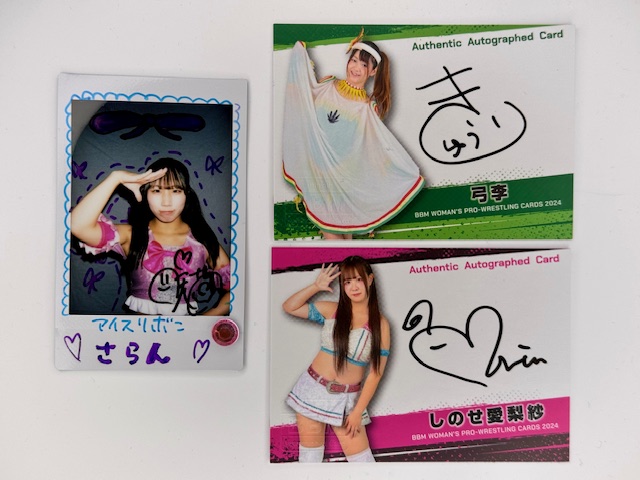
One of the main draws of the sets are the special randomly included cards signed by the wrestlers. This year there are 3-4 sig cards per box.
Anecdotally, for several cases I’m aware of, there were exactly 3 boxes in the 12 box case that had 3 sig cards with the remainder having 4. So it seems like a pretty stable 75% of boxes have 4 sig cards and 25% have 3.
These autographed cards are numbered and there’s generally around 100 of each base version. The vast majority of the base sigs cards this year are on card signatures (with stickers only used for included wrestlers currently based overseas), which is great.
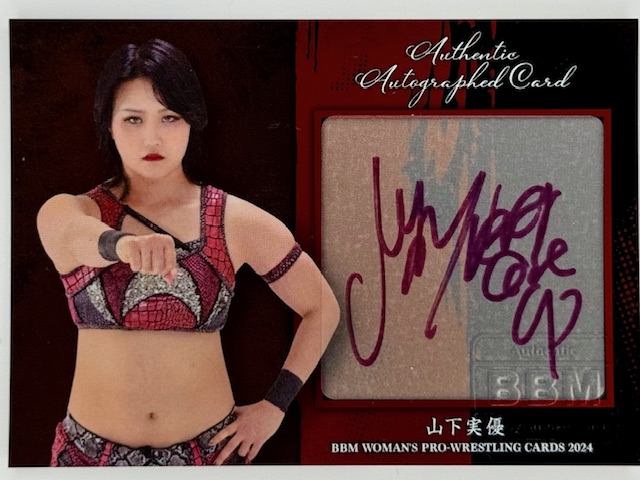
The base signature card design this year is very simple, but I personally like them a lot. The focus is firmly on the wrestler and their signature, and having a fair bit of white background on them makes the insert variants with fully colored backs contrast more.
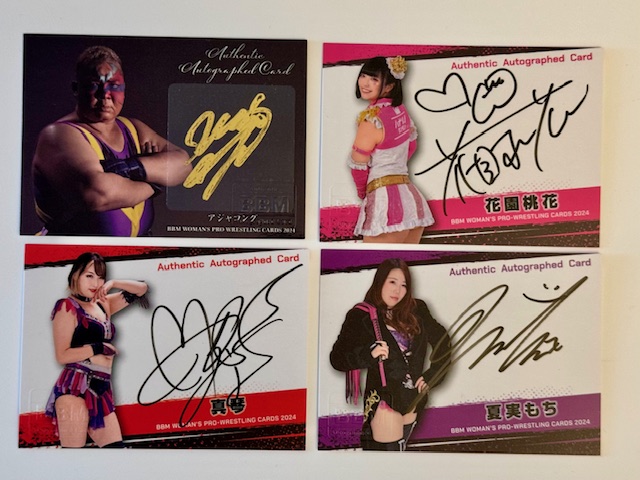
The 2024 set has signed secret variant cards for the wrestlers who have secret base versions. These are limited/numbered to 90. The foil insert subset has associated signature cards numbered to 60 each.
There are also a small number of “super secret” signature cards. Aja Kong has one limited to 30 copies, while five other wrestlers have versions limited to 10.
Stickers were used for all of the insert autos, which isn’t ideal but is understandable as they’re going for a certain look with these and the stickers limit signatures to a confined area on the card. All of the various insert autos this year look stunning.
The last chase items to talk about are chekis: mini polaroids of the wrestlers signed and sometimes decorated by them. There are generally 10 for each wrestler who does them (not everyone in the base set does), with a few wrestlers doing different outfits and having a total of 20 this year.
In past years chekis were generally extremely stable pull rate-wise at 3 per case (or 1 per 4 boxes). This year it has dropped to 2 per case (1 in 6 boxes). While they are among the most rare inserts to try to collect, they’re wonderfully unique and a focus of my personal collection.
So that’s it for my breakdown of this year’s BBM Women’s Wrestling release. I wish anyone who decides to collect some of this fun set good luck with their pulls and pickups.
Today I’d like to talk about one of the most unusual and unique trading card related collectibles: the printing plates used to generate the images on the cards.
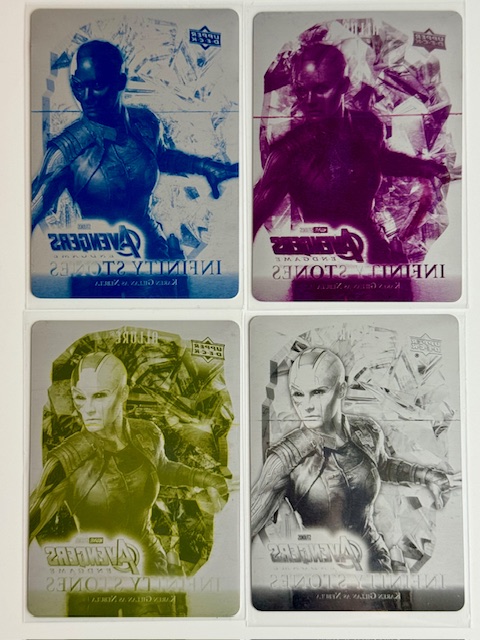
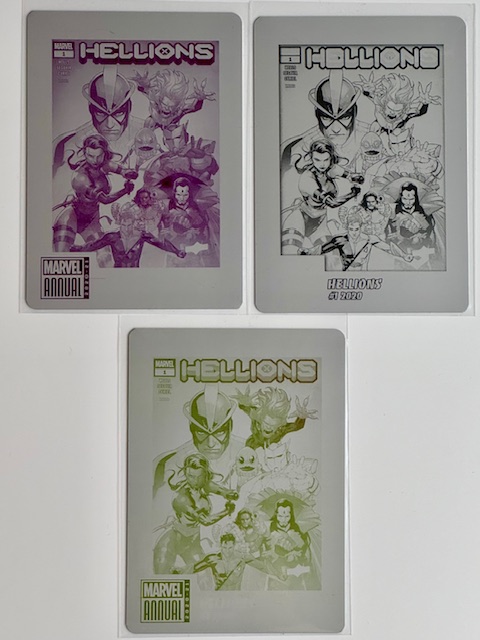
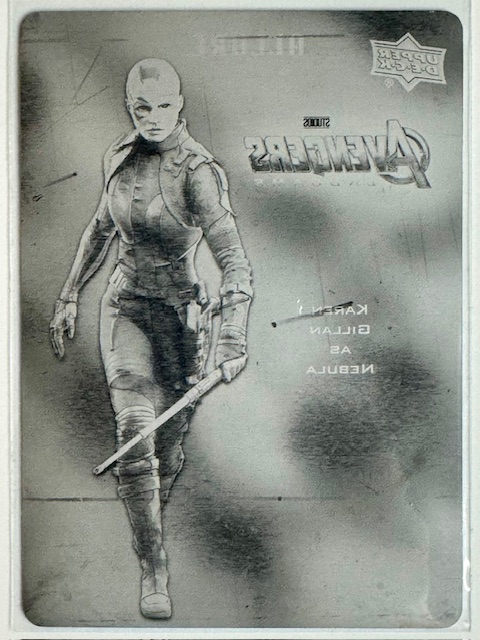
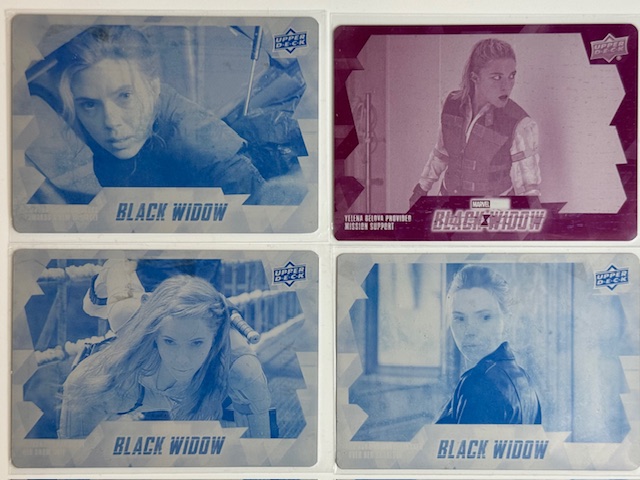
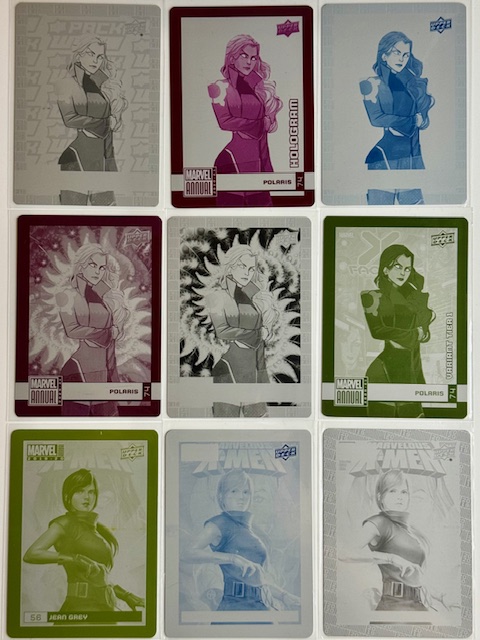
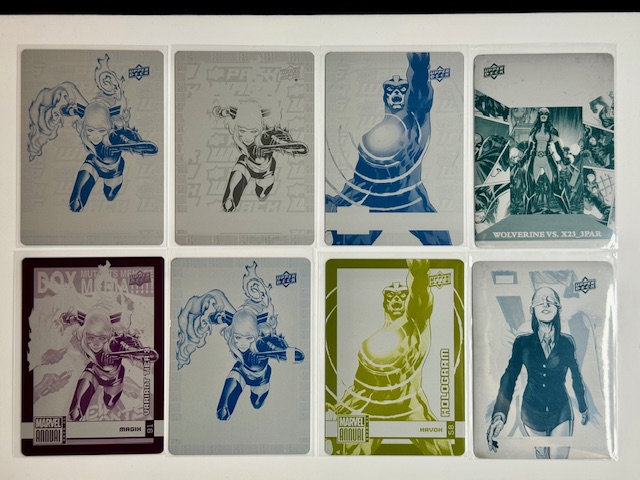
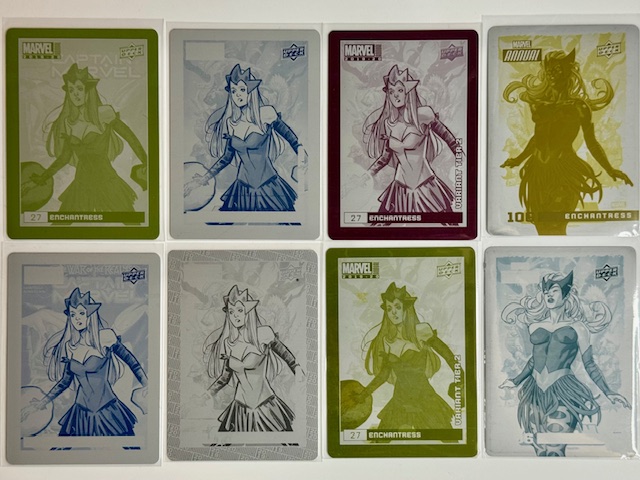
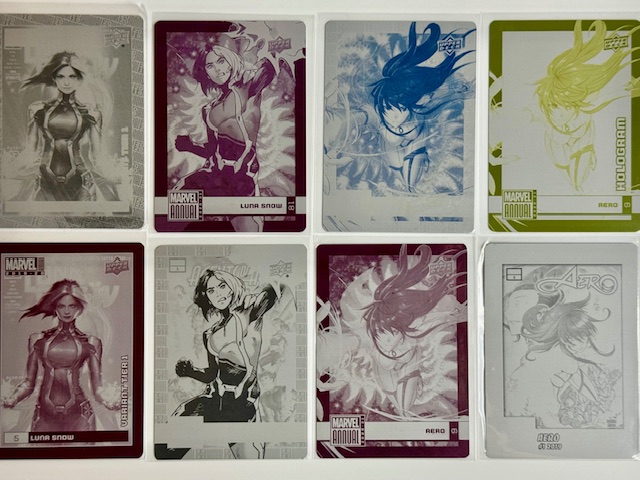
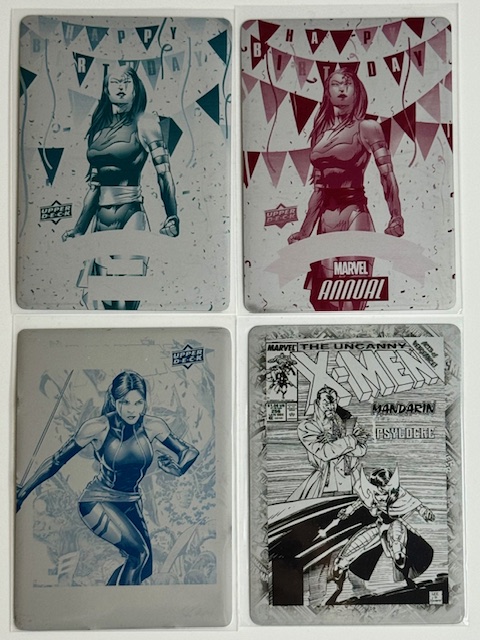
Printing plates are thin metal sheets used in the printing process of the card they represent. Generally there are four plates for a card corresponding to four basic component colors: black, cyan, magenta and yellow. When distributed plates usually have a sticker affixed to the back with publisher, set, card, and copyright information.
Different colored variants of a card won’t have different plates (changing ink saturation levels produces these versions) but variants with different background patterns, text or logos, etc will. Whether these other versions, or any plates at all, are distributed depends on the manufacturer, set, and distribution method.
Printing plates are extremely unique as a collectible. While many of them are still in great shape, given their nature they are also often imperfect as they may contain smudges, printing lines, blurred images, scratches, or other after effects of the printing process. How much these imperfections affect someone’s desire to collect a particular plate generally depends on the extent and of course personal preferences.
Also certain ink colors may have been practically unused in creating an image and that corresponding plate could be largely blank or an otherwise incomplete image. While rare, this phenomenon is a risk and particularly pops up comic and other art based cards (as opposed to photo based cards, where underlying colors are generally present across the image).
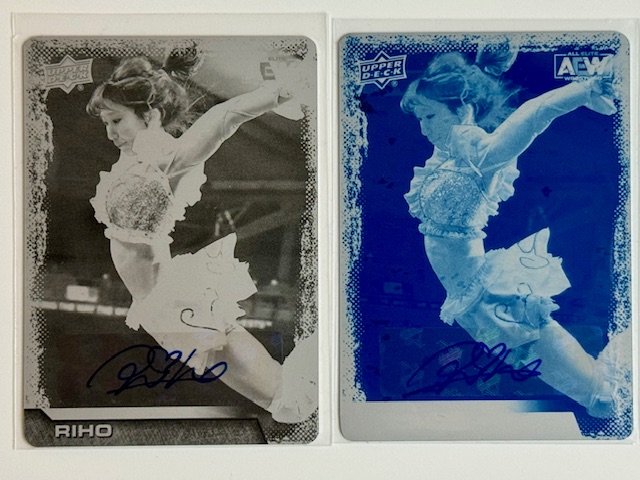
In certain circumstances printing plates may also be distributed with autographs. Actors or athletes depicted, or creators or voice actors of shown characters, sometimes have their autographs on the front of the plates. Usually it’s done via affixing a signed sticker, but direct signatures aren’t unheard of. This is an added layer of collectability and reward for the person who draws the plate.
Peni Paker collection
In addition to printing plates being randomly inserted into packs of their card sets, they are also commonly used as special distribution prizes. Upper Deck often has certain plates set aside to be used as rewards for completing collection goals in their online buying and trading platform ePack.
Sometimes plates used for these purposes are grouped together as sets, occasionally even being collected in connecting booklets. This can be convenient for completionists, as trying to collect all four color plates for a particular card when the plates are separately randomly inserted is a daunting task.
Metal Universe X-men printing plate booklets in custom display cases by Hardball34.
My personal affinity for collecting plates evolved from getting several wonderful booklet collections from the Metal Universe X-men set, as well as drawing some for my favorite characters from Marvel Annual sets and my favorite wrestlers from WWE and AEW sets.
From there I started more proactively chasing/trading for/buying plates and they’ve become a cornerstone of my collections all around. I adore the way the underlying color images look, and there’s just something cool about having a piece of the process.
The lion’s share of my plates are Marvel related from Upper Deck (UD), featuring a dazzling array of comic book characters and MCU actors.
However I also heavily collect joshi wrestling cards, and plates of certain wrestlers from UD’s AEW sets as well as Topps WWE sets form an additional, smaller centerpiece of my collection.
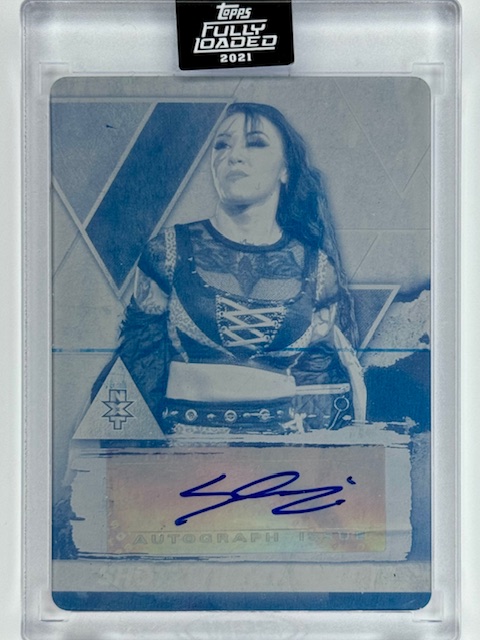
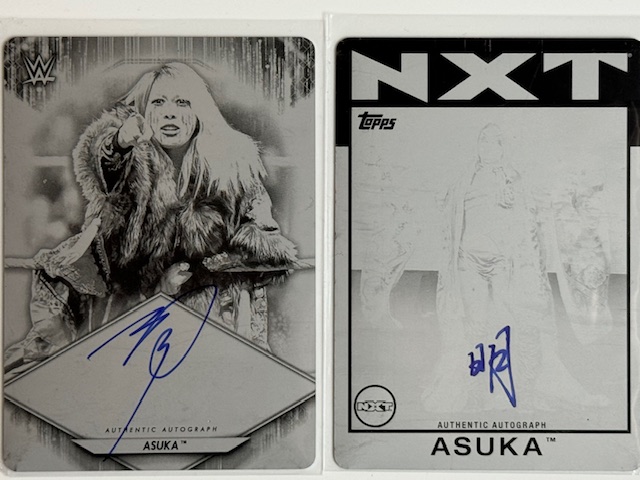
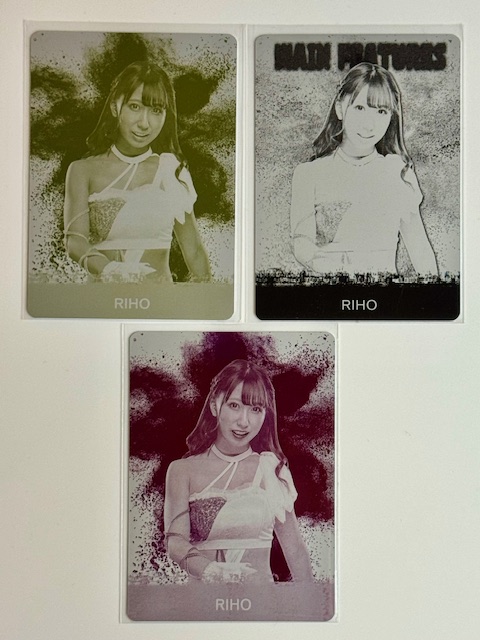
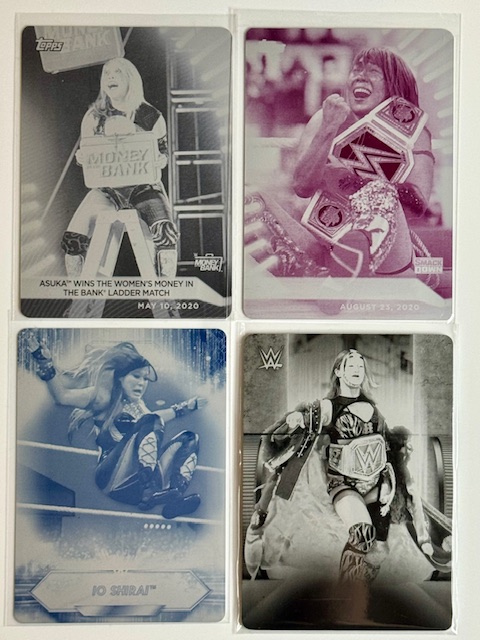
AEW’s Riho, Hikaru Shia, Nyla Rose, and William Regal and WWE’s Asuka and Iyo Sky.Riho plate displayed with AEW 1/1s in a custom frame by Dion Divens.
Chasing plate “rainbows” (a complete color collection of plates for a given card) is a case by case basis for me. For certain images, characters, and wrestlers I collect everything of theirs I can find. In other cases a particular color plate for a particular card jumps out at me and I’m happy just to have that.
Occasionally a plate I’d otherwise want to keep just doesn’t look great to me in that color and/or with its particular imperfections. And of course as with any card related collectible rarity, availability, popularity with other collectors, and luck all greatly influence what actually ends up in the collection.
These little pieces of metal have become some of my favorite collectibles. I love monochrome art in the first place, and the fact that these are essentially art and photos broken down into that format appeals to me greatly. I’m sure I’ll be expanding their numbers for a long time to come.
I hope everyone’s enjoyed the look at my collection of these unusual inserts. Best of luck with wherever your personal collecting tendencies take you.
It’s always exciting for me to discover new artists whose work jumps out and appeals to my personal artistic preferences. Today I’d like to highlight the striking art of Miki Okazaki.
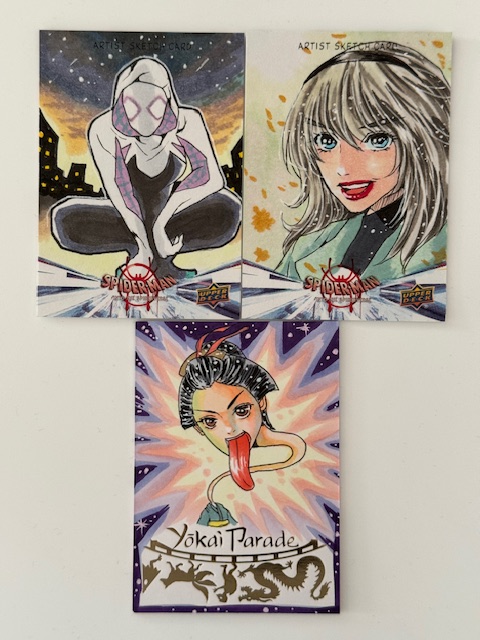
Ghost Spider and Gwen Stacy sketch cards from Upper Deck’s Into the Spider-Verse set, and a recently pulled Rokurokubi sketch card from Iconic Creations’ Yokai Parade set. All by Miki Okazaki.
The first time I saw any of Miki’s art was on sketch cards for Upper Deck’s Into the Spider-Verse card set. It made an immediate impression and had an air of whimsy, and when I followed her on Instagram and found out she was open for commission at the time I jumped at the chance to add more of her work to my collection.
Among the various subjects I collect art of, two of the biggest are joshi pro-wrestlers and Marvel’s Mystique mid-transformation. In my first batch of commissions from Miki I was able to add wonderful pieces to both collections.
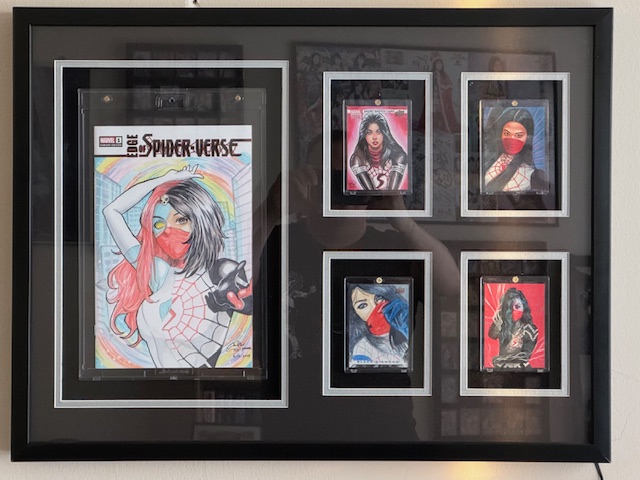
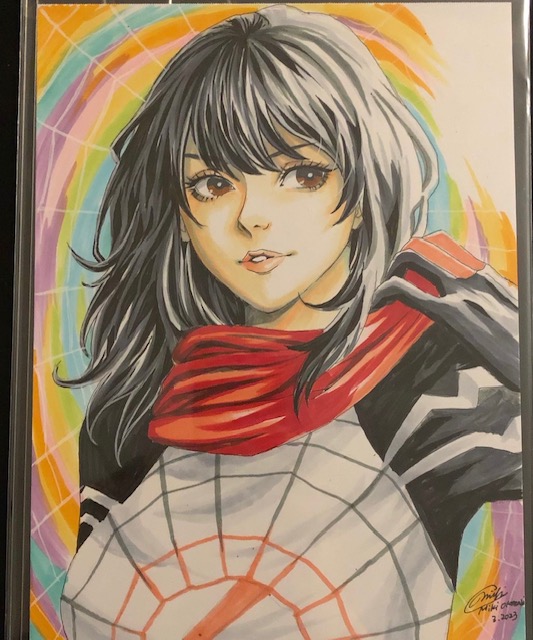
For the incredible Mystique as Silk sketch cover she did for me I specified only the subject. The composition and other specifics were left up to Miki, and she knocked it out of the park with a great dynamic pose and overall awesome general feel.
Miki’s Mystique/Silk cover on display with Silk sketch cards by Effix, Fred Ian, Marcia Dye, and Ash Gonzales in a custom light up frame by Dion Divens.
It’s a great example of her general style with coloring that really pops and a bunch of cool small details, like the exact way things are split between Mystique and Silk around the face and hair, that enhance the overall effect.
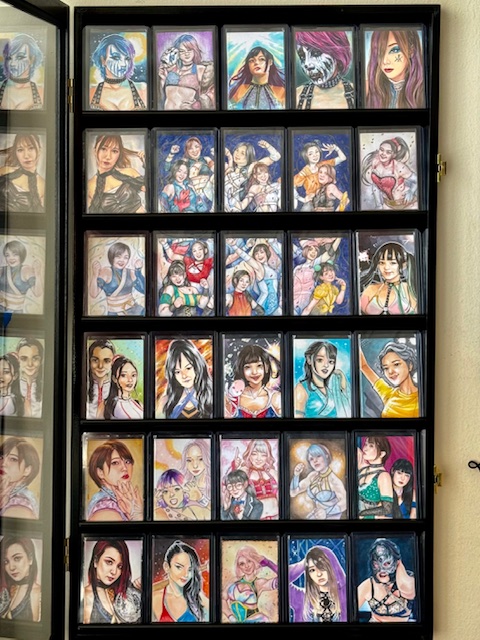
I am a huge fan of Japanese women’s professional wrestling, and have an extensive collection of personal sketch cards (PSCs) I’ve commissioned of many of my favorites, including quite a number from Juri H. Chinchilla (whose art I’ve discussed extensively in Beautiful Dreams, Beautiful Dreams 2,Beautiful Dreams 3, and Beautiful Dreams 4).
I was thrilled that Miki was open to doing some of these for me, and my first requests were a combination of wrestlers I’d planned on having done for quite a while in Ice Ribbon’s Kyuri & Maika Ozaki, AEW’s Hikaru Shida, and Marvelous’ Mio Momono & Maria, a perennial favorite in WWE’s Asuka, and even a brilliant up and coming rookie in Gatoh Move’s Miya Yotsuba.
She did an outstanding job with the unfamiliar subjects, and this became just the first of several batches of joshi PSCs I would get from her over the course of 2023. The joshi cards really illustrate Miki’s ability to apply her personal style to her art while still really capturing the essence of the subject.
The next batch included Yappy & Banny from Ice Ribbon, Momo Watanabe from Stardom, Emi Sakura and Best Bros (Mei Suruga & Balliyan Akki) from Gatoh Move, and TJPW’s announcer Sayuri Namba. These are all excellent and the coloring and highlighting really stand out in this group. The backgrounds are masterfully vibrant in a complementary way that doesn’t overwhelm the wonderful depictions of the wrestlers.
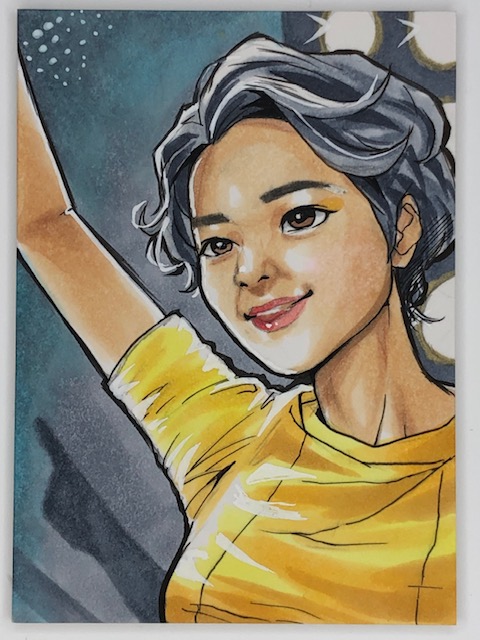
Finally around the end of the year I had cards done of TJPW’s Free Wi-Fi (Hikari Noa & Nao Kakuta), and Daisy Monkey (Suzume & Arisu Endo), another up and coming Gatoh Move rookie Nonoka Seto, WWE’s reigning Women’s Champion Iyo Sky (formerly Io Shirai), Stardom’s Yuna Mizumori (formerly of Gatoh Move), and freelancer Momoka Hanazono.
The detail on these is particularly fantastic, and it’s was really cool to see how Miki’s style evolved over such a short period. I know I’m repeating myself to the point of sounding like a broken record, but once again the coloring is impeccable and perfectly spotlights the subjects.
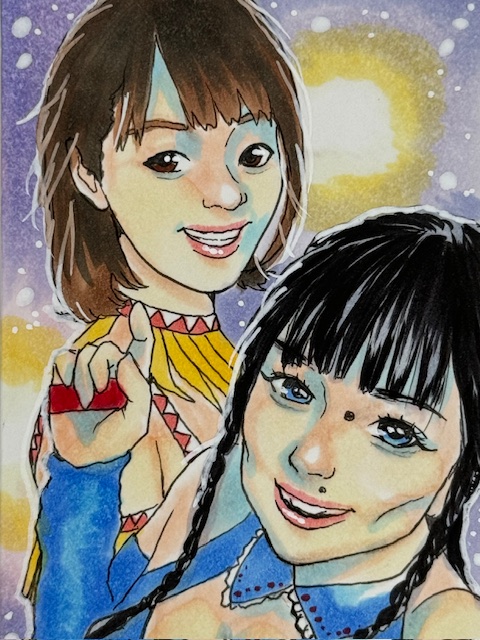
The Nonoka Seto card is particularly special from a few reasons, from the awesome way Miki captured her pointed finger pose in shadow even though the arm is out of frame to the fact that it’s a companion piece to the card Miki did for me of her sister, fellow Gatoh Move wrestler Miya Yotsuba.
I greatly appreciate all the art Miki has created for me and I hope to continue collecting her work in the future.
More information about Miki’s wonderful art can be found on her socialmedia pages.
In May of 2019 I was lucky enough to see a special showcase show of Emi Sakura’s casual training program DareJyo. It was a wonderfully fun display of training drills and exhibition matches. What no one knew at the time was five of the participants would go on to train as as full wrestlers and debut just a few months later as part of Gatoh Move’s Generation 4.
For many years in the early portion of Gatoh Move’s existence, Riho (now of AEW) was their ace and star. In Spring of 2019 it was announced that she would be leaving to go freelance in early July. The landscape of the promotion looked dramatically different after her departure and the subsequent debut of six rookies from DareJyo at Gatoh’s August show (the five previously mentioned that appeared on the 5/1/19 showcase show, plus Chie Koishikawa).
However as of the original announcement in July only four wrestlers would be debuting. The last trainee to decide to make the jump was the woman who eventually become Gatoh Move’s resident lovable ninja.
Sayuri’s DareJyo showcase exhibition match was against eventual fellow Gen 4 member Rin Rin (now the recently retired Yukari Hosokawa of Ganpro). Her debut match was against Mitsuru Konno.
Sayuri is the ultimate underdog and pitting her against the tough-as-nails, fierce Mitsuru in her first official match was perfect (the entire show was a masterclass in playing to their rookies’ strengths and presenting an incredibly entertaining slate of debuts). Even in this first match there were hints of the perseverance and personality that would draw fans to her.
Sayuri has incredibly unique charisma that continually emerged and evolved as she gained experience. Sakura once jokingly gave her an award for there being nothing remotely unique or interesting about her, but Gatoh’s founder couldn’t be more wrong in this case. There was an endearing goofiness to her mixed with a fiery determination that made it impossible not to cheer for her.
One of her most memorable series of moments revolved around her stubborn insistence to complete a bodyslam despite failure after failure to do so. She turned the cry of “Let’s bodyslam!” into a beloved rallying point for her fans (whom she named “Sayurists”). They were thrilled when she finally hit one on the 5/4/21 show.
Sayuri eventually fully embraced a ninja role, using tactics and antics such a shuriken style chops, awesome wall run headlock takedowns, and ninja vanishing techniques (hiding behind numerous environmental elements in Ichigaya Chocolate Square to later surprise her opponent). A perfect mix of skill and silliness, Sayuri’s matches were always captivating.
Sayuri and Sayaka PSC by Juri Chinchilla.
Gatoh’s 12/29/19 show turned out to be the last time I was able to attend a show Sayuri wrestled on. I missed a number of Gatoh Move shows during the remainder of that trip due to coming down with the flu, and once I recovered and could attend again Sayuri herself was out sick (along with many other wrestlers, it was a rough season).
However, there is something quite fitting that my final live memory of seeing her wrestle ended up being a singles match against her trainer, Emi Sakura. The legend spent the early match trying to run through and bully the overmatched ninja. But as usual Sayuri’s persistence created openings and allowed her to give her opponent much more fight than expected, even in defeat.
Sayuri’s career spanned just under 90 matches, and she never won a singles contest. But she never gave up and her Sayurists were certain her moment would come.
In 2021 Sayuri formed a regular tag team with 17 year veteran Choun Shiryu called Dragon Ninja. They had fantastic chemistry as a team, and Sayuri clearly evolved as a wrestler under Choun’s influence.
Dragon Ninja was a successful team with several wins, but always with Choun gaining the decision. They fought and won as a team, but the elusive pin or submission that evaded Sayuri in singles competition continued to do so in tag matches.
Until ChocoPro 264 on 10/23/22. In an incredible culmination of her wrestling journey she pinned Chie Koishikawa to give Dragon Ninja a huge win over Chie & Masa Takanashi. Her moment had arrived.
The victory seemed to herald big things ahead for Dragon Ninja and Sayuri, but unfortunately it wasn’t meant to be. She would wrestle two more matches after that before going on hiatus due to chronic health issues. In late 2023 it was announced she was not returning and would be retiring from wrestling.
Sayuri had remained involved in Gatoh Move and Chocopro in non-wrestling capacities in the meantime and ChocoPro 347 was her farewell show. She accompanied Choun against Otoki, and while not officially part of the match she had some involvement including traditional retirement spots. It was a great way to say farewell within the confines of her not being able to return for a full retirement match.
She gave a goodbye speech after the show and was sent off with smiles.
Sayuri had unique presence and style and was a breath of fresh air in wrestling throughout her short career. Wishing all the best to her in whatever’s next for our darling ninja.
Full Gatoh Move 6 card PSC “puzzle” by Juri H. Chinchilla.
During my first several trips to Japan, starting at the end of 2015, Gatoh Move became (and remains) one of my favorite promotions. It’s a wonderfully engaging experience built around a core roster of diverse wrestlers all fully embracing their own uniqueness.
And that’s been true throughout all the changes and transformations the company and roster has endured. Wrestlers that were there when I started watching like Kotori and Gatoh’s former ace Riho have retired and moved on to other opportunities (with occasional reappearances) respectively. In the wake of Riho leaving the company doubled in size with the debuts of Gatoh Move’s fourth generation. I’ve experienced the entire careers of Aasa Maika and Mitsuru Konno.
So it’s perhaps a little odd to realize that for me a certain wrestler has become such a core part of what Gatoh Move is today that her imminent departure might have the greatest impact of any change thus far.
In spring of 2018 I was lucky enough to catch Gatoh’s annual Go Go Green Curry Koppun Cup mixed tag tourney show. In the (non-tournament) opening contest I’d get my only look that trip at their new rookie, as just two months into her career Yuna Mizumori faced visiting reigning Pure-J Champion Hanako Nakamori.
Yuna immediately impressed as a great addition to the Gatoh roster. She had such an exuberant personality that was already apparent and integrated in her rapidly developing wrestling style. Her particular blend of speed and power was already on display and to this day remains striking and distinctive. I couldn’t wait to see more of her in the future after her strong showing against another company’s top competitor so early in her career.
The tone set by that first impression would continue when I was back later in the year, particularly in a very special elimination match on SEAdLINNNG’s 12/28/18 show.
It was Gatoh Move’s Emi Sakura, Yuna, & fellow rookie Mei Suruga against freelancer Sae, the reigning Regina di Wave champion Ryo Mizunami, & SEAdLINNG’s own champion (and founder) Nanae Takahashi.
The match was a blast, and seemed headed to a perfectly acceptable formula finish of Gatoh’s powerhouse rookie putting up a good fight in defeat against overwhelming experience and odds.
Instead Yuna, still within her first year of wrestling, overcame a 2-on-1 disadvantage to eliminate BOTH of the opposing reigning champions to secure the win for Gatoh Move (an achievement that would earn her a title shot at Nanae a couple months later).
As I wrote at the time: “Yuna is a wrecking ball in the ring in the best possible way, and her digging deep and powering her way through the odds was captivating, as well as totally believable.”
Yuna became an absolute favorite of mine and was always a treat to see. She was put in important positions and given big opportunities to show what she could do and always delivered. Yuna & her TropiKawild partner Saki would hold and defend the Asia Dream Tag Team Championships for nearly a year during their second reign starting in March of 2019.
During Gatoh’s Golden Week shows that year she semi-main evented in great singles contests against TJPW’s Mizuki and visiting freelancer Hiroyo Matsumoto.
A couple of other matches of hers that stick out (among the many I was lucky enough to see live) that I particularly loved include her participation in a special “Old Gatoh Move” vs “New Gatoh Move” variation on the the annual Gatoh roster 6-woman tag match they ran (available here), and a hard hitting battle she had against Yasu Urano.
The previously mentioned TropiKawild tag team title reigns meant that when Yuna hit her second wrestling anniversary she had been a reigning tag team champion for nearly half of her career. Between that, some of the things I’ve mentioned above, and other opportunities Yuna had a truly special start to her wrestling career.
Yet the dichotomy of Yuna being extremely strong and successful but still often seeming and feeling like the underdog would be a recurring theme and lead to some incredibly compelling stories and rivalries.
One place this is vividly apparent is in early ChocoPro.
ChocoPro is Gatoh Move’s twin promotion and arose out of Emi Sakura’s desire to do something specifically tailored to streaming when Covid hit and prevented them from continuing shows as normal in their small home base venue.
Yuna’s struggles, feelings, and insecurities explored and enflamed by her trainer, boss, and occasional partner Emi Sakura would be a driving force for the early seasons of ChocoPro. Yuna participated in the first ever intergender “ironman” match on ChocoPro 11 against Minoru Fujita (an incredible match itself well worth watching).
Sakura tore Yuna apart emotionally in an interview leading up to the match with Fujita, kicking off what I still believe is one of the greatest stories and feuds I’ve ever seen in wrestling (see The Ballad of Yuna and the Oni for full details).
One last thing that certainly has to be mentioned is Yuna’s camaraderie and rivalry with the only other member of her generation of Gatoh Move, Mei Suruga.
Mei debuted almost exactly three months after Yuna and the interplay between the two has always been interesting. Yuna has achieved more faster in traditionally measured ways and has been more successful overall in their singles encounters. She’s held the tag titles twice to Mei’s once, won them earlier on in her career, and holds a 6-3 victory advantage in their singles encounters.
But Mei has more unusual or intangible edges. She holds singles victories over high profile opponents like Hikaru Shida and Emi Sakura herself, she’s wrestled internationally, and her victories over Yuna came when it mattered most. She won a number one contendership tournament by beating Yuna in the finals and is up 2-1 when they faced each other in tag team title matches.
This is best encapsulated in Yuna’s comments after she defeated Mei in a fantastic 30-minute “ironman” match and wondered why she still felt like she lost.
The mutual respect, parallel yet wildly different careers they’ve had and the rivalry that goes with it, and captivating chemistry they have together all built to an absolutely phenomenal encounter they had headlining Gatoh Move’s 10th Anniversary show. As the last singles match they’ll have against one another in the foreseeable future, they went out on a hell of a high note.
In a few short hours Yuna will wrestle Emi Sakura 1-on-1 one last time in her final match before “graduating” from Gatoh Move (the term used in Japan when someone leaves a company to move on, whether it’s for retirement or a case like this). Can Yuna finally topple the Oni as she bids Gatoh farewell?
Yuna, Mei, Kotori, and Aasa by Shining Wizard Designs
I’ve barely scratched the surface of everything Yuna has meant to Gatoh Move and ChocoPro. She’s an amazing performer and though it seems like she’s been around forever her career is incredibly still under 5 years old. While her absence will be noticeable I wish her all the best and look forward to seeing what’s next for her in wrestling elsewhere.
Emi Sakura is one of the most incredibly multifaceted people in professional wrestling. The 27 year veteran can wrestle nearly any style, has trained a ridiculous number of other excellent wrestlers, and founded two different still running joshi promotions on the common idea that wrestling should be fun for both fans and wrestlers.
Gatoh Move, the promotion Sakura currently runs, is an absolute joy. In anticipation of their big 10th anniversary show this week (entitled Phoenix Rises) I wanted to take this opportunity to talk about one of my absolute favorite wrestling promotions.
Of course 10 years is a lot to cover and this won’t be complete nor an attempt at a proper history of the promotion for various reasons (starting with the fact that I was introduced to it a few years in). Rather I hope to provide a personal look back at some of what’s made Gatoh Move so special to me while also highlighting a few key moments and points of interest in depth.
At the end of 2015 I was lucky enough to make my first trip to Japan. I was already a big fan of women’s wrestling in general and was familiar with several joshi via their appearances in Shimmer (including several who had been trained by Emi Sakura, although I had no idea of that at the time). I was extremely excited to see as much wrestling as I could, and my schedule was packed with shows by a variety of promotions.
Due to strong recommendation of a good friend who was already a big Emi Sakura fan at the time, on the third day of my trip my fourth overall show introduced me to Gatoh Move. The four shows at four different venues from four different promotions were all wonderfully unique, interesting, and fun. Gatoh Move however was perhaps the most different from any show I’d seen before, and this was one of their ring shows in Itabashi Green Hall.
From the opening song and dance numbers, to the intergender tag match, to marveling at the skill of the younger wrestlers (although I’d later discover one of them already had nearly a decade of experience and was the company’s ace apparent), and so on it was a unique and enthralling experience.
And course the wrestling itself was extremely good. I only knew three of the wrestlers going in (Hiroyo Matsumoto, Hikaru Shida, and Makoto) but nearly all the rest would become familiar faces as time went on both in and out of Gatoh Move. Looking back at the main event in particular of Emi Sakura & Nanae Takahashi vs SAKI & Mizuki is kind of mind blowing.
I had a lot of fun, and was eager to see more of the promotion. As the saying goes, I hadn’t seen anything yet. The following week I went to my first (and second) show at Ichigaya Chocolate Square.
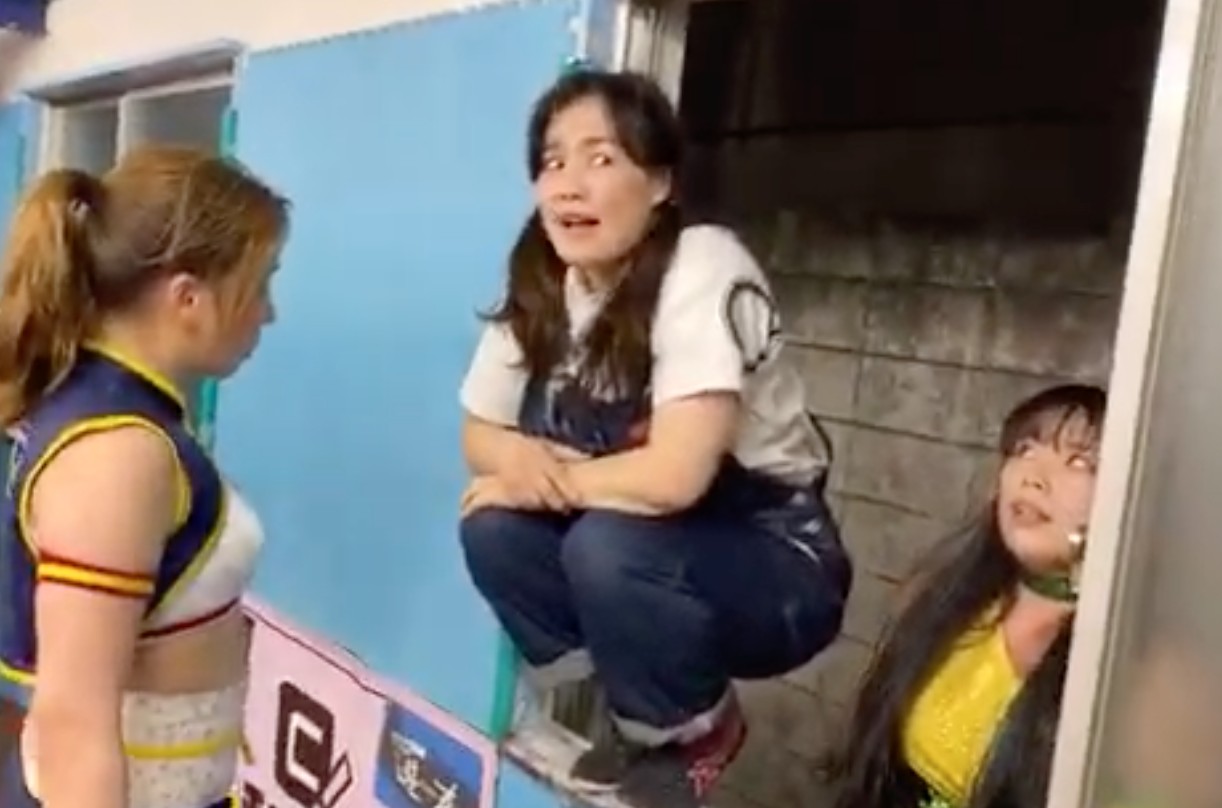
The venue has no ring and just barely holds a mat to wrestle on and a packed in audience (at the time) of about 70 people maximum including some watching through two large windows while standing in a side alley. The crowd is effectively the out of bounds marker and the wrestlers will often use the windowsill to jump off of. It’s a unique format and a great atmosphere.
The quality of matches they’re able to perform in such an environment speaks volumes of the talent of all involved, and I was instantly hooked. The wrestling Gatoh Move presents is unlike anything I’ve seen before or since, and the live experience is something special. I attended at least one Ichigaya show, as well Gatoh ring shows when they happened to coincide with my trip dates, every time I went back.
Signboard won in an audience-wide janken tournament.
Gatoh Move was about three years old at the time, and it already had a sense of identity and a lot of the same elements that persist to this day. Which is incredibly interesting since one of the promotions’ greatest strengths is Sakura’s willingness to innovate and try new things.
But the central concept and feel of a small core roster of joshi wrestlers supplemented by both men and women guests from other promotions putting on fun shows has remained throughout the years I’ve watched, and among the many things that gives Gatoh Move it’s appeal.
I’ve (rightfully) mentioned Emi Sakura often as the shaping force of Gatoh Move, but part of that is also her wonderful ability as a trainer to identify and accentuate her trainee’s personal charisma and skill strengths.
The resulting vast differences in personalities and styles of the roster determine what Gatoh looked and felt like in any given time period. Sakura’s genuine appreciation of fan support also carries through and everyone in Gatoh has always been an absolute pleasure to meet.
When I started watching Sakura, Riho, Sayaka Obihiro, and Kotori were Gatoh Move. A year later the addition of Mitsuru Konno and Aasa Maika and regular appearances of freelancer (and former Sakura trainee) Aoi Kizuki brought a different dynamic.
And so on through the debuts of Yuna Mizumori and Mei Suruga, the eventual retirements of Kotori, Aasa, Aoi, and Mitsuru, and Riho’s departure and the resulting debut of Gatoh Move Generation 4 (Chie Koishikawa, Sayuri, Sayaka, Tokiko Kirihara, Lulu Pencil, and Rin Rin (now Yukari Hosokawa of GLEAT)).
Each person/roster had a distinct effect on the promotion and matches and stories emerged from each group that both felt unique to them and at the same time like it fit perfectly into what Gatoh Move was.
The ability to change and innovate drastically while still maintaining a core identity is a recurring theme over the years I’ve watched Gatoh Move. A couple years ago it became more important than ever.
To me Gatoh Move’s intergender matches were always intergender done right. From the very first match I ever saw of theirs to the wonderfully fun annual Go Go Green Curry Koppun Cup annual intergender tag team tournament to the previously mentioned Riho vs Masa and so much more Gatoh has always known how to capture the proper feel of everyone in the match just being wrestlers competing.
This ended up playing a big part in one of most daring innovations Sakura had ever tried.
When Covid changed the world in 2020 Sakura’s small promotion with a home base unable to properly handle distancing requirements for an attending crowd was faced with a real question of how to survive.
Sakura embraced a rather crazy direction that could only have worked with her particular sense of innovation and risk taking, as well as an adaptable roster that was more than game for the challenges that would arise. Thus Gatoh Move’s twin promotion ChocoPro was born.
Not convinced that just doing Gatoh Move with no audience would be the right approach, Sakura envisioned a new presentation directly designed for streaming to bring live wrestling to fans all over the world in a way specifically tailored to the unique opportunities of wrestling without an audience in Ichigaya Chocolate Square.
While some might consider this philosophical premise a bit thin to differentiate a brand on, ChocoPro shows have developed their own feel and characteristics that make them distinct from Gatoh Move despite sharing a roster, creative forces, etc. One difference is that ChocoPro is a fully intergender brand, while Gatoh Move is technically a joshi company that has men wrestlers as guests (again a subtle but noticeable distinction).
But perhaps the biggest change to come from the creation of ChocoPro was the No Pay Wall philosophy. Every type of viewable content ChocoPro creates is put up on their YouTube channel for free, supported by optional sponsorship purchases, YouTube and Patreon memberships, etc as people choose and are able to contribute.
The commitment to make it work from everyone involved was incredible, and ChocoPro is as much a creation of Akki and Mei joining with or in place of Sakura on the live streams they started doing as added content to Gen 4 who all had to adapt to an extremely challenging situation in their rookie year to regular participants Masa, Choun Shiryu, Antonio Honda, Chris Brookes, and many more as it was Sakura’s. Seeing it succeed was both amazing and wonderful, as it really doesn’t seem like something anyone else could have pulled off.
Yet here we are two and a half years later with ChocoPro firmly established as a beloved sub brand of Gatoh Move to the point where it has and will continue even once Gatoh Move shows were able to start up again. Here’s hoping it will continue to prosper for a long time to come.
One last thing I’d like to talk about that I think perfectly underscores what Gatoh Move brings to the wrestling world is their casual trading program, Darejyo.
Darejyo is short for “Daredemo Joshi Puroresu” or Anyone’s Women’s Professional Wrestling. Started by Sakura and currently run by Mei (herself a former participant), the idea is to offer a suitable environment for any woman, regardless of age, experience, etc, to learn the basics of pro wrestling in a casual manner within a professional, safe environment. There are limits on the types of things they learn and try (avoiding more difficult and potentially dangerous aspects like certain types of strikes, etc) while still giving a strong introduction and base to build off of.
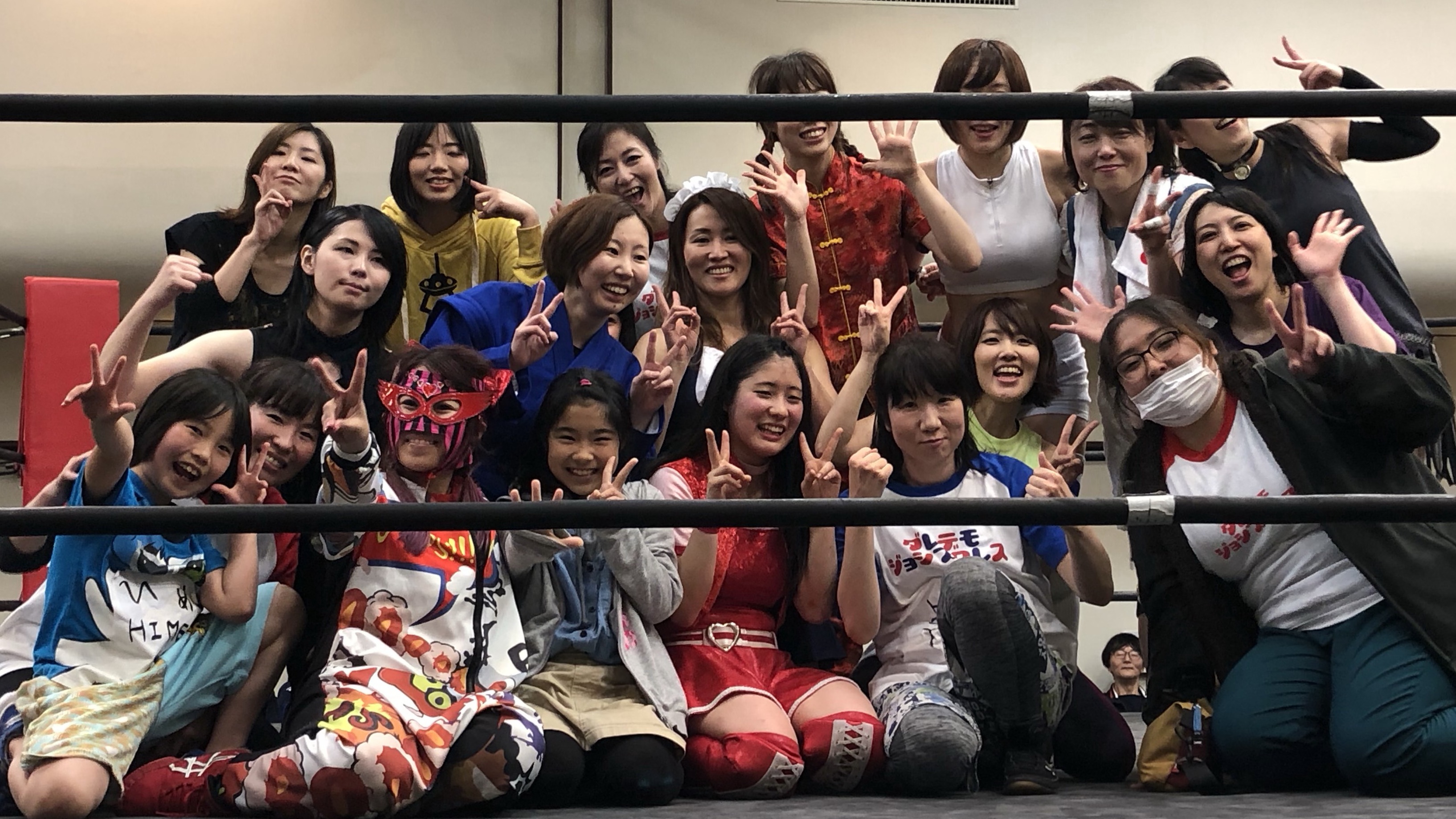
Darejyo’s had participants ranging from under 10 years old to women in their forties, and several participants have gone on to train and debut as full wrestlers including Mei herself and Gen 4 in Gatoh Move and even some in other promotions such as Diana’s Haruka Umesaki and Madeline.
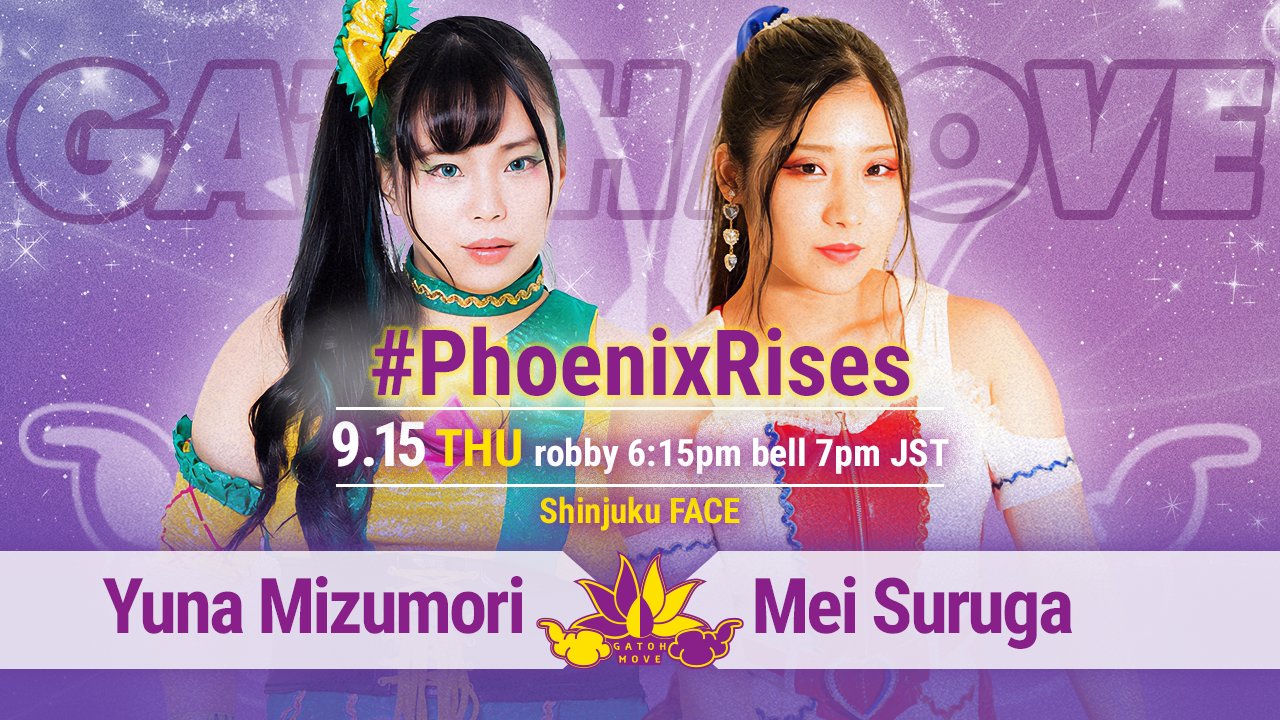
There’s a ton more details that could be shared and praises to be sung about Gatoh Move, but I hope what’s here has been interesting and enjoyable. Here are the details on the 10th anniversary show, and it’s an extremely exciting and suitable card for such an event.
Phoenix Rises: (7pm JST on 9/15/22, to be aired on YouTube at a later date)
Toru Owashi & Sayuri vs Tokio Kirihara & Antonio Honda vs Sayaka Obihiro & Sawasdee Kamen
Orange Panna Cotta (Sayaka & Chie Koishikawa) vs Daisy Monkey (TJPW’s Suzume & Arisa Endo)
Asia Dream Tag Title match: CDK (Chris Brookes & Masahiro Takanashi) (c) vs Isami Kodaka & Yuko Miyamoto
Yuna Mizumori vs Mei Suruga
Visit Gatoh Move’s YouTube channel to check out all of their content. As previously mentioned everything they are doing goes up for free under Sakura’s “No Pay Wall” initiative, so if you do enjoy and are able / would like to support please see their patreon, join as a member of their YouTube channel, visit their store and/or donate directly via their PayPal.
Thanks to everyone in Gatoh Move for a wonderful 10 years and I wish them all the best for many more.
Been a while. I hope to have the blog off its long hiatus and back to regular updates sometime in September. In the meantime there are a couple of things I though it would be useful to have reference for and decided to do a quick write up.
Exhibition Matches
Exhibition matches are matches that generally have short time limits and are happening for some sort of special reason or circumstances, including special events, return matches, or occasionally for retirements (such as with Reika Saiki’s retirement earlier this year).
Here I want to specifically talk about pre-debut exhibition matches, like the ones new Gatoh Move trainee Miya is currently having (and that I’ve seen wrestlers in other companies go through as well).
These exhibitions are “unofficial” semi-practice matches for a trainee to face an established wrestler (usually a roster member of the company they are training to join). In the past these often happened as a pre-show of sorts only for the live audience, but more of them are being broadcast the last few years (still generally before the show officially starts though).
There are a few special things about these matches to take note of. Both the trainee and her opponent wear training clothes/sweats as opposed to full wrestling gear, underscoring the nature of the match.
The matches are short, generally with a three to five minute time limit with unlimited falls (although occasionally exhibition matches can end with a single decision).
Finally, again these matches do not count towards the career of the trainee in that the trainee is not considered to have debuted as a wrestler by having exhibitions. They are exactly as described: a chance to get a look at someone preparing to be a wrestler and an opportunity for them to challenge themselves a bit in an actual match environment before they debut. There is no set number of exhibition matches or timing for them before a debut. It can vary greatly from trainee to trainee.
It’s really cool to be able to see these, and Miya’s been impressive in the ones she’s had thus far. I’m extremely excited for her official debut at Gatoh Move’s 10th Anniversary show on September 15 and happy for her. Good luck Miya!
Ichigaya Chocolate Square
Gatoh Move and its alter ego of sorts ChocoPro (which was specifically designed with the strengths and limitations of a streaming based wrestling show in mind and often runs shows without a live audience present) have a unique home base in Ichigaya Chocolate Square. It’s a venue that just barely holds a rectangular mat to wrestle on, and when an audience is present its maximum is about 50 people nowadays (including spectators watching through two large windows while standing in a side alley).
Chocolate Square’s peculiarities as a space to train and wrestle in not only lead to a great deal of innovation and adaptability among the participating wrestlers, but also give rise to some unusual rules and conventions.
Here’s a brief overview:
The edge of the mat and the wall it’s pushed up against act as a “rope break” for submission holds only (when there is a crowd the crowd is essentially the rope break marker).
For pinfalls, as long as the shoulders of the person being pinned are on the mat the pin counts. There is no “rope break” for pinfalls in Chocolate Square.
There are no countouts: action can (and typically does during ChocoPro shows) spill outside the windows.
The referees in Gatoh Move/ChocoPro (perhaps even more than elsewhere in puro) are very lenient about DQ’s. There have been maybe five total DQs or no contests in all 250 ChocoPro shows, and they were only when things got particularly blatant and/or out of hand.
Double teams and double pins are allowed in tag team matches. As long as the legal person is being pinned and the legal member of the other team is involved the pin counts.
There is a lot more to the special environment and atmosphere in Ichigaya Chocolate Square to discover by watching, but I just wanted to give a little bit of context and reference here for newer viewers.
“I don’t think I’m wrong. But just because I’m not wrong doesn’t mean that Chris is wrong.”
Lulu Pencil’s tale in ChocoPro took an unexpected and difficult turn when she ran headlong into Chris Brookes and put her beloved pink cap on the line. She fought tooth and nail through the resulting bitter feud and journey of self identity until she finally reclaimed her cap not by beating Chris, but by earning just enough of his respect for him to choose to give it back.
In their big I Quit tag match at ChocoPro 63, Lulu refused to give up as Chris tortured her and only lost because Emi Pencil (Emi Sakura’s Lulu-like “persona” she adopts when teaming with Lulu) finally became a truly selfless partner and quit herself to prevent more pain for Lulu. The fact that Lulu never gave up was enough for Chris, who shoved her hat under her hand as she lay exhausted after the match.
Lulu was whole, and her long war with Chris apparently over. But of course her larger story would continue…
Expanded Pencil Army
Chris wasn’t the only person whose respect Lulu would earn. Minoru Fujita, a deathmatch legend, has become a mainstay in ChocoPro and is currently the reigning Super Asia champion. But even before he won that particular title, he made a completely unexpected choice.
On ChocoPro 72 then reigning BJW Deathmatch Champion Fujita faced Lulu in a singles match. In a stark contrast to the match with Chris that started everything back on ChocoPro 44, Fujita insisted on putting his title on the line (unofficially at least). So Lulu faced Fujita on his terms: deathmatch style with all manner of weapons involved.
She put her heart into the match and as always fought in her own unusual style, using all manner of items she could get her hands on in wonderfully weird ways that forced Fujita to adjust and up the intensity. He prevailed of course, and Lulu being Lulu he did so by causing her to trip on a bunch of marbles he threw under her feet, but the quirky writer turned wrestler had left her mark. On ChocoPro 77 Fujita surprised everyone by coming out for his match teaming with Lulu against Best Bros in overalls. Mino Pencil was born and the Pencil Army had grown stronger.
It became official after his match with Emi Sakura on ChocoPro 78 where the two of them battled each other to exhaustion and an inconclusive double pin, then bonded over their shared … well, leader.
On ChocoPro 82 the full Pencil Army (Lulu, Emi, & Mino) united as a trio for the first time facing Best Bros & Yuna. The match was an excellent, intense affair. And Mino Pencil brought a chaotic energy to the group that elevated them beyond what they previously were.
But of course, they weren’t any more successful a team as a whole or in these other iterations than the original Pencil Army. But veterans like Fujita and Sakura believing in Lulu was clearly helping her progress, ever so slowly, towards unlocking more of her potential match by match.
The Unthinkable
At ChocoPro 95, four months and 32 episodes after Lulu was given her hat back after the tag team I Quit match, Chris and Lulu crossed paths once more. Chris teamed with Chie Koishikawa to face the new version of the Pencil Army, Lulu & Mino.
Chris & Chie prevailed in a great match, but that wasn’t the story. After the match things took an unbelievable turn when Lulu reached up from the mat and put her formerly reclaimed hat back in Chris’ hand.
“Do you understand why I gave you my hat back? Do you know what my hat means?”
“I do understand. What do you want from me? You said before you wanted me to make you stronger, and I did that. I did it by lying to you, admittedly. And I betrayed you. And I made you angry. And I took your hat. And because of that, you got strong. What more do you want from me eh? I did everything I could for you why are you giving me your hat? Leave me alone.”
“Yeah. You made me strong. It means you are Pencil Army.”
It took a lot of convincing to the person who says there’s nowhere he belongs in ChocoPro. But Lulu talked about how she knows why Chris came to Japan, how Pencil Army loves wrestling, and how they share the same passion. Her words reached him, and Chris reluctantly put on the cap. Chris Brookes joined the Pencil Army and the whole world was upside down.
Little Brother
Chris Pencil would have his first match as part of the Pencil Army on Day 1 of the big ChocoPro 100 festivities, teaming with Lulu against Black Comaneci (Antonio Honda & Tokiko Kirihara). He showed up as committed as he could be, wearing matching pink overalls with Lulu and the vaunted cap that they had once fought over.
Chris countered Black Comaneci’s dastardly antics with some of his own, with Lulu firmly along for the ride. They acted like real partners, but the more frequent team was a little too much for them and Honda eventually pinned an isolated Lulu with a small package. “Almost Lulu, almost. Next time.”
Despite the loss Lulu tried to do her best to be a proper leader for who she called the “Little Brother” of Pencil Army, including mending his overalls herself in between matches.
The duo gave it another go at ChocoPro 106, against even tougher, more experienced, more brutal competition in the form of Melt Brain Dancing (Psycho & Chango). After another hard fought loss, with Chango making Lulu submit to a vicious torture rack, Chris was not as understanding as he was the first time.
“I never lose in Ichigaya. I win. (…) Next time you call me to be in Pencil Amy, be ready to win.”
The next time would be the biggest challenge yet: the full Pencil Army in an 8 person tag against Best Bros (Mei Suruga & Baliyan Akki) & Egg Tart (Hagane Shinno & Chie Koishikawa) at ChocoPro 110. But at full strength, and with Chris’ stern words as motivation, Lulu was determined to lead the four to their first victory.
And they fought for everything they were worth. But in the end, Chie caught Lulu in the stretch muffler as her partners held the rest of the Pencil Army back.
Lulu tapped, and it all went to hell.
Sakura tried to console the group afterwards and told Chris they were just starting. “Baby steps.” Chris was having none of it.
“You lost. You lost, again. And you didn’t just lose Lulu. After everything we went through together (…) where you didn’t give up. (…) I stupidly thought that there was something in you. I thought there was something more to you than a stupid joke. After all that, today not only did we lose, we lose because you quit. Do you have any idea how insulted I feel right now?”
That was the last straw for Chris, and it was always intended to be. After further verbally laying into Lulu and saying he had enough, he revealed he had brought scissors concealed in his overalls. He cut half the brim off of the prized pink hat he and Lulu had fought over and stormed out, leaving a devastated Pencil Army in his wake.
Renewed Hostilities
To Chris, Lulu was living in a dreamworld. To Sakura and Fujita, what he did to Lulu was unforgivable. A conflicted Lulu felt a measure of brutal truth in Chris’ words about her weaknesses, but believed deep down that she had merit as a wrestler as she was.
She persevered, taping the destroyed hat back together and continuing on in her own way.
Chris was invited to gather two partners of his choice and face the remaining Pencil Army in a 6-person tag.
As with the tag team I Quit match, Chris had no trouble recruiting Yuna Mizumori to his side. Their partner was to be Chris’ close friend Drew Parker, making his “in-ring” ChocoPro debut.
However Drew was injured shortly before the match and it was postponed. In its place ChocoPro 115 ended up being headlined by Chris vs Emi Sakura in a singles contest. Or rather Chris vs Emi PENCIL.
Sakura’s devotion to Lulu and representation of the Emi Pencil persona just enraged Chris even more, and after a brutal twenty minutes of battle he lost all patience and wiped out referee Mei Suruga when she tried to pull him off Sakura. He then pulled off his belt and starting whipping Emi with it, leveling Lulu when she tried to intervene. Yuna stepped in to help Chris when Fujita subsequently attacked, but he ended up laying even her to waste when she tried to prevent him from choking Fujita with the belt. When all was said and done Chris walked out of the chaos with bodies strewn all about the mat behind him, and Mei pulled herself up just long enough to declare the match ChocoPro’s first no contest.
With all the tension overflowing and Drew’s recovery time uncertain, the trios tag was rescheduled for ChocoPro 120 with Chris bringing in Asuka (Veny) in Drew’s place.
The six of them waged war in 40 minutes of pure chaos, but eventually Chris isolated Lulu on what was left of the mat and applied a continually evolving and more vicious version of the very hold Lulu refused to give up in during the I Quit match. She held out as long as she could, with Akki on commentary screaming to her that it was alright and she needed to quit and save herself all the while, but eventually had no choice but to tap and give Chris, Asuka, & Yuna the win.
Chris forced Mei to raise his hand and Akki to announce him as the winner multiple times. ” Everything is as it should be again. The universe is healing. This isn’t a fairy tale. This isn’t a dream. This is real life, and in real life when reality comes to play Chris Brookes wins and Lulu Pencil loses.” He berated Sakura and Fujita about hanging out with Lulu to make themselves feel better.
“Don’t take this as motivation Lulu (…) Take this as a lesson, ok. You don’t belong here. You’re not a professional wrestler. You are a writer. And that’s all you’re ever going to be.”
Emi and Mino stood firm in their support and told Lulu they believe in her. But Lulu was at an impasse. She believed neither her nor Chris were wrong…
Everyone but Emi left without having the traditional post show janken tournament, and Emi said she will keep that chocolate until the day Lulu puts Chris down for a 3 count. The show ended without ChocoPro’s usual smiles as a somber Akki said he finally believes in Lulu Pencil and that someday she’ll give everyone the happy ending they deserved that day.
True Strength
“They’re not supporting you, they’re mocking you.”
One of Chris’ main points of contention about his time in the Pencil Army was the feeling that Sakura and Fujita were not giving Lulu their best.
On the very same night Chris teamed with Lulu as an official Pencil Army member for the first time their stablemates were challenging for the tag tam titles. Fujita & Sakura had defeated Best Bros in non-title competition on ChocoPro 99, SPECIFICALLY wrestling as Emi Sakura & Minoru Fujita and not Emi & Mino Pencil so that Best Bros would be facing their “strongest versions.”
They came up short in the title challenge but once again forwent their alternative Pencil personas in a hellaciously hard hitting affair. The Emi and Mino that show up for Pencil Army matches are completely different in approach and applied abilities than when they compete under other circumstances.
“You’ve got two of the best wrestlers to ever come out of this country in dungarees, dicking around with you pretending you’ve got a chance when all you do every time is screw up and lose.” To Chris, Lulu’s partners weren’t giving her their best efforts.
In Sakura and Fujita’s eyes their Pencil personas aren’t weaker versions per se, it’s that they concentrate on trying to slowly lift Lulu up and not leave her behind. Fujita commented after the six man war that they were fighting as a team. “What if I beat him? It’s nothing. YOU will beat him. And I believe that you will.”
She’ll Just Keep Coming
Things were quiet for a few weeks after the big trios showdown, then it was announced that a singles match between Lulu and Chris was forthcoming at Lulu’s request.
Chris, wanting to be done with it all, said he knew Lulu wouldn’t stop no matter how many times he beat her or tried to talk sense to her. So he wanted to get the next “ten to fifteen gos” out of the way at once. He demanded it be a 30 minute ironman match.
“I promise you, after the ironman match she won’t want to come at me again.”
Lulu’s path went through Chris’ CDK partner, a returning Masahiro Takanashi, on ChocoPro 135. The veteran went quite hard on Lulu, and while she put up a good fight in true Lulu fashion she lost by being unable to release a hold she herself applied and was disqualified on a 5 count after Masa reached the edge of the mat. It was a worrying sign that Lulu had yet to overcome her own failings going into the big showdown with Chris.
Chris had different kind of trial to overcome with one of Lulu’s partners, as he sat down for a ChocoTalk with Emi Sakura the day before the match.
They needled each other a little, but they largely remained civil overall in what was a fascinating, must watch interview about Chris’ side of the journey.
His previously mentioned frustration with the very concept of Emi and Mino Pencil bubbled to the front when discussing the very beginning of things and how Emi had proposed the tag team I Quit match be a handicap match.
“What? Why is two vs one not ok? (Because) You’re supposed to be Emi Sakura. Emi Sakura needs handicap matches?”
“Pencil Army. Emi Pencil.”
“But why are you Emi Pencil?”
“Emi Pencil is very important friend.”
“Emi Pencil is very easy for you.”
Chris also walked through what motivated past choices and actions, but was clear that it was all different now. He felt Lulu’s very continued existence in ChocoPro was a sign that mediocrity was ok.
“She can’t climb any wall. She can’t beat anyone. (…) Everyone’s telling her that she’s doing her best and she’s clearly not.”
“Today, the dream dies.”
Chris put up no pretenses. He came into this match to make sure Lulu never bothered him again. He dominated early on, antagonizing and belittling Lulu at every turn. At one point he used his height and strength to press her against the ceiling and tried to demand the referee count her shoulders pinned there. Later he mocked the fan support messages on the wall while holding Lulu in a headlock and ripped some down to stuff into her mouth. He gained a fall on her at one point by wrapping her up in the ChocoPro banner and slamming everyone in arms reach on her.
Even in the face of overwhelming odd against a much bigger and stronger opponent Lulu was determined to do all she could, and fought with an edge she’d never shown before. Some of it admittedly backfired, as when she got a table involved and it led to Chris suplexing her onto it to get the first fall.
But other things like using her full body weight to reverse Chris’ whip outside to send him instead into the metal shutters, then dropping them on his arm (!!), did major damage and worked more in her favor.
Chris had taunted Lulu in the past by taking pencils from her trademark pencil-shaped case and snapping them in half. The first time he tried it here Lulu looked right at him and said “you can’t break me!” while picking up one of the pencils and snapping it in half herself, then stabbing Chris in the knee with the pieces.
Later when she grabbed the other case Chris took it from her, only to find out Lulu had planned far ahead and that one was full of powder. Lulu hit it into Chris’ face, nearly gaining a fall with the subsequent submission she was able to lock in.
Lulu got on Chris’ nerves so much Masa had to intervene at one point to pull Chris off of her as Chris rained forearms down on Lulu as she was flat on the mat.
With time running down Chris lifted Lulu with a double underhook but couldn’t complete the move due to the damage Lulu had done to his arm. She transitioned into an octopus stretch and seemed to finally have Chris in trouble. He powered out however, and in standing position with Lulu across his back he swung her around presumably going for some sort of slam to put her down for good. Lulu continued swinging all the way back around behind Chris into a beautiful 120% schoolboy rollup… FOR 3! With 8 SECONDS left in the match, Lulu Pencil handed Chris Brookes his first lost pinfall in ChocoPro, ever.
And remembering everything they went through she had refused to give up, not even once, throughout the full 30 minutes.
A stunned Chris confirmed that he didn’t kick out in time with Masa as Emi Pencil and referee Mei Suruga tended to Lulu (who had taken a hard bump on the back of her head off a shotgun dropkick right before the end when her head cleared the mat and hit the wood floor). Chris won the match 3 falls to 1, but the one was really all it took. Lulu beat Chris, in the only way that truly mattered.
An exhausted, emotionally spent Lulu crawled over to Chris, who gently cradled his adversary and held the ice to her head. She had finally proven him wrong. She belonged. As much as anyone else. She always had, but now Chris knew it too.
While Lulu’s been on the winning side of a few tag matches with her partner securing the fall, neither Pencil Army nor Lulu herself have ever won a match. But Lulu’s done so much more than that.
Besides, “Lulu Pencil, Emi Pencil, Mino Pencil, Chris Pencil … and YOU” all know it’s only a matter of time. Time, pride, strength, and heart. And the freelance writer turned pro-wrestler has them all in spades.
The nature of Lulu’s journey will undoubtably drastically change again as she’s following Emi Sakura to the US. But as always her Pencil Army will support her every step of the way.
Everything ChocoPro is doing goes up for free on Gatoh Move’s YouTube channel under Sakura’s “No Pay Wall” initiative, so if you do enjoy and are able / would like to support please see their patreon, join as a member of their YouTube channel, and/or donate directly via their PayPal. Also check out their international merchandise store!
The schedule has shaken out in a curious way for Block A. Wasshoi Aniki has not had any matches yet (and have never teamed before). It not only leaves them an unknown quantity going into the second half of the tourney, but also means every Block A match in the second half has them in it. However this match could end their hopes as soon as they begin.
Reigning Asia Dream Tag Champions Best Bros have 3 points. If they beat WA they will end with an incredibly impressive 5 out of 6 possible pts, and the one loss will automatically put WA out of the running (their max score by winning their remaining matches would be 4 pts). Only TropiKawild could catch BB in this scenario, by also beating WA and forcing a tiebreaker match with the champs.
But WA isn’t the only team in danger. As I explained in my analysis going into ChocoPro 129, Dragon Ninja’s loss against TW eliminated them from contention. An interesting side note is that also renders the possibility of a block-wide tie at the end nil, meaning 3 points is not enough to stay in contention.
A WA win would mean BB finish their run in the tournament with 3 pts. It’d be quite an upset for a team to beat the champions in their first ever outing, but it certainly isn’t impossible with this superteam of ChocoPro fan favorites. So the flip side of WA possibly being eliminated in their first match is they could instead eliminate the champs.
This places ALL the intrigue of ChocoPro 130 in Block A’s match, because it’s surprisingly become a loser-is-out situation. The only way both teams will both still have a chance to win the block after this match is if they wrestle to a draw.
Speaking of new teams with successful first outings, Mi*Sayaka scored a huge and somewhat surprising victory against White Comaneci on ChocoPro 129 to eliminate the latter from contention in Block B.
This means WC’s match against Melt Brain Dancing is purely a matter of pride, but trying to avoid ending the tournament completely defeated might be the motivation they need. Since it’s only MBD’s second tournament match (and they won their first) the result can’t put them out either way, but their stranglehold on Block B as the dominant favorites would clearly be much better served with a win.
(If MDB do win the pressure is really on Egg Tart, who would then need to beat MS but also have MDB lose to that same team to force a three-way tiebreaker match.)
Summary
DN and WC have been eliminated from contention in their respective blocks.
BB, WA: Eliminated from winning their block with a loss.
Good luck to all. This’ll be a wild one.
——-
As I like to reiterate I’m beyond grateful to Sakura and the rest of Gatoh Move/ChocoPro for doing so much to provide good natured content aimed at connecting people in this time of isolation and bringing smiles to everyones faces. It’s much needed and appreciated.
Visit Gatoh Move’s YouTube channel to check out all of ChocoPro’s content. Everything they are doing goes up for free under Sakura’s “No Pay Wall” initiative, so if you do enjoy and are able / would like to support please see their patreon, join as a member of their YouTube channel, and/or donate directly via their PayPal. Also check out their merchandise store with international shipping!